
Why Do Catholics Call Priests ‘Father’ When Jesus Said ‘Call No Man Father’?
Jesus said “call no man father”, yet Catholics call priests Father. Here is what Jesus was condemning, how the Bible uses “father”, where the custom came from, and the fair objections.
Many Bible-believing Christians are genuinely puzzled, and some are scandalised, that Catholics call their priests “Father”. After all, Jesus said plainly: “call none your father upon earth; for one is your father, who is in heaven” (Matthew 23:9). It looks like a direct command of Jesus that Catholics openly disobey every Sunday. This is a fair question, and it deserves a careful answer. This article looks at what Jesus was actually condemning, how the Bible itself uses the word “father”, where the custom came from (it is more recent than many people think), the serious warning behind Jesus’s words, and why a strictly literal reading would forbid much more than Catholics’ use of the title.
1. Jesus was condemning pride, not banning a word
Catholics call priests “Father” as a title of spiritual care, not of superiority. They believe that in Matthew 23 Jesus was condemning pride and love of titles, not banning a particular word.
The context makes this clear. Matthew 23 is Jesus’s long denunciation of the scribes and Pharisees. He says that they tie up heavy burdens for others but will not lift a finger themselves; that they do all their works “for to be seen of men”; that they “love the first places at feasts, and the first chairs in the synagogues, and salutations in the market place, and to be called by men, Rabbi.” Then he tells his disciples: “be not you called Rabbi… call none your father upon earth… Neither be ye called masters” (Matthew 23:1-10). The target is self-importance.
Jesus himself used the word “father” for human beings. In his parable of the rich man and Lazarus, the rich man in torment cries out, “Father Abraham, have mercy on me”, and Abraham answers him (Luke 16:24-25). Jesus told the Jews of his day, “Abraham your father rejoiced that he might see my day” (John 8:56). Jesus did not think it wrong to call Abraham “father”.
St Jerome, the great biblical scholar, commented on this very verse in 398. He noted that monks in Egypt and Palestine called their elders “father” (abba) and asked how this could be squared with Jesus’s command. His answer: it is one thing to be a father by nature, or a teacher by holding an office, and another to claim to be father or teacher in place of God. We call people “father” to honour their age or their care for us, not to give them the honour due to God, who alone is Father by nature and the source of all fatherhood.
2. All fatherhood comes from God
The Catholic Church teaches that all fatherhood, whether natural or spiritual, comes from God the Father, and that priests share in it by serving their people, not by ruling over them.
St Paul wrote: “For this cause I bow my knees to the Father of our Lord Jesus Christ, of whom all paternity in heaven and earth is named” (Ephesians 3:14-15). Every human father, whether a dad or a spiritual guide, is a reflection of God’s fatherhood. The title is honoured because it points to God.
The Second Vatican Council asked priests to care for their people “as fathers in Christ”, having begotten them spiritually through baptism and teaching (Lumen Gentium 28). But it immediately added that priests are also “brothers among brothers” with all the faithful, members of the one body of Christ, and that they should lead not as masters but as servants (Presbyterorum Ordinis 9). The title describes a responsibility, not a rank.
St John Bosco, a nineteenth-century Italian priest, shows what spiritual fatherhood means in practice. In the slums of Turin, where poor boys from the countryside drifted into crime and dangerous jobs, Bosco gathered them off the streets, fed them, taught them trades, and gave them a home and the Gospel. Thousands of boys found in him the father many had never had. When Pope John Paul II wrote a letter marking the centenary of his death in 1988, he named Don Bosco “Father and Teacher of Youth” (Iuvenum Patris).
3. The Bible uses “father” for spiritual leaders
The Bible itself uses the language of spiritual fatherhood freely, including the apostles of themselves.
St Paul wrote to the Corinthians: “For if you have ten thousand instructors in Christ, yet not many fathers. For in Christ Jesus, by the gospel, I have begotten you” (1 Corinthians 4:15). Paul did not think he was disobeying Jesus by calling himself the Corinthians’ father. He also called Timothy “my dearly beloved son” (2 Timothy 1:2).
In the Old Testament, when the prophet Elijah was taken up to heaven in a whirlwind, his disciple Elisha cried out, “My father, my father, the chariot of Israel, and the driver thereof” (2 Kings 2:12). The disciples of the prophets were called “sons of the prophets”. Spiritual fatherhood was a familiar idea in Israel.
The early Christians used the same language. Around 155, the aged bishop Polycarp of Smyrna, a disciple of the apostle John, was arrested and brought into the stadium to be burned alive. According to the eyewitness account of his martyrdom, the pagan and Jewish crowd shouted against him: “This is the teacher of Asia, the father of the Christians, the destroyer of our gods” (Martyrdom of Polycarp 12). Even his enemies knew what Christians called him.
4. “Abba” and “papa”: abbot and pope
From the first centuries, Christians called their monks and bishops “abba” or “papa”, both meaning “father”. From these words come the English “abbot” and “pope”.
The hermits who went into the deserts of Egypt in the fourth century to pray and fast were addressed by their disciples as “abba” (father), and the women hermits as “amma” (mother). Their wise sayings were collected in the Sayings of the Desert Fathers, still read today: “Abba Antony said…”, “Abba Poemen said…”. Christians across the world went to them for spiritual guidance.
St Benedict, who wrote his Rule for monks around 530, explained that the head of a monastery is called “abbot” from the word abba, because he holds the place of Christ in the monastery. Benedict immediately adds a warning: the abbot must remember that he will have to give an account to God for every soul in his care (Rule of St Benedict, chapter 2). The title brings responsibility, not privilege.
The word “pope” comes from the Greek pappas, an affectionate word for “father”. In the early centuries it was given to many bishops, not only the bishop of Rome. In 250, when St Cyprian, bishop of Carthage, was in hiding during a persecution, the clergy of Rome wrote to him addressing their letter to “Pope Cyprian” (Cyprian, Letter 30). The Coptic patriarch of Alexandria is still called “Pope” today.
5. A fairly recent custom in English
It may surprise you to learn that calling every parish priest “Father” is a fairly recent habit in English. That shows it is a custom, not a doctrine.
In medieval England, ordinary parish priests were addressed as “Sir”, as Chaucer and Shakespeare show. After the Reformation, when Catholic priests in England had to hide their identity, they were usually called “Mr”. The title “Father” was traditionally reserved for members of religious orders, such as Franciscans, Dominicans and Jesuits, and for confessors. The custom of calling all priests “Father” spread from Ireland with Irish immigrants in the nineteenth century, and in England it was strongly encouraged by Cardinal Henry Edward Manning, Archbishop of Westminster from 1865 to 1892, who called it the highest and most persuasive of a priest’s titles.
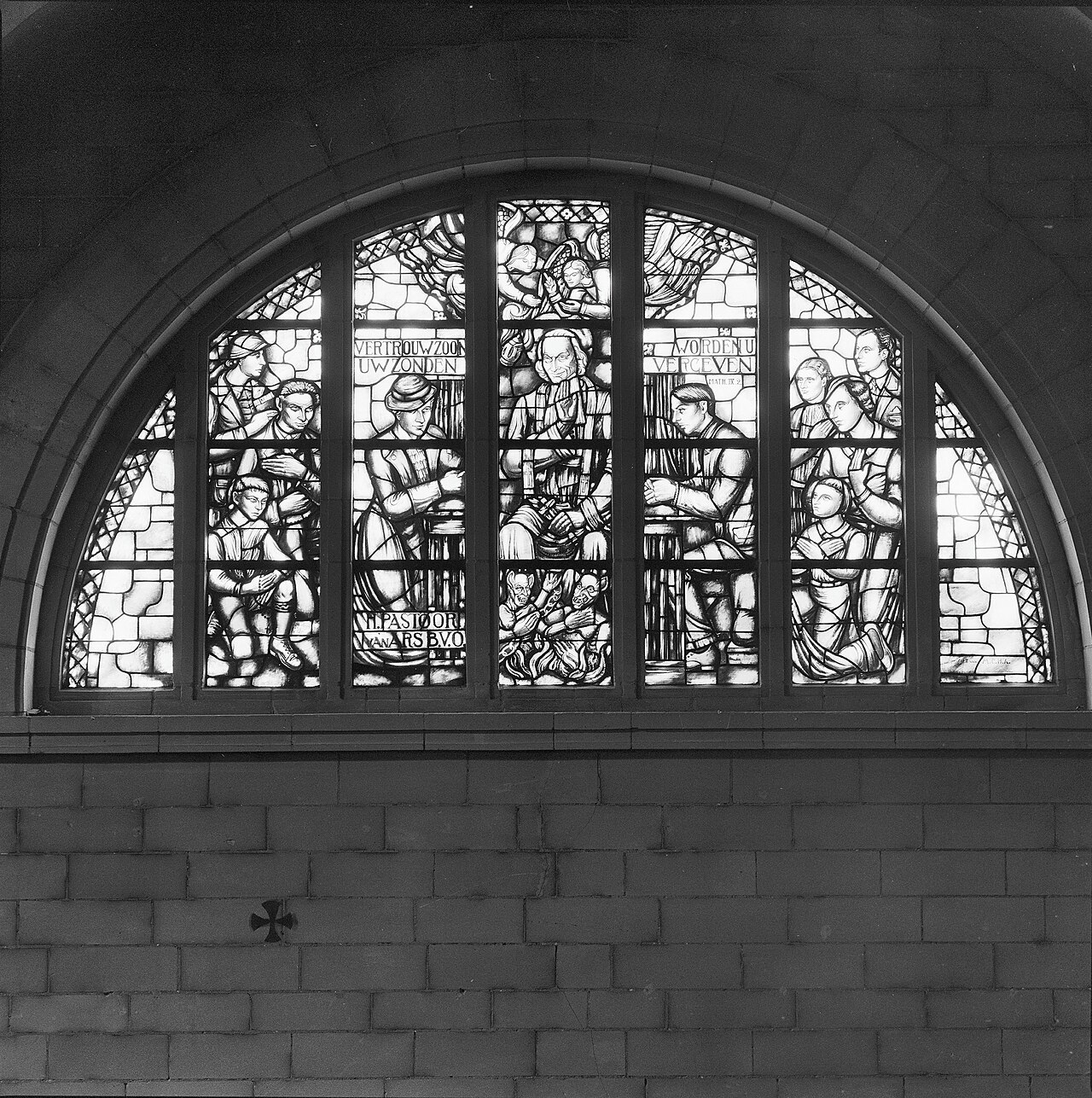
In other countries, the custom is different still. St John Vianney, the patron saint of parish priests, served the village of Ars in France from 1818 to 1859. His parishioners never called him “Father”. In French a parish priest was, and still is, addressed as “Monsieur le Curé”, and Vianney is remembered across the world as “the Curé of Ars”.
The older English custom can be seen in the Elizabethan martyrs. The Jesuit St Edmund Campion, executed at Tyburn on 1 December 1581, was called “Father Campion” because he was a member of a religious order, the Society of Jesus. A secular priest of the same period would more often have been called “Mr”. The title has varied over time and place, which shows it is not a matter of doctrine.
6. The objection deserves respect
The objection to calling priests “Father” deserves respect. Jesus’s words are plain, and religious titles can and do breed arrogance. Catholics should hear Matthew 23 as addressed to them.
In the same passage, Jesus gave the principle behind his words: “He that is the greatest among you shall be your servant. And whosoever shall exalt himself shall be humbled: and he that shall humble himself shall be exalted” (Matthew 23:11-12). Any priest who enjoys the title “Father” as a mark of superiority is breaking the spirit of Jesus’s command, whatever the word.
Some Christians have taken Jesus’s words very seriously. In the 1650s, George Fox and the first Quakers in England refused all honorific titles, such as “Your Honour”, “My Lord” or even “Mr”, and would not take off their hats to anyone, citing Scripture. They were often imprisoned for it. Their witness was a real protest against pride and social hierarchy.
The Catholic Church has itself recognised the danger. On 20 August 2018, after new revelations of sexual abuse by clergy, Pope Francis wrote a Letter to the People of God. In it he named “clericalism”, an attitude that treats priests as a superior caste above the people they serve, as a root of the abuse crisis. He wrote that clericalism “not only nullifies the character of Christians, but also tends to diminish and undervalue the baptismal grace” of the whole people of God. Titles can feed clericalism; Catholics should be on guard.
7. A strictly literal reading proves too much
Read with strict literalism, Matthew 23 would forbid much more than calling priests “Father”. It would also forbid calling anyone “teacher” or “doctor”, and even what a child calls his own father.
In the very same passage Jesus also said, “be not you called Rabbi [teacher]… Neither be ye called masters” (Matthew 23:8, 10). Yet St Paul calls himself “a teacher of the Gentiles” (1 Timothy 2:7), and lists “teachers” among the gifts Christ gave the Church (Ephesians 4:11). Christians everywhere call schoolteachers “teacher” and physicians “doctor” (from the Latin for “teacher”). Few would say they are disobeying Jesus.
There is a cautionary tale from the early Church about reading Jesus’s sayings with wooden literalism. According to the historian Eusebius, the brilliant young Origen of Alexandria, around 206, took literally Jesus’s saying about those who “made themselves eunuchs for the kingdom of heaven” (Matthew 19:12), and castrated himself. Eusebius treats it as an act of youthful zeal and immature judgement (Church History 6.8). Jesus’s sayings must be read as he meant them.
Protestants themselves have used the title “Father” for respected ministers. Edward Thompson Taylor, a Methodist preacher who ran the Seamen’s Bethel in Boston and ministered to sailors for decades until his death in 1871, was known across the city as “Father Taylor”. Herman Melville modelled the preacher Father Mapple in Moby-Dick partly on him. Nobody thought it unbiblical.
8. A duty of care, which some have betrayed
The title “Father” names a duty of care. Priests who betray that duty do grave harm, and Catholics must be honest about it.
The prophet Ezekiel denounced the shepherds of Israel who failed their flock: “Woe to the shepherds of Israel, that fed themselves: should not the flocks be fed by the shepherds?… The weak you have not strengthened, and that which was sick you have not healed” (Ezekiel 34:2-4). God declared he would take his flock from such shepherds and shepherd them himself.
In the United States, an independent study commissioned by the Catholic bishops and carried out by the John Jay College of Criminal Justice in New York found in 2004 that 4,392 priests had been accused of sexually abusing minors between 1950 and 2002, about four per cent of priests who served in that period. Similar revelations have followed in many countries. For victims, the title “Father” became associated with betrayal. The Church has had to face this with repentance and reform.
Yet the title also calls to mind priests who lived it heroically. St Damien De Veuster, a Belgian priest, volunteered in 1873 to serve the leprosy colony on the Hawaiian island of Molokai, where people with the disease were exiled. He lived among them as their father, building houses, a church, an orphanage and coffins, and burying the dead. In 1884 he discovered that he had caught leprosy himself. He began one sermon, “We lepers”. He died on Molokai in 1889.
9. Mother, Brother and Sister too
The same family language gives Catholics other titles too: “Mother” for the superior of a convent, “Brother” for a monk or friar, “Sister” for a nun. Non-Catholics are welcome to use these titles as a simple courtesy, without implying any belief.
Jesus himself used family language for his followers. When told that his mother and brothers were outside looking for him, he looked at those sitting around him and said, “Behold my mother and my brethren. For whosoever shall do the will of God, he is my brother, and my sister, and mother” (Mark 3:34-35). The Church is a family.
The desert tradition included women too. Amma Syncletica of Alexandria, a fourth-century woman who gave away her wealth and lived as a hermit, was called “mother” by the women who came to her for guidance. Her sayings were preserved alongside those of the desert fathers, and are still read today.
Non-Catholics often use these titles out of courtesy. On 23 September 2015, welcoming Pope Francis to the White House, President Barack Obama, a Protestant, began his speech: “Holy Father, on behalf of Michelle and myself, welcome to the White House.” Using the title did not make him a Catholic; it was simply the respectful way to address his guest.
10. Behind the title, an offer
Behind the title “Father” is an offer: a priest is there for anyone, Catholic or not, who needs help.
St Paul described his ministry in Thessalonica in exactly these terms: “as you know in what manner, entreating and comforting you (as a father doth his children), we testified to every one of you, that you would walk worthy of God” (1 Thessalonians 2:11-12).
On 11 September 2001, Father Mychal Judge, a Franciscan friar and chaplain to the New York City Fire Department, rushed to the burning World Trade Center with the firefighters. He was praying in the lobby of the North Tower when debris from the collapse of the South Tower killed him. Firefighters carried his body out. He was the first recorded victim of the attacks, listed as Victim 0001. A photograph of his body being carried from the ruins became one of the defining images of that day.
Fifty years earlier, Father Emil Kapaun, a Catholic chaplain in the US Army, was captured with his men during the Korean War. In a brutal prison camp at Pyoktong, he stole food for starving prisoners, nursed the sick, washed their clothes, and prayed with soldiers of every faith and none. He died in the camp on 23 May 1951. In 2013 he was posthumously awarded the Medal of Honor, America’s highest military decoration. His fellow prisoners, Catholic, Protestant and Jewish, remembered him simply as “Father”.
Frequently asked questions
Do I have to call a priest “Father” if I’m not Catholic? No. It is a courtesy, not an obligation. “Father” is customary, but “Reverend”, “Mr” or the priest’s first name may be used where appropriate.
Why do Catholics call the Pope “Holy Father”? It is an honorific title, recognising his role as spiritual father to the Catholic Church, not a claim that he is holier than others. See Can the Pope Wear Ordinary Clothes?
Do Orthodox and Anglicans call priests “Father”? Many do. Orthodox priests are commonly called “Father”, and many Anglican priests too.
Can I talk to a priest if I’m not Catholic? Yes. See Can an Atheist Ask a Priest for a Serious Conversation?
Sources and further reading
- The Bible: 2 Kings 2:9-12; Ezekiel 34:1-10; Matthew 19:12; 23:1-12; Mark 3:31-35; Luke 16:24; John 8:56; 1 Corinthians 4:14-15; Ephesians 3:14-15; 4:11; 1 Thessalonians 2:9-12; 1 Timothy 2:7; 2 Timothy 1:2.
- Second Vatican Council, Lumen Gentium 28; Presbyterorum Ordinis 9.
- St Jerome, Commentary on Matthew (398), on 23:9; Martyrdom of Polycarp 12; Sayings of the Desert Fathers; Rule of St Benedict, ch. 2; St Cyprian, Letter 30; Eusebius, Church History 6.8.
- John Paul II, Iuvenum Patris (1988); Francis, Letter to the People of God (20 August 2018).
- Henry Edward Manning, The Eternal Priesthood (1883).
- John Jay College of Criminal Justice, The Nature and Scope of Sexual Abuse of Minors by Catholic Priests and Deacons in the United States, 1950-2002 (2004).
- Remarks by President Obama at the Arrival Ceremony for Pope Francis (23 September 2015).
- Roy Wenzl and Travis Heying, The Miracle of Father Kapaun (2013).
