
Do We Need a New Civil Marriage Licence for a Catholic Convalidation?
Planning a Catholic convalidation? Learn what civil marriage documents, Church records and parish checks you may need before setting a date.
If you are already legally married, a Catholic convalidation ordinarily does not mean obtaining a second civil marriage licence simply to marry the same spouse again. But civil requirements vary, and your parish must check your particular situation. The existing civil certificate, baptismal records, previous marriages and the reason the Church marriage needs to be regularised all matter. Ask the parish before applying for documents or booking a ceremony.
Many couples describe their intention as “getting our marriage blessed.” That phrase expresses a good desire, but it can hide an important distinction. A convalidation is not merely a prayer added to a marriage presumed already valid in the Church. It addresses a defect that prevented a valid marriage from coming into existence.
There is no need to arrive at the parish with every canonical term mastered. Start with the history of your marriage and a willingness to let the Church help you understand the next step.
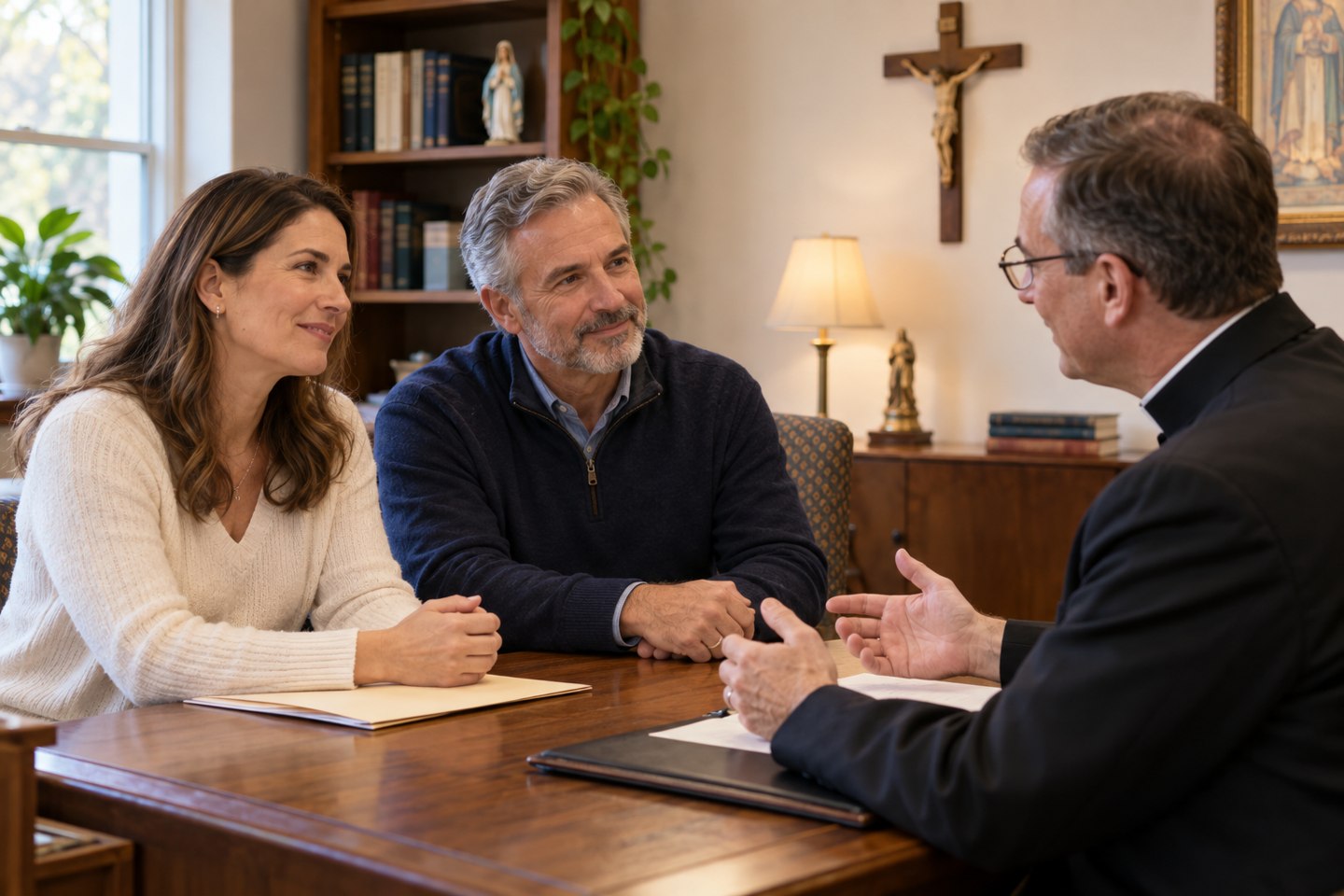
Civil marriage and canonical marriage answer different questions
Civil authorities determine a marriage’s legal recognition under the applicable country’s law. The Church considers whether the marriage was validly entered according to the requirements that apply to the spouses.
These questions overlap, but they are not identical. A civil certificate is an important document; it does not by itself establish that all canonical requirements were met. Conversely, resolving an issue in Church law is not permission to ignore registration, immigration, inheritance or other civil obligations.
The Code of Canon Law, especially canons 1055–1060 and 1071, explains the Church’s understanding of marriage and its attention to civil recognition. This article principally concerns Latin Catholic practice. Eastern Catholic couples should ask their own parish about the rules applicable to their Church.
Not every marriage outside a Catholic church needs convalidation
The building alone does not decide validity. A Catholic marriage may have been celebrated outside a Catholic church with the necessary dispensation. Two non-Catholics may have entered a valid marriage before either began exploring Catholicism. Their marriage is not automatically invalid merely because a Catholic priest did not officiate.
On the other hand, a Catholic normally bound to canonical form who married civilly without the necessary dispensation may need the situation regularised. Previous marriages can introduce a different and sometimes more complex question.
Do not diagnose your marriage from a checklist on the internet. Tell the parish who was Catholic at the time, where and when the wedding occurred, who officiated, whether permissions were obtained and whether either spouse had been married before.
What is simple convalidation?
In simple convalidation, the relevant obstacle is resolved and the required new act of marital consent is given according to the applicable law. The spouses are not merely staging a photograph opportunity or renewing feelings about a past day.
The bishops’ marriage resource For Your Marriage explains why this new consent matters. A couple can treasure their civil wedding and years together while recognising the distinct sacramental step now being taken.
Preparation is therefore more than paperwork. It can include reflection on fidelity, permanence, openness to children, communication and the responsibilities already present in family life. The parish should adapt preparation to the couple’s actual circumstances rather than assume that every couple is starting from the same place.
Is radical sanation the same thing?
No. A radical sanation is a different canonical remedy, granted by competent authority under specific conditions, which can validate a marriage without a new exchange of consent. Its availability depends on the facts, including the persistence of consent and whether the relevant impediment can be dispensed.
You do not choose this route simply because it sounds easier. Mention it to the priest if there is a particular obstacle to a new ceremony, and allow the parish and chancery to determine what is possible. The legal distinctions are set out in canons 1161–1165.
Neither route means the Church can set aside an existing valid marriage bond to make a new wedding convenient. Questions about prior bonds must be resolved through the appropriate process.
What should we bring to the first appointment?
Ask for the parish’s list before ordering documents. Commonly useful records include your civil marriage certificate, baptismal certificates where applicable, any previous Church permissions and records concerning earlier marriages.
If either spouse was previously married, disclose every previous union, including civil marriages and marriages before becoming Catholic. Bring relevant divorce decrees, death certificates or Church tribunal decisions when requested. A civil divorce alone does not settle freedom to marry in the Church.
Parishes often request a recently issued Catholic baptismal certificate because it may contain later sacramental notations. Do not assume that a childhood photocopy will meet every requirement. Equally, do not pay to obtain multiple documents without first confirming what is needed.
Our guide to becoming Catholic while waiting for an annulment explains why a prior-marriage question deserves its own careful attention.
An original illustration: two official records
Imagine a couple who own a house. The municipal record shows who holds the property, while a separate building file records whether a later extension received the required approval. Producing the title deed does not answer every question in the building file. Correcting the building file does not require buying the house from themselves again.
Marriage is, of course, a personal covenant rather than a construction project. This original illustration makes only one point: different records can answer different questions about the same lived reality.
A civil certificate and a canonical marriage record should therefore be considered together without treating either as a substitute for the other. Good administration serves the couple by clarifying their situation rather than leaving them to guess.
Do we need a second licence?
In the ordinary situation of spouses already civilly married to each other, the parish often records the existing civil marriage and handles the ecclesiastical celebration without another civil licence. That is the kind of situation addressed in the Catholic Review explanation of convalidation paperwork.
But that source discusses a particular civil setting, not a rule binding every registry worldwide. The answer may differ where the original marriage was abroad, recognition is disputed, documents are missing or local law imposes a particular registration process.
Ask the parish: “We are already civilly married in this jurisdiction. Do you need our existing certificate, a new licence, registration after the ceremony or another document?” If the parish is unsure about a civil-law question, obtain advice from the competent registry or a qualified local professional.
For readers in Malaysia or elsewhere outside the United States, this distinction is especially important: do not import an American paperwork answer without checking local requirements.
What about Communion while we prepare?
Do not infer a personal sacramental ruling from a general article. Explain your living situation, marital history and desire to return to the sacraments to the priest. Ask what steps are needed and how to live faithfully during preparation.
You can attend Mass, pray, seek formation and remain connected with the parish while the situation is being addressed. A delay in completing paperwork should not be interpreted as a command to disappear from Church life.
At the same time, avoid treating a booked convalidation date as if it automatically resolved every current question. Our article on sacramental eligibility explains why individual circumstances matter.
Questions couples often ask
Must we have a large wedding?
No general requirement makes an expensive celebration necessary. Discuss the appropriate rite, witnesses and parish arrangements. Your freedom to make a sincere commitment matters more than decorations or a reception.
What if one spouse is not Catholic?
Tell the priest whether that spouse is baptised and in which community. Different permissions or dispensations may be relevant. The non-Catholic spouse should be treated with respect and should not be pressured into a false profession of faith.
Does asking for help mean our years together counted for nothing?
No. The Church can recognise your responsibilities, sacrifices, affection and care for your children while also addressing a genuine canonical defect. Seeking convalidation is a forward-looking act of truth and commitment, not a demand to despise your shared history.
What if the parish has not replied?
Follow up politely, confirm that the request reached the right person and ask for a marriage-preparation appointment. If repeated efforts fail, the diocesan marriage or chancery office can identify the appropriate contact. Keep copies of correspondence without turning delay into a public accusation.
The best first question
Instead of beginning with “Where do we buy another licence?”, begin with “What is our actual canonical situation, and which documents do you need to establish it?” That question helps the parish guide you accurately.
Lord, bless our desire to live our marriage faithfully. Give us honesty in preparation, patience with the process and generosity towards one another. Amen.
Sources and further reading
- Code of Canon Law: Marriage, canons 1055–1165
- USCCB For Your Marriage: Convalidation
- Catholic Review: Civil marriage licence and convalidation
Sources checked 26 September 2026. Original illustrative stories are teaching aids, not reported events or quotations from Scripture. This article offers general formation; personal sacramental, legal and health questions require the appropriate qualified adviser.
