
Why Can’t Catholic Priests Marry? Celibacy and Its Exceptions
Priestly celibacy is a Church law, not a doctrine, and there are thousands of married Catholic priests. Here is the history, the reasons, the exceptions, the criticisms, and the debate today.
Many people assume that celibacy is a Catholic dogma: that the Church teaches priests cannot marry because sex or marriage is somehow incompatible with holiness. Others think the rule is unbiblical, unnatural, or the cause of the abuse scandals, or that it explains why there are so few priests. The truth is more interesting, and in some ways surprising. Celibacy is a law of the Latin Church, not a doctrine; there are thousands of married Catholic priests today; and the Church values celibacy not because it looks down on marriage, but because it sees in it a particular way of following Christ. This article explains what the rule is, its exceptions, the reasons for it, its long and complicated history, the criticisms made of it, the Church’s own failures, and the debate today.
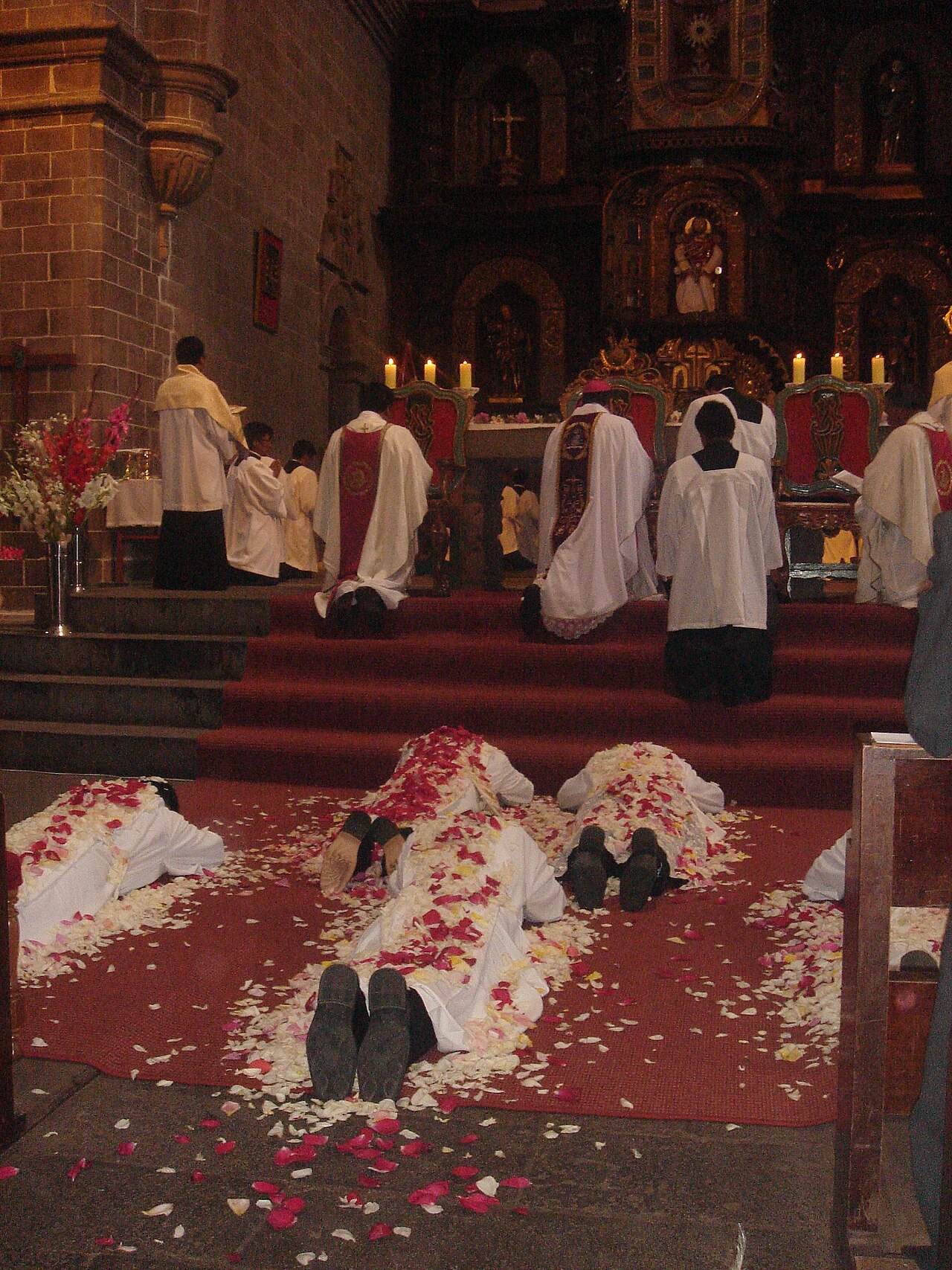
1. A Church law, not a doctrine
Most Catholic priests in the Western Church promise to remain celibate. But this is a Church law for the Latin Church, a discipline which could in principle be changed, not a doctrine of faith.
The New Testament is clear that the first leader of the apostles was married. Mark tells us that when Jesus entered the house of Simon Peter at Capernaum, “Simon’s wife’s mother lay in a fit of a fever.” Jesus took her by the hand and raised her up, and the fever left her (Mark 1:30-31). If Peter had a mother-in-law, he had a wife.
The Second Vatican Council stated plainly in 1965 that celibacy “is not demanded by the very nature of the priesthood, as is apparent from the practice of the early Church and from the traditions of the Eastern Churches”. In the same breath, it explained why the Church nevertheless values it highly and confirmed the law for the Latin Church (Presbyterorum Ordinis 16, 7 December 1965).
The current law of the Latin Church states that clerics are obliged to observe “perfect and perpetual continence for the sake of the kingdom of heaven”, and therefore are bound to celibacy, which it calls “a special gift of God by which sacred ministers can adhere more easily to Christ with an undivided heart” (Code of Canon Law, canon 277). Note the language: a gift and a calling, not a statement that marriage is inferior.
2. Thousands of married Catholic priests
There are thousands of married Catholic priests in the world today. Most are in the Eastern Catholic Churches, which, like the Orthodox, have always ordained married men. Others are former Protestant clergy who became Catholic.
In Ukraine, Lebanon, Romania, India and elsewhere, many parish priests of the Eastern Catholic Churches are married with families. For many years, however, Rome forbade married Eastern Catholic priests to minister in North America and other “Latin” territories, to avoid confusing Latin Catholics. On 14 June 2014, with Pope Francis’s approval, the Vatican lifted this ban, allowing Eastern Catholic Churches to ordain and send married priests to serve their people anywhere in the world (Pontificia Praecepta de Clero Uxorato Orientali).
Married Protestant ministers who become Catholic may also, with a special dispensation, be ordained Catholic priests. The first modern case was Rudolf Goethe, a married former Lutheran pastor in Germany who had become Catholic. With the permission of Pope Pius XII, he was ordained a Catholic priest in Mainz on 22 December 1951. Since then, hundreds of married former Lutheran, Anglican and Episcopalian clergy have been ordained.
In 2009 Pope Benedict XVI created “personal ordinariates” for groups of Anglicans entering the Catholic Church (Anglicanorum Coetibus, 4 November 2009). In these ordinariates, married former Anglican clergy may be ordained Catholic priests and continue to live with their wives and children while serving Catholic parishes.
3. Why celibacy? Following Jesus
If celibacy is not required by the nature of the priesthood, why does the Latin Church ask it of most of its priests? The main reason is that Jesus himself lived it and commended it “for the sake of the kingdom”.
When Jesus taught about marriage, his disciples said that if marriage was so demanding, perhaps it was better not to marry. Jesus answered: “All men take not this word, but they to whom it is given… there are eunuchs, who have made themselves eunuchs for the kingdom of heaven. He that can take, let him take it” (Matthew 19:11-12). He was speaking of a voluntary renunciation of marriage for the sake of God’s kingdom, a gift not given to everyone.
St Paul, himself unmarried, wrote: “I would that all men were even as myself: but every one hath his proper gift from God; one after this manner, and another after that.” He explained that “he that is without a wife, is solicitous for the things that belong to the Lord, how he may please God. But he that is with a wife, is solicitous for the things of the world, how he may please his wife: and he is divided” (1 Corinthians 7:7, 32-33). Paul did not condemn marriage, but he saw celibacy as a way of giving undivided attention to the Lord.
After the Second Vatican Council, many people expected celibacy to be made optional. In 1967 Pope Paul VI responded with a whole encyclical, Sacerdotalis Caelibatus (24 June 1967), restating the reasons for celibacy at length. He described it as a sign of a priest’s total dedication to Christ and to the people he serves, and as a sign of the world to come.
4. Many early priests were married
The early Church did not require celibacy of its clergy. Many early priests and bishops were married. But Western councils soon began to ask married clergy to live in continence, abstaining from sexual relations with their wives after ordination.
St Paul’s First Letter to Timothy assumes that a bishop will normally be a married man. He must be “the husband of one wife… one that ruleth well his own house, having his children in subjection with all chastity” (1 Timothy 3:2-4). Most scholars read “husband of one wife” as meaning that a bishop should not have remarried after his wife’s death.
Around 305, a council of bishops at Elvira in Spain issued one of the earliest laws on clerical continence. Its canon 33 required bishops, priests and deacons to abstain from relations with their wives and not to beget children, on pain of being removed from the clergy. The wives remained wives; the expectation was continence.
Even popes could have been married before ordination. Pope Hormisdas, who reigned from 514 to 523, had been married before he was ordained. His son Silverius later became pope himself, from 536 to 537. Silverius was deposed and exiled by the Byzantine general Belisarius and died in exile, and is honoured as a martyr.
5. East and West go different ways
Over the centuries, the Eastern and Western Churches developed different rules. The Western rule of celibacy was given its definitive legal form only in the twelfth century, although laws requiring continence of the clergy go back to the fourth.
In 692, a council of Eastern bishops in the domed hall (trullos) of the imperial palace in Constantinople, called the Council in Trullo, set out the Eastern discipline. It allowed married men to be ordained deacons and priests and to continue living with their wives, though bishops had to be celibate. Its canon 13 explicitly criticised the Roman custom of requiring continence from married priests. This remains the Orthodox and Eastern Catholic practice.
In the West, the rule was often ignored in practice, and in the eleventh century the reforming popes set out to enforce it. In 1074, at a synod in Rome during Lent, Pope Gregory VII decreed that married priests must not celebrate Mass, and that the laity should not attend Masses celebrated by them. Clergy in Germany and France protested angrily; some bishops who tried to announce the decree were nearly lynched by their own priests.
The decisive step came in 1139. The Second Lateran Council declared that marriages attempted by priests, deacons and subdeacons were not merely unlawful but invalid: they were not marriages at all (canons 6-7). From then on, celibacy was the firm law of the Latin Church.
6. Undivided availability, not contempt for marriage
The Church values celibacy as a sign of undivided availability to God and to people, not as contempt for marriage. In fact, the Church has always condemned those who despised marriage.
In the Old Testament, God told the prophet Jeremiah not to marry: “Thou shalt not take thee a wife, neither shalt thou have sons and daughters in this place.” Jeremiah’s single life was itself a prophetic sign to the people of Judah of the disaster that was coming (Jeremiah 16:1-4). Celibacy can speak.
In the fourth century, some ascetic Christians in Asia Minor began teaching that marriage was sinful, and refused to receive Communion from married priests. Around 340, a council at Gangra condemned them. Its fourth canon declared anathema anyone who maintained that it was wrong to receive Communion from a married priest. The Church defended married clergy against those who despised them.
Celibacy can free a priest to serve his people with total devotion. Blessed Stanley Rother, a farm boy from Oklahoma, served for thirteen years as a priest among the Tz’utujil Maya people of Santiago Atitlán in Guatemala, learning their language and working alongside them. During Guatemala’s civil war, his name appeared on a death list, and he briefly returned to the United States. But he said, “a shepherd cannot run at the first sign of danger”, and he went back to his people. On 28 July 1981 gunmen broke into his rectory and murdered him. He was beatified in 2017, the first US-born martyr to be beatified.
7. The critics’ case
Critics, including some Catholics, object that mandatory celibacy goes beyond what Scripture requires, that it is a heavy burden, and that it deprives communities of priests. Some Catholic bishops have asked for exceptions.
St Paul himself pointed out that the apostles were married: “Have we not power to carry about a woman, a sister, as well as the rest of the apostles, and the brethren of the Lord, and Cephas?” (1 Corinthians 9:5). “Cephas” is Peter. If the apostles could travel with their wives, critics ask, why can’t priests today marry?
Martin Luther argued in 1521, in his treatise On Monastic Vows, that vows of celibacy had no warrant in Scripture and bound consciences unjustly. On 13 June 1525, Luther, a former Augustinian friar, married Katharina von Bora, a former nun who, according to the traditional story, had escaped from her convent hidden in a fish wagon. Their marriage became a model for Protestant clergy families.
The question has also been raised within the Catholic Church. In October 2019, at the Synod of Bishops for the Amazon, bishops from the region, where many communities see a priest only a few times a year, voted 128 to 41 to propose that the Church consider ordaining married permanent deacons as priests in remote areas (Final Document, paragraph 111). Pope Francis, in his response to the synod, did not adopt the proposal.
8. Does celibacy cause abuse?
Many people believe that celibacy causes priests to sexually abuse children. The Catholic Church replies that celibacy is freely promised as a way of following Christ, and that research has not shown it to be the cause of abuse.
Catholics see celibacy as a sign of the world to come. When the Sadducees asked Jesus a trick question about marriage in the resurrection, he answered: “in the resurrection they shall neither marry nor be married; but shall be as the angels of God in heaven” (Matthew 22:30). Celibate priests, Catholics believe, anticipate in their lives the future in which God will be all in all.
In 2011, researchers at the John Jay College of Criminal Justice in New York, commissioned by the American bishops, published a major report, The Causes and Context of Sexual Abuse of Minors by Catholic Priests in the United States, 1950-2010. They concluded that celibacy could not explain the abuse crisis, because celibacy was a constant throughout the period, while the incidence of abuse rose sharply in the 1960s and 1970s and then fell. They pointed to other factors, including poor formation and the social upheaval of the period.
Not everyone agrees. In December 2017, Australia’s Royal Commission into Institutional Responses to Child Sexual Abuse, after a five-year inquiry, took a different view. It concluded that compulsory celibacy was a risk factor for abuse in some circumstances, and recommended that the Australian bishops ask the Holy See to consider introducing voluntary celibacy for diocesan clergy (Final Report, recommendation 16.18). The Church has not accepted the recommendation, but the debate is a real one.
9. The rule has often been broken
The rule of celibacy has often been badly kept, and the Church’s own history includes scandalous failures.
The Bible itself records priests who abused their position. The sons of Eli, priests at the sanctuary of Shiloh, “lay with the women that waited at the door of the tabernacle” and took for themselves the best of the people’s offerings. God judged them severely (1 Samuel 2:12-25).
The most notorious case in Catholic history is Rodrigo Borgia. As a cardinal, he fathered several children, including Cesare and Lucrezia Borgia, and after he became Pope Alexander VI in 1492, he openly advanced their careers, making Cesare a cardinal and arranging political marriages for Lucrezia. His papacy, from 1492 to 1503, became a byword for corruption and helped fuel the anger that led to the Reformation.
The problem has not disappeared. In February 2019, after an Irishman named Vincent Doyle, himself the son of a priest, had campaigned for years on behalf of children fathered by priests, the Vatican confirmed to the New York Times that it has internal guidelines for priests who father children. The guidelines, it said, focus on the well-being of the child, and generally expect the priest to leave the priesthood to take responsibility as a father.
10. Married deacons, possible change, and friendship
Married men already serve as Catholic deacons; the law of celibacy could, in principle, change; and meanwhile, celibate priests need friendship and prayer.
In 1967 Pope Paul VI restored the “permanent diaconate”, deacons who are not on the way to the priesthood, and opened it to married men over thirty-five (Sacrum Diaconatus Ordinem, 18 June 1967). The first permanent deacons in the modern Church were ordained in Cologne Cathedral on 28 April 1968. Today there are around fifty thousand permanent deacons worldwide, most of them married, preaching, baptising, witnessing marriages and conducting funerals.
Pope Francis has made clear that celibacy is a discipline, not a doctrine, but that he did not intend to change it. On 27 January 2019, on his flight back from World Youth Day in Panama, he told reporters that he would not make celibacy optional, quoting St Paul VI: “I would rather give my life than change the law of celibacy.” He added that some exceptions might be considered for very remote places, but that was a matter for theologians to study.
Celibate priests are not meant to live alone. Jesus himself, though unmarried, relied on the friendship and hospitality of a family in Bethany: Martha, her sister Mary and their brother Lazarus. Luke describes Jesus visiting their home, and John tells us simply that “Jesus loved Martha, and her sister Mary, and Lazarus” (Luke 10:38-42; John 11:5). Catholics can support their priests by friendship, hospitality and prayer. See also Do Celibate Priests Find Weddings Painful?
Frequently asked questions
Can a Catholic priest ever marry? A Latin-rite priest cannot marry after ordination. A married man may be ordained in the Eastern Catholic Churches, or as a former Protestant minister with a dispensation.
Is celibacy a vow? Diocesan priests make a promise of celibacy; religious priests (such as Franciscans or Jesuits) make a vow of chastity.
Could the Church change the rule? Yes, in principle, because it is a Church discipline, not a doctrine. Recent popes have chosen to keep it.
Are Orthodox priests allowed to marry? Married men may be ordained Orthodox priests, but priests may not marry after ordination, and bishops are celibate. See Catholic vs Orthodox.
Sources and further reading
- The Bible: 1 Samuel 2:12-25; Jeremiah 16:1-4; Matthew 19:10-12; 22:23-30; Mark 1:29-31; Luke 10:38-42; John 11:1-5; 1 Corinthians 7:7-8, 32-35; 9:5; 1 Timothy 3:1-5.
- Second Vatican Council, Presbyterorum Ordinis 16 (1965); Code of Canon Law (1983), canon 277.
- Paul VI, Sacerdotalis Caelibatus (1967) and Sacrum Diaconatus Ordinem (1967); Benedict XVI, Anglicanorum Coetibus (2009); Congregation for the Eastern Churches, Pontificia Praecepta de Clero Uxorato Orientali (2014).
- Councils of Elvira (c. 305), Gangra (c. 340), in Trullo (692), and Second Lateran (1139).
- Synod of Bishops for the Amazon, Final Document (2019), 111.
- John Jay College, The Causes and Context of Sexual Abuse of Minors by Catholic Priests in the United States, 1950-2010 (2011); Royal Commission into Institutional Responses to Child Sexual Abuse, Final Report (2017).
- Martin Luther, On Monastic Vows (1521).
- Christian Cochini, The Apostolic Origins of Priestly Celibacy (1990); Stefan Heid, Celibacy in the Early Church (2000).
