
Catholic vs Protestant: The Main Differences, Fairly Explained
An even-handed guide to what Catholics and Protestants share and where they differ: authority, the Bible, salvation, sacraments, the Church, saints, and how the divide is healing.
If you are dating someone from “the other side”, marrying across the divide, thinking about changing churches, or simply curious, you probably want an honest answer to a simple question: what actually is the difference between Catholics and Protestants? Most accounts you find online are written to score points for one side. This one tries to be fair. It sets out what Catholics and Protestants share, the five main areas where they differ, the strongest arguments each side makes, the painful history both carry, and how relations have changed in recent decades. One caution: “Protestant” covers a very wide range of churches, from Lutherans and Anglicans to Baptists and Pentecostals, so not every point applies equally to every Protestant.
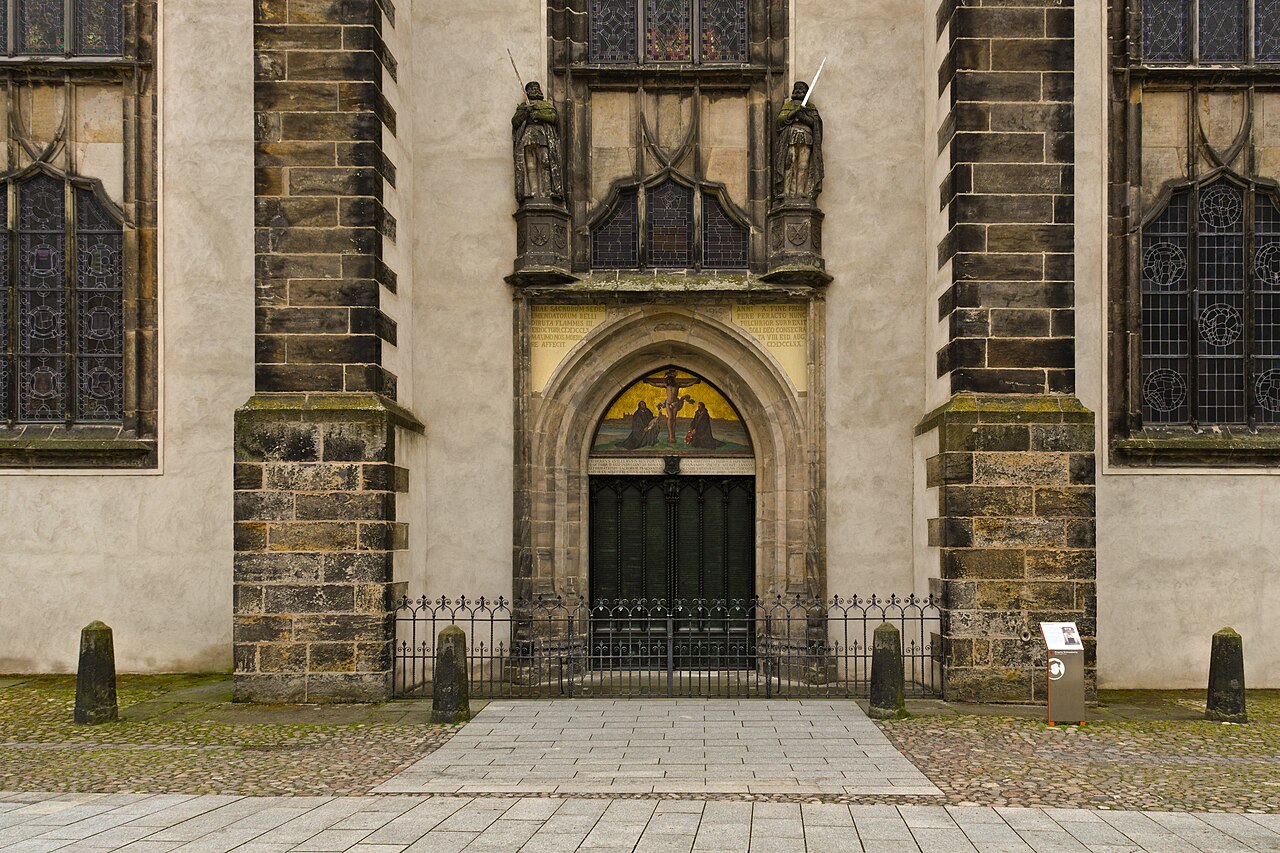
1. Far more in common than people think
Catholics and Protestants share the heart of Christianity. Both believe in one God in three Persons, Father, Son and Holy Spirit. Both believe that Jesus Christ is true God and true man, that he died for our sins and rose bodily from the dead, and that he will come again. Both read the same New Testament and pray the same Our Father.
St Paul described what binds Christians together in words both sides cherish: “one body and one Spirit… One Lord, one faith, one baptism. One God and Father of all” (Ephesians 4:4-6). Catholics recognise Protestant baptisms as true Christian baptisms, and most Protestant churches recognise Catholic ones.
Both also profess the Nicene Creed, drawn up by the councils of Nicaea in 325 and Constantinople in 381, more than a thousand years before the Reformation. Lutherans, Anglicans, Methodists and Catholics recite it in worship; many Baptist and evangelical churches hold the same faith even if they do not recite it.
On 31 October 2016, Pope Francis travelled to Lund Cathedral in Sweden, where the Lutheran World Federation was founded, for a joint commemoration of the Reformation’s 500th anniversary. Catholic and Lutheran leaders gave thanks together for the spiritual gifts of the Reformation, asked forgiveness for the wounds of division, and committed themselves to continued dialogue. A generation earlier, such a service would have been unthinkable.
2. Authority: Scripture alone, or Scripture and Tradition?
The deepest difference is about authority: how do we know what God has revealed?
Most Protestants hold to sola scriptura, “Scripture alone”. This does not mean they ignore tradition or the creeds, but that Scripture is the final authority over everything else. The principle was dramatically expressed by Martin Luther in April 1521 before the Emperor Charles V at the Diet of Worms. Asked to recant his writings, he refused unless he was convinced “by the testimony of Scripture or by clear reason”, declaring that his conscience was “captive to the Word of God”.
Catholics hold that God’s revelation comes to us through Scripture and Sacred Tradition together, both handed down from the apostles, and that the bishops in communion with the Pope have the task of interpreting it authentically. They point out that St Paul himself told the Thessalonians to “hold the traditions, which you have learned, whether by word, or by our epistle” (2 Thessalonians 2:15). Not everything the apostles taught was written down, and the Church existed and taught before the New Testament was complete.
Catholics also insist that the Church’s teaching office is not a rival to Scripture. The Second Vatican Council taught that the Magisterium “is not above the word of God, but serves it, teaching only what has been handed on” (Dei Verbum 10, 1965). The disagreement is not about whether Scripture is God’s word, which both affirm, but about who interprets it with authority when Christians disagree. Our article on why Catholics don’t go by the Bible alone explores this further.
3. Different Bibles: 73 books or 66?
A practical difference that surprises many people is that Catholic and Protestant Bibles do not contain the same number of books. Catholic Bibles have seventy-three, Protestant Bibles sixty-six. The difference lies in the Old Testament: seven books (Tobit, Judith, 1 and 2 Maccabees, Wisdom, Sirach and Baruch) plus some extra chapters of Esther and Daniel. Catholics call them “deuterocanonical”; Protestants usually call them “the Apocrypha”.
These books were part of the Greek translation of the Old Testament used by the early Christians. Regional councils in North Africa, attended by St Augustine, listed them as Scripture at Hippo in 393 and Carthage in 397, and the Council of Trent confirmed that list for Catholics in 1546.
The early Reformers did not simply throw them away. Luther’s complete German Bible of 1534 included them, placed between the Old and New Testaments under the heading “Apocrypha: books which are not held equal to Holy Scripture, but are useful and good to read.” The King James Bible of 1611 also included them.
The change came later. In 1826 the British and Foreign Bible Society, which printed and distributed Bibles across the world, resolved to stop funding editions that contained the Apocrypha. Within a generation most English-language Protestant Bibles had dropped them altogether, which is why many Protestants today have never seen them. For the full story, see our article on what Bible Catholics use.
4. Salvation: faith alone?
The question that sparked the Reformation was how a sinner is made right with God, what theologians call justification.
The Reformers taught that we are justified by grace alone, through faith alone (sola fide), because of Christ alone. They often quoted St Paul: “we account a man to be justified by faith, without the works of the law” (Romans 3:28). Catholics answered that they too believe salvation is entirely a gift of grace, but they quoted St James: “Do you see that by works a man is justified; and not by faith only?” (James 2:24). Both verses are in the Bible, and both sides have had to explain the other’s.
Catholics are sometimes accused of teaching salvation by works, but the Council of Trent, the very council that answered the Reformers, taught that “none of those things which precede justification, whether faith or works, merit the grace itself of justification” (Session 6, chapter 8, 1547). Where the sides really differed was over whether justification simply declares a sinner righteous, as many Reformers taught, or actually makes the sinner inwardly righteous through the Holy Spirit, as Catholics teach, and over whether good works done in grace have any reward.
In 1999 the Catholic Church and the Lutheran World Federation signed the Joint Declaration on the Doctrine of Justification in Augsburg, the city where the Lutheran confession had been presented in 1530. They agreed on the basic truth of justification by grace through faith and declared that the condemnations each side had pronounced in the sixteenth century did not apply to the other’s present teaching. The World Methodist Council joined the declaration in 2006, and the World Communion of Reformed Churches in 2017. Differences remain, but they are no longer seen as church-dividing on this point.
5. Sacraments and the Eucharist
Catholics celebrate seven sacraments: Baptism, Confirmation, the Eucharist, Penance (Confession), Anointing of the Sick, Holy Orders and Marriage. Most Protestants recognise two, Baptism and the Lord’s Supper, because these are the two clearly instituted by Christ in the Gospels, though Anglicans and Lutherans keep many of the other rites.
The greatest difference concerns the Eucharist. Catholics believe that at Mass the bread and wine truly become the body and blood of Christ, while keeping their outward appearances. St Paul warned the Corinthians that “whosoever shall eat this bread, or drink the chalice of the Lord unworthily, shall be guilty of the body and of the blood of the Lord” (1 Corinthians 11:27), language Catholics take literally.
Protestants themselves divided over this. In October 1529, Prince Philip of Hesse brought Luther and the Swiss reformer Huldrych Zwingli together at his castle in Marburg, hoping to unite the Reformation against the Emperor. They agreed on fourteen of fifteen articles. On the fifteenth, the Lord’s Supper, they could not agree. Luther believed Christ’s body was truly present; Zwingli held that the bread signified Christ’s body. According to tradition, Luther wrote “This is my body” in chalk on the table and refused to move from it. The two parted without full agreement.
The Catholic Church uses the word “transubstantiation” to describe the change. The Fourth Lateran Council used it in 1215, and the Council of Trent in 1551 said it was a “most apt” word for the change of the whole substance of bread into Christ’s body. See also our article Do Catholics Really Believe Jesus Is Present in the Eucharist?
6. The Church, priests and the Pope
Catholics and Protestants also understand the Church differently. Catholics believe that Christ founded a visible Church with a definite structure: bishops who succeed the apostles, priests who share in their ministry, and the Pope, the Bishop of Rome, as successor of Peter and visible head of the whole Church on earth.
Protestants stress the “priesthood of all believers”. St Peter wrote to ordinary Christians: “you are a chosen generation, a kingly priesthood, a holy nation” (1 Peter 2:9). Catholics affirm that verse too; the Second Vatican Council taught that all the baptised share in Christ’s priesthood (Lumen Gentium 10). But Catholics also believe in a distinct ordained priesthood. In 1520, in his Address to the Christian Nobility of the German Nation, Luther argued that all baptised Christians are equally priests and that ordination merely assigns someone to a particular office, removing the old distinction between clergy and laity.
The Pope is the most visible difference. Catholics believe that the Pope can, under strictly limited conditions, teach without error on matters of faith and morals. Many Protestants assume this means Catholics think the Pope is always right. In fact, the First Vatican Council defined papal infallibility in 1870 with tight conditions: the Pope must be teaching the whole Church, solemnly, as its supreme pastor, on faith or morals, intending to define the matter definitively. The only undisputed use of this power since 1870 was Pius XII’s definition of Mary’s Assumption in 1950. For more, see Why Did Jesus Call Peter a Rock?
7. Mary, the saints and the dead
Catholics ask Mary and the saints to pray for them, and they pray for the dead, believing that many who die in God’s friendship undergo a final purification called purgatory. Most Protestants honour the saints as examples of faith but do not ask for their prayers, and most do not pray for the dead.
Catholics find prayer for the dead in the Second Book of Maccabees, where Judas Maccabeus took up a collection and sent it to Jerusalem so that sacrifice could be offered for his soldiers who had fallen in battle, “that they might be loosed from sins” (2 Maccabees 12:42-46). Protestants do not accept the book as Scripture, so the passage does not settle the question for them.
The Church of England’s Thirty-Nine Articles of 1571 rejected “the Romish doctrine concerning purgatory, pardons, worshipping and adoration as well of images as of relics, and also invocation of saints” as a “fond thing vainly invented” (Article 22). Much of the Reformers’ anger was provoked by real abuses. In 1517 the Dominican preacher Johann Tetzel was raising money for the rebuilding of St Peter’s Basilica by preaching indulgences in a crude way that seemed to sell forgiveness, and it was this that drove Luther to write his theses. The Catholic Church later reformed the practice: in 1567 Pope St Pius V abolished all indulgences connected with any payment of money. See our articles Why Do Catholics Pray to Mary and the Saints? and Is Purgatory in the Bible?
8. Did Rome add to the Gospel?
The strongest Protestant objection is that the Catholic Church, over the centuries, added beliefs and practices to the simple Gospel of the New Testament, and that the Reformation was a return to the original faith.
Catholics reply that the Church has always had to settle new questions by meeting together and discerning the guidance of the Holy Spirit, as the apostles did. When a dispute arose over whether Gentile converts must be circumcised, the apostles and elders met in Jerusalem and sent a letter announcing that “it hath seemed good to the Holy Ghost and to us” (Acts 15:28). Catholics see later councils as continuing this pattern.
At the same time, Catholics can and should admit that the Church in the early sixteenth century badly needed reform. Remarkably, a pope said so at the time. In January 1523, Pope Adrian VI sent his envoy, Francesco Chieregati, to the imperial Diet at Nuremberg with instructions to confess openly that the troubles had begun with the sins of the clergy and of the papal court itself, and to promise reform. Adrian died that September before he could carry it out.
The most influential Catholic answer to the “additions” charge came from a man who began as a Protestant. John Henry Newman, a leading Anglican scholar at Oxford, set out to show that Rome had corrupted the early faith. In studying the question, he became convinced that later Catholic teaching had developed from early Christianity as an oak grows from an acorn, or an adult from a child, changing in form while remaining the same in identity. He published his Essay on the Development of Christian Doctrine in 1845, the year he became a Catholic.
9. A painful history on both sides
No fair account can ignore the fact that Catholics and Protestants have persecuted and killed one another. Both sides have had to repent before real conversation could begin.
Under the Catholic Queen Mary I of England, between 1555 and 1558, about 280 Protestants were burned at the stake for heresy, among them Thomas Cranmer, the former Archbishop of Canterbury who had compiled the Book of Common Prayer. Their deaths were recorded in John Foxe’s Book of Martyrs, which shaped English Protestant attitudes to Catholicism for centuries.
Under the Protestant Queen Elizabeth I, Catholic priests were hunted as traitors, and from 1585 a priest’s mere presence in England was high treason. The Jesuit priest St Edmund Campion, a brilliant Oxford scholar who had returned secretly to serve English Catholics, was captured, tortured on the rack, and on 1 December 1581 hanged, drawn and quartered at Tyburn in London. Scores of priests and lay Catholics died in the same way.
On 12 March 2000, during the Great Jubilee year, Pope St John Paul II led a “Day of Pardon” in St Peter’s Basilica. Among the sins for which he publicly asked God’s forgiveness were sins committed by Catholics against the unity of the body of Christ and acts of violence done in the service of truth. Many Protestant leaders have offered similar apologies for their own communities’ violence and hostility.
10. Real differences, shared faith
The differences between Catholics and Protestants are real, and it does nobody any favours to pretend otherwise. But they are differences among Christians who share a great deal, and in recent decades they have begun to pray, study and even die together.
On the night before his death, Jesus prayed for his disciples “that they all may be one” (John 17:21). In 1908, an American Episcopalian friar named Paul Wattson, who was himself working for reunion with Rome, began an “Octave of Prayer for Christian Unity” from 18 to 25 January. He became a Catholic the following year. Today the Week of Prayer for Christian Unity is prepared jointly by the Catholic Church and the World Council of Churches and is kept by Christians across the world.
Perhaps the most moving witness comes from Nazi Germany. In the port city of Lübeck, three young Catholic priests, Johannes Prassek, Eduard Müller and Hermann Lange, and a Lutheran pastor, Karl Friedrich Stellbrink, became friends and together spoke out against the Nazi regime. They were arrested, tried together and, on 10 November 1943, beheaded one after another in a Hamburg prison. Witnesses said their blood flowed together. When the three priests were beatified in Lübeck in 2011, the ceremony also honoured Pastor Stellbrink, and the four are remembered together as the Lübeck Martyrs.
Frequently asked questions
Is a Protestant marriage to a Catholic allowed? Yes, with the bishop’s permission. See our article on mixed marriages.
Can Protestants receive Communion at a Catholic Mass? Ordinarily no, because Communion expresses full unity of faith, though exceptions exist in grave need. See Which Sacraments Can I Receive If I’m Not Catholic?
Do Catholics think Protestants can be saved? Yes. The Catholic Church teaches that baptised Protestants are joined to Christ and that God’s grace works in their communities. See Do Catholics Believe Non-Catholics Can Go to Heaven?
Which is older? The Catholic Church traces itself to the apostles; Protestant churches began in the sixteenth century, though Protestants see themselves as recovering the faith of the apostles.
Sources and further reading
- The Bible: Ephesians 4:4-6; 2 Thessalonians 2:15; Romans 3:28; James 2:24; 1 Corinthians 11:23-29; 1 Peter 2:9; 2 Maccabees 12:42-46; Acts 15:6-29; John 17:20-23.
- Council of Trent, Session 4 (1546), Session 6 (1547), Session 13 (1551); Fourth Lateran Council (1215); First Vatican Council, Pastor Aeternus (1870); Pius XII, Munificentissimus Deus (1950).
- Second Vatican Council, Dei Verbum 10 and Lumen Gentium 10.
- Joint Declaration on the Doctrine of Justification (1999) and its later affirmations by Methodist (2006) and Reformed (2017) bodies.
- Martin Luther, To the Christian Nobility of the German Nation (1520); Luther Bible (1534); Thirty-Nine Articles (1571), Article 22.
- John Henry Newman, An Essay on the Development of Christian Doctrine (1845).
- John Foxe, Acts and Monuments (Book of Martyrs, 1563).
- Vatican and Lutheran World Federation, Joint Statement at Lund (31 October 2016); John Paul II, Universal Prayer, Day of Pardon (12 March 2000).
