
Catholic vs Orthodox: What Is the Difference, and How Close Are They?
Catholics and Orthodox share the same sacraments, priesthood and ancient faith. Here is what divides them, chiefly the papacy, how the split happened, and how close they are today.
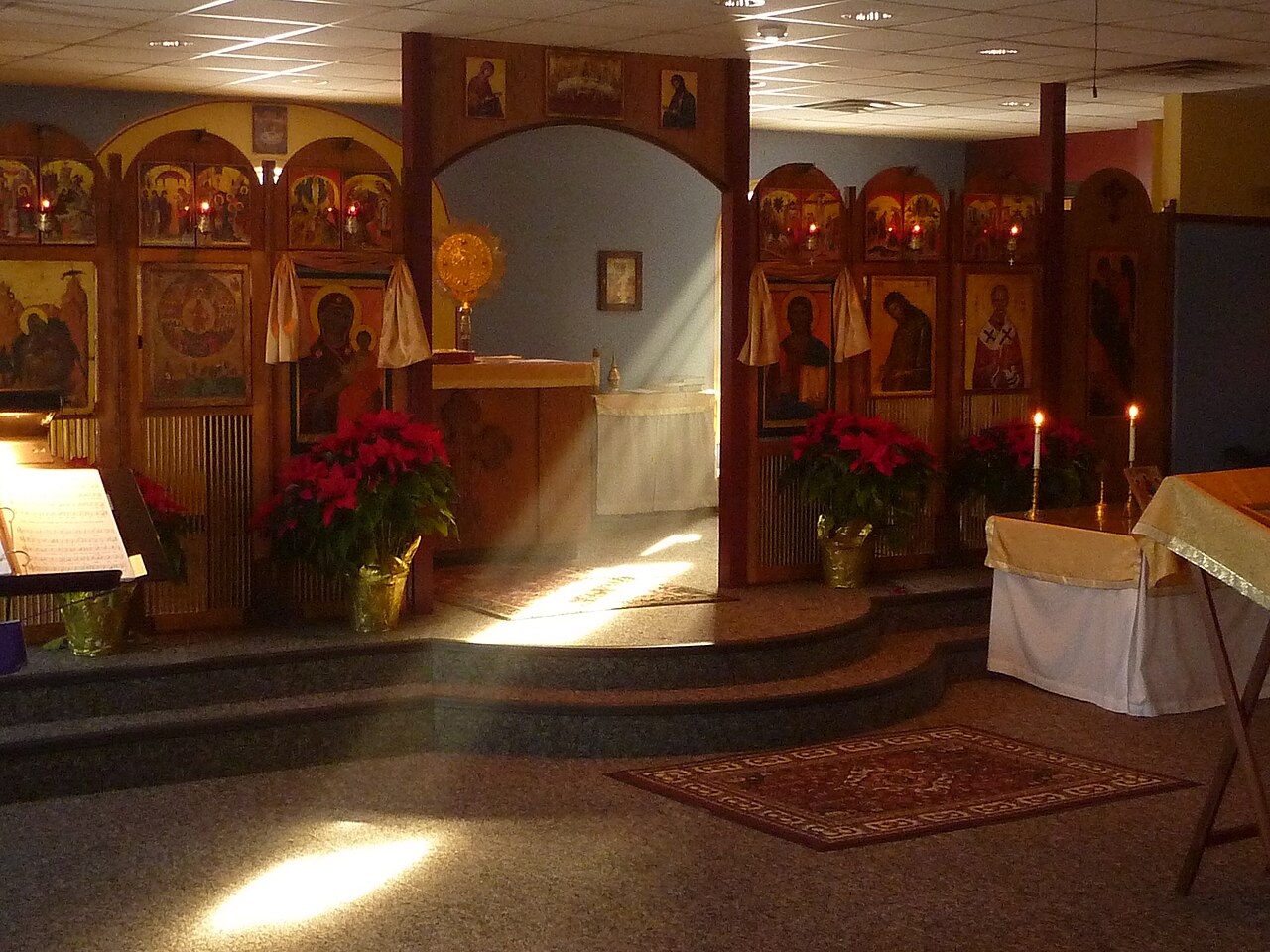
If you have ever stepped into an Orthodox church, with its icons, candles, incense and long, sung liturgy, you may have wondered whether you were in a Catholic church with different decoration. If you have Greek, Russian, Serbian, Romanian or Lebanese friends, you may have heard them say they are “Orthodox, not Catholic”, and wondered what exactly the difference is. The short answer is that Catholics and Orthodox are closer to each other than to any other Christians. They share the same sacraments, the same apostolic priesthood and most of the same faith. The main thing that divides them is the authority of the Pope. This article explains what they share, how they came apart, the real differences in belief and practice, the honest arguments on each side, and how relations have warmed in recent decades.
1. Very close, with one main division
Catholics and Orthodox both trace their bishops back to the apostles in an unbroken line. Both celebrate seven sacraments (the Orthodox often call them “mysteries”), with the Eucharist at the centre. Both honour Mary as the Mother of God, venerate icons and relics, ask the prayers of the saints and pray for the dead.
They also share the same foundational councils. Both churches accept the seven great “ecumenical” councils of the first thousand years, from the First Council of Nicaea in 325, which defined the divinity of Christ, to the Second Council of Nicaea in 787, which defended holy images. These councils produced the Nicene Creed and the classic Christian teaching about the Trinity and the person of Christ.
The Catholic Church officially recognises how much the Orthodox possess. The Second Vatican Council taught in 1964 that the Eastern Churches, although separated, “possess true sacraments, above all, by apostolic succession, the priesthood and the Eucharist”, by which they remain linked to Catholics in a very close relationship (Unitatis Redintegratio 15). Catholics do not regard Orthodox priests as laymen or Orthodox Eucharists as mere symbols.
Pope St John Paul II, a Slav from Poland who knew Eastern Christianity well, used a famous image. In his 1995 encyclical on Christian unity he wrote that the Church must learn again “to breathe with her two lungs”, the Eastern and the Western (Ut Unum Sint 54). A Church with only one lung can survive, but it cannot breathe fully.
2. How the Orthodox Church is organised
One reason people find the Orthodox Church hard to understand is that it is organised differently from the Catholic Church. The Orthodox Church is not one centralised body under a single head, but a communion of self-governing (“autocephalous”) churches: the Patriarchates of Constantinople, Alexandria, Antioch, Jerusalem, Moscow, Serbia, Romania, Bulgaria and Georgia, and the churches of Greece, Cyprus, Poland, Albania and others. They share one faith and Communion with each other, but each runs its own affairs.
The Ecumenical Patriarch of Constantinople, today Bartholomew I, is honoured as “first among equals”, but he has no jurisdiction over the other churches. His position goes back a long way. In 451 the Council of Chalcedon, in its twenty-eighth canon, gave the bishop of Constantinople, the “New Rome”, privileges second only to those of the bishop of old Rome, because Constantinople was the imperial capital. Pope St Leo the Great refused to accept that canon, arguing that the Church’s order rested on its apostolic foundations, not on political importance. The disagreement over what gives a bishop authority had begun.
Readers should also know that there is a second family of ancient Eastern churches, often confused with the Eastern Orthodox. The Coptic, Armenian, Syriac, Ethiopian, Eritrean and Malankara churches did not accept the Council of Chalcedon in 451, and are called the Oriental Orthodox. They are in communion with each other but not with the Eastern Orthodox or with Rome.
The Orthodox churches’ independence is a strength and sometimes a difficulty. For decades they planned a Holy and Great Council of all the Orthodox churches. When it finally met in Crete in June 2016, ten of the fourteen recognised churches attended, but the Patriarchates of Moscow, Antioch, Bulgaria and Georgia stayed away for various reasons. There is no single authority who can make all of them come together.
3. The split was slow, not sudden
Most people have heard that Catholics and Orthodox split in 1054. The truth is more complicated: the division was a slow estrangement over many centuries, driven by differences of language, culture, politics and theology, as well as by mistrust.
By the ninth century the Latin West and the Greek East were drifting apart. Few Westerners could read Greek, and few Easterners could read Latin. In 863 a dispute broke out between Pope Nicholas I and Photius, the brilliant scholar who had been appointed Patriarch of Constantinople after his predecessor was deposed. The quarrel was partly about whether Photius’s appointment was legitimate and partly about whether Greek or Latin missionaries should evangelise the newly converted Bulgarians. Pope and patriarch excommunicated each other. The breach was later healed, but it left a legacy of suspicion.
In 1054, Pope Leo IX sent Cardinal Humbert of Silva Candida to Constantinople to negotiate with Patriarch Michael Cerularius. The talks went badly. On 16 July 1054 Humbert marched into the great church of Hagia Sophia during the liturgy and laid a bull of excommunication on the altar. Strangely, Pope Leo IX had died three months earlier, so Humbert’s authority was doubtful. Cerularius excommunicated the legates in return. At the time, few people thought this was the final breach.
What turned estrangement into deep bitterness was the Fourth Crusade. In April 1204, Western crusaders who had set out to fight in the Holy Land instead captured and sacked Constantinople, the greatest Christian city in the world. They looted churches, desecrated altars and installed a Latin patriarch. For many Orthodox, this was the moment the West became an enemy. In May 2001, during a visit to Athens, Pope John Paul II expressed to Archbishop Christodoulos his deep regret for the sack of Constantinople, asking God’s forgiveness for the sins of Catholics against Orthodox Christians.
4. The main issue: the authority of the Pope
The central theological disagreement today is about the Pope. Catholics believe that the Bishop of Rome, as successor of St Peter, has full, supreme and universal jurisdiction over the whole Church, and that under strict conditions he can teach infallibly. The Orthodox believe that the Bishop of Rome was traditionally first in honour among the bishops, a “primacy of honour”, but not that he had authority over the other churches.
Both sides can point to early evidence. In 451, at the Council of Chalcedon, a letter from Pope Leo the Great explaining that Christ has two natures was read to the assembled bishops. They cried out, “Peter has spoken through Leo!” Catholics see this as recognition of the Pope’s special teaching role. Orthodox point out that the bishops had first examined Leo’s letter carefully to make sure it agreed with earlier teaching, which suggests they saw themselves as judges of his teaching, not simply as subjects.
In 1870 the First Vatican Council defined that the Pope has immediate jurisdiction over every Christian and every church, and that he is infallible when he teaches solemnly on faith and morals (Pastor Aeternus). For the Orthodox, this went far beyond anything the ancient Church had known, and it made reunion much harder.
Yet the two sides have found some common ground. In 2007 the official Catholic-Orthodox theological commission, meeting in Ravenna in Italy, agreed that in the first millennium Rome held the first place among the great ancient churches, the “first see”. They did not agree on what powers that first place carried. The question is now “what kind of primacy”, not “whether there is any primacy”.
5. The Creed and “and the Son”
The second classic difference concerns a single phrase in the Nicene Creed. In the original Creed of 381, Christians professed that the Holy Spirit “proceeds from the Father”. In the West, the words “and the Son” (in Latin, Filioque) were later added, so that Catholics say the Spirit “proceeds from the Father and the Son”.
The addition first appears officially in Spain. In 589 the Third Council of Toledo, celebrating the conversion of the Visigothic King Reccared from Arianism, used the phrase to stress that the Son is fully equal to the Father. It spread from Spain to France and Germany.
When Charlemagne’s court pressed Pope Leo III around 810 to add the phrase to the Creed used in Rome, the Pope agreed with the theology but refused to change the Creed. To make his point, he had the Creed engraved without the addition, in Greek and Latin, on two silver shields displayed in St Peter’s. Rome itself began singing the Creed with the Filioque only in 1014, when the German Emperor Henry II, visiting for his coronation, asked Pope Benedict VIII to include it.
The Orthodox object both to the theology, which they fear blurs the distinct role of the Father, and to the fact that the West changed an ecumenical creed without an ecumenical council. This question is explained in more depth in our article Why Do Catholic and Orthodox Creeds Differ?
6. Later Catholic teachings the Orthodox don’t accept
After the separation, the Catholic Church defined several teachings which the Orthodox do not accept as binding dogma, though in many cases they hold related beliefs.
There was one serious attempt at reunion. In 1438-1439, with the Byzantine Empire threatened by the Ottoman Turks, the Emperor, the Patriarch of Constantinople and a delegation of some 700 Greek bishops, clergy and theologians travelled to Italy for the Council of Florence. After long debates, they signed a decree of union, Laetentur Caeli, covering the papacy, purgatory and the Filioque. One Greek bishop, St Mark of Ephesus, refused to sign. When the delegates returned home, the people and clergy rejected the union, and Mark became a hero of Orthodoxy. Constantinople fell to the Ottomans in 1453.
Both churches keep 15 August as Mary’s greatest feast. The Orthodox call it the Dormition, the “falling asleep” of the Mother of God, and believe that she was taken body and soul into heaven. In 1950 Pope Pius XII defined the Assumption of Mary as a Catholic dogma. The Orthodox share the belief but do not accept that a pope can define it as dogma on his own authority. See Dormition or Assumption?
Similarly, the Orthodox pray for the dead constantly, especially in memorial services (the panikhida) and on special “Saturdays of Souls”. But they do not accept the Western way of describing purgatory as a place or state of purifying punishment. And they do not accept the Catholic definition of the Immaculate Conception, largely because they understand original sin differently.
7. Differences in everyday practice
Beyond doctrine, there are many differences in practice that visitors notice.
Married priests. In Orthodox churches, married men may be ordained priests, though they cannot marry after ordination, and bishops are chosen from celibate monks. This goes back to the Council in Trullo of 692, an Eastern council whose thirteenth canon allowed married priests to continue living with their wives and criticised Rome’s stricter custom. Latin-rite Catholic priests are normally celibate, though Eastern Catholic churches follow the Eastern practice.
The calendar and Easter. In 1582 Pope Gregory XIII reformed the calendar to correct its drift against the seasons, producing the Gregorian calendar used across the world today. Most Orthodox churches still calculate Easter by the older Julian calendar, so their Easter usually falls later than the Western one. In some years the dates coincide: on 20 April 2025, Catholics and Orthodox celebrated Easter on the same day, prompting renewed calls for a common date.
Divorce and remarriage. The Catholic Church does not allow remarriage after divorce while the first spouse is alive, unless the first marriage is found to have been invalid. The Orthodox, “by economy” (pastoral mercy), allow a second and even a third marriage in some circumstances, with a penitential rite. The penitential character has ancient roots: around 374, St Basil the Great laid down periods of penance for those who married a second or third time, mainly after a spouse’s death (Letter 188, canon 4), treating such marriages as tolerated rather than forbidden. The Orthodox practice of allowing remarriage after divorce developed later, in Byzantine church law.
Other differences include the Orthodox use of leavened bread for the Eucharist, giving Communion and Confirmation (Chrismation) to infants at baptism, and different rules for fasting.
8. The fair arguments on each side
The Orthodox objection is serious: they argue that over the centuries Rome claimed powers that the early Church never recognised. They point to a famous early episode. Around 190, Pope Victor I tried to excommunicate the churches of Asia Minor because they celebrated Easter on a different date from Rome. St Irenaeus of Lyons, though he followed the Roman custom himself, wrote to Victor urging him not to cut off whole churches over a custom, and reminding him that earlier popes had kept the peace (Eusebius, Church History 5.24). For the Orthodox, Irenaeus shows that the early Church did not accept the Pope as having the last word.
Catholics read the same episode differently: Victor clearly believed he had the authority to act, and the other churches appealed to him, which shows that Rome’s special role was already recognised. In 1848, when Pope Pius IX wrote to the Eastern Christians inviting them to reunion, the four Eastern Orthodox Patriarchs replied with a strongly worded encyclical. They described papal supremacy and the altered Creed as innovations foreign to the ancient Church.
The Catholic Church has since acknowledged that the way the papacy has been exercised can itself be an obstacle. In 1995, John Paul II made an extraordinary invitation. He asked Orthodox and other Christian leaders to engage with him in a “patient and fraternal dialogue” to help him find a way of exercising the primacy which, without renouncing what is essential, would be open to a new situation (Ut Unum Sint 95-96). No pope had ever asked other churches to help him rethink his own office.
9. Relations have warmed enormously
Since the 1960s, relations between Catholics and Orthodox have changed beyond recognition, though the two churches still do not normally share Communion.
In January 1964, Pope St Paul VI made a pilgrimage to the Holy Land, the first pope to leave Italy in a century and a half. On the Mount of Olives in Jerusalem, he met Ecumenical Patriarch Athenagoras. The two men embraced, the first meeting between a pope and an ecumenical patriarch in over five hundred years. On 7 December 1965, the day before the Second Vatican Council closed, they issued a joint declaration in Rome and Istanbul simultaneously, regretting the excommunications of 1054 and committing them “to oblivion”.
On 12 February 2016, Pope Francis and Patriarch Kirill of Moscow, the head of the largest Orthodox church, met at Havana airport in Cuba and signed a joint declaration. It was the first meeting ever between a pope and a patriarch of Moscow.
The Catholic Church allows a remarkable degree of sacramental sharing. Under the 1983 Code of Canon Law, Catholic priests may give Communion, confession and the anointing of the sick to Orthodox Christians who ask for them of their own accord and are properly disposed (canon 844 §3). In certain circumstances Catholics may also receive these sacraments from Orthodox priests. The Orthodox churches, however, generally do not permit their own members to receive from Catholics or Catholics to receive from them.
10. Go and see, and pray for unity
The best next step for anyone curious is to attend an Orthodox Divine Liturgy, or an Eastern Catholic one, and experience the beauty of Eastern Christian worship for yourself.
There is a lovely biblical image at the heart of Catholic-Orthodox relations. The apostle Andrew, traditionally the founder of the church of Byzantium and patron of Constantinople, was the brother who first brought Simon Peter to Jesus, saying, “We have found the Messias” (John 1:40-42). Rome is the church of Peter; Constantinople claims Andrew. Every year the two churches send official delegations to each other’s patronal feasts: the Orthodox to Rome for Sts Peter and Paul on 29 June, and the Catholics to Constantinople for St Andrew on 30 November. The brothers still visit each other.
According to the Russian Primary Chronicle, around 987 Prince Vladimir of Kyiv sent envoys to examine the religions of his neighbours before choosing one for his people. When they returned from Constantinople, where they had attended the liturgy in Hagia Sophia, they reported: “We knew not whether we were in heaven or on earth.” Vladimir was baptised, and with him began the Christianity of Ukraine, Russia and Belarus.
On 28 November 2025, Pope Leo XIV and Ecumenical Patriarch Bartholomew prayed together at the ruins of an ancient basilica on the shore of Lake Iznik in Turkey, the site of the city of Nicaea, to mark 1,700 years since the First Council of Nicaea. Standing where their shared Creed was born, the successors of Peter and Andrew prayed for the day when Catholics and Orthodox can once again share the one Eucharist.
Frequently asked questions
Can Catholics attend an Orthodox liturgy? Yes. Catholics are welcome to attend, though Orthodox churches normally ask non-Orthodox not to receive Communion.
Can a Catholic marry an Orthodox Christian? Yes. The Catholic Church recognises such marriages, and the bishop can permit the wedding to take place in an Orthodox church. See our article on mixed marriages.
Are Orthodox sacraments valid in Catholic eyes? Yes. The Catholic Church recognises Orthodox baptism, priesthood, Eucharist and other sacraments as valid.
Is the Orthodox Church the same as Eastern Catholics? No. Eastern Catholics share Eastern liturgies and customs but are in full communion with the Pope. See Roman Catholic vs Catholic: Eastern Catholics Explained.
Sources and further reading
- The Bible: John 1:40-42.
- Second Vatican Council, Unitatis Redintegratio (1964), 14-18; Orientalium Ecclesiarum (1964).
- John Paul II, Ut Unum Sint (1995), 54 and 95-96.
- Council of Chalcedon (451), canon 28; Council in Trullo (692), canon 13; Third Council of Toledo (589); Council of Florence, Laetentur Caeli (1439); First Vatican Council, Pastor Aeternus (1870).
- Eusebius, Church History 5.24; St Basil the Great, Letter 188.
- Encyclical of the Eastern Patriarchs (1848).
- Joint Catholic-Orthodox Declaration of Paul VI and Athenagoras I (7 December 1965); Joint Declaration of Pope Francis and Patriarch Kirill (Havana, 12 February 2016).
- Joint International Commission for Theological Dialogue, Ravenna Document (2007).
- Code of Canon Law (1983), canon 844.
- Vatican News and Holy See Press Office, Apostolic Journey to Türkiye, ecumenical prayer at İznik (28 November 2025).
- The Russian Primary Chronicle, entry for 987.
- Timothy Ware (Metropolitan Kallistos), The Orthodox Church (new edition, 2015).
