
Catholic vs Baptist: Key Differences in Belief and Worship
Catholics and Baptists share faith in Christ but differ on authority, baptism, the Lord’s Supper, salvation and worship. A fair, friendly guide for families and couples.
Baptists and Catholics often meet across the dinner table: a Baptist dating a Catholic, a Catholic marrying into a Baptist family, a teenager visiting a friend’s church and coming home with questions. Sometimes each side quietly suspects the other: Baptists may fear that Catholics have added things to the Gospel, while Catholics may feel that Baptists have stripped Christianity down to a sermon and a song. This article tries to set out the differences fairly, so that each side can understand what the other really believes. It covers what Catholics and Baptists share, the root difference about authority, baptism, the Lord’s Supper, salvation, Mary and the saints, worship, the main objections each side makes, the painful history, and how the two can live and pray together today. Baptists are a diverse family, from Southern Baptists to American Baptists to Free Will Baptists and Reformed Baptists, so not every point applies equally to every Baptist church.
1. Brothers and sisters in Christ
Catholics and Baptists are both Christians. Both believe in one God in three Persons. Both believe that Jesus Christ is God the Son made man, born of the Virgin Mary, who died on the cross for our sins and rose bodily from the dead. Both believe the Bible is the inspired word of God. On the essential truths of the Gospel, they stand together.
When the bishops of the Church met at Nicaea in 325 and defined that the Son of God is “true God from true God”, they were defending a faith that Baptists confess today as firmly as Catholics do. Most Baptists do not recite the Nicene Creed in worship, but they hold its teaching.
Baptist confessions of faith use the same language as the ancient creeds. The Second London Baptist Confession of 1689, one of the most influential Baptist statements of faith, devotes its second chapter to God and the Holy Trinity. It confesses that in the divine Being “there are three subsistences, the Father, the Word or Son, and Holy Spirit, of one substance, power, and eternity”, language drawn straight from the councils of the early Church.
The most famous Baptist of the twentieth century, the Southern Baptist evangelist Billy Graham, met Pope John Paul II privately in the papal apartments in January 1981. It was the first time Graham had ever met a pope. They talked, Graham later recalled, like long-lost friends, swapping stories about their travels. As Graham was leaving, the Pope reached over, took hold of his hand and told him, “We are brothers.” Graham kept the words to himself for years, knowing how both their followers might react, but he never forgot them.
2. The root difference: authority
The deepest difference between Catholics and Baptists is about authority. Who decides what Christians must believe, and how?
Baptists hold that Scripture alone is the final authority for faith and life, and that each local congregation is self-governing under Christ, answerable to no bishop, synod or pope. The movement’s earliest leaders were fiercely independent. In 1612 Thomas Helwys led a small group back from exile in Amsterdam and founded the first Baptist congregation on English soil, at Spitalfields, just outside the walls of London. Helwys wrote a book defending freedom of conscience and sent a copy to King James I with a handwritten note reminding the king that he was mortal man, not God. He died in Newgate Prison.
Catholics hold that Christ gave his Church a living teaching authority, exercised by the bishops in communion with the Pope. They point to the New Testament itself. When a dispute arose over whether Gentile converts must be circumcised, the churches did not settle it congregation by congregation. “The apostles and ancients assembled to consider of this matter” in Jerusalem, and sent a letter to the churches announcing a decision binding on all (Acts 15:1-31).
The Second Vatican Council summed up the Catholic view: Sacred Tradition, Sacred Scripture and the teaching authority of the Church “are so linked and joined together that one cannot stand without the others” (Dei Verbum 10, 1965). Almost every other difference between Catholics and Baptists flows from this one.
3. Baptism: babies or believers?
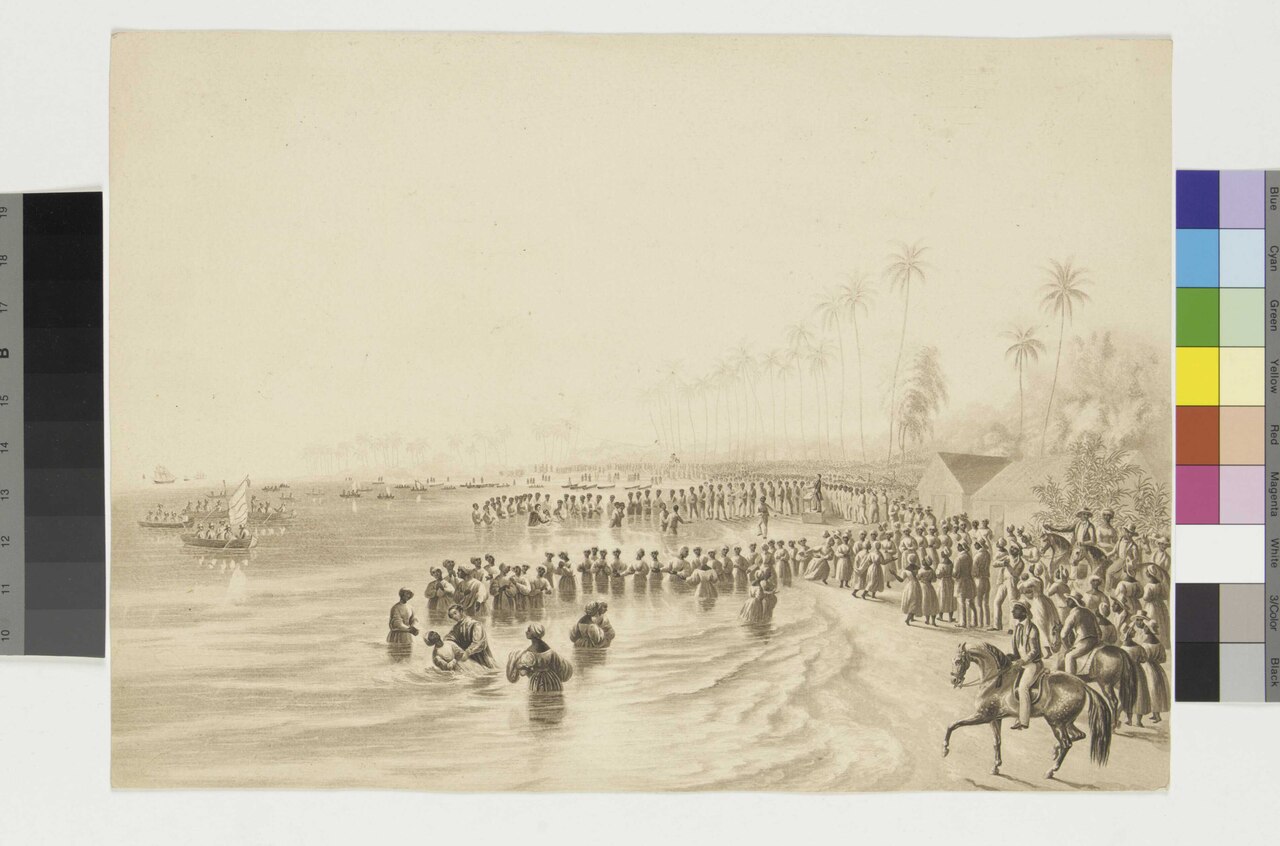
As the name suggests, Baptists have distinctive beliefs about baptism. They baptise only people old enough to profess faith in Christ for themselves (“believer’s baptism”), and they baptise by full immersion. For most Baptists, baptism is an “ordinance”, an act of obedience and a public witness to a salvation already received, not a means by which God gives grace.
The Baptist movement was born over this very question. In 1609 John Smyth, an English separatist pastor living in exile in Amsterdam, became convinced that his baptism as an infant in the Church of England meant nothing, because he had not believed at the time. With no one he considered properly baptised to baptise him, he baptised himself and then the members of his congregation. His followers, including Helwys, became the first Baptists.
Baptists point to the New Testament pattern. When Philip explained the Gospel to an Ethiopian official travelling home from Jerusalem, the man saw some water by the road and asked, “What doth hinder me from being baptized?” Philip baptised him after he professed faith (Acts 8:26-39). In the New Testament, they argue, faith comes first and baptism follows.
Catholics believe that baptism truly gives new birth, washing away original sin and making the person a child of God, and that it is right to give this gift to babies, as Christian parents give their children every other good thing. They note that whole households were baptised in Acts (16:15, 33), and that the practice of infant baptism is very ancient. In 253, sixty-six bishops meeting in council at Carthage under St Cyprian were asked by a bishop named Fidus whether babies should wait until the eighth day, like circumcision. They replied unanimously that God’s mercy should not be denied to anyone, and that newborn infants should be baptised without delay (Cyprian, Letter 64). For more, see Why Do Catholics Baptise Babies?
4. The Lord’s Supper
Catholics and Baptists both celebrate the meal Jesus gave his disciples on the night before he died, but they understand it very differently.
Catholics believe that at Mass the bread and wine become the body and blood of Christ, really and truly, and that the Mass makes present Christ’s one sacrifice on the cross. They take Jesus’s words in John 6 at face value. When he told a crowd in Capernaum that “unless you eat the flesh of the Son of man, and drink his blood, you shall not have life in you”, many of his disciples complained that it was a hard saying, and “went back; and walked no more with him” (John 6:53-66). Jesus did not call them back to explain that he was speaking only of a symbol.
The earliest Christians after the apostles seem to have read Jesus the same way. Around 107, St Ignatius of Antioch, on his way to martyrdom in Rome, criticised certain heretics who “abstain from the Eucharist and from prayer, because they confess not the Eucharist to be the flesh of our Saviour Jesus Christ” (Letter to the Smyrnaeans 7).
Most Baptists hold that the Lord’s Supper is a memorial: a meal in which believers remember Christ’s death, proclaim it and renew their commitment, without any change in the bread and wine. The Baptist Faith and Message (2000) of the Southern Baptist Convention describes it as “a symbolic act of obedience” in which members “memorialize the death of the Redeemer” (Article VII). This view goes back to the Swiss reformer Huldrych Zwingli, who argued at the Marburg Colloquy in 1529 that in the words “This is my body”, the word “is” means “signifies”. Luther disagreed fiercely, but Zwingli’s view was later adopted by many Baptists.
5. How we are saved
Both Catholics and Baptists believe that salvation is by God’s grace through Christ. But they emphasise different aspects of it.
Baptists stress personal conversion: a moment when a person repents and puts their trust in Christ as Lord and Saviour, often called being “born again” or “getting saved”. Many Baptists, especially Southern Baptists, also believe in the “eternal security” of the believer, popularly summarised as “once saved, always saved”. (Some Baptists, such as Free Will Baptists, do not.)
The most famous conversion story in Baptist history is that of Charles Spurgeon. On 6 January 1850, fifteen-year-old Charles was trying to get to church in Colchester when a snowstorm drove him into a small Primitive Methodist chapel instead. The minister did not turn up, and a thin, nervous layman, perhaps a shoemaker or tailor, got up to preach on the text “Look unto me, and be ye saved, all the ends of the earth” (Isaiah 45:22). Seeing the teenager at the back, he called out, “Young man, you look very miserable. Look! Look to Jesus Christ!” Spurgeon said he looked, and was saved. He became the most famous preacher of the Victorian age.
Catholics also believe in conversion, and many Catholics can tell similar stories. But they understand salvation as a lifelong journey of cooperation with God’s grace, which begins in baptism and can be lost through grave sin and restored through repentance. Catholics strongly deny that they earn salvation by works. The Council of Trent condemned anyone who says that a person can be justified by his own works without God’s grace through Jesus Christ (Session 6, canon 1, 1547). Catholics often point to St Paul, who long after his conversion wrote that he disciplined his body “lest perhaps, when I have preached to others, I myself should become a castaway” (1 Corinthians 9:27). See Do Catholics Believe They Are Saved by Works?
6. Mary and the saints
Catholics honour Mary as the Mother of God and ask her and the saints to pray for them. Baptists respect Mary as the mother of Jesus and a model of faith, but they pray to God alone through Christ, whom they regard as the one mediator between God and humanity.
Catholics point to the beginning of Luke’s Gospel. When Mary visited her cousin Elizabeth, Elizabeth, “filled with the Holy Ghost”, greeted her as “the mother of my Lord”, and Mary herself prophesied that “all generations shall call me blessed” (Luke 1:41-48). Catholics see their honour for Mary as the fulfilment of that prophecy.
The title “Mother of God” can alarm Baptists, who fear it suggests Mary is divine. Catholics explain that the title is really about Jesus. The Council of Ephesus defended it in 431 to protect the truth that Jesus is one person, truly God, from the moment of his conception.
Asking for Mary’s prayers is very old. A scrap of Greek papyrus found in Egypt and now in the John Rylands Library in Manchester, dated by many scholars to the third or fourth century, preserves a short prayer asking the Mother of God for protection in time of trouble. Catholics, Orthodox and Copts still pray it. Baptists answer that antiquity does not make a practice biblical. For more, see Why Do Catholics Pray to Mary and the Saints?
7. Worship and ministry
Walk into a Catholic church and then into a Baptist church on a Sunday morning, and you will notice the difference immediately. Catholic worship centres on the Mass: the altar, the priest, the Eucharist, a fixed liturgy shared around the world. Baptist worship centres on preaching: the pulpit, the open Bible, hymns and songs, and prayer. Catholic clergy are ordained priests and bishops; Baptist churches have pastors and deacons, chosen by the congregation.
Catholics see their pattern in the earliest description of Christian Sunday worship outside the New Testament. Around 155, St Justin Martyr described what Christians in Rome did: the memoirs of the apostles and the writings of the prophets were read; the presiding minister preached; all stood to pray; bread and wine were brought, and the presider offered prayers of thanksgiving; and deacons carried the consecrated food to those who were absent (First Apology 65-67).
Baptist worship has its own great tradition. In 1861 Spurgeon’s congregation opened the Metropolitan Tabernacle in south London, a vast building designed around the pulpit rather than an altar. Around five thousand people heard him preach every Sunday, and his printed sermons were sold all over the world. For Baptists, the preaching of the word is the heart of worship.
Both sides can find their ideal in a single verse describing the first Christians in Jerusalem: “they were persevering in the doctrine of the apostles, and in the communication of the breaking of bread, and in prayers” (Acts 2:42). Baptists emphasise the apostles’ teaching; Catholics the breaking of bread. The verse contains both.
8. Has Rome added to the Bible?
The strongest Baptist objection is that Catholic doctrines such as purgatory, prayers to saints and the authority of the Pope are human traditions added to the Bible. Baptists often cite Jesus’s rebuke of the Pharisees, who used a human tradition about offerings to the Temple to avoid supporting their parents: “you have made void the commandment of God for your tradition” (Matthew 15:6). Jesus clearly condemned traditions that contradict God’s word.
Catholics agree that human traditions which contradict God’s commands must be rejected. But they distinguish these from the apostolic Tradition that Paul told the Thessalonians to keep: “hold the traditions, which you have learned, whether by word, or by our epistle” (2 Thessalonians 2:15). Not everything the apostles taught was written down.
Catholics also point out that the Bible itself came to us through the Church. The New Testament books were written in the first century, but for generations Christians did not agree exactly which books belonged in it. The first surviving list naming exactly the twenty-seven books of our New Testament comes from St Athanasius, bishop of Alexandria, in his Easter letter of 367, more than three centuries after Christ. Catholics argue that if the Church could be trusted to recognise which books are Scripture, it can be trusted to interpret them. Baptists answer that the Church recognised Scripture’s authority rather than creating it. See Why Don’t Catholics Go by the Bible Alone?
9. A painful history
Catholics and Baptists have wronged and caricatured each other, and honesty requires admitting it.
The Baptists’ spiritual forerunners, the Anabaptists of the sixteenth century, were persecuted by Catholics and Protestants alike for rejecting infant baptism. In May 1527, Michael Sattler, a former Benedictine prior who had become an Anabaptist leader, was tried by Catholic Austrian authorities at Rottenburg am Neckar in south-west Germany. On 20 May he was tortured, his tongue was cut, and he was burned at the stake. His wife was drowned a few days later.
Prejudice also ran the other way. In 1960, John F. Kennedy, a Catholic, was running for President of the United States. Many Protestant ministers, a large number of them Baptists, warned that a Catholic president would take orders from the Pope. On 12 September 1960, Kennedy addressed the Greater Houston Ministerial Association in a televised speech, promising that he believed in an America “where the separation of church and state is absolute”. The fact that he had to make the speech at all shows how deep the suspicion ran.
Baptists have a proud history of championing religious freedom, from Helwys in London to Roger Williams in Rhode Island. For centuries the Catholic Church did not accept that principle in the same way. That changed on 7 December 1965, when the Second Vatican Council declared that every human person “has a right to religious freedom”, and that no one should be forced to act against their conscience in religious matters (Dignitatis Humanae 2). Catholics now affirm a freedom that Baptists championed first.
10. Living and praying together
Catholics and Baptists can do a great deal together: pray, read Scripture, serve the poor, defend the unborn and the persecuted. What they cannot yet share is Holy Communion, because the Eucharist expresses full unity of faith, which does not yet exist.
On the night before he died, Jesus prayed “that they all may be one” (John 17:21). That prayer is addressed to Baptists and Catholics alike.
There are practical signs of mutual respect. The Catholic Church’s Directory for Ecumenism (1993) recognises baptism given with water and the Trinitarian formula as valid, including baptism by immersion (paragraphs 93-95). A Baptist who becomes Catholic is therefore not baptised again; he or she is received into full communion, usually with confirmation and first Communion.
Official conversations have also taken place. The Baptist World Alliance and the Vatican held two rounds of formal dialogue. The first, from 1984 to 1988, produced a report called Summons to Witness to Christ in Today’s World. The second, from 2006 to 2010, produced a report on “The Word of God in the Life of the Church”. Both reports frankly record disagreements, but also a great deal of common ground, and a shared commitment to proclaiming Christ.
Frequently asked questions
Can a Catholic marry a Baptist? Yes, with the bishop’s permission, and the marriage can be a true sacrament. See our article on mixed marriages, Can a Catholic Marry a Non-Catholic?
Can a Baptist take Communion at a Catholic Mass? Ordinarily no. Baptists are welcome to attend and may come forward for a blessing. See Which Sacraments Can I Receive If I’m Not Catholic?
If a Baptist becomes Catholic, must they be rebaptised? No. A valid Trinitarian baptism is recognised and not repeated.
Do Catholics believe Baptists are saved? The Catholic Church recognises baptised Baptists as Christians and brothers and sisters in Christ. See Do Catholics Believe Non-Catholics Can Go to Heaven?
Sources and further reading
- The Bible: Isaiah 45:22; Mark 7:1-13; Luke 1:39-48; John 6:52-68; 17:20-23; Acts 2:42; 8:26-39; 15:1-31; 16:15, 33; 1 Corinthians 9:24-27; 2 Thessalonians 2:15.
- Second London Baptist Confession of Faith (1689), chapter 2; Baptist Faith and Message (2000), Article VII.
- Council of Trent, Session 6 (1547), canon 1; Second Vatican Council, Dei Verbum 10 and Dignitatis Humanae 2.
- Pontifical Council for Promoting Christian Unity, Directory for the Application of Principles and Norms on Ecumenism (1993), 93-95.
- Baptist World Alliance and Secretariat/Pontifical Council for Promoting Christian Unity, Summons to Witness to Christ in Today’s World (1988) and The Word of God in the Life of the Church (2010).
- St Ignatius, Letter to the Smyrnaeans 7; St Justin Martyr, First Apology 65-67; St Cyprian, Letter 64; St Athanasius, Festal Letter 39.
- Billy Graham, Just As I Am (1997); “The Pope and the Preacher”, Christianity Today (June 2005).
- C. H. Spurgeon, Autobiography, vol. 1 (1897).
- John F. Kennedy, Address to the Greater Houston Ministerial Association (12 September 1960).
