
Do Catholics Believe in the Rapture? What the Church Teaches About the End Times
Catholics believe Christ will return in glory and gather his people, but not in a secret rapture before a tribulation. Here is where the rapture idea came from and what the Church teaches.
If you grew up in an evangelical church reading the Left Behind novels or hearing sermons about the rapture, you may have wondered why your Catholic friends never mention it. Do Catholics believe that true Christians will suddenly vanish from the earth, leaving cars driverless and planes pilotless, before a seven-year tribulation? Or perhaps you are a Catholic unsettled by a friend’s confident predictions about the end of the world. This article explains what the Catholic Church teaches about Christ’s return, where the word “rapture” comes from, how the modern idea of a secret rapture developed in the 1830s, how Catholics read the favourite rapture verses, what the Church teaches about the “thousand years”, why the Church has always refused to set dates, and how Christians should live while they wait.
1. Christ will return, but not in a secret rapture
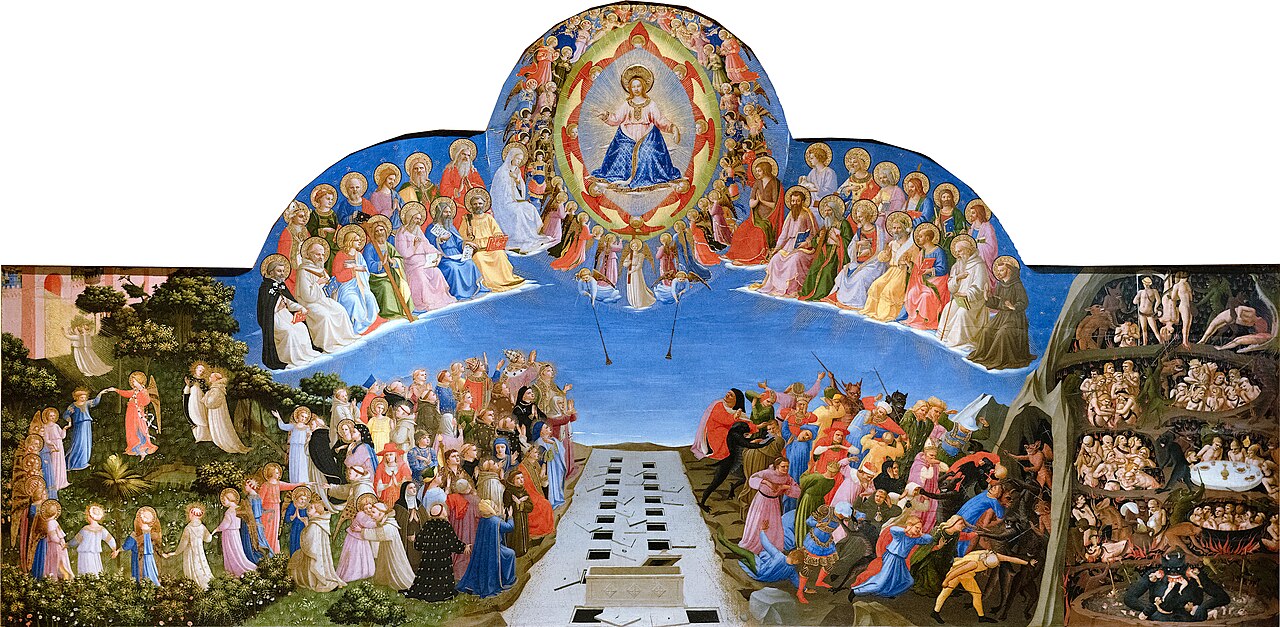
Catholics firmly believe that Jesus Christ will return in glory at the end of time, that the dead will rise, and that Christ will gather his people to himself. What Catholics do not believe is that Christ will come secretly to remove believers from the earth years before his final, visible return.
St Paul wrote to comfort the Christians of Thessalonica, who were grieving for members of their church who had died. He told them that “the Lord himself shall come down from heaven with commandment, and with the voice of an archangel, and with the trumpet of God: and the dead who are in Christ, shall rise first. Then we who are alive, who are left, shall be taken up together with them in the clouds to meet Christ, into the air, and so shall we be always with the Lord” (1 Thessalonians 4:16-17). Catholics believe every word of this passage.
In 381, the bishops at the First Council of Constantinople added to the Creed the words “he will come again in glory to judge the living and the dead, and his kingdom will have no end.” Catholics recite these words every Sunday.
The Catechism of the Catholic Church adds something that may surprise rapture believers. It teaches that before Christ’s second coming, the Church “must pass through a final trial that will shake the faith of many believers” (CCC 675). The Church does not expect to be removed before the final trial; it expects to go through it, as Christ went through his Passion before his Resurrection.
2. Where the word comes from
The word “rapture” does not appear in English Bibles, but it does have a biblical source. It comes from the Latin Bible.
The Latin Vulgate, the Bible translation associated with St Jerome (c. 400), renders Paul’s Greek word harpagēsometha (“we shall be caught up”) in 1 Thessalonians 4:17 as rapiemur, from the Latin verb rapere, “to seize” or “to snatch away”. From this Latin word comes the English “rapture”. In that sense, every Catholic believes in a “rapture”: the living faithful will be caught up to meet Christ when he comes.
The question is what kind of event Paul was describing. Catholics, together with Orthodox and most historic Protestant churches, read it as part of one public, visible return of Christ, not a separate secret event. Jesus himself described his coming as anything but secret: “as lightning cometh out of the east, and appeareth even into the west: so shall also the coming of the Son of man be… and they shall see the Son of man coming in the clouds of heaven with much power and majesty. And he shall send his angels with a trumpet” (Matthew 24:27-31).
Paul describes the same trumpet in another letter: “In a moment, in the twinkling of an eye, at the last trumpet: for the trumpet shall sound, and the dead shall rise again incorruptible: and we shall be changed” (1 Corinthians 15:52). The dead are raised and the living transformed together, at the “last” trumpet, which suggests a single, final event.
3. A nineteenth-century idea
The idea of a separate, secret rapture before a seven-year tribulation is surprisingly recent. It was developed in the 1830s and spread through study Bibles, prophecy conferences and, in our own time, best-selling novels.
The main architect of the idea was John Nelson Darby, an Anglo-Irish lawyer who became a priest of the Church of Ireland (the Anglican church), then left it to become a leader of the Plymouth Brethren. Between 1831 and 1833 he spoke at a series of prophecy conferences held at Powerscourt House in County Wicklow, Ireland, where he developed a scheme, called “dispensationalism”, that divides history into periods and expects the Church to be removed from the earth before God resumes his dealings with Israel in a final seven-year tribulation.
Darby’s ideas might have remained the property of a small group. But an American lawyer turned preacher, Cyrus Scofield, built them into the notes of a study Bible published by Oxford University Press in 1909. The Scofield Reference Bible sold millions of copies in America. Many readers absorbed its notes as if they were part of Scripture itself.
The idea reached its widest audience through fiction. In 1995 the evangelical minister Tim LaHaye and writer Jerry Jenkins published Left Behind, a novel opening with millions of people vanishing from the earth. The book and its sequels sold tens of millions of copies and were made into films. For many people today, the rapture is the story told in those novels.
4. The early Church expected to face the Antichrist
The earliest Christians did not expect to escape the final trial. They expected the Church to face the Antichrist, and to endure. On this point, Catholics agree with the Orthodox and with historic Lutheran, Reformed and Anglican teaching.
Paul himself told the Thessalonians not to be alarmed by rumours that the day of the Lord had already come: “that day shall not come, unless there come a revolt first, and the man of sin be revealed, the son of perdition” (2 Thessalonians 2:3). The Church would see the “man of sin” before Christ’s coming.
One of the oldest Christian writings outside the New Testament, the Didache, a church handbook from the late first or early second century, ends with a warning about the last days. It describes how “the world-deceiver” will appear as a son of God and do signs and wonders, and how “all created mankind” will come into “the fire of trial”, many will fall away, but those who endure in their faith will be saved. Only then, it says, will the Lord come on the clouds (Didache 16).
Around 350, St Cyril of Jerusalem gave a series of lectures to adults preparing for baptism. In the fifteenth, he taught them about Christ’s second coming and the Antichrist, so that if he should come in their lifetime they would recognise him and not be deceived. “Guard thyself then, O man,” he said; “thou hast the signs of Antichrist” (Catechetical Lecture 15). He prepared his candidates to stand firm, not to expect removal.
5. Reading the favourite rapture verses
Two passages are especially popular with rapture believers. Read in context, Catholics believe, both describe Christ’s single return.
The first is Jesus’s saying: “Then two shall be in the field: one shall be taken, and one shall be left. Two women shall be grinding at the mill: one shall be taken, and one shall be left” (Matthew 24:40-41). Many assume that “taken” means rescued in the rapture. But look at the verses just before. Jesus compares his coming to the days of Noah, when people were eating and drinking “until the flood came, and took them all away” (Matthew 24:39). In Noah’s day, those “taken” were swept away in judgement, while Noah was “left” safe in the ark. Being taken, in this context, is no rescue.
The second is Paul’s phrase “to meet Christ, into the air” (1 Thessalonians 4:17). The Greek word for “meet”, apantēsis, had a special meaning in the ancient world. When an emperor or important visitor approached a city, the citizens would go out to meet him on the road and then escort him back into the city. Luke uses the same word in Acts: when Christians in Rome heard that Paul was coming, they walked out as far as the Forum of Appius and Three Taverns “to meet us”, and then accompanied him into the city (Acts 28:15).
St John Chrysostom, preaching on 1 Thessalonians around the year 400, explained Paul’s words in exactly this way. When a king enters a city, he said, those in honour go out to meet him, while condemned criminals wait inside for the judge. So the faithful will go up to meet Christ and accompany him as he comes (Homily 8 on 1 Thessalonians). The faithful go out to welcome the King, not to leave the world behind for seven years.
6. The “thousand years”
Closely linked to rapture teaching is “premillennialism”, the belief that Christ will return to reign visibly on earth for a literal thousand years before the final judgement, based on Revelation 20. The Catholic Church does not teach this, though some respected early Christian writers did expect it.
Around 160, St Justin Martyr, in his Dialogue with Trypho, said he expected the righteous to reign with Christ for a thousand years in a rebuilt Jerusalem. Honestly, he also admitted that “many who belong to the pure and pious faith, and are true Christians, think otherwise” (Dialogue 80). The question was already debated.
St Augustine had once held the thousand-year view himself. But in his great work The City of God, completed around 426, he came to read the “thousand years” of Revelation 20 as a symbol of the present age of the Church, in which Christ already reigns through his saints and Satan is bound so that he cannot prevent the spread of the Gospel (City of God 20.7-9). This became the main view in the Western Church.
The Church has formally rejected the idea of Christ reigning visibly on earth before the final judgement. On 21 July 1944 the Holy Office ruled that even a “mitigated” millenarianism, which teaches that Christ will come visibly to reign on earth before the final judgement, “cannot be taught safely”. The Catechism likewise rejects any form of the idea that the kingdom will be fulfilled within history, rather than through God’s final victory beyond it (CCC 676).
7. What Catholics must believe
The Catholic Church does not require its members to hold any detailed timetable of the end times. What Catholics must believe is simple and clear: Christ will return in glory, the dead will rise, all will be judged, and God will make all things new.
Jesus described the judgement in one of his most famous parables. When the Son of Man comes in his glory and sits on his throne, “all nations shall be gathered together before him, and he shall separate them one from another, as the shepherd separateth the sheep from the goats”. The King will judge each person by how they treated “the least of these my brethren”: the hungry, the thirsty, the stranger, the naked, the sick and the prisoner (Matthew 25:31-46).
In 1215, the Fourth Lateran Council defined that at the end of time Christ “will come to judge the living and the dead, and to render to each according to his works”, and that all will rise “with their own bodies which they now bear”, to receive eternal punishment or eternal glory.
The final pages of the Bible describe the goal of all history. John saw “a new heaven and a new earth”, and heard a voice from the throne: “Behold the tabernacle of God with men, and he will dwell with them… And God shall wipe away all tears from their eyes: and death shall be no more” (Revelation 21:1-4). Catholics look forward not to escape from the world, but to its renewal.
8. “God would not let his Church suffer”
The strongest argument from rapture believers is emotional and theological: a loving God would not leave his Church to suffer the horrors of the final tribulation. Surely he would rescue his people first?
Catholics reply that Christ promised his followers strength in suffering, not exemption from it. At the Last Supper, Jesus prayed for his disciples: “I pray not that thou shouldst take them out of the world, but that thou shouldst keep them from evil” (John 17:15). God’s protection is within the trial, not always out of it.
The history of the Church is full of Christians who were not spared suffering. On 7 March 203, in the amphitheatre at Carthage, a young noblewoman named Perpetua, mother of a nursing baby, and a slave named Felicity, who had given birth in prison only days before, were thrown to wild beasts and then killed by the sword, for refusing to sacrifice to the emperor. Perpetua’s own prison diary survives, one of the earliest writings by a Christian woman.
The same is true in our own time. In February 2015, twenty Egyptian Coptic Christians and a companion from Ghana, migrant workers in Libya, were kidnapped and beheaded on a beach by Islamic State militants. A video showed many of them praying “Lord Jesus” as they died. In May 2023, Pope Francis announced that these Orthodox martyrs would be added to the Roman Martyrology, the Catholic Church’s official list of martyrs. Christians have always faced tribulation; Christ has always been with them in it.
9. Nobody knows the day or hour
One thing Catholic teaching is absolutely clear about: nobody knows when Christ will return, and every attempt to calculate it, Protestant or Catholic, has ended in embarrassment.
Just before his Ascension, the apostles asked the risen Jesus whether he would now restore the kingdom to Israel. He replied: “It is not for you to know the times or moments, which the Father hath put in his own power” (Acts 1:7). Instead, he told them to be his witnesses to the ends of the earth.
Christians have often ignored that warning. In the 1830s and 1840s, a Baptist farmer and preacher in New York State, William Miller, calculated from the Book of Daniel that Christ would return in 1843 or 1844. Tens of thousands of followers, called Millerites, prepared to meet the Lord; some sold their farms and businesses. When the date was finally fixed as 22 October 1844, they waited all night. Nothing happened. The day became known as “the Great Disappointment”.
Catholics have done it too. Around 1500, wandering preachers in Italy were stirring up crowds by announcing the date of the Antichrist’s coming and the end of the world. On 19 December 1516, the Fifth Lateran Council ordered all preachers to preach the Gospel according to Scripture and the Fathers, and forbade them to presume to announce a fixed time for future evils, the coming of the Antichrist or the day of judgement (Session 11).
10. Be ready
The right response to the end times, Catholics believe, is not fear and not speculation, but readiness: a life of prayer, faithful work and hope.
Jesus told a parable about ten bridesmaids waiting with their lamps for a bridegroom who was delayed. Five were wise and took extra oil; five were foolish and took none. When the bridegroom arrived at midnight, the foolish ones had run out of oil and went off to buy more, and while they were away the wise ones went in with him to the wedding feast, and the door was shut. “Watch ye therefore,” Jesus concluded, “because you know not the day nor the hour” (Matthew 25:1-13).
Waiting for Christ does not mean dropping everything. Paul had to rebuke some Thessalonian Christians who, expecting the Lord’s imminent return, had stopped working and were living as busybodies. He told them to “work with silence” and “eat their own bread”, adding the famous rule: “If any man will not work, neither let him eat” (2 Thessalonians 3:10-12). Faithful daily work is part of being ready.
Every time Catholics go to Mass, they proclaim their hope in Christ’s return. Since the reform of the liturgy, published in the Roman Missal of 1970, the people respond after the consecration with words based on 1 Corinthians 11:26: “We proclaim your Death, O Lord, and profess your Resurrection until you come again.” And the Bible’s last prayer, which Catholics make their own, is simply this: “Come, Lord Jesus” (Revelation 22:20).
Frequently asked questions
Do Catholics believe in the rapture at all? Catholics believe the faithful will be “caught up” to meet Christ when he returns (1 Thessalonians 4:17), but as part of his single, visible, final coming, not a secret rapture before a tribulation.
Do Catholics believe in the Antichrist? Yes. The Catechism teaches that the Church will face a final trial and a final deception before Christ’s return (CCC 675-677).
Is the Book of Revelation about the future? It speaks of the end, but also of the Church’s struggles in every age, and above all of Christ’s victory. Catholics hear it at Mass, especially in the Easter season.
What happens when we die? See Do Catholics Believe in Reincarnation? What Happens After Death and Is Purgatory in the Bible?
Sources and further reading
- The Bible: Matthew 24:27-41; 25:1-46; John 17:15; Acts 1:6-8; 28:14-16; 1 Corinthians 15:51-52; 1 Thessalonians 4:13-18; 2 Thessalonians 2:1-4; 3:6-13; Revelation 20-22.
- Catechism of the Catholic Church, 668-682.
- First Council of Constantinople (381); Fourth Lateran Council (1215); Fifth Lateran Council, Session 11 (19 December 1516); Holy Office, decree on millenarianism (21 July 1944).
- Didache 16; St Justin Martyr, Dialogue with Trypho 80; St Cyril of Jerusalem, Catechetical Lecture 15; St John Chrysostom, Homily 8 on 1 Thessalonians; St Augustine, City of God 20.7-9; The Passion of Perpetua and Felicity.
- Roman Missal (1970), memorial acclamations.
- Carl E. Olson, Will Catholics Be “Left Behind”? (2003); Timothy P. Weber, On the Road to Armageddon (2004).
