
Catholic vs Anglican and Episcopal: How Are They Different?
Anglican and Episcopal services look almost Catholic. Is the only difference the Pope, or Henry VIII’s divorce? A fair guide to history, orders, sacraments, Mary and today.
Walk into a traditional Episcopal church in the United States or an Anglican cathedral in England, and you might think you had walked into a Catholic church. There are robed clergy, an altar with candles, the Creed, the Gloria, the Eucharist, and sometimes incense and statues of Mary. Many people assume that the only difference is that Anglicans do not accept the Pope, or that the whole thing goes back to Henry VIII wanting a divorce. The truth is more interesting. This article explains what Anglicans (called Episcopalians in the United States) and Catholics share, how the break happened, how doctrine developed, why the Catholic Church does not recognise Anglican priests, and why newer questions have made unity harder. It also shows how close the two churches have come in friendship.
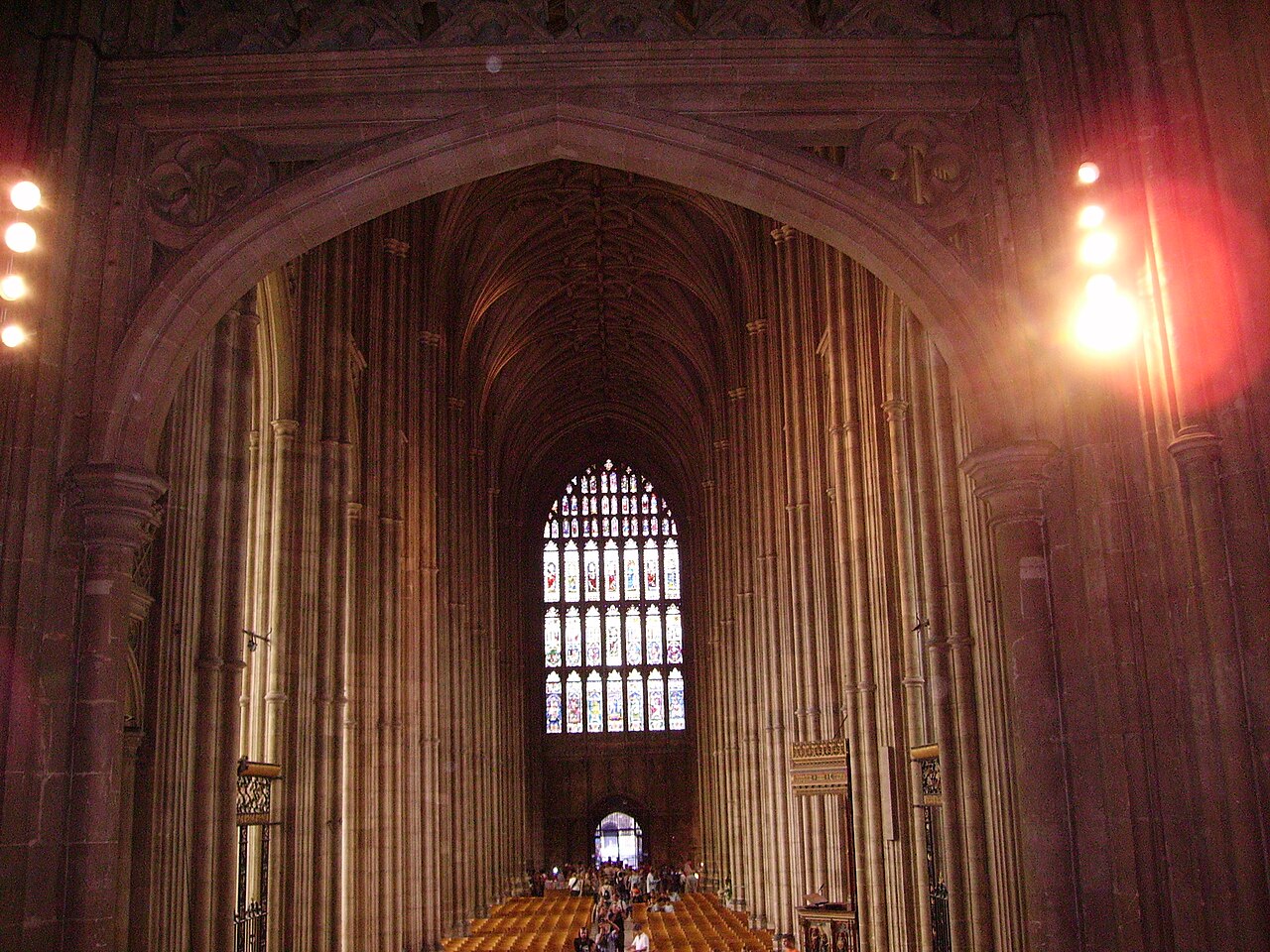
1. Very similar, but not in communion
The Anglican Communion is a worldwide family of churches that grew from the Church of England, with around 85 million members. In the United States its member church is called the Episcopal Church, from the Greek word for “bishop”, because it kept the ancient order of bishops. Anglicans and Catholics share the creeds, the Scriptures, baptism, bishops and a similar form of liturgy. But they are not in communion with each other, and Anglicans do not accept the authority of the Pope.
Anglican worship has deep Catholic roots. In 1549 Archbishop Thomas Cranmer produced the first Book of Common Prayer, which translated, simplified and reshaped into English the Latin services that had been used in England for centuries, especially the “Sarum” rite of Salisbury Cathedral. That is why Anglican Morning and Evening Prayer echo the ancient monastic hours, and why the Anglican Eucharist follows the shape of the Mass.
In 1888 the bishops of the Anglican Communion, meeting at Lambeth Palace in London, named four essentials on which they would seek unity with other Christians. This “Lambeth Quadrilateral” listed the Holy Scriptures, the Apostles’ and Nicene Creeds, the two sacraments of Baptism and the Lord’s Supper, and the historic episcopate. Catholics would affirm all four, though they would add more.
Both churches can see themselves in the description of the first Christians in Jerusalem: “they were persevering in the doctrine of the apostles, and in the communication of the breaking of bread, and in prayers” (Acts 2:42).
2. A thousand years of communion, then a break
Christianity in England is ancient, and for nearly a thousand years English Christians were in communion with Rome. Anglicans see the sixteenth-century break as a reform of the old Church of England, not the founding of a new one. Catholics see it as a separation from the universal Church.
The Church of England traces its origins back to the year 597, when Pope St Gregory the Great sent a monk named Augustine, prior of a Roman monastery, with about forty companions to preach to the Anglo-Saxons. They landed in Kent, where King Ethelbert had a Christian wife from Gaul. The king was baptised, and Augustine became the first Archbishop of Canterbury. St Bede the Venerable told the story in his Ecclesiastical History of the English People (731). (There were already British Christians in the west, whose faith went back to Roman times.)
The break came under King Henry VIII. Henry wanted his marriage to Catherine of Aragon annulled because she had not given him a male heir. When Pope Clement VII refused, Henry had Parliament pass the Act of Supremacy in 1534, declaring the king “the only supreme head in earth of the Church of England”. At first Henry changed little else in doctrine; he thought of himself as a Catholic without the Pope.
Some refused to accept the king’s claim. John Fisher, the elderly Bishop of Rochester, and Sir Thomas More, the former Lord Chancellor and a famous scholar, would not swear the oath acknowledging the king as head of the Church. Fisher was beheaded on 22 June 1535 and More on 6 July. More told the crowd that he died “the King’s good servant, but God’s first”. Both are honoured as saints by Catholics, and Thomas More is also commemorated in the Church of England’s calendar.
3. Doctrine changed, and both sides killed
Under Henry’s son, the boy King Edward VI (1547-1553), the Church of England moved decisively in a Protestant direction. Altars were replaced by tables, images were removed, and the second Book of Common Prayer (1552) was more Reformed in theology. Under Edward’s Catholic half-sister Mary I (1553-1558), England returned to communion with Rome. Under Elizabeth I (1558-1603), a Protestant settlement was restored and lasted.
Each side killed for its convictions. Under Mary, about 280 Protestants were burned for heresy. On 21 March 1556 Thomas Cranmer, the author of the Prayer Book, was burned at Oxford. He had signed several recantations under pressure, but at the end he withdrew them and thrust the hand that had signed them into the flames first.
Under Elizabeth, Catholic priests were outlawed and those who sheltered them risked death. Margaret Clitherow, the wife of a butcher in York and a convert to Catholicism, hid priests in her home. Arrested in 1586, she refused to plead so that her children and servants would not be forced to testify. On 25 March 1586 she was pressed to death under a heavy door loaded with stones. She was canonised in 1970 as one of the Forty Martyrs of England and Wales.
The Elizabethan Church’s doctrine was set out in the Thirty-Nine Articles of 1571. They rejected purgatory and the invocation of saints (Article XXII) and declared that transubstantiation “cannot be proved by Holy Writ” (Article XXVIII). Since then, Anglicanism has held together a wide range: an Anglo-Catholic wing close to Rome, an evangelical wing close to other Protestants, and a liberal wing. You can find all three within a few miles of each other in many English towns.
4. Who decides?
One major difference is how the two churches make decisions about doctrine. Catholics have a single teaching authority centred on the Pope and the bishops in communion with him. Anglicans are a family of self-governing national and regional churches (“provinces”), with no central authority able to bind them all.
Catholics see the Pope’s role in Jesus’s words to Peter at the Last Supper: “I have prayed for thee, that thy faith fail not: and thou, being once converted, confirm thy brethren” (Luke 22:32).
Anglicans have deliberately avoided creating such an authority. In 1867 Archbishop Charles Longley of Canterbury invited all the Anglican bishops in the world to a conference at Lambeth Palace. It was the first such gathering. But Longley made clear that it would not be a synod able to pass binding laws; it could only consult and advise. Lambeth Conferences have met roughly every ten years since, but their resolutions are not binding on the member churches.
The weakness of this system has become clear in recent decades. After the Episcopal Church in the United States consecrated a bishop living in a same-sex partnership in 2003, many conservative Anglican leaders, mostly from Africa, Asia and South America, felt the Communion had no way to enforce its teaching. In June 2008 they met in Jerusalem as the Global Anglican Future Conference (GAFCON), deliberately separate from the Lambeth Conference held a few weeks later. The Anglican Communion today is under great strain.
5. Anglican orders
The most painful issue between the two churches is the validity of Anglican ordinations. The Catholic Church does not recognise Anglican bishops and priests as validly ordained. Anglicans firmly reject that judgement. It is the main reason Catholics and Anglicans cannot share the Eucharist.
On 13 September 1896, after a commission had studied the question, Pope Leo XIII issued the apostolic letter Apostolicae Curae. He concluded that the ordination rite introduced under Edward VI had been changed in a way that showed the intention was no longer to ordain sacrificing priests in the Catholic sense, and that the line of succession had been broken. He declared Anglican orders “absolutely null and utterly void”.
The following year, the Archbishops of Canterbury and York published a careful reply in Latin, Saepius Officio (1897). They argued that Leo’s reasoning, if applied consistently, would cast doubt on many ancient ordination rites, including some used by Rome itself, and that the Church of England had always intended to continue the ministry of the ancient Church.
Catholics believe ordination passes through the laying on of hands, as St Paul reminded Timothy: “stir up the grace of God which is in thee, by the imposition of my hands” (2 Timothy 1:6). The question is whether this chain was preserved in England. Some later Anglican bishops were co-consecrated by Old Catholic bishops whose orders Rome recognises, which complicates the picture, but the 1896 judgement has never been withdrawn.
6. Sacraments and the Eucharist
Catholics teach seven sacraments and the doctrine of transubstantiation. Anglicans speak of two “sacraments of the Gospel”, Baptism and the Lord’s Supper, and allow a wide range of belief about how Christ is present in Communion.
Article XXV of the Thirty-Nine Articles calls Baptism and the Lord’s Supper “Sacraments of the Gospel”, and describes Confirmation, Penance, Orders, Matrimony and Extreme Unction as “commonly called Sacraments” but not of the same nature. In practice, Anglicans celebrate all of these rites, and Anglo-Catholics treat them as sacraments in the full sense.
On the Eucharist, Anglicans range from those who believe in a real, objective presence of Christ very close to Catholic belief to those who hold a more spiritual or memorial view. Many Anglicans love the story of the disciples on the road to Emmaus, who recognised the risen Jesus only “in the breaking of bread”, when “he took bread, and blessed, and brake, and gave to them” (Luke 24:30-35).
In 1971 the Anglican-Roman Catholic International Commission (ARCIC), meeting at Windsor, issued an “Agreed Statement on Eucharistic Doctrine” claiming that its members had reached “substantial agreement” on the Eucharist. The Vatican welcomed the work but said that it did not yet fully express Catholic teaching, and neither church has fully adopted it. Still, it showed how close the two traditions can come.
7. Mary and the saints
Anglicans honour Mary and keep many saints’ days. But most Anglicans do not pray to the saints, and the Catholic dogmas about Mary (her Immaculate Conception and Assumption) are not required beliefs for Anglicans.
England was once known as “Mary’s Dowry”, so great was its devotion to her. The greatest English Marian shrine was at Walsingham in Norfolk, where, according to tradition, a noblewoman built a replica of the Holy House of Nazareth in 1061. Kings and commoners went on pilgrimage there for centuries. In 1538, under Henry VIII, the shrine was destroyed and its statue taken to London and burned. Four centuries later, pilgrimage returned: an Anglican priest, Alfred Hope Patten, built a new Anglican shrine at Walsingham in 1931, and in 1934 the Catholic bishops of England made the nearby medieval Slipper Chapel the Catholic National Shrine of Our Lady. Today Catholic and Anglican pilgrims walk the “Holy Mile” between them.
Every evening, in cathedrals and parish churches across the Anglican world, choirs sing the Magnificat at Evensong, as Catholics do at Vespers: “My soul doth magnify the Lord… from henceforth all generations shall call me blessed” (Luke 1:46-48).
In 2005 the Anglican-Roman Catholic International Commission published Mary: Grace and Hope in Christ. Its members agreed that Catholic teaching about Mary’s Immaculate Conception and Assumption, understood within the biblical pattern of grace and hope, can be said to be consonant with Scripture. But they did not settle whether these teachings could be binding on Anglicans.
8. New differences: women’s ordination and sexual ethics
In the 1960s and 1970s many hoped that Anglicans and Catholics might soon be reunited. New differences, especially over the ordination of women and over sexual ethics, have since made full unity much harder.
The first woman ordained a priest in the Anglican Communion was Florence Li Tim-Oi. During the Second World War, Anglicans in Macau were cut off from any priest by the Japanese occupation of Hong Kong and southern China. On 25 January 1944 Bishop Ronald Hall of Hong Kong ordained her a priest to serve them. After the war, under pressure, she stopped exercising her priesthood, but her ordination was later recognised, and she is now commemorated in the Anglican calendar.
The Church of England ordained its first thirty-two women priests in Bristol Cathedral on 12 March 1994. Ten weeks later, on 22 May 1994, Pope John Paul II issued Ordinatio Sacerdotalis, declaring that the Church has no authority whatsoever to confer priestly ordination on women and that this judgement is to be held definitively by all the faithful. See our article Why Can’t Women Be Catholic Priests?
On 2 November 2003 the Episcopal Church in the United States consecrated Gene Robinson, a priest living in a same-sex partnership, as Bishop of New Hampshire. The decision deeply divided Anglicans worldwide and made relations with the Catholic Church, which teaches that marriage is between a man and a woman, more difficult.
9. Has Rome added new dogmas?
The classic Anglican objection is that Rome has added dogmas unknown to the early Church: papal infallibility, the Immaculate Conception, the Assumption. Anglicans often appeal to the faith of the first five centuries as the test of true doctrine.
The definition of papal infallibility by the First Vatican Council on 18 July 1870 (Pastor Aeternus) is seen by many Anglicans as a particularly serious novelty and obstacle to reunion.
Catholics answer that doctrine develops under the guidance of the Holy Spirit without changing its substance. Jesus promised the apostles that “when he, the Spirit of truth, is come, he will teach you all truth” (John 16:13). Some truths, Catholics say, are understood more clearly over time.
The great champion of this view was an Anglican. John Henry Newman was the leading theologian of the Oxford Movement in the 1830s, devoted to proving that the Church of England was the true Catholic Church in England. As he studied the early Church, he became convinced that Christian doctrine had developed organically, and that the Roman Catholic Church was the true heir of the Church of the Fathers. On the rainy night of 9 October 1845, at his small community at Littlemore near Oxford, he asked to be received into the Catholic Church by Blessed Dominic Barberi, an Italian Passionist priest. Newman was canonised in 2019.
10. Friendship and a way home
Despite the differences, Catholics and Anglicans recognise each other’s baptism, pray together often, and have built remarkable friendships. Anglicans who become Catholic may now keep much of their heritage.
On 24 March 1966, Archbishop Michael Ramsey of Canterbury made an official visit to Pope Paul VI, the first such visit since the Reformation. At a service at the Basilica of St Paul Outside the Walls in Rome, the Pope suddenly took off his own episcopal ring and placed it on Ramsey’s finger. Ramsey wept. He wore the ring for the rest of his life, and later archbishops have worn it when visiting Rome.
On 29 May 1982, Pope John Paul II became the first pope to visit Canterbury Cathedral. He and Archbishop Robert Runcie knelt side by side in silent prayer at the place where St Thomas Becket was murdered in 1170, and together they lit candles for the martyrs of the twentieth century.
On 4 November 2009, Pope Benedict XVI issued Anglicanorum Coetibus, creating “personal ordinariates” so that groups of Anglicans could enter full communion with the Catholic Church while keeping elements of their Anglican liturgy, music and spiritual tradition. Three ordinariates now exist, in England and Wales, in North America, and in Australia, where former Anglican priests, many of them married, serve as Catholic priests and use a beautiful liturgy called Divine Worship that preserves the language of the Prayer Book.
Frequently asked questions
Is the Episcopal Church Catholic? It is part of the Anglican Communion, not the Catholic Church. Many Episcopalians describe their church as “catholic and reformed”.
Can a Catholic receive Communion in an Episcopal church? No. Catholics should receive Communion only in Catholic churches (or, in some circumstances, Orthodox churches).
Can an Anglican priest become a Catholic priest? Yes. He must be ordained in the Catholic Church, and married former Anglican clergy may be ordained with a dispensation. See Why Can’t Catholic Priests Marry?
Was the Church of England founded because of Henry VIII’s divorce? The break with Rome was triggered by Henry’s marriage case, but Anglicans see their church as the ancient Church of England, reformed.
Sources and further reading
- The Bible: Luke 1:46-55; 22:31-32; 24:28-35; John 16:12-15; Acts 2:42; 2 Timothy 1:6.
- Bede, Ecclesiastical History of the English People 1.23-26 (731).
- Act of Supremacy (1534); Book of Common Prayer (1549, 1552, 1662); Thirty-Nine Articles (1571), Articles XXII, XXV, XXVIII.
- Lambeth Quadrilateral (1888).
- Leo XIII, Apostolicae Curae (1896); Archbishops of Canterbury and York, Saepius Officio (1897).
- ARCIC, Agreed Statement on Eucharistic Doctrine (Windsor, 1971); Mary: Grace and Hope in Christ (2005).
- John Paul II, Ordinatio Sacerdotalis (1994); Benedict XVI, Anglicanorum Coetibus (2009).
- Common Declaration of Paul VI and Archbishop Michael Ramsey (24 March 1966); Common Declaration of John Paul II and Archbishop Robert Runcie (Canterbury, 29 May 1982).
- Eamon Duffy, The Stripping of the Altars (1992); Diarmaid MacCulloch, Thomas Cranmer (1996).
- John Henry Newman, Apologia Pro Vita Sua (1864).
