
Why Is the Traditional Latin Mass Restricted? A Catholic Guide
Understand Traditional Latin Mass restrictions, the reasons given by the Church, current permissions, and how attached communities can respond.
Restrictions on the Traditional Latin Mass were introduced by Pope Francis chiefly for the stated purpose of protecting Church unity and acceptance of the liturgical reform following Vatican II. They regulate use of the 1962 Roman Missal; they do not declare that Latin is forbidden or that every Catholic attached to the older liturgy rejects the Council. Understanding the rules requires distinguishing their official rationale, their practical effects and legitimate questions about pastoral judgment.
For some Catholics, the older liturgy is where they learned to pray, raised children or returned to the sacraments. A restriction can therefore feel like the loss of a spiritual home. Others see the controversy through arguments over Vatican II and obedience. A fair account should recognise those experiences without turning either group into a caricature.
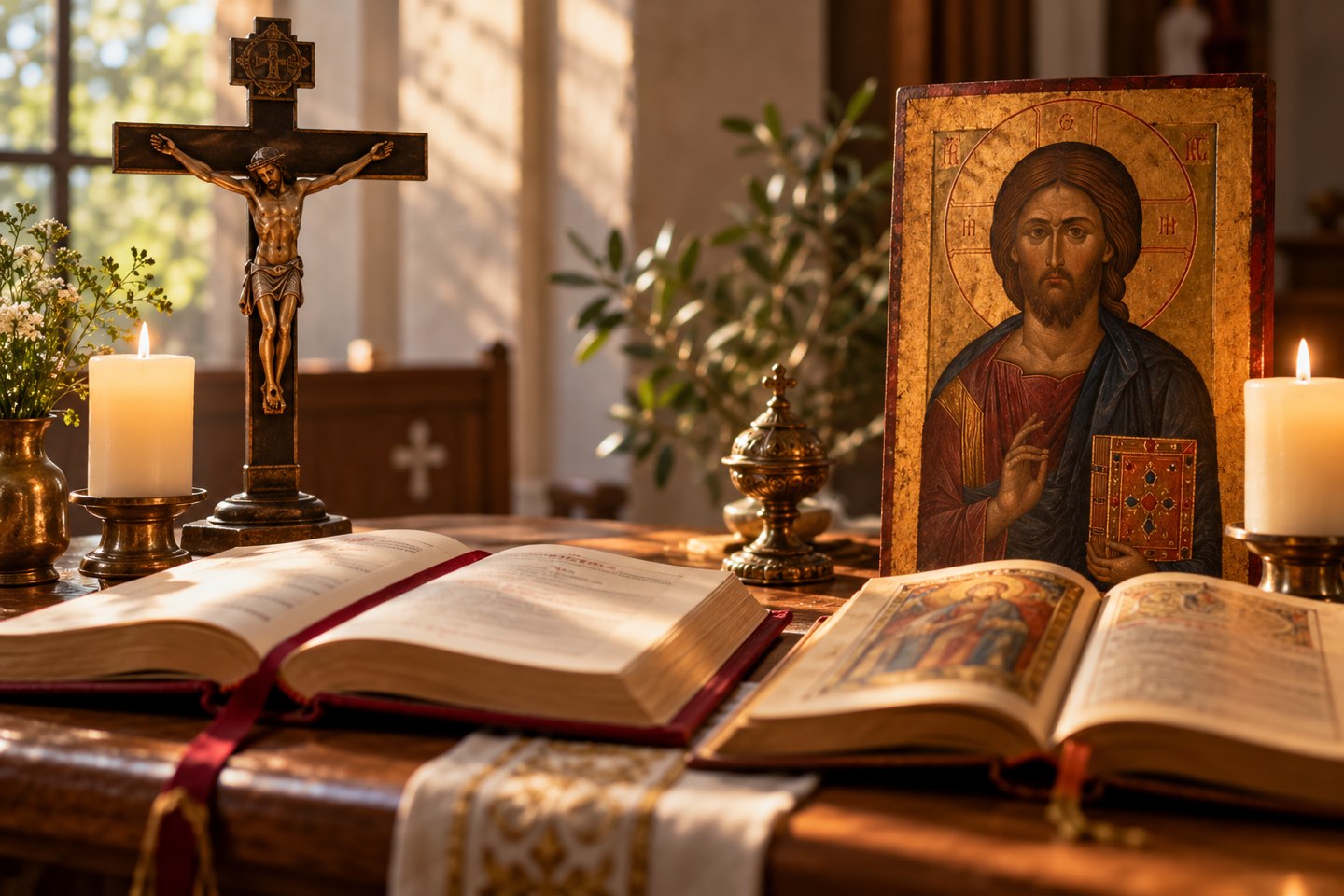
What is being restricted?
“Traditional Latin Mass” usually means Mass celebrated according to the Roman Missal of 1962. It is not a synonym for every Mass celebrated in Latin. The reformed Roman Missal can also be celebrated in Latin, and Gregorian chant belongs to the wider tradition of the Roman Rite.
Vatican II’s Sacrosanctum Concilium retained a place for Latin while permitting wider use of vernacular languages, and gave Gregorian chant a particular place in Roman worship (36 and 116). It also called for the faithful’s full, conscious and active participation (14). Quiet prayer and participation are not opposites; listening and interior offering belong alongside appropriate responses and singing.
An argument that begins “Vatican II banned Latin” has therefore started from a false premise. An argument that assumes the Council ordered every feature of every later parish practice is equally unreliable.
Why did the Church change its earlier policy?
Benedict XVI’s 2007 approach widened access to the older Missal. Francis took a different disciplinary approach in Traditionis Custodes, issued on 16 July 2021. The change concerns how liturgical books may be used; it is not a declaration that the Eucharist previously celebrated according to those books was invalid.
In his accompanying letter to bishops, Francis said that concessions intended to assist unity had, in his judgment, been used in some settings to deepen division and reject the reform. He connected rejection of the reform with rejection of the Council and of the Church’s authority. That is the stated reasoning of the legislation. Reporting it accurately does not require pretending that it describes every person who loves the older Mass.
The letter also criticises abuses in celebrations of the reformed liturgy. Its argument is not that careless worship becomes acceptable when it uses the newer Missal. Faithfulness to the Church’s liturgy matters wherever Mass is celebrated.
What do the principal rules say?
The details involve both diocesan authority and the Holy See. These are the central points, not a substitute for a particular community’s written permission:
| Document | What it establishes |
|---|---|
| Traditionis Custodes (2021), articles 1–3 | The reformed books are identified as the Roman Rite’s normative expression of prayer; bishops regulate authorised use of the 1962 Missal under the Holy See’s guidelines, including conditions concerning groups and locations. |
| Traditionis Custodes, articles 4–5 | Priests need the relevant authorisation; the document distinguishes priests already celebrating from those ordained after its publication. |
| Rescript of 20 February 2023 | Certain dispensations are reserved to the Apostolic See, including use of parish churches or erection of personal parishes for these celebrations, and permission for priests ordained after 16 July 2021. |
The 2023 rescript matters because a general statement that “the local bishop can simply make any exception” omits reservations to Rome. Conversely, the existence of restrictions does not mean there are no authorised celebrations. Permissions and dispensations are part of the practical picture.
What is the position as of September 2026?
A Vatican News report dated 15 September 2026, discussing the Dicastery for Divine Worship’s published 2025 decrees, describes permissions continuing under the existing framework across the change of pontificate. Those individual permissions are not evidence of a universal repeal of Traditionis Custodes.
For that reason, this article does not treat speculation about future policy as present law. The practical question for a worshipper is: what is currently authorised in this diocese and at this location? Ask the parish or diocesan liturgy office for the current arrangement. Different permissions may have different terms, and a schedule copied from an old website may no longer be reliable.
This review reflects sources checked on 26 September 2026. It should be updated if the Holy See changes the governing discipline.
Does attachment to the older Mass mean disobedience?
No. Love of a liturgical inheritance does not, by itself, establish rejection of the Church. Someone may be drawn by silence, chant, the prayers, family history or the care with which a community worships. It is unjust to infer a person’s motives solely from the Mass they lawfully attend.
At the same time, affection for a form of worship cannot justify denying the validity of the Church’s reformed liturgy or treating other Catholics as spiritually inferior. The same standard runs in both directions: Catholics attending the newer Missal should not ridicule those who mourn a restriction.
A community’s communion with the Church and its actual permissions matter more than a label on a directory. The older Missal, Latin language and a group’s canonical status are distinct questions. Ask about each rather than assuming one answers the others.
An illustration: the family chapel
This is an original teaching story, not an account of a real restriction.
A family has prayed for generations in a small chapel. When its use becomes limited, an elderly member says, “They are taking away the place where I learned that God loves me.” A younger relative hears only an argument about regulations and replies with a lecture.
Later, he sits beside her and asks about the people she remembers there. He still believes the family must respect the lawful arrangements. But he now understands that care requires more than explaining a rule.
The story illustrates a pastoral duty: people need to be heard. It does not prove that any particular restriction is wise or unwise. Good accompaniment can acknowledge grief while helping a community live faithfully within the Church.
May Catholics respectfully question these restrictions?
Yes. A disciplinary judgment is not the same kind of act as a dogmatic definition. Catholics may discuss whether a policy achieves its purpose and explain its effects. Canon 212 recognises the faithful’s right, and sometimes duty, to make their needs and opinions known, with respect for pastors, the common good and the dignity of persons.
A useful request identifies concrete facts: the community’s sacramental life, available locations, travel burdens, pastoral needs and willingness to remain in communion. Personal attacks and claims to know a bishop’s hidden motives make a serious conversation harder.
Respectful disagreement also requires accuracy. Quote the actual document, distinguish general law from a local decision, and avoid spreading a rumour because it confirms your fears. Our guide to raising a concern in the Church offers practical help with a measured approach.
How can a community respond constructively?
Ask for a meeting through appropriate representatives. Explain what would help people continue receiving the sacraments and remain connected to parish life. Keep correspondence factual and preserve copies of relevant permissions. If a canonical question remains, seek qualified advice rather than assuming an internet commentator has settled it.
Support priests who are trying to care for people within the rules. Welcome those who must worship in an unfamiliar setting. Learn the reformed liturgy’s own texts and possibilities for silence, chant and dignity. Our guide to finding a reverent Mass explains why reverence is a responsibility across lawful forms of Catholic worship.
The Eucharist is Christ’s gift before it is the setting of our preferences or disputes. Remembering that will not remove every disagreement. It can keep disagreement from becoming contempt.
Lord Jesus, preserve your Church in truth and charity. Comfort those who feel displaced, guide our pastors, and teach us to worship with reverence and love for one another. Amen.
Sources and further reading
- Vatican II: Sacrosanctum Concilium
- Francis: Traditionis Custodes (16 July 2021)
- Francis: Letter accompanying Traditionis Custodes
- Rescript on Traditionis Custodes (20 February 2023)
- Vatican News: 2025 permissions under the existing framework (15 September 2026; Vietnamese)
- Code of Canon Law: Rights and obligations of the faithful, including canon 222
Sources checked 26 September 2026. Illustrative stories are original teaching aids, not reported events or quotations from Scripture.
