
Why Don’t Catholics Eat Meat on Fridays, and Why Is Fish Allowed?
Friday is the day Jesus died, so Catholics mark it with a small penance. Here is why meat is given up and fish is allowed, what the rules are today, the myths, and what the custom is really for.
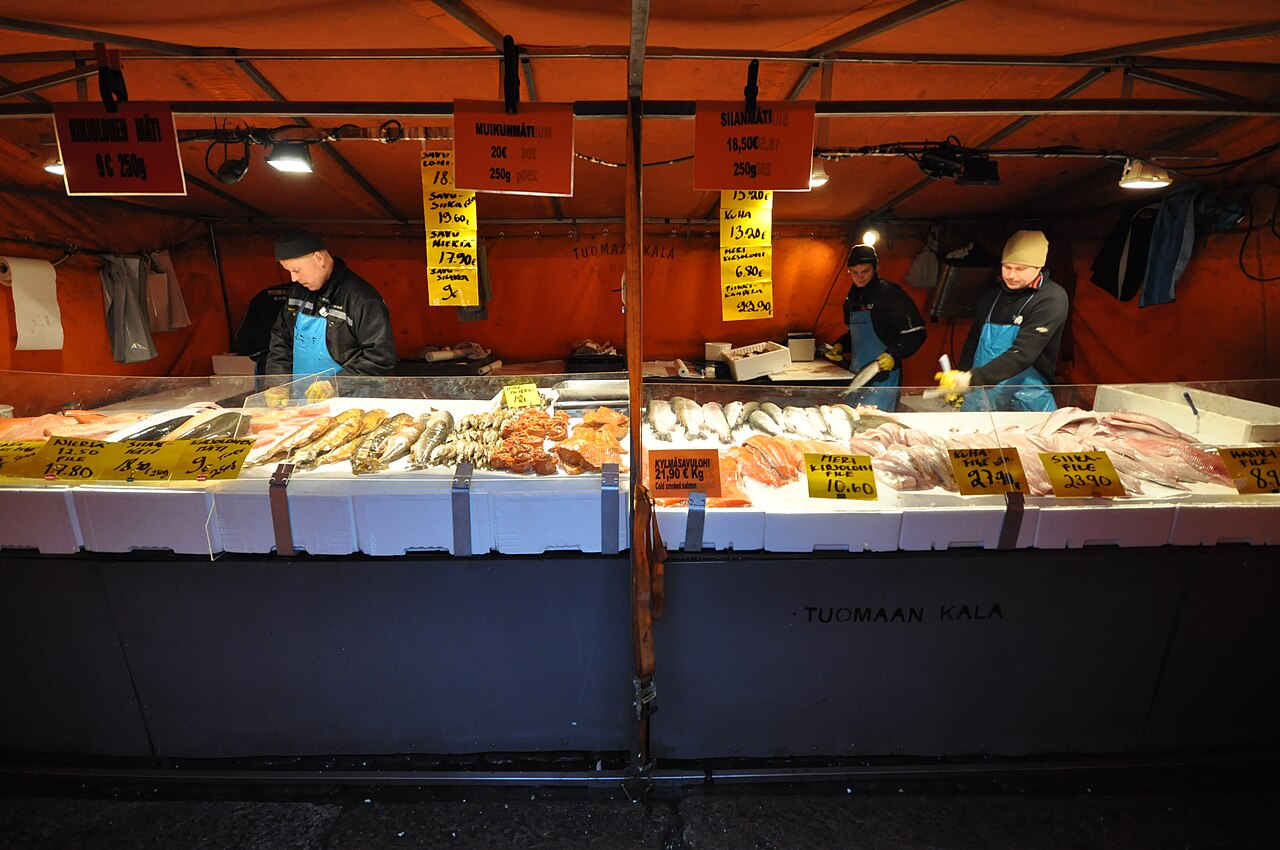
“Fish on Friday” is one of the best-known Catholic customs, even among people who know little else about Catholicism. Pubs and restaurants in many countries still serve fish on Fridays; some fast-food chains famously sell more fish sandwiches in Lent. But why do Catholics give up meat on Fridays? Why is fish allowed? Was the rule invented by a medieval pope to help the fishing industry? Is it biblical, and is it still binding? This article explains the meaning of Friday penance, its roots in Scripture and the early Church, why meat (and not fish) is given up, what Church law requires today and how it differs between countries, the fish-trade myth and some surprising economic facts, the fair objection from Christian freedom, the loopholes that miss the point, and how anyone can keep a meaningful Friday.
1. Friday: the day Jesus died
Catholics give up meat on Fridays because Friday is the day Jesus died on the cross. Every Friday is a small echo of Good Friday, and Catholics mark it with a small act of penance, traditionally by abstaining from meat. Fish is permitted, but it has never been required.
The Gospels are clear about the day. Mark tells us that Jesus was crucified and died on “the Parasceve, that is, the day before the sabbath” (Mark 15:42). The Jewish Sabbath was Saturday, so the day before was Friday.
Christians began marking Friday very early. The Didache, a Christian handbook from around the year 100, one of the oldest Christian writings outside the New Testament, tells believers not to fast on Mondays and Thursdays like the “hypocrites”, but on Wednesdays and Fridays (Didache 8). Wednesday was traditionally linked with Judas’s betrayal of Jesus, and Friday with his death.
The Catholic Church’s law today still names every Friday as a penitential day. The Code of Canon Law states that “the penitential days and times in the universal Church are every Friday of the whole year and the season of Lent” (canon 1250).
2. Fasting is biblical
Fasting from rich food as an act of prayer and penance comes straight from Scripture and the earliest Christian practice.
Jesus expected his followers to fast. When people asked why his disciples did not fast, while John the Baptist’s disciples and the Pharisees did, he answered: “Can the children of the marriage fast, as long as the bridegroom is with them?… But the days will come when the bridegroom shall be taken away from them; and then they shall fast in those days” (Mark 2:19-20). Christians have understood the “days when the bridegroom is taken away” to include the day of his death.
The Old Testament gives an example of giving up rich food, rather than all food. The prophet Daniel, mourning and praying for his people in exile, said: “I ate no desirable bread, and neither flesh, nor wine entered into my mouth… till the days of three weeks were accomplished” (Daniel 10:3). His fast was a partial one: plain food instead of meat and wine.
The early Christians kept regular fasts. Around 208, Tertullian described the “station” fasts that Christians in North Africa kept on Wednesdays and Fridays, when they fasted until three in the afternoon, the hour of Jesus’s death (On Fasting 10). The word “station” came from military language: Christians were “standing guard” in prayer.
3. Why meat, and why not fish?
Why meat, specifically? In the ancient and medieval world, meat was the food of feasts and celebrations. It was expensive and rich. Giving it up was a way of making the day plainer. And “meat” in this context meant the flesh of warm-blooded land animals and birds; fish were simply a different kind of creature, and fell outside the rule.
St Paul notices the difference in passing, in his discussion of the resurrection body: “All flesh is not the same flesh: but one is the flesh of men, another of beasts, another of birds, another of fishes” (1 Corinthians 15:39). Ancient people naturally classed fish separately from land animals.
Monastic rules made this distinction formal. Around 540, St Benedict wrote in his Rule for monks that “except the sick who are very weak, let all abstain entirely from eating the flesh of four-footed animals” (Rule of St Benedict 39). Fish, eggs and cheese were allowed. This monastic pattern shaped the later rule for all Catholics.
In the thirteenth century, St Thomas Aquinas explained the reason. Meat, he said, is given up in fasting because it is more pleasant to eat and more nourishing than fish or vegetables, and so gives up more of the body’s pleasures (Summa Theologiae II-II, q. 147, a. 8). The point was not that meat is bad, but that giving up a good thing is a sacrifice offered to God. In his day, fish was the ordinary food of poor people near rivers and coasts; it was not a luxury.
4. Church law, not divine law
It is important to understand that Friday abstinence is a Church law, a discipline which the Church can change, not a divine law or a teaching that certain foods are unclean.
In 1966, Pope Paul VI rewrote the Church’s rules on penance in the apostolic constitution Paenitemini (17 February 1966). He explained that the duty to do penance comes from God himself: Christ calls all his followers to conversion. But the particular forms of penance, such as abstaining from meat on certain days, are set by the Church, and can be adapted to different times and places.
The current Code of Canon Law states that “abstinence from meat, or from some other food as determined by the Episcopal Conference, is to be observed on all Fridays, unless a solemnity should fall on a Friday” (canon 1251). A solemnity is a great feast, such as Christmas or the Assumption; if it falls on a Friday, the penance is lifted because it is a day of celebration.
The law of abstinence binds Catholics from the age of fourteen; the law of fasting (which applies on Ash Wednesday and Good Friday) binds adults from the age of eighteen until their fifty-ninth birthday (canon 1252). The sick, pregnant women and others with a good reason are excused. Pastors and parents are asked to teach children the meaning of penance even before they are bound by law.
5. Different rules in different countries
Because the Code allows bishops’ conferences to substitute other forms of penance, the rule on ordinary Fridays outside Lent differs from country to country.
In the United States, the Catholic bishops issued a Pastoral Statement on Penance and Abstinence on 18 November 1966. They ended the binding obligation to abstain from meat on Fridays outside Lent, but strongly urged Catholics to continue the practice voluntarily, or to substitute another act of penance, prayer or charity. Many Catholics took this to mean the Friday penance had been abolished, which was not the bishops’ intention. During Lent, abstinence on Fridays remains obligatory in the United States.
In England and Wales, the bishops took the opposite step. In 2011 they restored the obligation to abstain from meat on all Fridays of the year, starting on 16 September 2011, the first anniversary of Pope Benedict XVI’s state visit to Britain. They explained that a shared act of penance would be a clear witness to Catholic identity in a secular society.
Bishops can also grant dispensations. In 2017, St Patrick’s Day, a great feast for Irish and Irish-American Catholics, fell on a Friday in Lent. Many American bishops dispensed their people from abstinence that day, often asking them to make a different act of penance instead, as Catholic News Agency reported. The flexibility shows that this is a discipline serving people, not a rigid taboo.
6. The fish-trade myth
A popular myth says that a medieval pope invented meatless Fridays to help the fishing industry, perhaps because a pope’s relatives owned fishing fleets. There is no evidence for this. As we have seen, the practice goes back to the first century. Ironically, the only famous law requiring people to eat fish for economic reasons came from Protestant England.
In 1563, the Parliament of the Protestant Queen Elizabeth I passed a statute making Wednesday a compulsory “fish day”, in addition to Fridays and Saturdays. The purpose was to support the English fishing industry and so maintain a supply of trained seamen for the navy. The law was nicknamed “Cecil’s Fast”, after Elizabeth’s chief minister William Cecil, who promoted it. To avoid any appearance of popery, the statute explicitly stated that it was made for political reasons, not religious ones, and anyone who claimed otherwise could be punished.
Friday abstinence really did affect the fish trade, though. In 1968, the economist Frederick Bell published a study in the American Economic Review examining fish prices in New England after the American bishops ended the obligation in 1966. He found that prices of several kinds of fish fell by around an eighth, as demand dropped.
The most famous commercial consequence came even earlier. In 1962, Lou Groen, a McDonald’s franchise owner in a heavily Catholic area of Cincinnati, Ohio, found that his sales collapsed every Friday, because his Catholic customers went to a rival that sold fish. He invented a fried fish sandwich, the Filet-O-Fish, and persuaded the company to adopt it. It is still on the menu worldwide, and sells especially well in Lent.
7. “Christians are free from food laws”
A fair objection comes from the New Testament. St Paul warned against false teachers “forbidding to marry, to abstain from meats, which God hath created to be received with thanksgiving by the faithful… For every creature of God is good, and nothing to be rejected that is received with thanksgiving” (1 Timothy 4:3-4). Isn’t Friday abstinence exactly what Paul condemned?
Catholics answer that Paul was condemning teachers who said that certain foods, or marriage, were evil in themselves. The Catholic Church teaches the opposite: meat is good, which is precisely why giving it up is a sacrifice. Friday abstinence is a shared discipline, not a claim that meat is unclean.
The New Testament itself shows the Church asking believers to abstain from certain foods for the sake of unity. When the apostles met in Jerusalem to decide what to ask of Gentile converts, they wrote: “it hath seemed good to the Holy Ghost and to us, to lay no further burden upon you than these necessary things: That you abstain from things sacrificed to idols, and from blood, and from things strangled” (Acts 15:28-29). Church authority could bind believers to food disciplines.
The question played a dramatic part in the Swiss Reformation. During Lent in March 1522, a group of men gathered at the house of the printer Christoph Froschauer in Zurich and ate sausages, deliberately breaking the Lenten fast. The reformer Huldrych Zwingli was present, though he did not eat himself. He then preached a sermon defending them, arguing that Christians are free to eat whatever they wish. The “Affair of the Sausages” became one of the opening acts of the Reformation in Switzerland.
8. Loopholes miss the point
Some Catholics try to keep the letter of the law while missing its point. A lobster dinner on a Friday in Lent is technically meatless, but hardly a penance.
Some rulings on what counts as “meat” have become famous. In 2010, a man in Louisiana wrote to Archbishop Gregory Aymond of New Orleans asking whether alligator, a popular local food, counted as meat. The archbishop replied that alligator is considered “in the fish family” for the purposes of Lent. The story was widely reported, including by Catholic News Agency in 2013.
In Venezuela, according to a long-standing custom said to rest on a permission granted in Rome in the eighteenth century, the capybara, a large semi-aquatic rodent, is eaten during Lent as if it were fish, because it lives in water. The New York Sun reported on the custom in 2005. Such rulings, whatever their basis, can make the whole practice seem like a game of loopholes.
The prophet Isaiah warned against fasting that observes the rules while missing the purpose. The people complained that God ignored their fasts. God answered: “Behold in the day of your fast your own will is found, and you exact of all your debtors. Behold you fast for debates and strife… Is not this rather the fast that I have chosen?… Deal thy bread to the hungry, and bring the needy and the harbourless into thy house” (Isaiah 58:3-7). A meatless Friday that makes no difference to how we treat others has missed the point.
9. Keeping it well
Kept well, a meatless Friday joins self-denial to prayer and generosity, and, as it happens, it can also help care for creation.
The angel Raphael, revealing himself to Tobit and his son Tobias after guiding them on their journey, told them: “Prayer is good with fasting and alms more than to lay up treasures of gold” (Tobit 12:8). Christians have always seen the three as belonging together: give up something, pray more, and give what you save to those in need.
St John Chrysostom made the same point forcefully in 387, preaching in Antioch during Lent. “What good is it”, he asked, “if we abstain from birds and fishes, and yet bite and devour our brethren?” He meant by slander and gossip. “The slanderer has eaten his brother’s flesh” (Homilies on the Statues 3). Fasting from food is worthless if we do not also fast from sin.
There is an unexpected modern benefit. In 2022, researchers at the University of Cambridge led by Shaun Larcom studied the effect of the English and Welsh bishops’ decision to restore meatless Fridays in 2011. Although only about a quarter of Catholics changed their diets, they estimated that the change saved more than 55,000 tonnes of carbon emissions a year. The researchers suggested that if the Pope restored the rule worldwide, the effect would be very large. Care for creation was not the original purpose, but it is a welcome side effect.
10. Anyone can try it
Anyone can try a simple meat-free Friday, as a small way of remembering Christ’s sacrifice. Many other Christians keep the same day in their own way.
Fish have a special place in the Gospels. After the resurrection, Jesus appeared to his disciples by the Sea of Galilee. When they came ashore after a night of fishing, “they saw hot coals lying, and a fish laid thereon, and bread.” Jesus said, “Come, and dine,” and “taketh bread, and giveth them, and fish in like manner” (John 21:9-13). The risen Lord cooked fish for his friends.
Orthodox Christians keep a much stricter Friday fast than Catholics. On most Wednesdays and Fridays of the year, traditionally, Orthodox Christians abstain not only from meat, but also from dairy products, eggs, fish, wine and oil, eating a simple vegan diet. Many Eastern Catholics keep similar fasts.
Even some Protestants have kept Friday fasts. In the 1730s, John Wesley and the members of the “Holy Club” at Oxford fasted every Wednesday and Friday. Later, as founder of Methodism, Wesley urged his followers to fast on Fridays, especially as a preparation for Holy Communion. He saw fasting as one of the “means of grace” that Christians neglect at their peril.
Frequently asked questions
Is it a sin to eat meat on a Friday? For Catholics bound by the law, deliberately ignoring the obligatory Friday penance without reason is a sin. Forgetting is not. See Accidentally Ate Meat on a Friday in Lent?
Do Catholics have to eat fish on Fridays? No. Fish is allowed, not required. Any meat-free meal will do.
Do I have to abstain from meat every Friday of the year? It depends on where you live. In England and Wales, yes; in the United States, only in Lent, though another penance is asked for the rest of the year.
What about Ash Wednesday? It is a day of fasting and abstinence. See Why Do Catholics Get Ashes on Ash Wednesday?
Sources and further reading
- The Bible: Tobit 12:8; Isaiah 58:3-7; Daniel 10:2-3; Mark 2:18-20; 15:42; John 21:9-13; Acts 15:28-29; 1 Corinthians 15:39; 1 Timothy 4:1-5.
- Code of Canon Law (1983), canons 1249-1253; Paul VI, Paenitemini (1966).
- United States Conference of Catholic Bishops, Pastoral Statement on Penance and Abstinence (18 November 1966); Catholic Bishops’ Conference of England and Wales, resolution on Friday penance (2011).
- Didache 8; Tertullian, On Fasting 10; Rule of St Benedict 39; St John Chrysostom, Homilies on the Statues 3; St Thomas Aquinas, Summa Theologiae II-II, q. 147.
- Statute of 5 Elizabeth I, c. 5 (1563).
- Frederick W. Bell, “The Pope and the Price of Fish”, American Economic Review 58 (1968).
- Shaun Larcom and colleagues, study of the climate effect of meatless Fridays (University of Cambridge, 2022).
