
Do Catholics Believe in Ghosts? Souls, Spirits and the Occult
Catholics believe the dead live on, and that God may allow a soul to appear. But séances and mediums are forbidden. Here is what the Church teaches about ghosts, spirits and grief.
Perhaps something odd has happened to you: a presence you felt in your house, a dream in which a dead parent spoke to you, an unexplained noise in the night. Perhaps you have lost someone you love, and you long for some sign that they are still there. Or perhaps you are a Protestant who wonders whether Catholic prayers for the dead and to the saints are really a form of spiritualism. This article explains what the Catholic Church teaches about the dead and about ghosts: that the dead truly live on, that God may sometimes allow a soul to appear, but that spirits do not wander at will. It looks at what the Bible says, the stories in Catholic tradition, the reasons for caution, the firm ban on séances and mediums, the history of spiritualism, the difference between praying to saints and summoning spirits, what to do when a place seems disturbed, some popular confusions, and the Catholic advice for anyone grieving or frightened.
1. The dead live on, but do not wander at will
Catholics believe that the dead live on, and that God may, in rare cases, allow a soul to appear to the living. But the Church does not teach that spirits of the dead wander the earth at will, haunting houses or trapped between worlds.
In 1336, Pope Benedict XII issued the constitution Benedictus Deus. He defined that after death, souls go at once to their eternal state. The souls of the saints, and of those who have been purified, see God face to face in heaven. Those who still need purification are purified (in what the Church calls purgatory). And those who die in mortal sin go to hell. There is no long period of wandering on earth.
St Thomas Aquinas, in the thirteenth century, asked whether the souls of the dead can leave their place after death. He answered that by the natural order, the souls of the dead cannot appear to the living at will. But by God’s special permission, souls of the dead sometimes do appear to the living, whether to ask for prayers, to give a warning, or to teach something (Summa Theologiae, Supplement, q. 69, a. 3). Such appearances are by God’s permission, not at the soul’s own whim.
The Gospels themselves record an appearance of the dead. On a high mountain, Jesus was transfigured before Peter, James and John: “his face did shine as the sun: and his garments became white as snow. And behold there appeared to them Moses and Elias talking with him” (Matthew 17:1-8). Moses had died centuries earlier, and Elijah had been taken up to heaven. Yet both appeared and spoke with Jesus, in front of three witnesses.
2. The Bible takes ghosts for granted
The Bible takes the idea of ghosts for granted in places, without building any teaching on it.
One night on the Sea of Galilee, the disciples were in their boat, struggling against the wind. In the fourth watch of the night, Jesus came to them, walking on the water. “And they seeing him walking upon the sea, were troubled, saying: It is an apparition. And they cried out for fear.” Jesus said to them: “Be of good heart: it is I, fear ye not” (Matthew 14:25-27). The disciples believed in ghosts; Jesus did not rebuke the belief, but simply showed them it was him.
After the resurrection, Jesus appeared to the disciples in Jerusalem. “But they being troubled and frightened, supposed that they saw a spirit.” Jesus said to them: “See my hands and feet, that it is I myself; handle, and see: for a spirit hath not flesh and bones, as you see me to have.” To prove the point, he asked for something to eat, and they gave him a piece of broiled fish, which he ate in front of them (Luke 24:36-43). The risen Jesus was not a ghost.
The Second Book of Maccabees describes a vision of the dead. Before a great battle against the Syrian general Nicanor, Judas Maccabeus told his troops of a dream. In it, he saw Onias, a good high priest who had died, praying for the whole Jewish people. Then another figure appeared, an old man, glorious and majestic. Onias said: “This is a lover of his brethren, and of the people of Israel: this is he that prayeth much for the people, and for all the holy city, Jeremias the prophet of God” (2 Maccabees 15:11-16). The dead were praying for the living.
3. Souls asking for prayer
Catholic tradition contains many accounts of souls of the dead appearing to ask for prayer. The Church permits Catholics to believe such stories, but never requires anyone to believe any particular one.
St Perpetua, a young noblewoman martyred at Carthage in 203, kept a diary in prison. In it she records that she saw in a vision her younger brother Dinocrates, who had died of a cancer of the face at the age of seven. He was hot, thirsty, pale and dirty, and could not reach the water in a pool. She prayed for him day and night. Later, she saw him again, clean, well dressed and refreshed, the wound on his face healed, drinking from a golden bowl and playing as children do (Passion of Perpetua and Felicity 7-8).
Pope St Gregory the Great tells a story about a monk named Justus in his own monastery in Rome. Justus, a doctor, had secretly kept three gold coins, against the monastery’s rule of poverty. He admitted it as he lay dying, and died grieving for his fault. Gregory ordered thirty Masses to be offered for him on thirty consecutive days. After the thirtieth Mass, Justus appeared in a vision to his brother, Copiosus, saying that until then he had been in torment, but that now he had been released (Dialogues 4.57). The custom of thirty consecutive Masses for the dead, known as “Gregorian Masses”, comes from this story.
In Rome, beside the River Tiber, stands the church of the Sacred Heart of Jesus in Suffrage (Sacro Cuore del Suffragio). It houses a small museum, the Museum of the Souls in Purgatory, assembled by a French priest, Father Victor Jouët, from 1897. It displays books, garments and other objects bearing scorched marks of fingers and hands, said to have been left by souls from purgatory asking for prayers. The Church has made no ruling on these objects, and Catholics are free to believe or doubt them.
4. Why the Church is cautious
The Church is cautious about ghost stories, because an apparent ghost may be imagination, illness, fraud or even a deceiving spirit.
St Paul warned the Corinthians that some who claimed to be apostles were false. “And no wonder: for Satan himself transformeth himself into an angel of light” (2 Corinthians 11:14). Not everything that seems spiritual or beautiful comes from God.
Around 422, St Augustine was asked by Paulinus of Nola about apparitions of the dead. In his reply, On the Care to Be Had for the Dead, he argued that the dead do not ordinarily know what happens on earth. When the dead appear in dreams, he suggested, it is usually not the soul itself, but an image produced in the mind, perhaps by the action of angels, while the dead person remains unaware. He gave the example of a living man who appeared to someone in a dream to give advice, though the man himself knew nothing of it.
St Ignatius of Loyola, the founder of the Jesuits, learned caution from his own experience. In 1522, while living at Manresa in Spain, he was often consoled by a beautiful vision, a shining shape like a serpent with many eye-like lights. It gave him great comfort. Later, kneeling before a cross, he saw the same vision and realised that its colours were dull, and that it came from the devil, not from God. He recounted this in his Autobiography (19 and 31). His Spiritual Exercises later taught Catholics how to discern which spiritual experiences come from God.
5. Séances, mediums and Ouija boards are forbidden
Trying to summon or question the dead is firmly forbidden for Catholics. Séances, mediums and Ouija boards are ruled out.
The law of Moses forbids every attempt to consult the dead. “Neither let there be found among you any one… that consulteth pythonic spirits, or fortune tellers, or that seeketh the truth from the dead. For the Lord abhorreth all these things” (Deuteronomy 18:10-12).
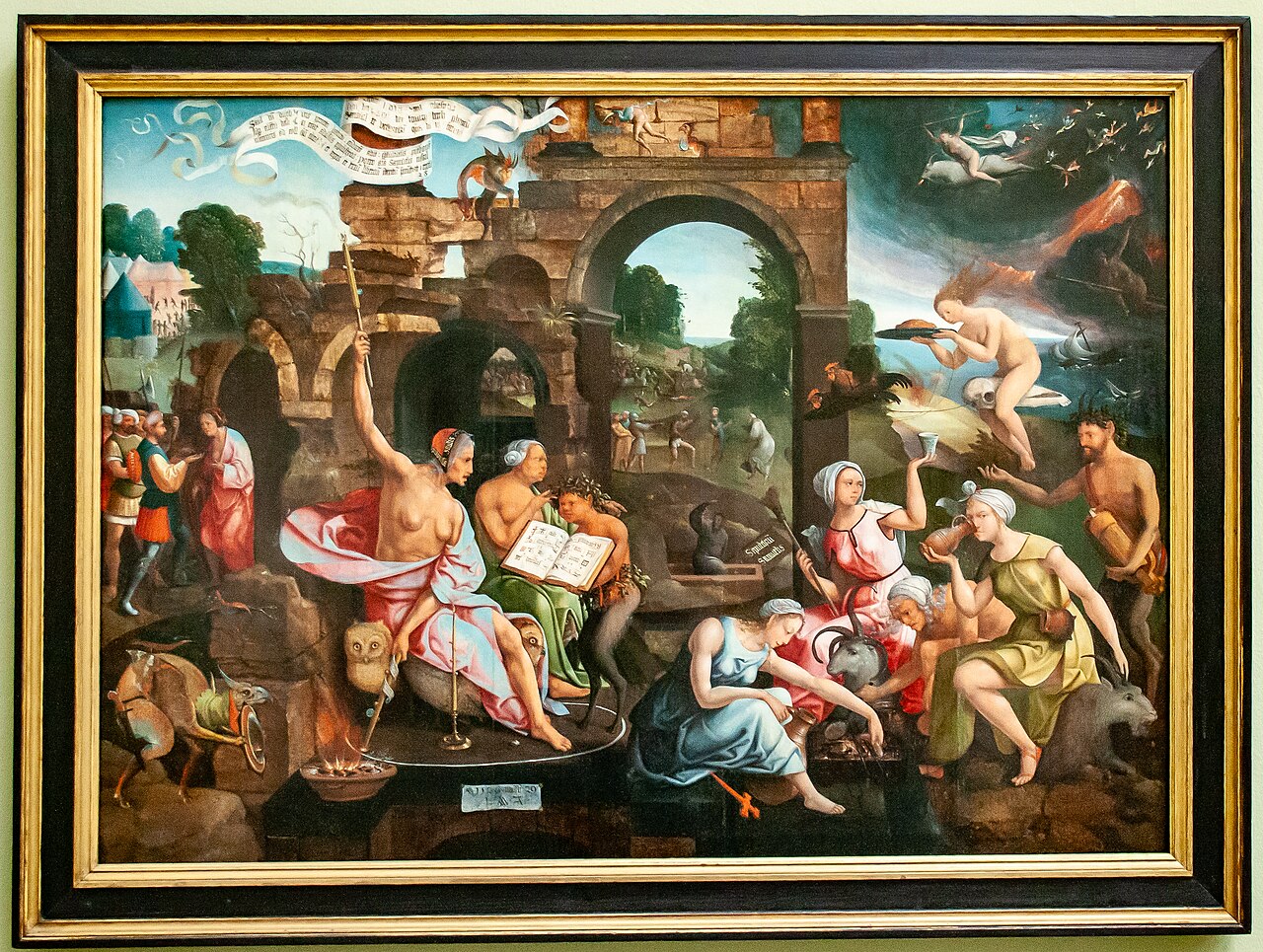
The Bible’s great warning is the story of King Saul. Saul had banned mediums from Israel. But on the eve of battle against the Philistines, terrified and abandoned by God, he went in disguise to a medium at Endor and asked her to call up the dead prophet Samuel. A figure appeared, and told Saul that he and his sons would die the next day, as they did (1 Samuel 28:3-20). The Chronicler later records: “So Saul died for his iniquities… and moreover consulted also a witch” (1 Chronicles 10:13). See also Do Catholics Celebrate Halloween?
The Church has applied this law to modern spiritualism. On 24 April 1917, the Holy Office (now the Dicastery for the Doctrine of the Faith) ruled that Catholics may not take part in spiritualist séances or sittings, whether with or without a medium, even as mere onlookers, and even with good intentions. The Catechism teaches that “all forms of divination are to be rejected”, including “conjuring up the dead” and “recourse to mediums” (CCC 2116).
6. Spiritualism and real grief
Modern spiritualism grew out of real grief and longing, and the Church’s objection is partly that it exploits the bereaved.
In 1848, two young sisters, Margaret and Kate Fox, in Hydesville in upstate New York, claimed that a spirit in their house answered their questions with rapping noises. The story caused a sensation and launched the modern spiritualist movement in America and Europe. On 21 October 1888, in an interview published in the New York World, Margaret Fox confessed publicly that the sisters had produced the rapping sounds by cracking their toe joints. She later retracted the confession, but the damage had been done.
Arthur Conan Doyle, the creator of Sherlock Holmes, was raised a Catholic and educated by the Jesuits at Stonyhurst College in Lancashire. He gave up the Catholic faith as a young man. During and after the First World War, he became the leading advocate of spiritualism in the English-speaking world. His book The New Revelation (1918) appeared in the same year his son Kingsley died of pneumonia after being wounded in the war; his brother Innes died early the next year. Like millions of bereaved families after the war, Conan Doyle longed to reach the dead.
The magician Harry Houdini also longed to contact his dead mother, whom he adored. But the mediums he consulted all failed to convince him, and he became a determined exposer of fraudulent mediums. In 1924, he sat on a committee set up by Scientific American magazine to investigate the Boston medium Mina Crandon, known as “Margery”, and exposed her tricks. Houdini saw how fake mediums preyed on grieving people.
7. Asking for prayer is not summoning
A fair objection, often raised by Protestants, is that Catholic prayers to the saints look like the same thing as spiritualism. Catholics reply that asking the saints for their prayers is not the same as summoning the dead.
The Book of Revelation gives a picture of the saints in heaven offering the prayers of God’s people on earth. “The four living creatures, and the four and twenty ancients, fell down before the Lamb, having every one of them harps, and golden vials full of odours, which are the prayers of saints” (Revelation 5:8). The saints in heaven are not cut off from us; they join their prayers to ours.
The first Christians asked the saints for their prayers. Around 260, pilgrims to a shrine of St Peter and St Paul beneath the church of San Sebastiano on the Appian Way in Rome scratched hundreds of short prayers on the walls. Many are still legible today, such as “Paul and Peter, pray for Victor”. They did not try to make the apostles appear or speak; they simply asked for their prayers.
The Council of Trent, in 1563, taught that it is good and useful to ask the saints for their prayers. But it also ordered that every superstition be removed from the practice. The difference is clear: a Catholic asks a saint to pray to God on his behalf, as we ask a friend on earth to pray for us. A spiritualist tries to make the dead appear, speak or give information. The first is prayer; the second is forbidden. See also Why Do Catholics Pray to Mary and the Saints?
8. When a place seems disturbed
When a house or place seems disturbed, the Church’s response is sober. First, rule out natural causes. Then, pray, and ask a priest to bless the place.
The Church’s rite of exorcism, in the Roman Ritual first issued in 1614 and revised in 1999, tells the priest not to believe readily that someone is possessed by the devil. He must carefully distinguish genuine possession from mental or physical illness, and should consult doctors and psychiatrists. The same caution applies to houses: most “hauntings” have natural explanations, such as old pipes, draughts, animals or electrical faults.
The Bible tells of an evil spirit driven away by prayer. In the Book of Tobit, a young woman named Sarah had been married seven times, but each husband had been killed by a demon on the wedding night. When Tobias, guided by the angel Raphael, married her, the couple prayed together on their wedding night, and the angel bound the demon (Tobit 3:7-8; 8:1-3). Prayer, not magic, is the Christian answer.
St John Vianney, the parish priest of Ars in France, endured years of strange night-time disturbances, from about 1824 until near his death in 1859: loud knocking, noises, voices, and even his bed curtains being set on fire. He attributed them to the devil, whom he called the grappin (the “grabber”). His biographer, Abbé Alfred Monnin, recorded many of these events. Vianney did not let them frighten him. He carried on hearing confessions, sometimes for sixteen hours a day. See also What Do Priests Experience Hearing Confessions?
9. Sorting out popular ideas
Some popular ideas about ghosts need sorting out. The Holy Ghost is not a ghost, and most ghost lore is folklore, not Catholic doctrine.
“Holy Ghost” is simply the older English name for the Holy Spirit. The word “ghost” comes from the Old English gast, meaning “spirit” or “breath”. The Catholic Douay-Rheims Bible (New Testament 1582) and the Protestant King James Bible (1611) both use “Holy Ghost”. The Holy Spirit is the third person of the Trinity, not a ghost in the modern sense. Most modern English translations now say “Holy Spirit”.
In Shakespeare’s Hamlet (around 1600), the ghost of Hamlet’s father says that he is “doomed for a certain term to walk the night” and confined by day in fires until his sins are “burnt and purged away”, a clear reference to purgatory. Protestants of the time denied purgatory, and many argued that apparitions were not souls of the dead at all. Ludwig Lavater, a Reformed pastor in Zurich, wrote a widely read book arguing that such apparitions were either illusions or devils, never souls. It was published in German in 1569, in Latin in 1570, and in English in 1572 as Of Ghostes and Spirites Walking by Nyght.
The Church today is very cautious about claims of the supernatural. On 17 May 2024, the Dicastery for the Doctrine of the Faith issued new norms for discerning reported apparitions and other supernatural phenomena. Under them, the Church will normally not declare any reported apparition to be certainly supernatural in origin. At most, it may say that there is no objection to people’s devotion connected with it (a nihil obstat).
10. Pray for the dead; do not chase them
If you are grieving, or frightened by something you have experienced, the Catholic advice is simple: pray for the dead, and do not chase them.
The Bible praises the practice of praying for the dead. After a battle, Judas Maccabeus sent money to Jerusalem for a sacrifice to be offered for his fallen soldiers. The book says this was done “thinking well and religiously concerning the resurrection”, and that “it is therefore a holy and wholesome thought to pray for the dead, that they may be loosed from sins” (2 Maccabees 12:43-46). See also Why Do Catholics Pray for the Dead?
St Catherine of Genoa, a fifteenth-century Italian noblewoman, ran a large hospital in Genoa and cared for plague victims. She was also a mystic. In her Treatise on Purgatory, published in 1551 after her death, she described the souls in purgatory as suffering, yet full of joy, because they are being purified by God’s love and are certain of reaching him. Her vision gives comfort to those who pray for loved ones who have died: they are not lost or wandering, but in God’s hands.
St Nicholas of Tolentino, an Augustinian friar who died in 1305, is the patron of the souls in purgatory. According to his early biography, he once dreamed that a dead friar he had known appeared to him, begging him to offer Masses for his release from purgatory. Nicholas offered Mass for him and for the other souls every day for a week, and then saw the friar again, thanking him. Pope Eugene IV canonised him in 1446. The Catholic answer to the dead is not to call them up, but to pray for them, and to trust them to God.
Frequently asked questions
Do Catholics believe in ghosts? Catholics believe the dead live on and that God may sometimes allow a soul to appear. But the Church does not teach that ghosts roam freely.
Can Catholics use a Ouija board? No. Ouija boards, séances and mediums are attempts to contact the dead or spirits, which the Church forbids.
What should I do if my house feels haunted? Check for natural causes first. Then pray, go to confession, and ask your parish priest to bless the house.
I dreamed of my dead mother. Was it really her? The Church does not say. Take the dream as a call to pray for her, and entrust her to God.
You may also like Can Souls in Purgatory Pray for Us? and Is Purgatory in the Bible?
Sources and further reading
- The Bible: Deuteronomy 18:9-12; 1 Samuel 28:3-20; 1 Chronicles 10:13-14; Tobit 3:7-8; 8:1-3; 2 Maccabees 12:39-46; 15:11-16; Matthew 14:22-33; 17:1-8; Luke 24:36-43; 2 Corinthians 11:13-15; Revelation 5:8.
- Catechism of the Catholic Church, 1021-1032, 2116-2117.
- Benedict XII, Benedictus Deus (1336); Council of Trent, Session 25 (1563); Holy Office, decree of 24 April 1917; Dicastery for the Doctrine of the Faith, Norms for Proceeding in the Discernment of Alleged Supernatural Phenomena (17 May 2024).
- The Passion of Perpetua and Felicity; St Augustine, On the Care to Be Had for the Dead; St Gregory the Great, Dialogues 4; St Thomas Aquinas, Summa Theologiae, Supplement, q. 69.
- St Ignatius of Loyola, Autobiography; St Catherine of Genoa, Treatise on Purgatory; Alfred Monnin, Life of the Curé d’Ars.
- Ludwig Lavater, Of Ghostes and Spirites Walking by Nyght (1572).
- Arthur Conan Doyle, The New Revelation (1918).
