
What Are Indulgences? Did the Catholic Church Sell Forgiveness?
An indulgence was never forgiveness of sins for money, though indulgences were scandalously sold. Here is what they are, how the abuse happened, how the Church reformed it, and what they mean today.
For many people, the word “indulgence” means one thing: the scandal that sparked the Protestant Reformation. History students learn that in 1517 the Catholic Church was selling forgiveness of sins for money, that a friar named Tetzel promised that souls would fly out of purgatory when coins dropped into his chest, and that Martin Luther nailed ninety-five theses to a church door in protest. Much of that story is true. But it is not the whole story, and it leaves out what an indulgence actually is. This article explains what the Church teaches indulgences are and are not, where the practice came from, how it became corrupted, how the Church reformed it, the Protestant objections, and what indulgences mean for Catholics today, when they cost nothing at all.
1. Never forgiveness for money, but scandalously sold
An indulgence was never, in Catholic teaching, the forgiveness of sins in exchange for money. But indulgences were scandalously sold in the late Middle Ages, and the Catholic Church today freely admits it.
Even the official instructions under which Johann Tetzel preached his notorious indulgence in 1517 required more than money. The Instructio Summaria, issued by Archbishop Albrecht of Mainz to his preachers, stated that living persons seeking the plenary indulgence for themselves must be contrite in heart and confess their sins. The instructions were tragically undermined by the fundraising pressure and the crude preaching that accompanied them, especially regarding indulgences for the dead.
Luther himself, in his Ninety-Five Theses of 31 October 1517, did not reject indulgences outright. He attacked their abuse. His seventy-first thesis even declared: “Let him who speaks against the truth concerning papal indulgences be anathema and accursed.” His next thesis blessed anyone who guarded against the “lust and licence” of the indulgence preachers. Luther’s views later hardened, but his original protest was against corruption.
The Church eventually ended the trade completely. In 1567, after the Council of Trent, Pope St Pius V issued a bull, Etsi Dominici Gregis, cancelling every indulgence that involved any fee or financial transaction. Since then, no indulgence can be obtained by paying money.
2. What an indulgence actually is
To understand indulgences, it helps to understand a distinction Catholics make between the guilt of sin and its consequences. When God forgives a sin, through repentance and, for Catholics, through confession, he removes the guilt and restores us to his friendship. But sin can leave lingering effects, what the Church calls “temporal punishment”: damage in our souls, disordered attachments, and harm in the world, which need to be healed and purified, either in this life or in purgatory.
An indulgence is a remission of that temporal punishment for sins whose guilt has already been forgiven. It presupposes repentance and forgiveness; it never replaces them. Pope St Paul VI gave the official definition in his apostolic constitution Indulgentiarum Doctrina on 1 January 1967: an indulgence is “a remission before God of the temporal punishment due to sins whose guilt has already been forgiven” (CCC 1471). An indulgence cannot forgive a sin that has not been repented of.
The Bible shows that forgiveness and consequences are different. When Israel rebelled in the desert and refused to enter the promised land, Moses prayed for the people, and God said, “I have forgiven according to thy word.” Yet he added that that generation would not see the land they had refused (Numbers 14:19-23). They were forgiven, but the consequence remained.
The same pattern appears in the story of King David. After his adultery with Bathsheba and the murder of her husband, David repented. The prophet Nathan told him, “The Lord also hath taken away thy sin.” But painful consequences of his sin still followed (2 Samuel 12:13-14). An indulgence is the Church’s prayer that God will heal such consequences.
3. Roots in the early Church’s penances
The practice of indulgences grew from the early Church’s system of public penance. In the first centuries, Christians who committed grave public sins, such as murder, adultery or denying the faith under persecution, were excluded from Communion and had to do public penance, sometimes for years, before being readmitted. Bishops had the authority to shorten these penances for good reason.
St Paul himself showed this pastoral flexibility. A member of the church in Corinth had committed a grave sin and been disciplined by the community. In his second letter, Paul urged the Corinthians to forgive and comfort the man, “lest perhaps such an one be swallowed up with overmuch sorrow”. He added, “to whom you have pardoned any thing, I also. For, what I have pardoned… for your sakes have I done it in the person of Christ” (2 Corinthians 2:6-10).
Around 250, during the persecution of the Emperor Decius, many Christians in Carthage lapsed, offering sacrifice to the pagan gods to save their lives. Afterwards, many sought “letters of peace” from Christians who were in prison awaiting martyrdom, the “confessors”. These letters asked the bishop to shorten the lapsed person’s penance because of the confessor’s sufferings. St Cyprian, bishop of Carthage, wrote many letters about this practice (Letters 15-23), accepting the principle but insisting that the bishop must judge each case. This is an early root of the idea that the merits of the holy can help others.
In 325, the Council of Nicaea gave bishops authority to treat penitents more leniently when they showed real signs of conversion, with fear and tears and good works, rather than mere outward compliance (canon 12). The principle was clear: penance was meant to heal, and could be shortened when healing had begun.
4. The authority behind indulgences
The Church grants indulgences, it teaches, by the authority Christ gave it to “bind and loose”, drawing on the merits of Christ and the saints, shared within his Body.
Jesus gave this authority first to Peter: “I will give to thee the keys of the kingdom of heaven. And whatsoever thou shalt bind upon earth, it shall be bound also in heaven: and whatsoever thou shalt loose on earth, it shall be loosed also in heaven” (Matthew 16:19). He later gave the same authority to the disciples together (Matthew 18:18).
The Gospels also show that the faith of others can help a person before God. When four friends carried a paralysed man to Jesus and, unable to get through the crowd, lowered him through the roof, Mark tells us that Jesus, “seeing their faith”, said to the paralytic, “Son, thy sins are forgiven thee”, and then healed him (Mark 2:1-12). The faith of his friends mattered.
In 1343 Pope Clement VI gave the first official explanation of what came to be called the “treasury of the Church”. In the bull Unigenitus Dei Filius, he taught that Christ’s sacrifice was so infinitely precious that a single drop of his blood would have been enough to save all humanity. The superabundant merits of Christ, together with those of Mary and the saints, form a “treasury” which Christ entrusted to the Church to apply to the faithful. Indulgences draw on this treasury, which is really an expression of the communion of saints: the holiness of one member helps the whole body.
5. Pilgrimages, crusades and jubilees
In the Middle Ages, indulgences became attached less to public penance and more to particular acts of devotion: pilgrimages, crusades and jubilees.
In November 1095, at the Council of Clermont in France, Pope Urban II launched the First Crusade to help the Eastern Christians and free Jerusalem. The council declared that anyone who set out to free the Church of God at Jerusalem “out of devotion alone, not for the gaining of honour or money”, could count the journey in place of all penance (canon 2). The crusades, with all their violence and tragedy, spread the idea of the plenary indulgence.
In 1300, Pope Boniface VIII proclaimed the first Christian Jubilee year, granting a full indulgence to those who confessed their sins and visited the basilicas of St Peter and St Paul in Rome. Pilgrims flooded into the city in enormous numbers; the chronicler Giovanni Villani, who was there, reported a constant crowd of some two hundred thousand pilgrims. Dante mentions the crowds crossing the bridge to St Peter’s in his Inferno. Jubilees are still held, normally every twenty-five years; the most recent was in 2025.
According to Franciscan tradition, in 1216 St Francis of Assisi went to Pope Honorius III to ask a remarkable favour: a plenary indulgence for anyone who visited his tiny chapel of the Portiuncula, near Assisi, without any offering of money. Francis wanted the poor, who could not afford to go to Rome or Jerusalem, to receive the same grace as the rich. The “Portiuncula indulgence” is still granted every 2 August.
6. The corruption
By the late Middle Ages, indulgences connected with almsgiving had become a major fundraising tool, and real corruption followed.
The Church knew about the danger long before Luther. In 1215, three centuries before the Reformation, the Fourth Lateran Council issued a canon restricting excessive and indiscreet indulgences, which it said brought contempt on the Church’s power of the keys, and warning against the deceptions of travelling alms-collectors, the “pardoners”, who exaggerated what indulgences could do in order to collect more money (canon 62). Geoffrey Chaucer’s corrupt Pardoner in The Canterbury Tales, written around 1390, shows how widely the problem was known.
The worst case came just before the Reformation. Albrecht of Brandenburg, a young prince, wanted to become Archbishop of Mainz while already holding two other dioceses, which church law forbade. He paid the papal court a huge sum for a dispensation, borrowing it from the Fugger banking house of Augsburg. Pope Leo X then authorised an indulgence in Albrecht’s territories, officially to raise funds for rebuilding St Peter’s Basilica. By private agreement, half the proceeds went to repay Albrecht’s debt to the bankers.
The Dominican preacher Johann Tetzel was given the task of preaching it. His preaching was so crude that it horrified Luther. A popular rhyme associated with Tetzel ran: “As soon as the coin in the coffer rings, the soul from purgatory springs.” Luther’s twenty-seventh thesis attacked exactly this: “They preach only human doctrines who say that as soon as the money clinks into the money chest, the soul flies out of purgatory.”
7. Trent kept indulgences but abolished the trade
The Council of Trent, which met to answer the Reformers, kept the doctrine of indulgences but outlawed the trade in them. Later popes simplified them drastically.
On 16 July 1562, the council abolished entirely the name and office of the quaestores eleemosynarum, the travelling pardoners who had collected alms for indulgences, ordering that they should never again be used anywhere in the Christian world (Session 21, Decree on Reformation, chapter 9). Indulgences connected with alms were to be published by bishops, and any alms were to be received without payment for the grace.
On 4 December 1563, in its final session, Trent issued a brief decree on indulgences. It affirmed that the Church has the power to grant them and that their use is “most salutary for Christian people”. But it ordered that “all evil gains for the obtaining thereof” be wholly abolished, and that all other abuses arising from superstition, ignorance or irreverence be corrected (Session 25).
Four centuries later, Paul VI reformed the practice again. In Indulgentiarum Doctrina (1967), he abolished the old system of reckoning partial indulgences in “days” and “years” (which had referred to the old canonical penances, not time in purgatory, but was widely misunderstood). He also greatly reduced the number of plenary indulgences, so that they would be valued more highly.
8. The Protestant objection, and the Catholic reply
Protestants object that indulgences have no basis in Scripture, and that they obscure the free grace of God by suggesting that our works or the Church’s actions can add to what Christ has done.
Luther put this objection beautifully in his sixty-second thesis: “The true treasure of the Church is the most holy Gospel of the glory and grace of God.” For Luther, the Church’s treasure was not a store of merits to be distributed, but the Gospel itself.
The conflict escalated quickly. On 15 June 1520, Pope Leo X issued the bull Exsurge Domine, condemning forty-one propositions from Luther’s writings, several of them concerning indulgences, and threatening him with excommunication. On 10 December 1520, outside the Elster Gate in Wittenberg, Luther publicly burned the bull, together with books of church law. His excommunication followed in January 1521.
Catholics reply that indulgences presuppose both grace and repentance. They are not a way of buying grace, but a way of receiving God’s mercy through the prayer of the Church. Pope John Paul II explained this at a General Audience on 29 September 1999: an indulgence is not a “discount” on the duty of conversion, he said, but a help towards a deeper and more generous conversion. It cannot be a mechanical transaction; it requires a heart turned towards God.
9. Today, an indulgence costs nothing
Today, an indulgence costs nothing. To gain a plenary indulgence, a Catholic must go to confession, receive Communion, pray for the Pope’s intentions, be free from attachment to any sin, and perform a particular act of devotion or charity.
Many of the acts are very ordinary. The Church’s official handbook, the Enchiridion Indulgentiarum (4th edition, 1999), grants a plenary indulgence for reading Sacred Scripture prayerfully for at least half an hour, for spending at least half an hour in adoration of the Blessed Sacrament, for praying the Rosary in a church or with family, and for making the Stations of the Cross.
During the Jubilee of Mercy, Pope Francis made a striking provision for prisoners. In a letter of 1 September 2015, he wrote that prisoners could obtain the Jubilee indulgence in the chapels of their prisons, and that each time they passed through the door of their cell, turning their thoughts and prayers to the Father, the gesture could be for them like passing through the Holy Door.
In March 2020, during the first weeks of the coronavirus pandemic, the Vatican’s Apostolic Penitentiary issued a decree (dated 19 March, published the next day) granting a plenary indulgence to people suffering from the virus, to those caring for them, including health workers and family members, and to the faithful who offered certain prayers for an end to the pandemic, such as a visit to the Blessed Sacrament, the Rosary or half an hour of Scripture reading. Those who could not go to confession or Communion because of lockdowns could receive it with the intention of doing so as soon as possible.
10. An invitation to conversion and mercy
Seen rightly, an indulgence is an invitation: to conversion, to prayer, to charity, and to mercy towards others, including the dead, since Catholics may offer indulgences for the souls in purgatory.
The Christian Jubilee has deep roots in the Old Testament. The Law of Moses set every fiftieth year as a “year of jubilee”, when debts were released, land returned to its original families, and slaves went free: “you shall proclaim remission to all the inhabitants of thy land” (Leviticus 25:10). Jesus began his public ministry by reading Isaiah’s proclamation of “the acceptable year of the Lord” (Luke 4:19). The Jubilee is a season of release.
Around 1552, St Philip Neri, a joyful priest in Rome, began leading crowds of people, especially young people, on a day-long walking pilgrimage to the seven great churches of Rome. They prayed and sang along the way, and stopped for a picnic in a vineyard. The pilgrimage was a way of gaining the indulgence, but also of turning Roman carnival season towards God with joy rather than excess. The “Seven Churches Walk” is still made today.
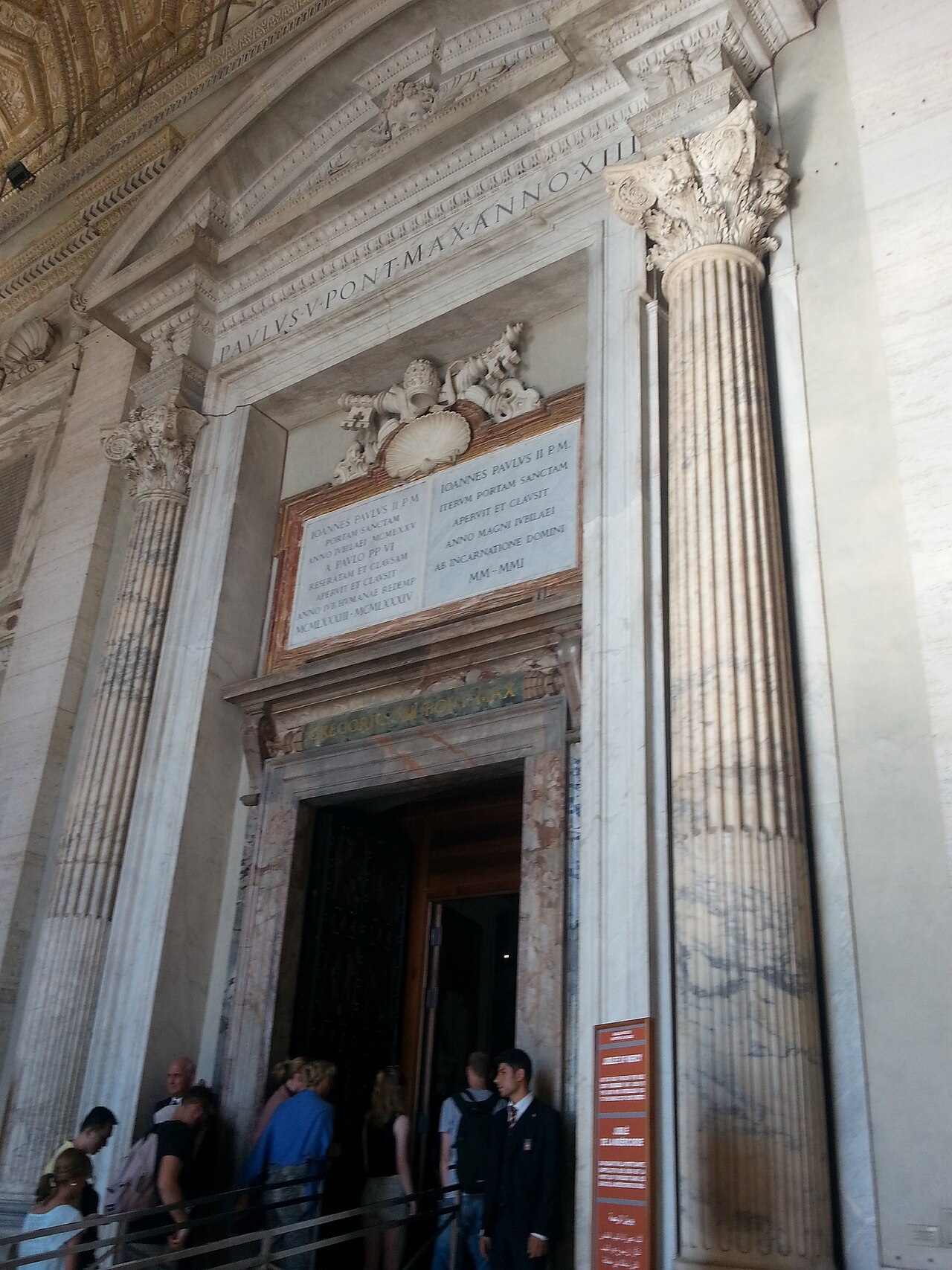
On 26 December 2024, two days after opening the Holy Door of St Peter’s Basilica for the 2025 Jubilee of Hope, Pope Francis opened a Holy Door in the chapel of Rebibbia prison in Rome, the first time a Holy Door had ever been opened in a prison. He told the inmates to hold fast to hope, using the image of an anchor. An indulgence, at its best, is exactly that: a door of mercy that no one is too poor, or too far gone, to walk through.
Frequently asked questions
Can you buy an indulgence? No. Since 1567, no indulgence can be obtained by paying money, and selling them is forbidden.
Does an indulgence forgive sins? No. An indulgence presupposes that the sin has already been forgiven through repentance (and, for grave sins, confession). It concerns only the lingering consequences of sin.
What is a plenary indulgence? A plenary indulgence removes all temporal punishment due to sin; a partial indulgence removes part of it. Both require a heart turned away from sin.
Can indulgences help the dead? Yes. Catholics may offer indulgences on behalf of the souls in purgatory. See Is Purgatory in the Bible? and Why Do Catholics Pray for the Dead?
You may also like Catholic vs Lutheran: What Still Divides Them?
Sources and further reading
- The Bible: Leviticus 25:8-13; Numbers 14:19-23; 2 Samuel 12:13-14; Matthew 16:19; 18:18; Mark 2:1-12; Luke 4:16-21; 2 Corinthians 2:5-11.
- Catechism of the Catholic Church, 1471-1479.
- Paul VI, Indulgentiarum Doctrina (1 January 1967); Apostolic Penitentiary, Enchiridion Indulgentiarum (4th ed., 1999); decree on the pandemic (19 March 2020).
- Council of Nicaea (325), canon 12; Fourth Lateran Council (1215), canon 62; Council of Trent, Session 21 (1562), ch. 9 and Session 25 (1563), Decree on Indulgences.
- Clement VI, Unigenitus Dei Filius (1343); Boniface VIII, Antiquorum Habet Fida Relatio (1300); Leo X, Exsurge Domine (1520); Pius V, Etsi Dominici Gregis (1567).
- Council of Clermont (1095), canon 2.
- Martin Luther, Ninety-Five Theses (1517); Albrecht of Mainz, Instructio Summaria (1517).
- St Cyprian, Letters 15-23.
- John Paul II, General Audience (29 September 1999); Francis, Letter on the Jubilee of Mercy (1 September 2015).
- Robert W. Shaffern, The Penitents’ Treasury: Indulgences in Latin Christendom, 1175-1375 (2007).
