Do Catholics Believe in Reincarnation? What Happens After Death
No. Catholics believe in one earthly life, followed by judgement and the resurrection of the body. Here is why, what the early Church said, the myth of a deleted teaching, and the Christian hope.
Many people today find the idea of reincarnation attractive. It seems to offer a second chance, a way to make sense of injustice and suffering, and a reassurance that death is not the end. Some Catholics quietly believe in it, and some have heard that the early Church once taught reincarnation until a council or emperor removed it from the Bible. Hindu and Buddhist friends may ask how Christians understand life after death. If you have wondered about any of this, here is the short answer: no, Catholics do not believe in reincarnation. The Church teaches that each person lives one earthly life, followed by judgement and, at the end of time, the resurrection of the body. This article explains what the Church teaches and why, what it offers instead of rebirth, why the human person is one body and one soul, the Bible passages sometimes quoted for reincarnation, what the early Church said, the myth of a deleted teaching, how Hindus and Buddhists see rebirth, the strongest objections, why many Christians hold both beliefs, and the Christian hope.
1. One earthly life
No: Catholics believe that each person lives one earthly life, followed by judgement and, at the end of time, the bodily resurrection of the dead.
The Letter to the Hebrews states the Christian view plainly: “It is appointed unto men once to die, and after this the judgment” (Hebrews 9:27). Each person dies once. There is no cycle of deaths and rebirths.
The Second Vatican Council chose its words carefully on this point. In Lumen Gentium (1964), its constitution on the Church, it spoke of the need to be watchful, so that “when the single course of our earthly life is completed”, we may enter into the marriage feast with Christ (Lumen Gentium 48). The phrase “the single course of our earthly life” was chosen to exclude any idea of a return to earth.
The Catechism of the Catholic Church says it in so many words: “Death is the end of man’s earthly pilgrimage, of the time of grace and mercy which God offers him so as to work out his earthly life in keeping with the divine plan, and to decide his ultimate destiny. When ‘the single course of our earthly life’ is completed, we shall not return to other earthly lives: ‘It is appointed for men to die once.’ There is no ‘reincarnation’ after death” (CCC 1013).
2. Instead of rebirth: meeting God and resurrection
In place of rebirth, the Church teaches two things: an immediate meeting with God at death, and a final raising of the dead at the end of time.
As Jesus hung on the cross, one of the two criminals crucified beside him mocked him. But the other rebuked him, saying that they were being punished justly, but that Jesus had done nothing wrong. Then he said: “Lord, remember me when thou shalt come into thy kingdom.” Jesus answered: “Amen I say to thee, this day thou shalt be with me in paradise” (Luke 23:39-43). Not after many lifetimes, but that very day.
In 1336, Pope Benedict XII, in the constitution Benedictus Deus, defined that souls go immediately after death to their eternal state: to heaven, after any necessary purification, or to hell. They do not have to wait until the last day to receive their reward or punishment. And they do not return to earth in another body.
But the Church’s hope does not end with the soul in heaven. It looks forward to the resurrection of the body. St Paul told the Corinthians, some of whom doubted that the dead would rise: “If there be no resurrection of the dead, then Christ is not risen again. And if Christ be not risen again, then is our preaching vain, and your faith is also vain.” But “now Christ is risen from the dead, the firstfruits of them that sleep” (1 Corinthians 15:13-20). See also Is Baptism Complete Until Death?
3. One body and one soul together
The deeper reason why Catholics reject reincarnation is that a human person is one body and one soul together, not a soul passing through a series of bodies.
The Second Book of Maccabees tells of a Jewish mother and her seven sons, arrested during a persecution in the second century BC and ordered to eat pork in violation of God’s law. One after another, the sons refused and were tortured to death. The third son, when his tongue and hands were about to be cut off, held them out and said: “These I have from heaven, but for the laws of God I now despise them: because I hope to receive them again from him” (2 Maccabees 7:11). He expected to receive back from God the very same body that was being destroyed.
The risen Jesus showed his friends that he had not taken another body, but had risen in his own body, now transformed. He said to them: “See my hands and feet, that it is I myself” (Luke 24:39). He invited the doubting Thomas to put his finger into the wounds in his hands and his hand into the wound in his side (John 20:27). It was the same body that had been crucified, not a new one.
In 1312, the Council of Vienne in France defined that “the rational or intellectual soul is of itself and essentially the form of the human body”. In plain language, the soul is not a passenger in the body, or a prisoner who could move to a different body. Soul and body together make up one human person. The Catechism teaches that the unity of soul and body is so profound that “spirit and matter, in man, are not two natures united, but rather their union forms a single nature” (CCC 365).
4. Bible passages misread
Some passages of the Bible are sometimes quoted in support of reincarnation. When they are read in context, they do not teach it.
Jesus said of John the Baptist: “And if you will receive it, he is Elias that is to come” (Matthew 11:14). Some take this to mean that John was Elijah reincarnated. But when the priests and Levites asked John directly, “Art thou Elias?”, he answered: “I am not” (John 1:21). The angel who announced John’s birth explained what Jesus meant: John would go before the Lord “in the spirit and power of Elias” (Luke 1:17). John was like Elijah in his mission, not Elijah himself. Besides, Elijah never died; he was taken up to heaven (2 Kings 2:11).
When Jesus and his disciples passed a man blind from birth, the disciples asked: “Rabbi, who hath sinned, this man, or his parents, that he should be born blind?” Some read this question as hinting that the man might have sinned in a previous life. But Jesus rejected both explanations: “Neither hath this man sinned, nor his parents; but that the works of God should be made manifest in him.” And he healed the man (John 9:1-7). He did not teach that suffering is punishment for past lives.
When Jesus told Nicodemus, a Pharisee, that “unless a man be born again, he cannot see the kingdom of God”, Nicodemus was puzzled: “How can a man be born when he is old? Can he enter a second time into his mother’s womb, and be born again?” Jesus explained that he meant birth “of water and the Holy Ghost” (John 3:3-5). Being “born again” means baptism and new life in the Spirit, not a second physical birth.
5. The early Church rejected the idea
The early Church met the idea of reincarnation in Greek philosophy, especially among the followers of Pythagoras and Plato, and in some Gnostic sects. It rejected the idea.
St Justin Martyr, a philosopher who became a Christian and was martyred in Rome around 165, describes how he came to faith. As a young man, he had been a follower of Plato. One day, walking by the sea, he met an old man who questioned him about his beliefs. Among other things, the old man pointed out that if souls passed into other bodies as punishment, they would remember their former lives, yet they remember nothing; so the punishment would make no sense. Justin was persuaded, and turned to the Christian faith (Dialogue with Trypho 4).
St Irenaeus, bishop of Lyons, wrote around 180 against the Carpocratians, a Gnostic sect who taught that souls pass from body to body until they have experienced everything. He argued that if souls had lived before, they would remember something of their former lives. Since they do not, the theory is groundless (Against Heresies 2.33).
Tertullian, writing in Carthage around 210, mocked the claims of Pythagoras, the Greek philosopher who taught reincarnation. Pythagoras claimed to have been, in an earlier life, Euphorbus, a warrior who fought in the Trojan War, and to recognise the shield he had carried then. Tertullian made fun of the idea and argued at length against the transmigration of souls (On the Soul 28-35).
6. The myth of a deleted teaching
A popular story claims that the early Church taught reincarnation until a council or emperor cut it out of Christianity. The story does not survive checking.
The actress Shirley MacLaine popularised this story in her best-selling book Out on a Limb (1983). She told millions of readers that reincarnation had been part of Christian teaching until the Church struck it out at a council in 553, the Second Council of Constantinople, under the Emperor Justinian.
What was actually condemned in the sixth century was something different. The great third-century scholar Origen had speculated that souls existed before their bodies, in a spiritual world, and fell into bodies because of sin. In 543, a synod in Constantinople, at the urging of Justinian, condemned this idea of the pre-existence of souls. But pre-existence is not reincarnation. Origen himself had explicitly rejected the transmigration of souls from body to body, calling it foreign to the Church’s teaching (Commentary on Matthew 13.1).
Nor was anything cut out of the Bible. Near-complete manuscripts of the Bible copied two centuries before the council of 553, such as the Codex Sinaiticus and the Codex Vaticanus, both from the fourth century, still survive. Their text is the one we read today, and it contains no trace of a teaching on reincarnation. See also Are There Missing Verses in the Catholic Bible?
7. Rebirth in Hinduism and Buddhism
Many Western people think of reincarnation as a comforting second chance. But Hindus and Buddhists, in whose religions the idea of rebirth is central, do not usually see it that way. For them, the cycle of rebirth (samsara) is something to be escaped.
In the Bhagavad Gita, one of the most beloved Hindu scriptures, the god Krishna tells the warrior Arjuna, who is reluctant to fight, that the self is eternal and cannot be killed. “As a person casts off worn-out garments and puts on others that are new, so the embodied self casts off worn-out bodies and enters into others that are new” (Bhagavad Gita 2.22). The goal of Hindu spirituality is moksha, liberation from the cycle of birth and death.
Buddhist scripture describes the Buddha’s awakening. In one discourse, the Buddha relates that on the night of his enlightenment, he recalled his many former lives, in great detail, and then understood the causes of suffering and found the way to end the cycle of rebirth (Majjhima Nikaya 36). For Buddhists, the goal is nirvana, the end of rebirth.
Tibetan Buddhists believe that great teachers can choose to be reborn. In 1937, a search party of Tibetan monks came to a farming village in Amdo, in north-eastern Tibet. According to the Tibetan account, a two-year-old boy there recognised belongings of the thirteenth Dalai Lama, who had died in 1933, and was identified as his rebirth. He was enthroned in Lhasa in 1940 as the fourteenth Dalai Lama, Tenzin Gyatso. Catholics respect the sincerity of these beliefs, while not sharing them. The Church teaches that it “rejects nothing that is true and holy” in other religions (Nostra Aetate 2).
8. The strongest objections
The strongest objections to the Catholic view are that one life seems unfair, and that some people appear to remember past lives.
Ian Stevenson, a psychiatrist at the University of Virginia, spent decades collecting cases of young children, mostly in Asia, who seemed to remember a previous life, sometimes with details that could be checked. In his book Twenty Cases Suggestive of Reincarnation (1966), he presented some of these cases. Stevenson was careful to call them “suggestive”, not proof. Critics have pointed to the difficulty of ruling out other explanations, such as information the children picked up from adults around them.
The most famous case of supposed past-life memory turned out to have a simple explanation. In 1952, a Colorado housewife named Virginia Tighe, under hypnosis, seemed to “become” Bridey Murphy, a woman who had lived in nineteenth-century Ireland, speaking with an Irish accent and describing her life. A book about the case became a best-seller in 1956. But in 1956, reporters from the Chicago American newspaper found that, as a child in Chicago, Tighe had lived across the street from an Irish immigrant woman named Bridie Murphy Corkell. Much of her “past life” seemed to come from forgotten childhood memories.
On the question of fairness, the Church does not teach that people who have had no chance to know Christ are automatically lost. The Second Vatican Council taught that “those also can attain to salvation who through no fault of their own do not know the Gospel of Christ or his Church, yet sincerely seek God and moved by grace strive by their deeds to do his will” (Lumen Gentium 16). God’s justice and mercy do not need many lifetimes. See also Can Non-Catholics Go to Heaven?
9. Holding both beliefs
Many Christians quietly hold both Christian beliefs and a belief in reincarnation. And the Catholic teaching on purgatory is sometimes confused with a kind of rebirth.
In 2018, the Pew Research Center surveyed Americans about four “New Age” beliefs, including reincarnation. It found that about a third of all American adults (33%) believed in reincarnation, including 29% of those who identified as Christians. Catholics were among the Christian groups most likely to hold at least one of the New Age beliefs surveyed (70%). The survey shows how widespread the idea has become, even among churchgoers.
Purgatory is sometimes misunderstood as a kind of second life or second chance. It is not. In 1439, the Council of Florence, in the decree Laetentur Caeli, defined that those who die in God’s friendship, but who still need purification, are purified after death, and that the prayers of the living help them. Purgatory is a purification after death for those who are already saved, not a return to earthly life or a new opportunity to choose God. See also Is Purgatory in the Bible?
In the Middle Ages, the Cathars of southern France taught that souls are pure spirits trapped in evil matter, and that they pass from body to body until they are freed. The Church answered them with preaching, notably by St Dominic, who founded the Dominican order partly for this purpose. But it also answered them with a brutal crusade. In 1209, crusaders sacked the town of Béziers and massacred many of its inhabitants, Catholics as well as Cathars. It is a dark chapter that the Church today does not defend. In 1215, the Fourth Lateran Council affirmed against the Cathars that all will rise “with their own bodies, which they now wear”.
10. Not a return, but an arrival
The Christian hope is not a return to earth, but an arrival home. This one life, and each person in it, is unrepeatable and infinitely precious to God.
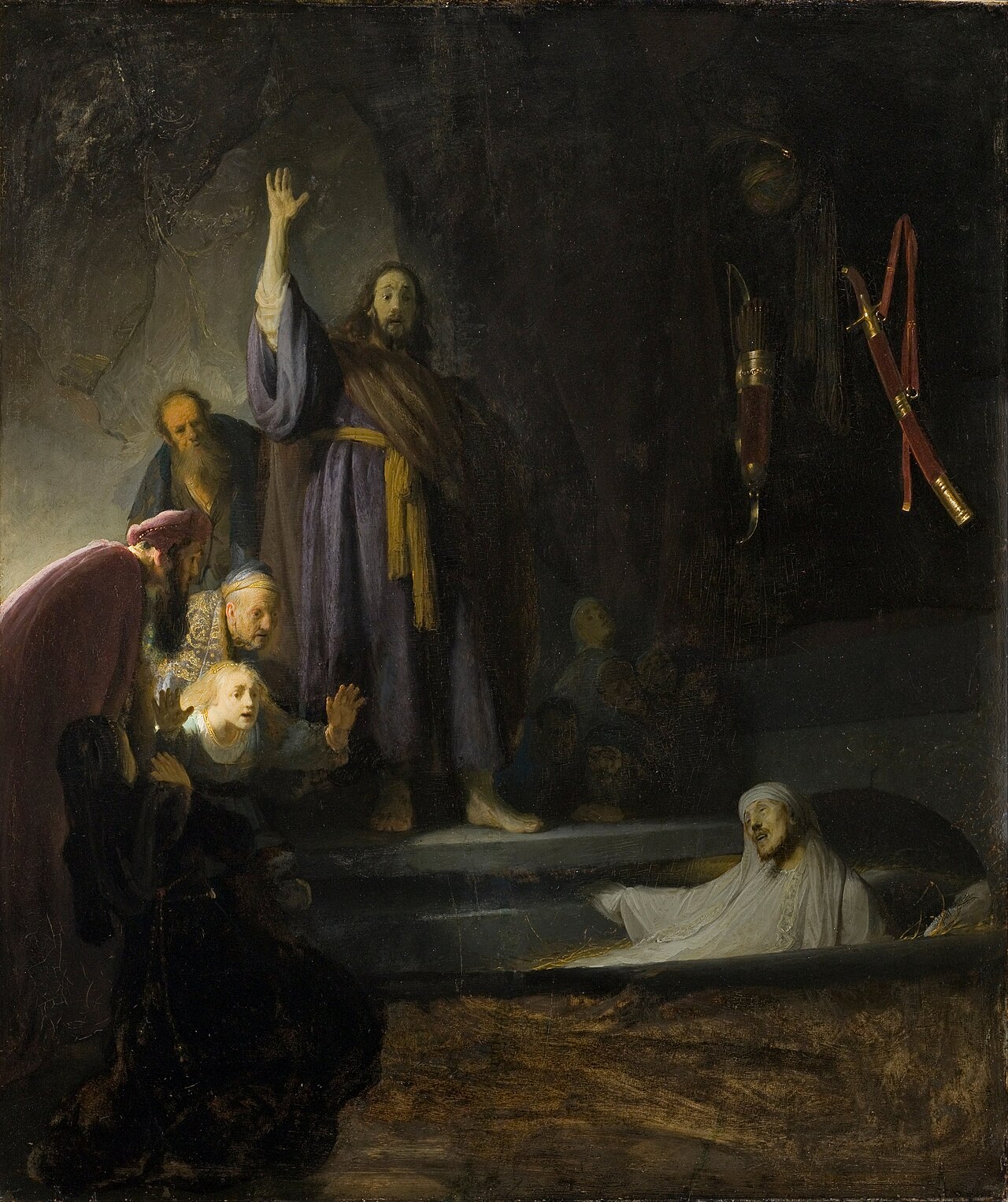
When Jesus arrived in Bethany after his friend Lazarus had died, Lazarus’s sister Martha went out to meet him. “Lord, if thou hadst been here, my brother had not died.” Jesus told her: “Thy brother shall rise again.” Martha said she knew he would rise “in the resurrection at the last day”. Jesus said to her: “I am the resurrection and the life: he that believeth in me, although he be dead, shall live: and every one that liveth, and believeth in me, shall not die for ever. Believest thou this?” (John 11:21-27). Then he raised Lazarus from the tomb.
In 627, the missionary Paulinus came to the court of King Edwin of Northumbria to preach the Gospel. According to the Venerable Bede, one of the king’s counsellors compared human life to the flight of a sparrow through the king’s hall on a winter night. The sparrow flies in through one door from the darkness and cold outside, enjoys a moment of warmth and light by the fire, and then flies out through the other door into the darkness again. “So this life of man appears for a short space, but of what went before, or what is to follow, we are utterly ignorant.” If this new teaching could tell them something more certain, he said, it seemed right to follow it (Bede, Ecclesiastical History 2.13).
St Thérèse of Lisieux, a young French Carmelite nun, was dying of tuberculosis at the age of twenty-four. On 9 June 1897, she wrote to a young seminarian preparing to be a missionary, Maurice Bellière, who was afraid of losing her. She told him: “I am not dying, I am entering into life.” She died on 30 September 1897. For Christians, death is not the beginning of another round of earthly lives, but the doorway into the life that has no end.
Frequently asked questions
Do Catholics believe in reincarnation? No. The Catechism says plainly that there is no reincarnation after death.
Did the early Church teach reincarnation? No. Early Christian writers argued against it. The council of 553 condemned the pre-existence of souls, a different idea.
Is purgatory like reincarnation? No. Purgatory is a purification after death for those already saved, not a return to earthly life.
Can a Catholic believe in reincarnation? It is incompatible with Catholic teaching on the one earthly life, judgement and the resurrection of the body.
You may also like Jesus Died for Our Sins, So Why Is There Hell? and Can Catholics Be Cremated?
Sources and further reading
- The Bible: 2 Kings 2:11; 2 Maccabees 7; Matthew 11:14; 17:10-13; Luke 1:17; 23:39-43; 24:36-43; John 1:19-21; 3:1-8; 9:1-7; 11:21-27; 20:24-29; 1 Corinthians 15; Hebrews 9:27.
- Catechism of the Catholic Church, 362-368, 988-1019, 1030-1032.
- Fourth Lateran Council (1215); Council of Vienne (1312); Benedict XII, Benedictus Deus (1336); Council of Florence, Laetentur Caeli (1439); Second Vatican Council, Lumen Gentium 16 and 48, Nostra Aetate 2.
- St Justin Martyr, Dialogue with Trypho 4; St Irenaeus, Against Heresies 2.33; Tertullian, On the Soul; Origen, Commentary on Matthew 13.1; Bede, Ecclesiastical History of the English People 2.13.
- St Thérèse of Lisieux, Letter to Maurice Bellière, 9 June 1897.
- Bhagavad Gita 2.22; Majjhima Nikaya 36.
- Ian Stevenson, Twenty Cases Suggestive of Reincarnation (1966).
- Pew Research Center, “‘New Age’ beliefs common among both religious and nonreligious Americans” (1 October 2018).
