
Why Do Catholics Confess to a Priest Instead of Directly to God?
Only God forgives sins, and Catholics agree. Here is why they confess through a priest: what Jesus said, the Bible and early Church, the seal of confession, the objections, and how to come back.
“Why should I tell my sins to a man? I can confess directly to God.” Many Protestants say this, and so do many Catholics who have not been to confession for years. It seems obvious that only God can forgive sins, and that putting a priest in the middle is at best unnecessary and at worst puts a human being in God’s place. The Catholic Church agrees that only God forgives sins. It also encourages Catholics to confess to God directly every day. So why does it ask them to confess serious sins to a priest? This article explains what Jesus said and did, how the Bible shows people confessing aloud, how the early Church struggled with forgiveness, how confession changed shape over the centuries, the strongest Protestant objections and the Catholic reply, the absolute secrecy of the confessional, its abuses, and why anyone, however long they have been away, can come back.
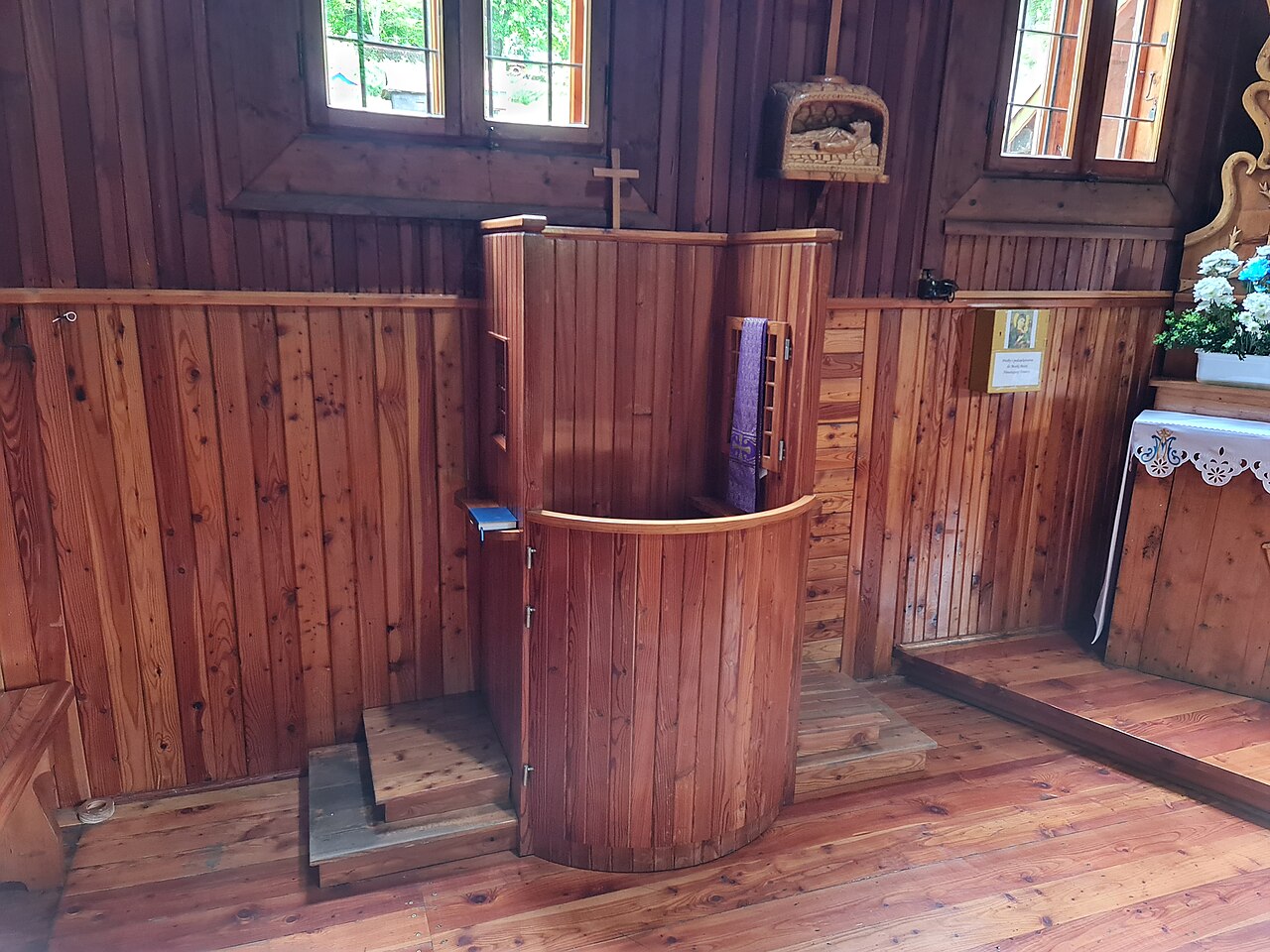
1. Catholics do confess to God, through a priest
Catholics do confess to God. Every Mass begins with a prayer of confession, and Catholics are encouraged to examine their consciences and tell God they are sorry every night. What the sacrament of confession adds is that, for serious sins especially, Catholics confess to God through a priest, because they believe Jesus gave his apostles authority to forgive sins in his name.
The key text comes from the evening of the first Easter Sunday. The risen Jesus appeared to his frightened disciples in a locked room in Jerusalem and said, “Peace be to you. As the Father hath sent me, I also send you.” Then “he breathed on them; and he said to them: Receive ye the Holy Ghost. Whose sins you shall forgive, they are forgiven them; and whose sins you shall retain, they are retained” (John 20:21-23). Catholics take this at face value: Jesus gave the apostles real authority to forgive or withhold forgiveness. And since they could not forgive or retain sins without knowing what the sins were, confession is implied.
St Paul described his own ministry in the same way. God, he wrote, “hath reconciled us to himself by Christ; and hath given to us the ministry of reconciliation… For Christ therefore we are ambassadors, God as it were exhorting by us” (2 Corinthians 5:18-20). The apostles were not the source of reconciliation, but they were its ministers.
On 25 November 1551, the Council of Trent taught that Christ instituted the sacrament of penance when, after his resurrection, he breathed on his disciples, and that priests absolve as ministers of Christ, exercising a power he himself gave (Session 14).
2. Only God forgives; the priest is his instrument
The objection that “only God can forgive sins” is not new. It was first raised against Jesus himself.
When four friends lowered a paralysed man through a roof in Capernaum, Jesus said to him, “Son, thy sins are forgiven thee.” Some scribes sitting there thought, “Who can forgive sins, but God only?” Jesus answered by healing the man, to show “that the Son of man hath power on earth to forgive sins” (Mark 2:5-12). Matthew adds a revealing detail: the crowds “glorified God that gave such power to men” (Matthew 9:8). Note the plural: “to men”.
In the fourth century, a strict group called the Novatianists denied that the Church could forgive grave sins committed after baptism, saying that only God could forgive them. Around 388, St Ambrose of Milan wrote two books On Penance in reply. He argued that priests claim nothing of their own; it is the Holy Spirit who forgives sins through them. To deny that the Church can forgive, he said, is not to honour God but to refuse his command.
The Catholic Church also teaches that the sacrament does not depend on the priest’s personal holiness. In the early fourth century, the Donatists of North Africa claimed that sacraments given by unworthy clergy were invalid. In 314 the Council of Arles rejected this view, and the Church has held ever since that Christ himself is the one who acts in the sacraments. A sinful priest can validly absolve, because it is Christ, not the priest’s virtue, that forgives.
3. Confessing aloud is biblical
Scripture shows God’s people confessing their sins aloud to another person, not only silently in their hearts.
The Law of Moses required this. A person who had sinned was to own the sin and bring an offering to the priest (Leviticus 5:5-6). The Book of Numbers says that when someone wrongs another, “they shall confess their sin, and restore the principal itself” (Numbers 5:7). Confession in Israel was spoken, and connected to the priest’s offering.
In the New Testament, St James wrote: “Is any man sick among you? Let him bring in the priests of the church, and let them pray over him, anointing him with oil in the name of the Lord… Confess therefore your sins one to another: and pray one for another, that you may be saved” (James 5:14-16). Confession is spoken, in the context of the Church’s elders.
The earliest Christian handbook after the New Testament, the Didache, written around the year 100, tells believers: “In the church you shall confess your transgressions, and you shall not come near for your prayer with an evil conscience” (4:14). It also instructs them to gather on the Lord’s Day, break bread and give thanks, “having first confessed your transgressions, that your sacrifice may be pure” (14:1). From the beginning, Christians confessed their sins aloud within the community.
4. The early Church argued, and chose mercy
The early Church fought hard over a painful question: could serious sins committed after baptism be forgiven at all? Some Christians thought baptism was the only chance. The Church decided, after real struggle, that God’s mercy reaches further.
Around 140, a Roman Christian named Hermas wrote The Shepherd, a popular book of visions and moral teachings. In it, an angel tells him that after baptism God allows one further opportunity of repentance for grave sin (Mandate 4). It was a cautious step, but a real one.
Around 220, Pope Callistus I in Rome readmitted to Communion Christians who had committed adultery, once they had done penance. He was attacked fiercely for laxity. The theologian Hippolytus, who set himself up as a rival bishop, and the North African writer Tertullian, who had joined the rigorist Montanist sect, denounced him for making forgiveness too easy.
The question came to a head after the persecution of the Emperor Decius in 250, when many Christians had denied their faith to save their lives. A Roman priest named Novatian insisted that such Christians could never be reconciled to the Church. In 251, a synod of sixty bishops in Rome under Pope Cornelius rejected Novatian’s rigorism and affirmed that repentant apostates could be readmitted after penance. Novatian set up a breakaway church. The Catholic Church chose mercy.
5. The form changed; the heart did not
Over the centuries, the outward form of confession has changed a great deal, from rare, public penance to frequent, private confession. But the basic practice, confessing sins through the Church’s ministers, has remained.
In the early centuries, those who committed grave public sins did public penance, often for years, before being reconciled. The most famous example is the Emperor Theodosius. In 390, after a riot in Thessalonica, Theodosius ordered a punitive massacre in which thousands of citizens were killed in the circus. St Ambrose, bishop of Milan, wrote to him that he could not receive Communion until he had done penance. Remarkably, the most powerful man in the world submitted. He laid aside his imperial robes and did public penance in Milan cathedral for several months before Ambrose readmitted him at Christmas.
A gentler, more frequent form of confession came from Ireland. Irish monks practised private confession to a spiritual father, with a set penance, that could be repeated as often as needed. From around 590, St Columbanus and other Irish missionaries carried this practice to Gaul, Switzerland and Italy, along with handbooks called “penitentials” listing penances for various sins. Private, repeatable confession gradually became the norm across the Western Church.
In 1215, the Fourth Lateran Council required every Catholic who had reached the age of discretion to confess their sins at least once a year to their own priest. The same canon bound priests to absolute secrecy, under pain of being deposed and shut away in a monastery for life (canon 21). This annual minimum is still Church law for anyone conscious of grave sin (canon 989).
6. The Protestant objection
Protestants object that confession to a priest has no place, because Christ is the only mediator between God and humanity, and because Scripture promises forgiveness to anyone who confesses directly to God.
St Paul wrote that “there is one God, and one mediator of God and men, the man Christ Jesus” (1 Timothy 2:5). Protestants argue that no priest can stand between the believer and God.
St John wrote: “If we confess our sins, he is faithful and just, to forgive us our sins, and to cleanse us from all iniquity” (1 John 1:9). John says nothing about confessing to a priest. Many Protestants see this verse as the plain biblical pattern: confess to God, and he forgives.
The Reformer John Calvin rejected compulsory confession to a priest as a human law. In his Institutes of the Christian Religion, he argued that the obligation to confess all sins to a priest once a year was imposed by Pope Innocent III at the Fourth Lateran Council in 1215, and had no basis in Scripture (Institutes III.4). Calvin did not object to Christians confessing to one another or seeking a pastor’s counsel; he objected to making it a compulsory sacrament.
7. The Catholic reply
Catholics reply that the one mediator, Christ, chooses to work through human ministers, as he did throughout the Bible, and that human beings need to hear forgiveness spoken aloud.
When King David sinned with Bathsheba, God did not simply forgive him in silence. He sent the prophet Nathan to confront him. When David confessed, “I have sinned against the Lord”, it was Nathan who told him aloud, “The Lord also hath taken away thy sin” (2 Samuel 12:13). God’s forgiveness came through a human messenger.
The conversion of St Paul shows the same pattern. On the road to Damascus, the risen Jesus appeared to Saul in person, blinding him with light. Yet Jesus did not heal or baptise him directly. He sent him into the city, where a disciple named Ananias laid hands on him, restored his sight, and told him, “Rise up, and be baptized, and wash away thy sins” (Acts 9:10-19; 22:16). Christ chose to work through a member of his Church.
Interestingly, the first Protestants did not abolish confession. Martin Luther valued private confession and went to confession himself throughout his life. His Small Catechism of 1529 includes a section on confession with a form for penitents to use. The Augsburg Confession of 1530, the founding Lutheran statement of faith, says that “private absolution ought to be retained in the churches” (Article XI). Many Lutherans and Anglicans still practise confession today.
8. Absolute secrecy
One of the most remarkable features of Catholic confession is the “seal”: whatever is confessed is absolutely secret. Church law forbids a priest to reveal it to anyone, for any reason whatsoever, even to save his own life.
The most famous martyr of the seal is St John Nepomuk, vicar general of Prague in the fourteenth century. According to tradition, King Wenceslaus IV of Bohemia demanded that he reveal what the queen had said in confession. John refused. On 20 March 1393, after being tortured, he was thrown from the Charles Bridge into the Vltava river and drowned. A statue of him stands on the bridge today, and he is honoured as patron of confessors.
A modern example comes from Mexico. During the Cristero persecution of the Church in the 1920s, Father Mateo Correa Magallanes was arrested by government troops. A general ordered him to hear the confessions of some condemned prisoners, and then demanded that he reveal what they had confessed. Father Mateo refused, saying he would rather die. On 6 February 1927 he was taken to a cemetery near Durango and shot. Pope John Paul II canonised him in 2000.
Church law today states: “The sacramental seal is inviolable; therefore it is absolutely forbidden for a confessor to betray in any way a penitent in words or in any manner and for any reason” (Code of Canon Law, canon 983). A priest who directly violates the seal is automatically excommunicated (canon 1386). See also Do Priests Judge You in Confession?
9. Not a licence to sin, and real abuses
Confession is not a licence to sin again, as some critics suppose. And the Church has had to punish priests who abused the confessional.
Jesus showed both mercy and seriousness when a woman caught in adultery was dragged before him. When her accusers had slipped away, he said: “Neither will I condemn thee. Go, and now sin no more” (John 8:11). Forgiveness came with a call to change.
The Council of Trent taught that true sorrow for sin, called contrition, must include the resolve not to sin again (Session 14, chapter 4, 1551). A confession made without any intention to change is not a valid confession. The priest cannot read hearts, but God can.
The Church has also had to confront the abuse of confession by priests themselves. In the eighteenth century, cases came to light of priests using the privacy of the confessional to make sexual advances to penitents. On 1 June 1741, Pope Benedict XIV issued the constitution Sacramentum Poenitentiae, imposing severe penalties on any priest who solicited a penitent to sin in connection with confession, and obliging penitents to denounce such priests. The abuse was real, and the Church treated it as one of the gravest crimes a priest could commit. Modern church law continues to punish it severely.
10. Anyone can come
Anyone can come to confession: Catholics who have been away for decades, and non-Catholics who simply want to talk to a priest. (Non-Catholics cannot ordinarily receive sacramental absolution, though Church law makes exceptions for Orthodox Christians and for emergencies such as danger of death; ask the priest. Anyone can ask a priest for a blessing, advice or a conversation.)
Jesus’s parable of the prodigal son shows what awaits. A young man demanded his inheritance, squandered it in a far country, and ended up feeding pigs. He prepared a speech of confession and set off home. But “when he was yet a great way off, his father saw him, and was moved with compassion, and running to him fell upon his neck, and kissed him.” The son began his speech, but the father did not even let him finish. He called for the best robe, a ring and a feast (Luke 15:11-32). Catholics see the confessional as that moment of embrace.
In the nineteenth century, a simple parish priest in the French village of Ars, St John Vianney, became famous throughout France as a confessor. In his later years, he spent up to sixteen hours a day in his confessional, often in bitter cold or stifling heat. Tens of thousands of people a year travelled to the tiny village to confess to him. He died in 1859 and is the patron saint of parish priests.
On 28 March 2014, during a penitential service in St Peter’s Basilica, Pope Francis was being led by his master of ceremonies to a confessional where he was to hear confessions. Instead, to the surprise of his aides, he turned aside, knelt at another confessional, and made his own confession to an ordinary priest first. The photographs went around the world: the Pope, too, needs God’s forgiveness.
If you have been away a long time, you may find these articles helpful: Returning to Confession After Years and Inside the Confessional: What Priests Experience.
Frequently asked questions
Can’t I just confess to God? You can and should confess to God daily. The Church asks Catholics to confess grave (mortal) sins in the sacrament, because Christ gave this means of forgiveness to the Church.
Will the priest tell anyone? No. The seal of confession is absolute, and a priest who breaks it is automatically excommunicated.
What if I can’t remember all my sins? Confess what you remember honestly; forgotten sins are forgiven too. See Returning to Confession After Years.
Can a non-Catholic go to confession? Non-Catholics cannot ordinarily receive absolution, but any priest will gladly talk with you. See Can an Atheist Ask a Priest for a Serious Conversation?
Sources and further reading
- The Bible: Leviticus 5:5-6; Numbers 5:6-7; 2 Samuel 12:1-13; Matthew 9:8; Mark 2:5-12; Luke 15:11-32; John 8:2-11; 20:19-23; Acts 9:10-19; 22:12-16; 2 Corinthians 5:17-20; 1 Timothy 2:5-6; James 5:14-16; 1 John 1:8-9.
- Catechism of the Catholic Church, 1422-1498.
- Council of Arles (314); Fourth Lateran Council (1215), canon 21; Council of Trent, Session 14 (1551).
- Code of Canon Law (1983, revised 2021), canons 983 and 1386.
- Benedict XIV, Sacramentum Poenitentiae (1741).
- Didache 4 and 14; Hermas, The Shepherd, Mandate 4; St Ambrose, On Penance; Eusebius, Church History 6.43 (on Novatian).
- John Calvin, Institutes of the Christian Religion III.4; Martin Luther, Small Catechism (1529); Augsburg Confession, Article XI.
- Abbé Francis Trochu, The Curé d’Ars (1927).
- Vatican Radio report on Pope Francis’s confession (28 March 2014).
