
Catholic vs Mormon (Latter-day Saints): What Are the Differences?
Catholics and Latter-day Saints both honour Jesus, but differ deeply about God, scripture, the Church and salvation. A respectful, accurate guide to what each believes.
Two young missionaries in white shirts and name badges knock at your door. Or your neighbour, a kind and generous family man, turns out to be a Latter-day Saint. Or perhaps you are a Latter-day Saint yourself, curious about your Catholic friends. Many people on both sides assume that Catholics and “Mormons” are simply two Christian denominations with different customs, like Catholics and Methodists. In fact, the differences go much deeper, to the nature of God himself. This article tries to explain those differences accurately and respectfully, using the Church of Jesus Christ of Latter-day Saints’ own sources wherever possible. It covers the name, the “Restoration”, God and the Trinity, scripture and revelation, Jesus Christ, human destiny, baptism and temples, the claim of a great apostasy, the history of persecution, and how Catholics and Latter-day Saints can be friends and allies.
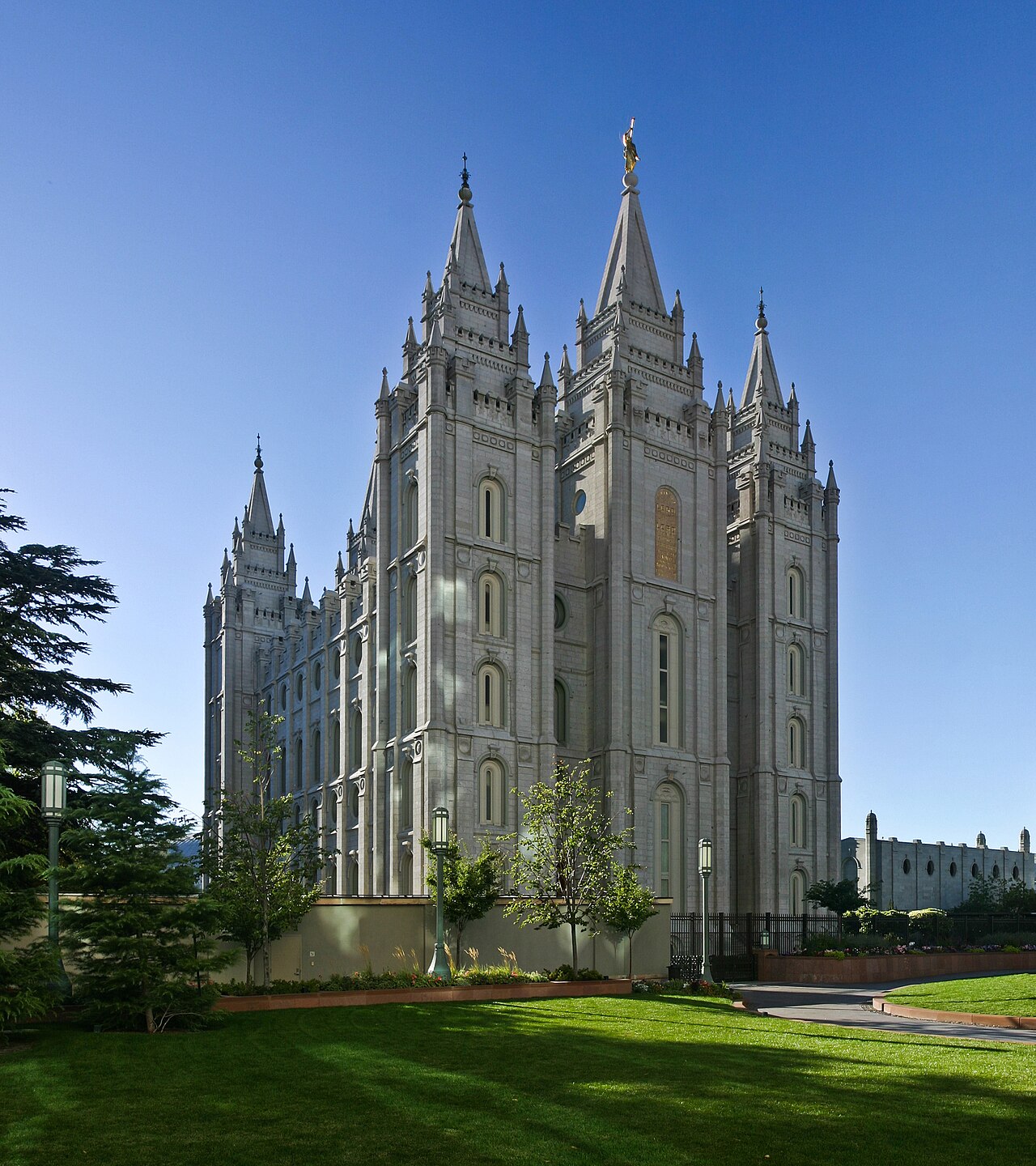
1. Both honour Christ, but differ deeply about God
Catholics and Latter-day Saints both honour Jesus Christ as Saviour and Redeemer. Both value family, prayer, service and moral living. But they understand God so differently that the Catholic Church does not recognise Latter-day Saint baptism as Christian baptism.
In 2001 a bishop asked the Vatican’s doctrinal office, then the Congregation for the Doctrine of the Faith, whether baptism administered in The Church of Jesus Christ of Latter-day Saints is valid. On 5 June 2001, with the approval of Pope John Paul II, the Congregation answered: “Negative.” An explanation published in the Vatican newspaper made clear that the problem was not the words used, which mention the Father, the Son and the Holy Spirit, but what those words mean. Latter-day Saints, it explained, understand the Father, Son and Holy Spirit not as one God in three persons but as three distinct beings. The ruling was not an insult, but an honest recognition of real difference.
Latter-day Saints, for their part, describe their faith in Trinitarian-sounding language. In 1842 the church’s founder, Joseph Smith, wrote a summary of its beliefs for a Chicago newspaper editor named John Wentworth. Its first article reads: “We believe in God, the Eternal Father, and in His Son, Jesus Christ, and in the Holy Ghost” (Articles of Faith 1:1). Catholics would say the same words, but, as we will see, they mean something different by them.
A note on names: “Mormon” was originally a nickname, from the Book of Mormon. On 16 August 2018 the church’s president, Russell M. Nelson, asked that the church be called by its full name, The Church of Jesus Christ of Latter-day Saints, and its members “Latter-day Saints”, to keep the name of Jesus Christ central. This article respects that request, using “Mormon” only where people commonly search for it.
2. Unbroken Church or restored Church?
The most basic difference between the two churches is their account of Christian history. Catholics believe that the Church Christ founded has continued, unbroken, from the apostles to today. Latter-day Saints believe that after the death of the apostles the true Church was lost in a “Great Apostasy”, and that it was restored in the nineteenth century through Joseph Smith.
According to Joseph Smith’s own account, in the spring of 1820, when he was fourteen and confused by the competing revival preachers near his home in Palmyra, New York, he went into a grove of trees to pray. He reported that two personages appeared to him in a pillar of light, God the Father and his Son Jesus Christ, and told him to join none of the existing churches (Joseph Smith—History 1:14-20). Latter-day Saints call this the First Vision.
On 6 April 1830, Joseph Smith and five other men formally organised the church in the farmhouse of Peter Whitmer in Fayette, New York (Doctrine and Covenants 21). Latter-day Saints see this as the restoration of the Church Jesus founded.
Catholics, by contrast, point to the unbroken chain of bishops reaching back to the apostles. Around 180, St Irenaeus of Lyons listed the bishops of Rome one by one, from those appointed by Peter and Paul down to his own day, as public proof that the apostles’ teaching had been handed down openly and without interruption (Against Heresies 3.3.3). For Catholics, there was never a time when the Church disappeared.
3. One God in three Persons, or three beings?
The deepest difference concerns God himself. Catholics believe in one God, eternal, without beginning, without a body, who exists as three Persons, Father, Son and Holy Spirit, sharing one divine nature. Latter-day Saints believe that the Father, the Son and the Holy Ghost are three separate beings, one in purpose but not in substance, and that the Father has a glorified physical body.
Catholics begin with the faith of Israel. When a scribe asked Jesus which commandment was first, Jesus answered by quoting the ancient Jewish confession: “Hear, O Israel: the Lord thy God is one God” (Mark 12:29; Deuteronomy 6:4). Christians believe the one God has revealed himself as Father, Son and Spirit, but they insist he remains one God.
In 325, the bishops at the Council of Nicaea declared that the Son is “of one substance” (homoousios) with the Father: not a second, separate god, but the same God. Catholics confess this every Sunday in the Nicene Creed.
Joseph Smith taught a very different view. On 2 April 1843, at Ramus, Illinois, he stated: “The Father has a body of flesh and bones as tangible as man’s; the Son also; but the Holy Ghost has not a body of flesh and bones, but is a personage of Spirit” (Doctrine and Covenants 130:22). Latter-day Saints therefore reject the Nicene Creed’s description of God as a later corruption of the original faith. This is why the Catholic Church concluded that, though both use the same words in baptism, they do not mean the same God.
4. Scripture and continuing revelation
Catholics believe that God’s public revelation was completed in Jesus Christ and handed on by the apostles; nothing new needs to be added, though the Church grows in understanding it. Latter-day Saints accept three further books of scripture besides the Bible, the Book of Mormon, the Doctrine and Covenants and the Pearl of Great Price, and believe that God continues to reveal his will through living prophets, above all the president of the church.
In March 1830 Joseph Smith published the Book of Mormon. He said he had translated it, “by the gift and power of God”, from ancient records engraved on gold plates, which had been shown to him by an angel named Moroni and buried in a hill near his home. The book tells the story of ancient peoples who, it says, travelled from the Middle East to the Americas.
Latter-day Saints believe that revelation continues today. A notable example came in June 1978, when the church’s president, Spencer W. Kimball, announced a revelation extending the priesthood to “all worthy male members of the Church” regardless of race, ending a long-standing restriction on men of Black African descent (Official Declaration 2).
Catholics believe that Christ himself is God’s final word. The Letter to the Hebrews begins: “God, who, at sundry times and in divers manners, spoke in times past to the fathers by the prophets, last of all, in these days hath spoken to us by his Son” (Hebrews 1:1-2). The Second Vatican Council drew the conclusion that “no new public revelation is to be expected before the glorious manifestation of our Lord Jesus Christ” (Dei Verbum 4).
5. Who is Jesus?
Both Catholics and Latter-day Saints confess Jesus as the Son of God, crucified and risen, and the Saviour of the world. But they understand his divinity differently. Catholics believe that Jesus is the one eternal God, the second Person of the Trinity, who became man. Latter-day Saints believe that he is a divine being distinct from the Father, the firstborn spirit child of the Father, who became the Saviour.
Catholics take their starting point from the opening of John’s Gospel: “In the beginning was the Word, and the Word was with God, and the Word was God… And the Word was made flesh, and dwelt among us” (John 1:1, 14). For Catholics, the Word was not a second god, but God himself.
The Book of Mormon contains a moving account of Christ’s appearance after his resurrection. It describes the risen Jesus descending among a people in the Americas, inviting them to come forward one by one and feel the prints of the nails in his hands and feet, so that they might know he is the God of Israel (3 Nephi 11:1-17). The account is central to Latter-day Saint devotion.
On 1 January 2000, the church’s First Presidency and Quorum of the Twelve Apostles issued a solemn testimony called “The Living Christ”. It declares Jesus to be “the Firstborn of the Father, the Only Begotten Son in the flesh, the Redeemer of the world”. Catholics can admire the devotion to Christ in this statement, while noting that “Firstborn of the Father” here refers to the Latter-day Saint belief that Jesus was the first of God’s spirit children, not to the eternal Son of the Nicene Creed.
6. Where we came from and where we are going
Catholics believe that God creates each human soul directly, and that by grace we are raised to share in God’s own life while always remaining creatures. Latter-day Saints believe that every person lived as a spirit child of Heavenly Parents before birth, and that the faithful may, through Christ’s atonement and temple covenants, eventually become like God.
On 16 February 1832, at Hiram, Ohio, Joseph Smith and his associate Sidney Rigdon reported a shared vision of the afterlife. They described three degrees of glory, the celestial, terrestrial and telestial kingdoms, awaiting almost all of humanity, with only a very few consigned to outer darkness (Doctrine and Covenants 76).
On 7 April 1844, at the funeral of a church member named King Follett, Joseph Smith gave one of his most famous sermons. He taught that God himself was once as we are now, an exalted man, and that people may become gods. The church today explains this teaching in an essay titled “Becoming Like God” on its official website.
Catholics also speak of becoming like God, but in a very different sense. In the fourth century St Athanasius of Alexandria wrote that God “became man so that we might be made God” (On the Incarnation 54). He meant that we are raised to share God’s life by grace, as adopted children, never becoming gods in our own right or ceasing to be creatures. As St Peter put it, we become “partakers of the divine nature” (2 Peter 1:4).
7. Baptism, temples and the dead
Neither church accepts the other’s baptism. Catholics do not recognise Latter-day Saint baptism, for the reasons explained above. Latter-day Saints do not recognise Catholic baptism, because they believe valid baptism requires priesthood authority restored only through Joseph Smith.
According to Latter-day Saint scripture, on 15 May 1829, while Joseph Smith and his scribe Oliver Cowdery were praying by the Susquehanna River in Pennsylvania, John the Baptist appeared to them as a heavenly messenger, conferred on them the “Priesthood of Aaron”, and told them to baptise each other (Doctrine and Covenants 13).
Latter-day Saints also perform ordinances in their temples, including “baptism for the dead”, in which a living person is baptised on behalf of an ancestor who has died. Joseph Smith first taught the practice publicly on 15 August 1840, at the funeral of a friend named Seymour Brunson in Nauvoo, Illinois. He appealed to a passing remark of St Paul: “what shall they do that are baptized for the dead?” (1 Corinthians 15:29). Latter-day Saints believe the dead person may accept or reject the ordinance in the spirit world.
Catholics are troubled by proxy baptisms of Catholic ancestors. On 5 April 2008, the Vatican’s Congregation for the Clergy wrote to bishops’ conferences around the world asking that dioceses not allow the church’s Genealogical Society of Utah to microfilm and digitise Catholic parish registers, so as not to cooperate with what the letter called erroneous practices. The decision followed a letter from the doctrinal office expressing “grave reservations”.
8. Was there a great apostasy?
Latter-day Saints believe that soon after the apostles died, the early Church fell into apostasy, and that the creeds of the great councils corrupted the original faith. Catholics answer that Christ promised to remain with his Church, and that the evidence of the earliest Christian writers shows continuity, not collapse.
In Joseph Smith’s account of the First Vision, he asked which church he should join. He reported that he was told to join none of them, “for they were all wrong”, and that “all their creeds were an abomination” in the sight of God (Joseph Smith—History 1:19).
Catholics point to Christ’s promise to the apostles before his Ascension: “Going therefore, teach ye all nations… and behold I am with you all days, even to the consummation of the world” (Matthew 28:19-20). If the Church had disappeared within a generation, they ask, how was Christ “with” it every day?
They also point to the evidence. Around the year 107, only a decade or two after the death of the last apostle, St Ignatius of Antioch wrote letters describing churches led by bishops, priests and deacons, celebrating the Eucharist, which he called the flesh of Christ, and united in what he named “the Catholic Church” (Letter to the Smyrnaeans 7-8). Ignatius had very probably known apostles. Catholics see in his letters the same Church they belong to today.
9. Persecution and caricature
Fairness requires acknowledging that Latter-day Saints have suffered violent persecution and persistent caricature in their history, and that they deserve to be described accurately.
In the 1830s Latter-day Saints settled in Missouri, where tensions with their neighbours turned violent. On 27 October 1838 the governor of Missouri, Lilburn Boggs, issued Executive Order 44, declaring that “the Mormons must be treated as enemies, and must be exterminated or driven from the State”. Thousands were driven out in winter, and at Haun’s Mill seventeen Latter-day Saints were massacred. The order was formally rescinded only in 1976 by Governor Christopher Bond, who apologised.
On 27 June 1844, an armed mob with blackened faces stormed the jail at Carthage, Illinois, where Joseph Smith and his brother Hyrum were being held, and shot both men dead. Their deaths led to the great migration of the Latter-day Saints westward to Utah under Brigham Young.
One common caricature is that Latter-day Saints practise polygamy. In 1890 the church’s president, Wilford Woodruff, issued a manifesto ending the practice of plural marriage (Official Declaration 1). Today the church excommunicates members who enter plural marriages. Polygamous groups sometimes in the news are breakaway sects, not part of The Church of Jesus Christ of Latter-day Saints. Catholics, who were themselves caricatured and persecuted in nineteenth-century America, should be the first to avoid unfair portrayals.
10. Friends and allies, honest about differences
Catholics and Latter-day Saints can be warm friends and allies, especially in charity and in defending religious freedom, while being honest that their beliefs differ.
St Paul gave a model for respectful conversation. When he spoke to the philosophers of Athens on the Areopagus, he began by acknowledging their sincere religious devotion, mentioning an altar he had seen “to the unknown God”, before proclaiming the risen Christ (Acts 17:22-31). Respect and honesty can go together.
On 23 February 2010, Cardinal Francis George of Chicago, then president of the US Catholic bishops, became the first cardinal to speak at Brigham Young University in Provo, Utah, the church’s flagship university. He told students that Catholics and Latter-day Saints must stand together to defend religious freedom in a secular society, while frankly acknowledging the theological differences between them.
On 9 March 2019, the day before the dedication of the first Latter-day Saint temple in Rome, the church’s president Russell M. Nelson met Pope Francis at the Vatican. It was the first meeting ever between a Latter-day Saint president and a pope. They spoke about their shared concern for families, young people and the world’s suffering. Catholics and Latter-day Saints have also cooperated in disaster relief and humanitarian work around the world.
Frequently asked questions
Are Latter-day Saints Christians? Latter-day Saints consider themselves Christians and worship Jesus Christ. The Catholic Church does not consider their baptism valid, because of their very different understanding of God. Many people express this by saying Latter-day Saints are not Christians in the historic, Nicene sense.
If a Latter-day Saint becomes Catholic, must they be baptised? Yes. Because their baptism is not recognised, they receive Catholic baptism.
Can a Catholic marry a Latter-day Saint? Because Latter-day Saint baptism is not recognised, such a marriage requires a dispensation for “disparity of cult” from the bishop. See Can a Catholic Marry a Non-Catholic?
Do Latter-day Saints believe in the Trinity? They believe in the Father, Son and Holy Ghost as three separate divine beings united in purpose, rather than one God in three Persons. See Do Catholics Believe Jesus Is God? The Trinity in Plain English.
Sources and further reading
- The Bible: Deuteronomy 6:4; Mark 12:28-30; Matthew 28:16-20; John 1:1-14; Acts 17:22-34; 1 Corinthians 15:29; Hebrews 1:1-2; 2 Peter 1:4.
- Congregation for the Doctrine of the Faith, Response on the validity of baptism conferred by The Church of Jesus Christ of Latter-day Saints (5 June 2001), with commentary in L’Osservatore Romano.
- Congregation for the Clergy, letter to episcopal conferences (5 April 2008), reported by Catholic News Service and Catholic News Agency (May 2008).
- The Church of Jesus Christ of Latter-day Saints (churchofjesuschrist.org): Articles of Faith; Joseph Smith—History; Doctrine and Covenants 13, 21, 76 and 130; Official Declarations 1 and 2; “The Living Christ” (2000); Gospel Topics essay “Becoming Like God”; statement on the name of the Church (16 August 2018).
- Book of Mormon, 3 Nephi 11.
- St Irenaeus, Against Heresies 3.3.3; St Ignatius, Letter to the Smyrnaeans 7-8; St Athanasius, On the Incarnation 54; Council of Nicaea (325).
- Second Vatican Council, Dei Verbum 4.
- Cardinal Francis George, address at Brigham Young University (23 February 2010).
- Richard Lyman Bushman, Joseph Smith: Rough Stone Rolling (2005).
