
Can Catholics Divorce? Divorce, Annulment and Remarriage Explained
Divorced Catholics are not excommunicated. Here is what the Church teaches about divorce, separation, annulment and remarriage, where it comes from, the hard cases, and where to find help.
If you are separated or divorced, or in love with someone who is, you may be carrying a heavy fear: that the Catholic Church has thrown you out, that you are barred from the sacraments for life, or that there is no place for you. Many divorced Catholics stay away from church for years because of this fear, often needlessly. The Catholic Church does hold a demanding teaching on marriage, which comes from Jesus himself. But divorced Catholics are not excommunicated, and the Church’s teaching is more nuanced, and more merciful, than many people realise. This article explains what the Church teaches about divorce, where the teaching comes from, its cost through history, separation for safety, what an annulment really is, the “exception clause” and other churches’ views, the cases where marriages can be dissolved, the debate about remarried Catholics and Communion, and where to find help.
1. Civil divorce does not end a valid marriage
A Catholic may obtain a civil divorce for serious reasons. But the Church teaches that a civil divorce does not end a valid sacramental marriage, and does not free either spouse to marry someone else while the other is alive.
The teaching comes straight from Jesus. When some Pharisees asked him whether it was lawful for a man to divorce his wife, he pointed back to creation: “from the beginning of the creation, God made them male and female… and they two shall be in one flesh… What therefore God hath joined together, let not man put asunder.” Later, in private, his disciples asked him about it again, and he said: “Whosoever shall put away his wife and marry another, committeth adultery against her. And if the wife shall put away her husband, and be married to another, she committeth adultery” (Mark 10:2-12).
Church law states that “a marriage that is ratified and consummated cannot be dissolved by any human power or by any cause other than death” (Code of Canon Law, canon 1141). “Ratified” means a valid marriage between two baptised people; “consummated” means the couple have had sexual intercourse after the wedding.
But the Church recognises that civil divorce may sometimes be necessary. The Catechism teaches that if civil divorce “remains the only possible way of ensuring certain legal rights, the care of the children, or the protection of inheritance, it can be tolerated and does not constitute a moral offence” (CCC 2383). A Catholic who has been abandoned or who must divorce to protect themselves or their children has not sinned by doing so.
2. A teaching that startled Jesus’s own followers
This teaching comes from Jesus himself, and it startled his own followers as much as it startles people today.
When Jesus taught that marriage is permanent, the Pharisees objected that Moses had allowed a man to give his wife a certificate of divorce. Jesus answered that Moses permitted it “by reason of the hardness of your heart… but from the beginning it was not so.” His disciples were so taken aback that they said: “If the case of a man with his wife be so, it is not expedient to marry” (Matthew 19:7-10). Jesus’s teaching was not a softening of the Law, but a radical return to God’s original plan.
The prophets had already spoken against divorce. The prophet Malachi rebuked men who abandoned “the wife of thy youth”, saying that “the Lord hath been witness between thee, and the wife of thy youth, whom thou hast despised: yet she was thy partner, and the wife of thy covenant.” He added God’s own words: “I hate divorce” (Malachi 2:14-16, in many modern translations).
John the Baptist paid with his life for defending marriage. Herod Antipas, the ruler of Galilee, had taken Herodias, the wife of his brother Philip. John told Herod plainly, “It is not lawful for thee to have thy brother’s wife.” Herod imprisoned him, and at Herodias’s request, had him beheaded (Mark 6:17-28).
3. The first Christians held the line
The first Christians held to Jesus’s teaching, even though the Roman world around them allowed divorce easily. Roman men and women could divorce almost at will, and many prominent Romans married several times.
St Paul passed on Jesus’s teaching to the Corinthians as a command of the Lord himself: “To them that are married, not I but the Lord commandeth, that the wife depart not from her husband. And if she depart, that she remain unmarried, or be reconciled to her husband. And let not the husband put away his wife” (1 Corinthians 7:10-11). Paul recognised that separation might happen, but not remarriage.
The Shepherd of Hermas, a popular Christian book written in Rome in the mid-second century, addressed a hard case. What should a husband do if his wife was unfaithful? Hermas’s angelic guide answered that he could separate from her, but must remain single, so that if she repented, she could return to him (Mandate 4.1). The goal was always reconciliation.
Around 155, St Justin Martyr, defending Christianity to the Roman emperor, pointed to the Christian teaching on marriage as evidence of Christian moral seriousness. He quoted Jesus’s words and explained that, according to Christ, “those who contract a second marriage” after divorce are sinners in his sight (First Apology 15).
4. The Church has paid a high price
The Catholic Church has kept this teaching at great cost, refusing kings and emperors what it refuses everyone else.
In the ninth century, King Lothair II of Lotharingia wanted to divorce his queen, Theutberga, who had not given him children, and marry his mistress, Waldrada. He persuaded a synod of compliant bishops at Metz in 863 to approve the divorce, partly on the basis of trumped-up charges against Theutberga. Pope Nicholas I annulled the synod’s decision, deposed the two archbishops who had led it, and insisted that Lothair take back his lawful wife.
The most famous case is that of King Henry VIII of England. Henry asked Pope Clement VII to declare his marriage to Catherine of Aragon null, so that he could marry Anne Boleyn. After years of delay and legal argument, on 23 March 1534 the Pope finally ruled that Henry’s marriage to Catherine was valid. By then Henry had already broken with Rome, and England was lost to the Catholic Church for centuries.
Even Napoleon could not bend the Church. In 1803 his younger brother Jérôme married an American Protestant from Baltimore, Elizabeth Patterson. Napoleon, wanting Jérôme to make a dynastic marriage, demanded in 1805 that Pope Pius VII declare the marriage null. The Pope examined the case and replied that he could find no grounds to annul a valid marriage. Napoleon had the marriage annulled by a French imperial decree instead, but the Pope never recognised it.
5. Divorced Catholics are not excommunicated
Many divorced Catholics believe that they have been excommunicated or barred from the sacraments. They have not. Separation is permitted, and even urged, when a spouse or children are in danger.
Church law recognises that a spouse has a legitimate reason to separate “if either of the spouses causes grave mental or physical danger to the other spouse or to the offspring or otherwise renders common life too difficult” (canon 1153). No one is obliged to stay in an abusive or dangerous situation. The Church supports those who must leave for their safety.
In 1981, Pope John Paul II wrote with compassion about spouses who are divorced but have not remarried, especially those who were unjustly abandoned. He praised those who remain faithful to their marriage vows despite being abandoned, and said they should receive encouragement and support from the Church. He made clear that a divorced person who has not remarried faces no obstacle to receiving the sacraments, including Holy Communion (Familiaris Consortio 83).
There was once a special penalty in the United States. In 1884, the Third Plenary Council of Baltimore imposed an automatic excommunication on American Catholics who divorced and then attempted to remarry. In November 1977, at the request of the American bishops, Pope Paul VI removed this penalty. No such excommunication exists anywhere in the Church today.
6. An annulment is not a Catholic divorce
Many people think that an annulment is just a “Catholic divorce”. It is not. A divorce claims to end a marriage that existed. An annulment, or more precisely a “declaration of nullity”, is a finding by a Church tribunal that a binding marriage never came into being in the first place, because something essential was missing at the time of the wedding: for example, true consent, freedom, the capacity to commit, or openness to fidelity or children.
Annulments have been abused in the past, especially by the powerful. In 1152, King Louis VII of France and Queen Eleanor of Aquitaine had their marriage declared null by a synod of bishops at Beaugency, on the grounds that they were too closely related by blood, a ground that was often conveniently “discovered” when royal couples wanted to separate. Eleanor married Henry of Anjou, the future Henry II of England, a few weeks later.
The process can also be contested. In the 1990s, Joseph P. Kennedy II, then a US Congressman, obtained an annulment of his marriage to Sheila Rauch Kennedy from a diocesan tribunal in Boston. Sheila, an Episcopalian, publicly contested it, arguing that their marriage had been real, and appealed to the Roman Rota, the Church’s highest marriage court. In 2005, the Rota overturned the annulment and upheld the validity of the marriage, as was reported in 2007.
On 15 August 2015, Pope Francis reformed the annulment process with the document Mitis Iudex Dominus Iesus. He made the process quicker and simpler, removed the requirement for an automatic second judgement, introduced a shorter process in clear cases, and asked that it be free of charge wherever possible. See also Can I Become Catholic While Waiting for an Annulment?
7. The “exception clause”
The strongest objection to the Catholic teaching comes from what is called the “exception clause”. In Matthew’s Gospel, but not in Mark or Luke, Jesus says that whoever divorces his wife “excepting for the cause of fornication” and marries another commits adultery (Matthew 19:9; see also 5:32). Orthodox and most Protestant Christians read this as permitting divorce and remarriage at least in cases of adultery.
The Church has never defined the meaning of this clause, and Catholic scholars read it in more than one way. Many read the Greek word porneia not as “adultery” (for which Greek has a different word, moicheia), but as referring to unlawful unions, such as marriages within forbidden degrees of kinship, which were not true marriages to begin with. In such cases, separation is not divorcing a wife but ending an invalid union. Others, following St Jerome and St Augustine, read it as adultery that justifies separation but not remarriage. On either reading the Church’s teaching is the same: a valid, consummated marriage between two baptised people cannot be dissolved.
The Orthodox Churches allow a second and even a third marriage, as an act of pastoral mercy (oikonomia), with a penitential rite. They forbid a fourth. In 906, the Byzantine Emperor Leo VI, whose first three wives had died without giving him a male heir, married a fourth time, to the mother of his son. Patriarch Nicholas Mystikos refused to admit him to church. The resulting crisis was settled only in 920 by the “Tome of Union”, which forbade fourth marriages absolutely.
The Council of Trent, in 1563, defined that the Church does not err when it teaches that the marriage bond cannot be dissolved even for adultery. But at the request of the ambassadors of the Republic of Venice, whose territories included many Greek Orthodox Christians, the council worded its canon carefully, so as to condemn those who said the Catholic Church erred, without directly condemning the Greek practice itself (Session 24, canon 7).
8. Some marriages can be dissolved
The Church’s teaching that marriage is indissoluble applies fully to a marriage that is both sacramental (between two baptised people) and consummated. Some other marriages can, in certain circumstances, be dissolved.
St Paul taught that if a believer is married to an unbeliever, and the unbeliever “depart” and refuses to live with the believer in peace, “a brother or sister is not under servitude in such cases” (1 Corinthians 7:15). This is the basis of what is called the “Pauline privilege”: when an unbaptised person is baptised, and the unbaptised spouse refuses to live peaceably with them, the first marriage can be dissolved in favour of a new marriage with a Christian.
The Church has extended this principle in difficult missionary situations. In 1537, Pope Paul III dealt with the problem of indigenous converts in the Americas who had several wives and did not know which one they had married first. In the constitution Altitudo (1 June 1537), he ruled that such a man, when baptised, could keep one of his wives, if he could not determine which was the first.
The Pope can also dissolve a marriage that has never been consummated, for a just reason, at the request of one or both spouses (canon 1142). Such cases are rare, but they show that the Church’s teaching distinguishes carefully between different situations.
9. Remarried Catholics and Communion
Catholics who divorce and remarry civilly, without an annulment, remain members of the Church. They are not excommunicated. How they may approach the sacraments, especially Holy Communion, has been the subject of serious debate in recent years.
In 1981, Pope John Paul II urged divorced and remarried Catholics to take part in the life of the Church: to attend Mass, listen to the word of God, pray, take part in works of charity and raise their children in the faith. But he held that they could not receive Communion while living as husband and wife, because their situation objectively contradicted the union of love between Christ and the Church signified by the Eucharist. He allowed that couples who, for serious reasons such as raising children, could not separate, but who committed to living in complete continence, could receive the sacraments (Familiaris Consortio 84).
In 2016, after two synods of bishops on the family, Pope Francis issued the apostolic exhortation Amoris Laetitia. In its eighth chapter, he asked pastors to accompany remarried Catholics, and to discern each case individually, recognising that personal circumstances may reduce a person’s culpability. A footnote suggested that in certain cases this discernment could include the help of the sacraments. In a letter of 5 September 2016, Pope Francis approved the guidelines of the bishops of the Buenos Aires region, which stated that in some cases, after careful discernment, access to the sacraments could be possible.
The question remains debated. On 19 September 2016, four cardinals (Walter Brandmüller, Raymond Burke, Carlo Caffarra and Joachim Meisner) privately submitted five questions, or dubia, to the Pope, asking whether earlier teaching still stood. They made the questions public in November 2016 when they received no reply. They did not receive a direct answer.
10. Talk to someone; no one is beyond mercy
If you are divorced, separated or in a complicated situation, the best next step is to talk in confidence to a priest or to your diocesan marriage tribunal. No situation is beyond God’s mercy.
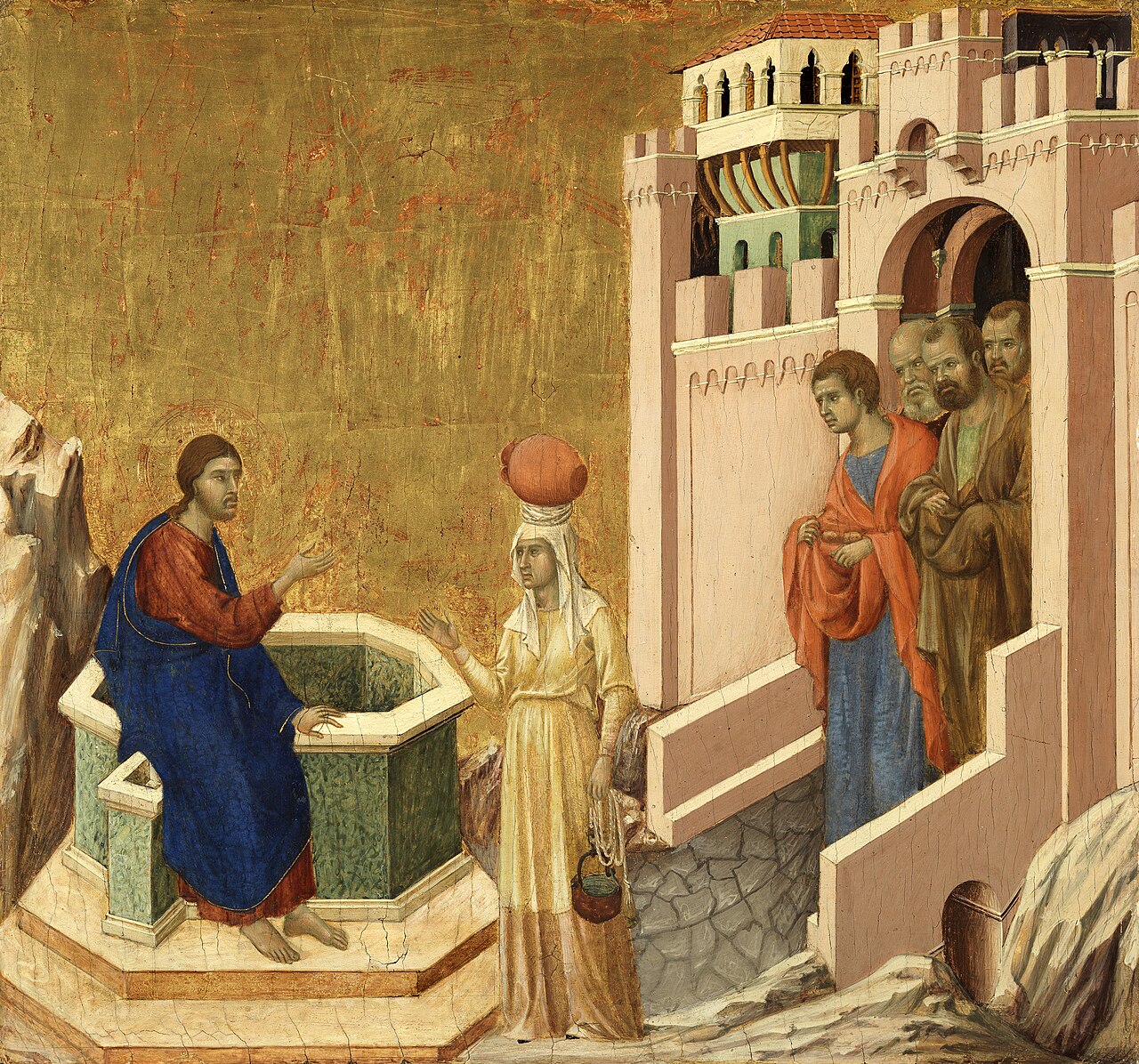
Jesus went out of his way to speak with a woman whose marriages were in disarray. At Jacob’s well in Samaria, he began a conversation with a Samaritan woman, asking her for a drink. He gently revealed that he knew she had had five husbands, and that the man she was now with was not her husband. He did not condemn her; he offered her “living water”. She ran back to her town and told everyone, “Come, and see a man who has told me all things whatsoever I have done. Is not he the Christ?” Many believed because of her (John 4:4-42).
In the late fourth century, Fabiola, a wealthy Roman noblewoman, divorced her vicious, immoral first husband and, while he was still alive, married another man. After her second husband’s death, she came to see that her remarriage had been against Christ’s teaching. She did public penance in the Lateran Basilica in front of the whole Roman church, then gave her fortune to the poor and founded the first public hospital in Rome, where she nursed the sick herself. St Jerome, who knew her, wrote her eulogy (Letter 77).
When the scribes and Pharisees dragged before Jesus a woman caught in adultery, demanding that she be stoned, Jesus said, “He that is without sin among you, let him first cast a stone at her.” One by one they went away. Jesus said to her: “Neither will I condemn thee. Go, and now sin no more” (John 8:7-11). His mercy and his call to a new life go together.
Frequently asked questions
Is a divorced Catholic excommunicated? No. Divorced Catholics are full members of the Church and may receive the sacraments.
Can a divorced Catholic receive Communion? Yes, if they have not remarried outside the Church and are otherwise in a state of grace.
Does an annulment make my children illegitimate? No. Church law states that children born of a marriage later declared null are legitimate (canon 1137).
How do I start an annulment? Speak to your parish priest, who can put you in touch with your diocesan tribunal. The process is now quicker and often free.
You may also like My Spouse Threatens Divorce If I Become Catholic and Can a Catholic Marry a Non-Catholic?
Sources and further reading
- The Bible: Malachi 2:13-16; Matthew 5:31-32; 19:3-12; Mark 6:17-29; 10:2-12; John 4:4-42; 8:1-11; 1 Corinthians 7:10-16.
- Catechism of the Catholic Church, 1640-1651 and 2382-2386.
- Code of Canon Law (1983), canons 1137, 1141-1155.
- Council of Trent, Session 24 (1563), canons on matrimony.
- John Paul II, Familiaris Consortio 83-84 (1981); Francis, Mitis Iudex Dominus Iesus (2015) and Amoris Laetitia, ch. 8 (2016).
- Paul III, Altitudo (1537).
- The Shepherd of Hermas, Mandate 4.1; St Justin Martyr, First Apology 15; St Jerome, Letter 77.
- Sheila Rauch Kennedy, Shattered Faith (1997).
