Why Can’t Women Be Catholic Priests? What the Church Teaches and Why
The Catholic Church teaches it has no authority to ordain women priests. Here is its reasoning stated honestly, the history, the strongest objections, the women deacons question, and where women lead today.
For many people today, the fact that the Catholic Church ordains only men as priests looks like plain discrimination. If you are a woman who feels a call to serve, or a Christian from a church that ordains women, or simply someone who believes in equality, the Church’s position may seem impossible to defend. This article tries to state the Church’s reasoning honestly and fairly, without avoiding the hard questions. It explains what the Church teaches and how firmly, why it says Jesus was not simply following the customs of his time, what the early Church did, the theological reasoning about the priest representing Christ the Bridegroom, the many ways women lead in the Church, the strongest objections, the separate question of women deacons, and the Church’s admission that it has often failed women.
1. The Church says it has no authority
The Catholic Church does not say that women are unworthy of the priesthood, or less holy, or less capable. It says that it has no authority to ordain women as priests, because it is bound by the choice Christ himself made.
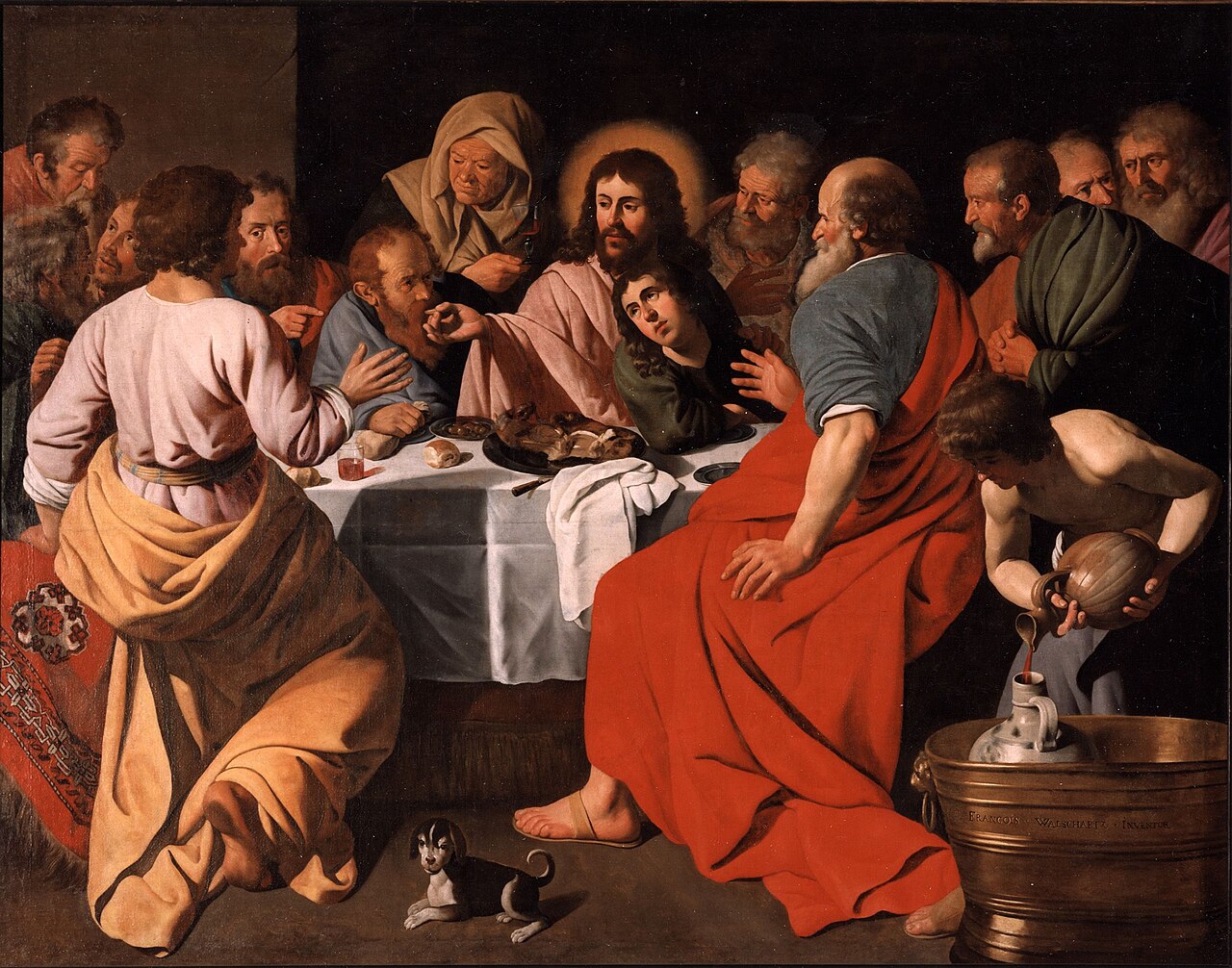
Luke tells us that Jesus “went out into a mountain to pray, and he passed the whole night in the prayer of God. And when day was come, he called unto him his disciples; and he chose twelve of them (whom also he named apostles)” (Luke 6:12-13). From among the many men and women who followed him, after a night of prayer, Jesus chose twelve men to be apostles. The Church believes it must follow that choice.
On 22 May 1994, Pope John Paul II issued a short apostolic letter, Ordinatio Sacerdotalis. In it he declared: “in order that all doubt may be removed regarding a matter of great importance, a matter which pertains to the Church’s divine constitution itself… I declare that the Church has no authority whatsoever to confer priestly ordination on women and that this judgment is to be definitively held by all the Church’s faithful.”
Some theologians asked whether this teaching was infallible. On 28 October 1995, the Congregation for the Doctrine of the Faith, then led by Cardinal Joseph Ratzinger, replied that the teaching “requires definitive assent” because it “belongs to the deposit of the faith” and has been “set forth infallibly by the ordinary and universal Magisterium”.
2. Not like celibacy
It is important to understand that this teaching is different from the rule of priestly celibacy. Celibacy is a Church discipline, which could in principle be changed. The male priesthood is presented as definitive teaching about the nature of the sacrament itself, which the Church says it has no power to change.
The modern discussion began when other churches started ordaining women. On 30 November 1975, as the Church of England was considering the question, Pope Paul VI wrote to the Archbishop of Canterbury, Donald Coggan. He explained that the Catholic Church held that it was not admissible to ordain women to the priesthood, for “very fundamental reasons”: the example of Christ in choosing only men as apostles, the constant practice of the Church, and the Church’s living teaching authority.
The Vatican’s first full statement of the reasons was a declaration called Inter Insigniores, dated 15 October 1976 and published in January 1977, issued as several Anglican provinces were beginning to ordain women. It set out the arguments from Scripture, tradition and theology that later popes would build on.
Pope Francis was asked about the question several times. On 1 November 2016, flying back from Sweden, a Swedish journalist asked him whether the Catholic Church might one day ordain women. Francis answered that St John Paul II had given the last clear word on this, and that it stands.
3. Jesus was not just following custom
The most common objection is that Jesus chose only men because he was following the customs of his time and culture. The Church answers that Jesus broke the conventions of his day about women freely, in a world that knew female priests.
Jesus repeatedly treated women in ways that shocked his contemporaries. At a well in Samaria, he held a long theological conversation with a Samaritan woman, revealing to her that he was the Messiah. Samaritans and Jews did not mix, and rabbis did not normally speak with women in public. When his disciples returned, “they wondered that he talked with the woman” (John 4:27). She went and told her whole town about him.
Women travelled with Jesus during his ministry. Luke tells us that the Twelve were with him, “and certain women… Mary who is called Magdalen… and Joanna the wife of Chusa, Herod’s steward, and Susanna, and many others who ministered unto him of their substance” (Luke 8:1-3). Women funded his mission from their own means, which was highly unusual.
And priestesses were common in the ancient world. In Rome, the Vestal Virgins tended the sacred fire of the city and enjoyed great honour. At Delphi, the Pythia, a priestess of Apollo, delivered the most famous oracles of the Greek world; the Greek writer Plutarch, who was himself a priest at Delphi, wrote about her role. If Jesus had wanted female priests, the culture around him would not have found the idea strange. Yet he did not choose women as apostles.
4. The early Church did not ordain women priests
The early Church never ordained women as priests, and it rejected the fringe groups that tried.
Around 180, St Irenaeus of Lyons wrote about a Gnostic teacher named Marcus, who had women pronounce the Eucharistic words over cups of wine and then claimed that the wine turned red by magic. Irenaeus describes this as one of Marcus’s deceptions, part of his manipulation of wealthy women (Against Heresies 1.13).
Around 375, St Epiphanius of Salamis described a sect in Arabia, the Collyridians, in which women offered small cakes or loaves to the Virgin Mary as priests, in imitation of pagan goddess worship. Epiphanius pointed out that even Mary herself, the holiest of all women, was never given the priesthood; Christ did not entrust it to her (Panarion 79).
In the West, Pope Gelasius I wrote to the bishops of southern Italy on 11 March 494. He had learned, to his dismay, that women were serving at the altar in some of their churches, performing ministries reserved to men. He rebuked the bishops and ordered the practice stopped (Letter 14). Whatever one thinks of these sources, they show that the mainstream Church did not ordain women priests and regarded attempts to do so as departures from tradition.
5. The priest represents Christ the Bridegroom
The deepest theological reason the Church gives is that the priest acts in persona Christi, “in the person of Christ”, and sacramentally represents Christ as the Bridegroom of his bride, the Church. Sacramental signs, the Church teaches, are received from Christ, not invented by the Church.
Jesus described himself as the bridegroom. When people asked why his disciples did not fast, he answered: “Can the children of the marriage fast, as long as the bridegroom is with them?” (Mark 2:19). The image of God as Israel’s husband runs through the Old Testament prophets, and Jesus applied it to himself.
St Paul developed this image in his letter to the Ephesians. “Husbands, love your wives, as Christ also loved the church, and delivered himself up for it… This is a great sacrament; but I speak in Christ and in the church” (Ephesians 5:25, 32). At Mass, Catholics believe, the priest stands in the person of Christ the Bridegroom offering himself for his bride. The Church argues that this sacramental sign requires a man, just as the Eucharist requires bread and wine.
The Church also teaches that it has no power to change the substance of the sacraments. In 1947, Pope Pius XII made a significant change to the rite of ordination, defining which words and gestures were essential. In the same document he stated that the Church has no power over “the substance of the sacraments”, that is, over what Christ himself established as the sacramental sign (Sacramentum Ordinis, 30 November 1947). The Church can change many things about how sacraments are celebrated, but not what Christ instituted.
6. Not a ranking of holiness
Ordination is not a ranking of holiness or worth. In the Catholic understanding, the greatest members of the Church are the saints, and the greatest of all is a woman: Mary, the Mother of God.
Mary was with the apostles in the upper room before Pentecost. Luke lists the eleven apostles by name, and then adds that they were all persevering in prayer “with the women, and Mary the mother of Jesus” (Acts 1:13-14). Catholics honour Mary above every apostle and every pope, yet she was never one of the Twelve and never a priest. Holiness and priesthood are different things.
Some of the most influential figures in Church history have been women without any office. St Catherine of Siena was the daughter of a dyer, with no formal education, who joined a lay group of Dominican women. In the 1370s, the popes had been living in Avignon in France for nearly seventy years. In 1376 Catherine travelled to Avignon and urged Pope Gregory XI, in person and in blunt letters, to return to Rome. He did. In 1970 Pope Paul VI named her a Doctor of the Church, one of the first women to receive the title.
St Hildegard of Bingen, a twelfth-century German abbess, was a theologian, composer, scientist and visionary. Between about 1158 and 1170, already in her sixties, she made preaching tours through the Rhineland, preaching to clergy and people and calling for reform. She corresponded with popes, emperors and kings. In 2012 Pope Benedict XVI named her a Doctor of the Church.
7. Women lead in the Church today
Women teach, lead and govern in the Catholic Church, and now hold senior Vatican offices once reserved to cardinals and bishops.
The Gospels give women a central place in the Resurrection. Mary Magdalene was the first to see the risen Jesus, at the empty tomb, and he sent her to announce his resurrection to the apostles: “go to my brethren, and say to them” (John 20:17). Early Christian writers called her “the apostle to the apostles”. In 2016, Pope Francis raised her memorial on 22 July to the rank of a feast, equal to the feasts of the apostles.
In 2021 Pope Francis changed Church law so that women can be formally and permanently instituted in the ministries of lector (reader) and acolyte (altar server and minister of Communion), which had previously been reserved to men (Spiritus Domini, 10 January 2021). Women had long performed these roles informally; now they are officially recognised.
On 6 January 2025, Pope Francis appointed Sister Simona Brambilla, an Italian missionary sister, as Prefect of the Dicastery for Institutes of Consecrated Life and Societies of Apostolic Life. She became the first woman ever to head a Vatican dicastery, the equivalent of a government ministry, a post previously held by cardinals. Women now hold other senior Vatican offices too, including in the governance of Vatican City.
8. The serious objection
The objection to the Church’s teaching is serious and deserves a fair statement. Scripture proclaims equality in Christ, names women in ministry, and many other churches now ordain women.
St Paul wrote: “There is neither Jew nor Greek: there is neither bond nor free: there is neither male nor female. For you are all one in Christ Jesus” (Galatians 3:28). In his letter to the Romans, he commended “Phebe our sister, who is in the ministry [diakonos] of the church, that is in Cenchrae”, and greeted “Andronicus and Junias… who are of note among the apostles” (Romans 16:1, 7). Many scholars believe Junia was a woman, and that Paul is calling her an apostle in a broad sense.
Other churches have ordained women for decades. The first woman ordained a priest in the Anglican Communion was Florence Li Tim-Oi. During the Second World War, Anglicans in the Portuguese colony of Macau were cut off from any priest by the Japanese occupation. On 25 January 1944, Bishop Ronald Hall of Hong Kong ordained her a priest so that she could celebrate the sacraments for them. Today many Anglican, Lutheran and Methodist churches ordain women.
There is also an interesting historical detail. In 1976, according to a report leaked to the press, the Pontifical Biblical Commission, a group of Catholic biblical scholars advising the Vatican, voted unanimously that the New Testament alone does not settle the question of whether women can be priests. The Vatican’s teaching, however, rests not on Scripture alone but on Scripture, Tradition and the Church’s understanding of the sacrament together.
9. Equal dignity, different roles, and women deacons
The Church replies that equal dignity does not require identical roles. The separate question of women deacons has been studied at length, and the answer, for now, is also no, though not definitively.
St Paul taught that the one body of Christ has many different members, each with its own role, and that “the eye cannot say to the hand: I need not thy help” (1 Corinthians 12:21). Differences of role do not imply differences of worth. Catholics point out that no man can be a mother, and no man can be the mother of God.
The early Church did have deaconesses, whose exact role is debated. St Olympias, a wealthy widow of Constantinople who died in 408, was ordained a deaconess by the patriarch and devoted her fortune to the poor. She was a close friend and supporter of St John Chrysostom and stood by him when he was exiled. The Council of Chalcedon in 451 set the minimum age for ordaining deaconesses at forty (canon 15). Historians debate whether deaconesses received the same sacramental ordination as male deacons.
Pope Francis established two study commissions on women deacons. The second, chaired by Cardinal Giuseppe Petrocchi, completed its work in 2025, and on 4 December 2025, at the request of Pope Leo XIV, the Vatican published a summary of its findings. The commission voted against admitting women to the diaconate understood as a degree of the sacrament of Holy Orders. But it also said that it was not currently possible to formulate a definitive judgement on the question, as had been done for priestly ordination, and it encouraged new forms of ministry for women.
10. The Church has often failed women
Catholics should admit honestly that the Church has often failed women, and anyone troubled by this teaching is invited to keep asking questions, as the Gospel encourages.
Jesus himself was argued with by a woman, and he praised her for it. A Gentile woman from Syrophoenicia begged him to heal her daughter. When he seemed to refuse, saying it was not right to give the children’s bread to the dogs, she answered back: “Yea, Lord; for the whelps also eat under the table of the crumbs of the children.” Jesus praised her answer, and her daughter was healed (Mark 7:24-30).
The Church has sometimes treated faithful women badly. In the early seventeenth century, an English Catholic woman named Mary Ward founded an order of religious sisters modelled on the Jesuits: not enclosed in convents, but active in teaching girls and serving in the world. Church authorities found this unacceptable. In 1631, Pope Urban VIII suppressed her order, and Mary Ward was briefly imprisoned in Munich as a heretic. Centuries later the Church changed its mind: her sisters became the Congregation of Jesus, and in 2009 Pope Benedict XVI declared her Venerable.
On 29 June 1995, Pope John Paul II wrote a Letter to Women. In it he thanked women for their contributions in every sphere of life. He acknowledged that women’s dignity has often been unacknowledged and their prerogatives misrepresented, and that they have been “relegated to the margins of society and even reduced to servitude”. He wrote that if objective blame for this belonged to members of the Church, “for this I am truly sorry”. The question of women in the Church is not closed to prayer, conversation and growth, even where the Church believes its teaching on priesthood is settled.
Frequently asked questions
Is the male priesthood infallible teaching? The Vatican has stated that it belongs to the deposit of faith and requires definitive assent. Some theologians continue to debate the precise level of authority.
Could a future pope change it? The Church teaches that it has no authority to do so, because the teaching concerns the substance of the sacrament.
Can women be deacons? Not at present. A papal commission, reporting in 2025, voted against it but said its judgement was not definitive.
What roles can women have? Women serve as lectors, acolytes, catechists, chaplains, theologians, canon lawyers, school and hospital leaders, diocesan chancellors and senior Vatican officials. Religious sisters lead vast networks of schools, hospitals and charities worldwide.
You may also like Why Can’t Catholic Priests Marry? and Catholic vs Anglican and Episcopal
Sources and further reading
- The Bible: Mark 2:18-20; 7:24-30; Luke 6:12-16; 8:1-3; John 4:5-30; 20:11-18; Acts 1:12-14; Romans 16:1-7; 1 Corinthians 12:12-27; Galatians 3:27-28; Ephesians 5:25-32.
- Catechism of the Catholic Church, 1577-1578.
- Paul VI, Letter to Archbishop Donald Coggan (30 November 1975); Congregation for the Doctrine of the Faith, Inter Insigniores (1976) and Response to a Dubium (28 October 1995); John Paul II, Ordinatio Sacerdotalis (1994) and Letter to Women (1995).
- Pius XII, Sacramentum Ordinis (1947); Francis, Spiritus Domini (2021).
- Vatican News, summary of the report of the Study Commission on the Female Diaconate chaired by Cardinal Giuseppe Petrocchi (4 December 2025).
- Council of Chalcedon (451), canon 15.
- St Irenaeus, Against Heresies 1.13; St Epiphanius, Panarion 79; Pope Gelasius I, Letter 14.
- Sara Butler, The Catholic Priesthood and Women: A Guide to the Teaching of the Church (2007).
