
No Catholic Chaplain While Deployed: What About Mass and the Sacraments?
No Catholic priest during deployment? A practical guide to Sunday prayer, spiritual Communion, Confession and contacting a Catholic chaplain.
If you are deployed where Catholic Mass is genuinely unavailable, you do not sin by failing to attend the impossible. You should make reasonable efforts to obtain Catholic pastoral care, keep Sunday holy as circumstances allow, and stay connected with a Catholic chaplain. God has not abandoned you because your assignment has taken you beyond the reach of a parish church.
The important questions are practical: Is a visiting priest available? What worship is authorised when he is absent? How can you prepare for Confession and Communion when an opportunity comes? Which rules apply to your service and military ordinariate?
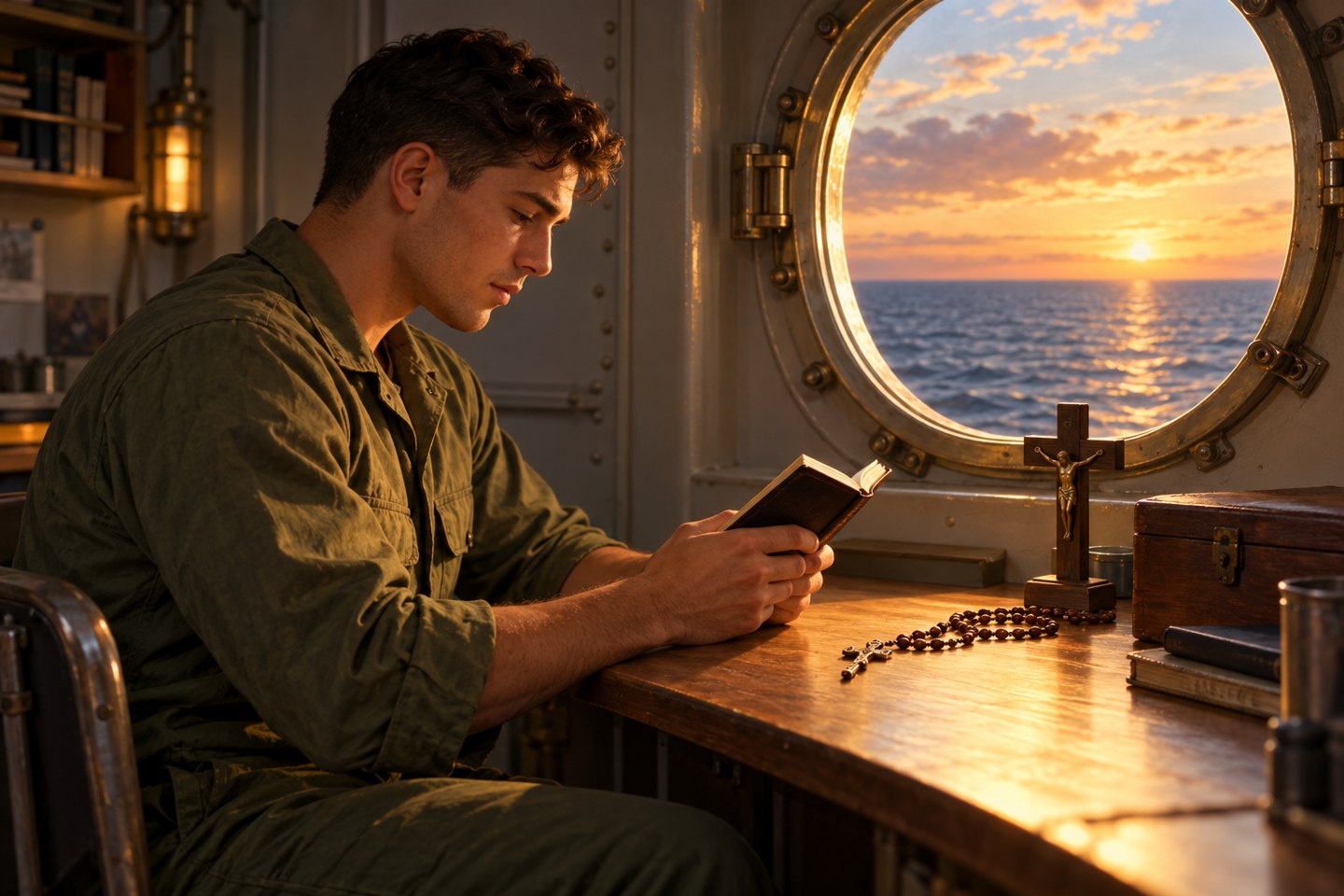
Does the Sunday obligation still apply?
Catholics are ordinarily bound to participate in Mass on Sundays and holy days of obligation. But canon 1248 §2 recognises that participation may be impossible because there is no sacred minister or because of another grave cause. It recommends participation in a suitable liturgy of the Word, where provided, or a fitting time of prayer personally, with family or in a group.
That is different from choosing convenience when Mass is reasonably available. Deployment does not automatically make every absence excused, and an online article cannot assess every duty roster or safety restriction. Explain the actual circumstances to your Catholic chaplain when you can.
You should not put yourself or others in danger, disregard lawful operational restrictions or disclose sensitive movements in an attempt to prove devotion. Work through the appropriate chaplaincy and command channels to seek religious accommodation.
Start planning before deployment if possible
Ask your Catholic chaplain about expected access to priests, contact arrangements, approved resources and what to do in an emergency. If you already know there will be a long absence, seek Confession beforehand and discuss any particular sacramental concern.
Keep an accessible prayer book or downloaded resources where permitted. A small Catholic Bible, Sunday readings and a simple method of morning and evening prayer may be more useful than an ambitious routine that cannot survive your schedule.
You might ask:
- How can I request a Catholic priest through the proper channels?
- Are visiting Masses or opportunities for Confession anticipated?
- Is there an authorised Catholic lay leader?
- Which Sunday prayer resources does the chaplain recommend?
- What should I do if someone becomes seriously ill or faces danger of death?
The answers will differ by country and service. The Archdiocese for the Military Services, USA provides one example of formal pastoral arrangements; its administrative rules should not be assumed to govern every nation’s armed forces.
Can a lay leader celebrate Mass?
No. A lay person cannot consecrate the Eucharist or give sacramental absolution. A Catholic prayer gathering led by a service member can be valuable, but it is not Mass.
The US military archdiocese’s lay-leader guidance is particularly clear: authorised leaders may conduct an approved Sunday celebration when a priest is unavailable; their role does not include reserving, transporting or distributing Holy Communion. This is a specific policy, not permission for anyone to invent a local arrangement.
Elsewhere, follow your competent Catholic authority’s directions. Do not keep consecrated Hosts privately or organise Communion on your own initiative. Reverence includes respecting the Church’s care for the sacrament.
Our article on the Real Presence explains why a Catholic prayer service and the Eucharistic sacrifice cannot simply be treated as interchangeable experiences.
An illustration: the lamp and the harbour
This is an original illustrative story.
A sailor kept a small lamp beside a photograph of his family. While away, he wrote letters and called whenever the connection allowed. The lamp was not his home, and the calls were not the same as sitting at the family table. Yet they kept his attention turned towards the people he loved until he could return.
Prayer in isolation is something like that. It does not manufacture the sacramental celebration you cannot reach. It keeps you turned towards Christ and his Church, ready to receive the sacraments when they become available.
The comparison has limits: Christ is not absent from someone who prays away from Mass. It illustrates the difference between maintaining a relationship and pretending every expression of it is identical.
What can I do on Sunday?
Choose a sustainable period of prayer, allowing for duties and fatigue. Read the Sunday Gospel; pray the Our Father; make an examination of conscience; pray for your family, fellow service members and those affected by conflict. The Liturgy of the Hours or a Rosary may also help.
A spiritual Communion expresses your desire for union with Christ when sacramental Communion is unavailable. It is not a method for consecrating bread, and it does not remove the obligation to attend Mass when attendance is possible.
A streamed Mass may support prayer if access is permitted. Watching a screen is not physical participation in a Mass for the purpose of fulfilling the normal attendance obligation. In genuine impossibility, however, the issue is already the absence of an attainable obligation, not whether you can recreate it digitally.
If prayer feels dry, our reflection on praying when you feel nothing may be useful. Exhaustion and distraction do not prove that your prayer is worthless.
May I receive Communion from a non-Catholic chaplain?
Do not assume that any Christian service offers a sacrament Catholics may receive. Canon 844 §2 provides a limited exception when necessity or true spiritual advantage calls for it, access to a Catholic minister is physically or morally impossible, and danger of error or religious indifference is avoided. It concerns Penance, Eucharist and Anointing from non-Catholic ministers in whose Churches those sacraments are valid.
This is not a blanket permission to receive at an ordinary Protestant service. The discipline of the other Church must also be respected; Catholic permission does not oblige another minister to admit you. Discuss an actual case with a Catholic chaplain rather than making assumptions from the minister’s title or clothing.
A non-Catholic chaplain can still offer valuable pastoral support and help connect you with Catholic care. Respecting sacramental differences need not mean refusing kindness or conversation.
What if I need Confession and no priest is available?
Turn to God sincerely, repent, and resolve to confess when possible. Catholic teaching distinguishes perfect contrition, arising from love of God above all things, from sorrow motivated principally by fear. Perfect contrition includes the firm intention to receive sacramental Confession as soon as possible; it is not a reason to avoid it later. See the Compendium, question 391.
Do not turn this into anxious self-measurement: “Was my sorrow exactly perfect enough?” Bring that anxiety to a priest when contact becomes possible. Phone or video conversation can provide counsel, but it is not sacramental absolution at a distance.
In danger of death, canon 976 provides that any priest can validly and licitly absolve, even if he otherwise lacks the faculty to hear Confessions. Let the chaplaincy know the urgency and seek a priest through appropriate channels.
Returning to ordinary sacramental life
When a Catholic priest becomes available, ask about Mass, Confession and any unfinished pastoral concerns. You do not need to invent guilt for months when attendance was genuinely impossible. You can explain the situation simply and receive guidance about anything you freely chose during that time.
Separation from the sacraments can be painful. It can also deepen gratitude for them. Your task is to do what is reasonably possible, remain honest with God, and accept the Church’s help as it becomes available.
Sources and further reading
- Code of Canon Law: Canons 1244–1253
- Archdiocese for the Military Services, USA: Pastoral care requirements
- Archdiocese for the Military Services, USA: Lay leaders
- Code of Canon Law: Canons 834–878, including canon 844
- Compendium of the Catechism of the Catholic Church
- Code of Canon Law: Penance, canons 959–997
Sources checked 26 September 2026. Original illustrative stories are teaching aids, not reported events or quotations from Scripture. This article offers general formation; personal sacramental, legal and health questions require the appropriate qualified adviser.
