
Do Catholics Believe in Evolution? Faith, Science and Genesis
Catholics are free to accept evolution. Here is what the Church teaches about creation, how it reads Genesis, the Catholic scientists behind modern science, Galileo, and Adam and Eve.
Many people assume that the Catholic Church is against science. They remember Galileo, and they imagine that the Church still insists the world was made in six twenty-four-hour days a few thousand years ago. Others, especially Bible-believing Christians, worry the opposite: that the Catholic Church has given up on Genesis and simply goes along with whatever scientists say. The truth is more interesting than either view. Catholics are free to accept the scientific theory of evolution. The Church teaches no scientific theory as part of the faith, but it does insist on some things science cannot prove or disprove: that God freely created everything, and that each human soul is his direct gift. This article explains what the Church teaches, what is binding and what is left open, how Catholics read Genesis, the Catholic scientists who helped found modern science, the Church’s first reactions to Darwin, the objections from both sides, the Church’s reply, the hard question of Adam and Eve, the truth about Galileo, and the invitation to wonder.
1. Catholics are free to accept evolution
Catholics are free to accept the scientific theory of evolution. The Church does not teach any scientific theory as part of the faith. It teaches only that God is the Creator of all things, and that each human soul is created directly by God.
The first major papal statement came from Pope Pius XII. In his encyclical Humani Generis (12 August 1950), he wrote that the Church does not forbid research and discussion, by experts in both science and theology, on the theory of evolution, insofar as it concerns the origin of the human body from pre-existent and living matter. But, he added, the Catholic faith obliges us to hold that souls are immediately created by God (Humani Generis 36). Pius XII was cautious, and treated evolution as an unproven hypothesis. But he opened the door.
On 22 October 1996, Pope John Paul II sent a message to the Pontifical Academy of Sciences. He noted that new knowledge had led to the recognition that the theory of evolution is “more than a hypothesis”. The convergence of independent findings in different fields, he said, was itself a significant argument in favour of the theory. But he insisted, like Pius XII, that the human soul cannot be explained as merely emerging from matter.
On 27 October 2014, Pope Francis addressed the same Academy, at the unveiling of a bust of Pope Benedict XVI. He said that when we read the account of creation in Genesis, we risk imagining God as a magician with a magic wand able to do everything. But that is not so. He added that evolution in nature is not inconsistent with the notion of creation, because evolution requires the creation of beings that evolve.
2. What is binding and what is left open
What Catholics must believe is that God freely created everything that exists from nothing, and that he holds it in being at every moment. How life developed over time is a question the Church leaves open to science.
The idea of creation “from nothing” appears in Scripture. In the second century BC, during a persecution of the Jews, a mother watched her seven sons tortured and killed for refusing to break God’s law. To strengthen her youngest son, she told him: “I beseech thee, my son, look upon heaven and earth, and all that is in them: and consider that God made them out of nothing, and mankind also” (2 Maccabees 7:28). Her faith in God as Creator gave her hope in God as the one who would raise her sons again.
In 1215, the Fourth Lateran Council defined that the one God is “the creator of all things invisible and visible, spiritual and corporeal, who by his almighty power at the beginning of time created from nothing both spiritual and corporeal creatures”. This is a teaching about God and about where the universe ultimately comes from, not about the mechanisms of biology.
The First Vatican Council, in 1870, taught that faith and reason can never truly conflict, since the same God who reveals the mysteries of faith also gives the human mind the light of reason. “God cannot deny himself, nor can truth ever contradict truth” (Dei Filius, chapter 4). If there seems to be a conflict, either science has been misunderstood or the faith has been. See also Why Don’t Catholics Use the Bible Alone?
3. Genesis is not a science textbook
Catholics do not read the first chapters of Genesis as a science textbook. And the greatest early Christian teachers did not read them that way either, long before anyone had heard of Darwin.
Around 225, the great Alexandrian scholar Origen pointed out an obvious problem in Genesis 1. The sun, moon and stars are not created until the fourth day, yet the first three days have “evening and morning”. He asked what sensible person could suppose that there were a first, second and third day, with evening and morning, without sun, moon and stars (On First Principles 4.3.1). For Origen, such details showed that the passage had a deeper meaning.
St Augustine, in the early fifth century, wrote a long commentary called The Literal Meaning of Genesis (written about 401 to 415). He concluded that the six “days” of creation were not ordinary days, and suggested that God created all things at once, with the potential to unfold over time. He also warned Christians against talking nonsense about astronomy, biology or other natural sciences in the name of the Bible. If an unbeliever hears a Christian making foolish claims about nature, Augustine said, and laughs, the unbeliever may conclude that the Bible itself is foolish, and reject its teaching about salvation (The Literal Meaning of Genesis 1.19.39).
In 1893, Pope Leo XIII taught in his encyclical Providentissimus Deus that the sacred writers did not intend to teach the inner structure of the visible universe, which is of no use for salvation. They described things in the language of their time, as things appear to the senses (Providentissimus Deus 18). Genesis teaches that God made everything, that it is good, and that human beings are made in his image. It does not teach geology or biology.
4. Catholics helped to found the sciences
Believing Catholics, including priests and religious, helped to found the very sciences on which the theory of evolution depends.
Nicolas Steno, a Danish anatomist who converted from Lutheranism to Catholicism, worked out how layers of rock (strata) are laid down over time, one on top of another, with the oldest at the bottom. His Prodromus, published in 1669, laid the foundations of geology. He later became a priest and then a bishop, working among Catholics in northern Germany and Scandinavia. Pope John Paul II beatified him in 1988.
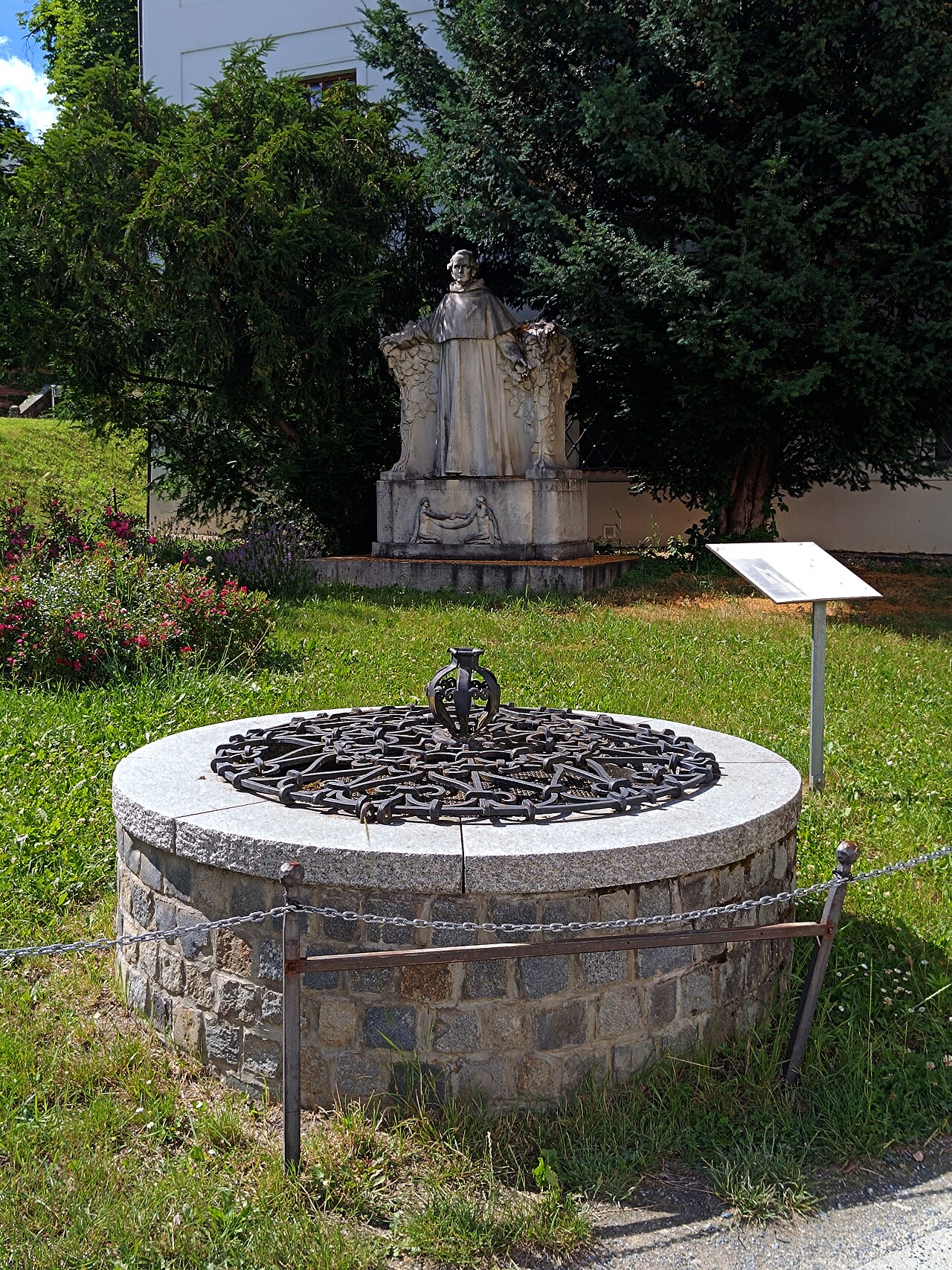
Gregor Mendel was an Augustinian friar at St Thomas’s Abbey in Brno, in what is now the Czech Republic. Between 1856 and 1863, he grew and crossed thousands of pea plants in the abbey garden, carefully recording how traits such as colour and shape were passed on from one generation to the next. He published his results in 1866. He had discovered the basic laws of inheritance. His work was largely ignored during his lifetime, but after its rediscovery in 1900, it became the foundation of genetics, which explains how evolution works. Mendel became abbot of his monastery in 1868.
Georges Lemaître was a Belgian Catholic priest and physicist. In 1927, he published a paper proposing that the universe is expanding, and in 1931 he suggested that it began from a “primeval atom”. This idea is now known as the Big Bang. Some scientists, including at first Albert Einstein, were suspicious of the idea, partly because it seemed too close to the religious idea of creation. Lemaître himself was careful to keep science and faith distinct.
5. The Church never condemned Darwin
The Church’s first reaction to Charles Darwin was wary and sometimes heavy-handed. But it never condemned his theory.
Darwin’s On the Origin of Species was published in 1859. Contrary to a common belief, it was never placed on the Index of Forbidden Books, the Church’s list of works Catholics were forbidden to read. Interestingly, the Index did include Zoonomia, a book by Charles’s grandfather, Erasmus Darwin, which had been placed on it in 1817.
Some Catholics welcomed Darwin cautiously from the start. In 1868, John Henry Newman, the English convert who would later become a cardinal and is now a saint, wrote privately to a friend, Canon John Walker. He said he did not see that Darwin’s theory was necessarily atheistic, and that it might suggest a larger idea of God’s providence and skill (letter of 22 May 1868).
Rome’s censors were more nervous. John Zahm, an American priest of the Congregation of Holy Cross at the University of Notre Dame, published Evolution and Dogma in 1896, arguing that evolution was compatible with Catholic faith. In 1898, the Congregation of the Index moved to ban the book. The decree was never published, but Zahm was made to withdraw the book from circulation. His treatment shows that the Church’s early response was not always wise, even if it never formally condemned evolution.
6. Objections from two sides
The objection to the Catholic position comes from two opposite sides. Some Christians say that evolution contradicts Scripture. Some atheists say that evolution makes God unnecessary.
In July 1925, John Scopes, a schoolteacher in Dayton, Tennessee, was tried for teaching human evolution, which a new state law had forbidden. The famous “Scopes Monkey Trial” pitted the lawyer Clarence Darrow, for the defence, against William Jennings Bryan, a Presbyterian statesman and three-time presidential candidate, who helped the prosecution and defended the Bible’s account of creation. Scopes was convicted and fined $100, though the verdict was later overturned on a technicality.
On the other side, the biologist Richard Dawkins wrote in The Blind Watchmaker (1986) that, although atheism might have been logically tenable before Darwin, Darwin made it possible to be an intellectually fulfilled atheist. For Dawkins, evolution explains the appearance of design in living things without any need for a designer.
Even within the Church, the question can be controversial. On 7 July 2005, Cardinal Christoph Schönborn, the Archbishop of Vienna, wrote an article in The New York Times. He argued that evolution in the sense of common ancestry might be true, but that evolution in the neo-Darwinian sense, an unguided, unplanned process of random variation and natural selection, is not science but ideology. His article caused an international row, and many Catholic scientists criticised it.
7. The Church’s reply: science and philosophy
The Church’s reply is to distinguish between the scientific theory of evolution and a philosophy that claims nothing exists except matter and chance. The first is a question for science. The second goes beyond what science can show.
St Thomas Aquinas, in the thirteenth century, taught that God ordinarily acts through created causes. God does not have to intervene constantly to make things happen. He gives creatures the dignity of being real causes themselves (Summa Theologiae I, q. 22, a. 3; q. 105, a. 5). For Aquinas, the more powerful and complete a creature’s own activity, the more it shows the greatness of the Creator who made it. A world that develops through natural processes does not make God unnecessary.
In 2004, the International Theological Commission, a Vatican body then chaired by Cardinal Joseph Ratzinger, later Pope Benedict XVI, published a document called Communion and Stewardship. It accepted that, according to the widely accepted scientific account, all living organisms on earth are descended from a common ancestor. It argued that even the outcome of a truly contingent natural process can fall within God’s providential plan for creation (Communion and Stewardship 63-69).
The Bible itself shows how God can work through events that seem random or even evil. Joseph’s jealous brothers sold him into slavery in Egypt. Years later, after he had risen to power and saved Egypt and his own family from famine, they feared he would take revenge. Joseph told them: “You thought evil against me: but God turned it into good, that he might exalt me, as at present you see, and might save many people” (Genesis 50:20). God’s plan can work through processes that look, from the inside, unplanned.
8. The hardest question: Adam, Eve and original sin
The hardest question for Catholics who accept evolution concerns Adam and Eve and original sin. Here the Church asks for care, and theological discussion continues.
St Paul teaches that “by one man sin entered into this world, and by sin death; and so death passed upon all men, in whom all have sinned”. And just as through one man’s disobedience many were made sinners, so through one man’s obedience, Jesus Christ, many will be made righteous (Romans 5:12-19). Paul’s teaching about salvation through Christ is tied to his teaching about sin through Adam.
In 1546, the Council of Trent defined that original sin is passed on to all human beings “by propagation, not by imitation”. In other words, we inherit a fallen human condition from the first parents, rather than merely copying their bad example.
Pope Pius XII was cautious about this question. In Humani Generis, he warned against the idea that after Adam there existed on earth true human beings who were not descended from him, or that “Adam” refers to a group of many first parents. He said that it is not apparent how such an opinion could be reconciled with the Church’s teaching on original sin (Humani Generis 37). His wording was careful: he said that the reconciliation was “not apparent”, not that it was impossible. Theologians continue to discuss how the doctrine of original sin can be understood in light of modern genetics.
9. The truth about Galileo
A common misunderstanding is that the Galileo affair proves the Church is against science. The real historical record is mixed, but mostly otherwise.
Galileo was a real case of injustice. In 1633, the Roman Inquisition condemned him for teaching that the earth moves around the sun, and he spent the rest of his life under house arrest near Florence. On 31 October 1992, after a commission had studied the case for over a decade, Pope John Paul II admitted publicly that the theologians who condemned Galileo had erred, by failing to distinguish properly between faith and a particular scientific cosmology.
But the Church has also supported science. In 1936, Pope Pius XI refounded the Pontifical Academy of Sciences, with members chosen for their scientific merit regardless of religion or nationality. Its members have included many Nobel Prize winners. The physicist Stephen Hawking, an atheist, was appointed a member in 1986, and addressed the Academy several times.
In March 2009, to mark 150 years since Darwin’s On the Origin of Species, the Pontifical Council for Culture co-sponsored an international scientific conference on biological evolution at the Pontifical Gregorian University in Rome (3 to 7 March). Scientists, philosophers and theologians gathered to discuss Darwin’s theory. The Church did not fear the conversation.
10. Faith and science together, and wonder
The invitation to Catholics is to hold faith and science together, and to let the study of nature become a source of wonder and praise.
In the Book of Job, God answers Job’s complaints, not with an explanation, but with a long tour of the wonders of creation. “Where wast thou when I laid the foundations of the earth? Tell me if thou hast understanding.” God shows Job the sea, the stars, the lion, the raven, the mountain goats, the wild ass, the ostrich, the horse and the hawk (Job 38-39). Job is humbled, and amazed.
St Albert the Great, a thirteenth-century Dominican friar and bishop, and the teacher of St Thomas Aquinas, was one of the greatest naturalists of the Middle Ages. He studied and catalogued plants, animals and minerals, often from his own observation rather than from books. He died in 1280. In 1941, Pope Pius XII named him patron saint of those who study the natural sciences.
In 1998, Pope John Paul II opened his encyclical Fides et Ratio (Faith and Reason) with a famous image: “Faith and reason are like two wings on which the human spirit rises to the contemplation of truth.” A Catholic does not need to choose between science and faith. Both are ways of seeking the truth, and all truth comes from God.
Frequently asked questions
Can a Catholic believe in evolution? Yes. The Church allows Catholics to accept the scientific theory of evolution, while holding that God is the Creator and that each soul is created directly by God.
Do Catholics have to believe the world was made in six days? No. The Church does not require a literal reading of the six days of Genesis 1.
Does the Church teach that Adam and Eve were real? The Church teaches that the whole human race shares in the original sin of the first parents. How this fits with genetics is still discussed by theologians.
Is the Big Bang a Catholic idea? It was first proposed by a Catholic priest, Georges Lemaître, though it is a scientific theory, not a doctrine.
You may also like What Bible Do Catholics Use? and Do Catholics Read the Bible?
Sources and further reading
- The Bible: Genesis 1-2; 50:15-21; Job 38-39; 2 Maccabees 7:20-29; Romans 5:12-19.
- Catechism of the Catholic Church, 282-289, 337-349, 362-368, 390, 396-406.
- Fourth Lateran Council (1215); Council of Trent, Session 5 (1546); First Vatican Council, Dei Filius (1870).
- Leo XIII, Providentissimus Deus (1893); Pius XII, Humani Generis (1950); John Paul II, Message to the Pontifical Academy of Sciences (22 October 1996), address on Galileo (31 October 1992) and Fides et Ratio (1998); Francis, Address to the Pontifical Academy of Sciences (27 October 2014).
- International Theological Commission, Communion and Stewardship: Human Persons Created in the Image of God (2004).
- Origen, On First Principles 4.3; St Augustine, The Literal Meaning of Genesis; St Thomas Aquinas, Summa Theologiae I, qq. 22 and 105.
- John Henry Newman, letter to J. Walker, 22 May 1868; John Zahm, Evolution and Dogma (1896).
- Richard Dawkins, The Blind Watchmaker (1986); Christoph Schönborn, “Finding Design in Nature”, The New York Times, 7 July 2005.
