
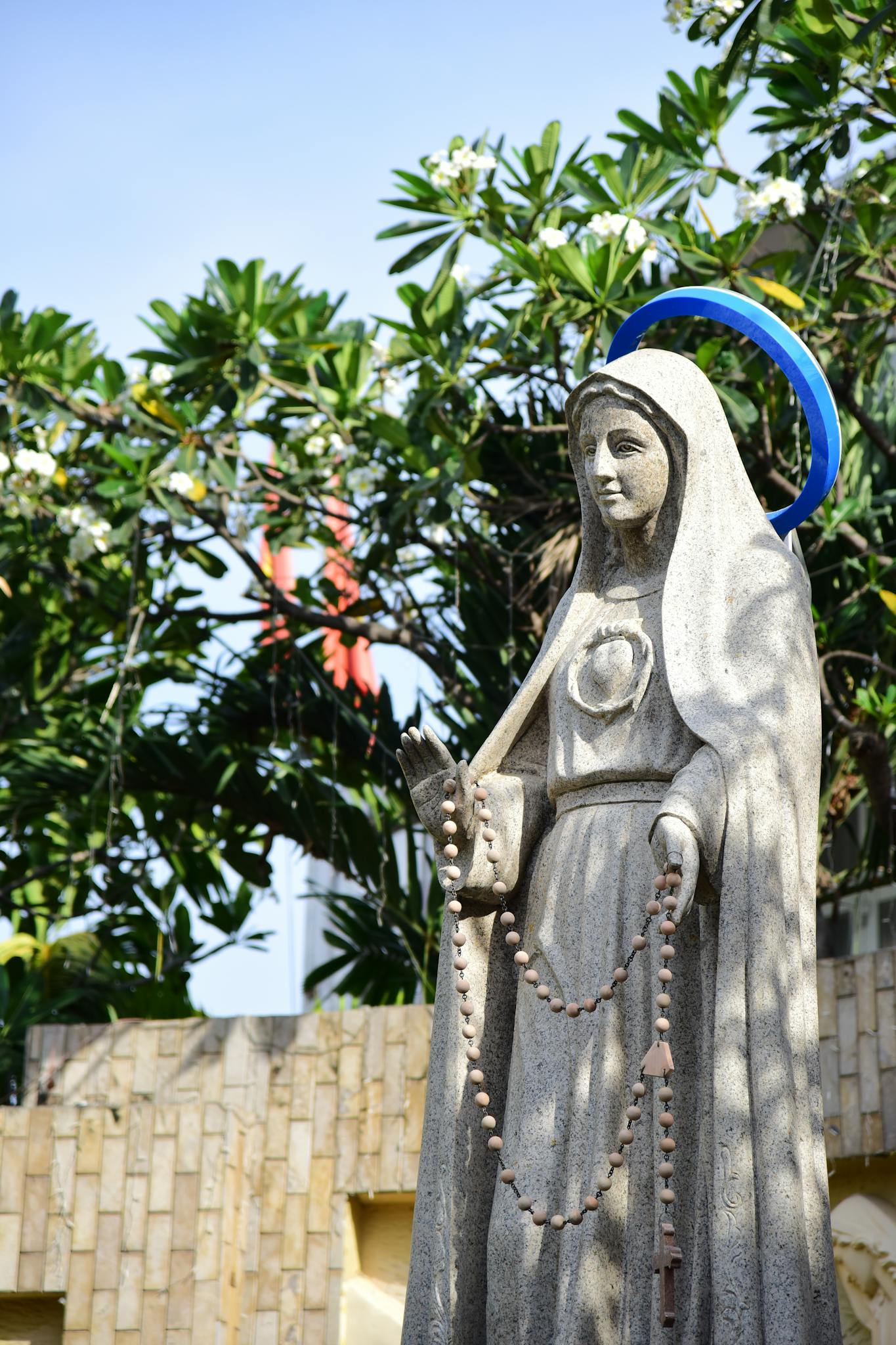
Scapulars
Devotions
The general Catholic sacramental of the scapular — what enrollment means, how a cloth scapular relates to the scapular medal, and an index of the Church’s seven best-known scapulars.
A scapular, in its devotional form, is a small sacramental made of two pieces of cloth joined by cords and worn over the shoulders, front and back, as a sign of formal enrollment in a particular devotion and a share in the spiritual benefits attached to it. This page explains what a scapular is theologically and historically, the canonical and devotional requirements of enrollment, and how the cloth scapular relates to the scapular medal permitted as its substitute, then serves as an index to the Church’s seven best-known scapulars, each of which has its own dedicated page with its full history.
Quick Facts
- Category: Sacramentals & Devotional Practices — Sacred Objects & Domestic Piety
- Origin: Adapted from the monastic scapular, the apron-like garment worn by members of certain religious orders, into a small devotional sacramental for the laity from the medieval period onward
- Associated saint: Varies by specific scapular; several trace to a particular order or reported vision
- Country: Universal
- Feast/observance: Varies by specific scapular
- Church status: An approved category of sacramental; individual scapulars carry their own specific history of Church approval
- Private revelation: Some individual scapulars rest on a reported vision; the scapular as a general sacramental category does not depend on one
What Is This Devotion?
The word scapular originally named the apron-like garment, falling over the shoulders front and back, worn as part of the habit by members of many religious orders, understood as a share in that order’s particular protection and way of life. From roughly the thirteenth century onward, this monastic garment gave rise to a smaller devotional form for the laity: two small pieces of cloth, each bearing a sacred image, joined by cords and worn over the shoulders under ordinary clothing, allowing a layperson to share, in a reduced but genuine way, in the spiritual life and promises of a particular religious order or devotion without formally joining that order.
This page addresses the scapular as a general sacramental category — what enrollment requires, how the practice developed, and how the cloth scapular relates to its permitted metal substitute, the scapular medal. Each of the Church’s individual, best-known scapulars carries its own separate history, imagery and specific promises, covered in full on that scapular’s own dedicated page; see the list under Explore More below.
Origin and History
The devotional scapular for the laity developed from the Carmelite tradition above all, traditionally linked to a reported vision to St. Simon Stock in the thirteenth century that gave rise to the Brown Scapular of Our Lady of Mount Carmel, still the most widely worn scapular today. Other religious orders and devotions developed their own scapulars in the centuries that followed, several tied to specific reported visions of their own, such as the Green Scapular (reported to Sr. Justine Bisqueyburu in 1840) and the Miraculous Medal-linked devotions of nineteenth-century France. By the early twentieth century the Church recognized several distinct scapulars as approved sacramentals, each requiring its own formal investiture, and in 1910 Pope St. Pius X approved the scapular medal as a licit substitute for the cloth for those already validly enrolled, in recognition of the practical difficulty some found in wearing cloth scapulars daily.
Catholic Theology
A scapular functions, like every sacramental, as a sign that disposes the wearer to grace through the prayer of the Church, never as an object that acts automatically or apart from a genuine Christian life (CCC §§1667-1673). Enrollment in a scapular’s confraternity binds the wearer to certain minimal devotional commitments proper to that scapular, and the promises historically associated with several scapulars, most famously the Brown Scapular’s so-called Carmelite promise, have always been understood by the Church as conditioned on persevering in a life of grace and Christian practice, never as an automatic guarantee owed to mere physical possession of the cloth.
How to Practice It
- Be formally invested in a scapular by a priest, or by a layperson properly delegated for the purpose, since valid enrollment, not simply wearing the cloth, is what confers full participation in that scapular’s confraternity and spiritual benefits.
- Wear the two pieces of cloth over the shoulders, front and back, as intended, or, once validly enrolled, use the permitted scapular medal in its place for daily convenience.
- Learn the specific prayers, feast day and devotional commitments proper to whichever scapular you are enrolled in, since these differ from one scapular to another.
- Treat scapular enrollment as an aid to persevering in a genuinely Christian life, never as a substitute for the sacraments, prayer, or ordinary moral effort.
Associated Prayers
When It’s Observed
There is no single feast day for scapulars as a category; each individual scapular is typically associated with its own proper feast, such as Our Lady of Mount Carmel’s feast on July 16 for the Brown Scapular.
Church Status
Scapulars are a long-recognized category of Catholic sacramental, requiring formal investiture for full enrollment in each one’s confraternity. The Church has approved several distinct scapulars over the centuries, each with its own specific history; the general practice of wearing an approved scapular is well established, while the particular promises and approvals attached to any one scapular belong to that scapular’s own history rather than to the category as a whole (SRC-01; SRC-12).
Common Misconceptions
“Wearing any scapular automatically guarantees salvation or a happy death.”
It does not. Whatever specific promises are historically associated with a particular scapular, the Church has always taught that they presuppose ongoing fidelity to a Christian life, not mere physical possession of a piece of cloth regardless of how a person actually lives.
“A scapular medal is a lesser, unofficial version of the real cloth scapular.”
It is not unofficial. Pope St. Pius X formally approved the scapular medal in 1910 as a fully licit substitute for the cloth, for someone already validly invested in that scapular; it is a legitimate alternative form, not an informal shortcut around the Church’s requirements.
Frequently Asked Questions
Do I need to be formally invested to wear a scapular validly?
Yes; simply putting on a scapular without proper investiture does not confer enrollment in that scapular’s confraternity or its full spiritual benefits, though a priest or duly delegated layperson can perform the investiture, which is usually simple and brief.
Can I wear more than one scapular at the same time?
Yes; there is no prohibition on being enrolled in and wearing more than one approved scapular, provided each was received through valid investiture.
What is the difference between a scapular and a scapular medal?
The scapular is the original two-panel cloth form worn over the shoulders; the scapular medal is a single metal medal, approved in 1910 as a licit substitute for someone already validly enrolled, worn instead of the cloth for greater convenience.
Which scapular should I choose?
Most Catholics begin with the Brown Scapular of Our Lady of Mount Carmel, the most widely worn and historically established scapular, though the choice ultimately depends on which devotion draws you and which confraternity you wish to join.
Are all scapulars Marian?
No; while several of the best-known scapulars honor Mary under different titles, others, such as the Red Scapular of the Passion or the White Scapular of the Most Holy Trinity, are centered on other mysteries of the faith rather than on a Marian devotion specifically.
Sources
- Catechism of the Catholic Church, §§1667-1676
- Directory on Popular Piety and the Liturgy: Principles and Guidelines (2001)
- Code of Canon Law — sacred places, shrines and sacramentals
- Official diocesan, basilica, shrine or religious-order sources for individual shrines and devotions