
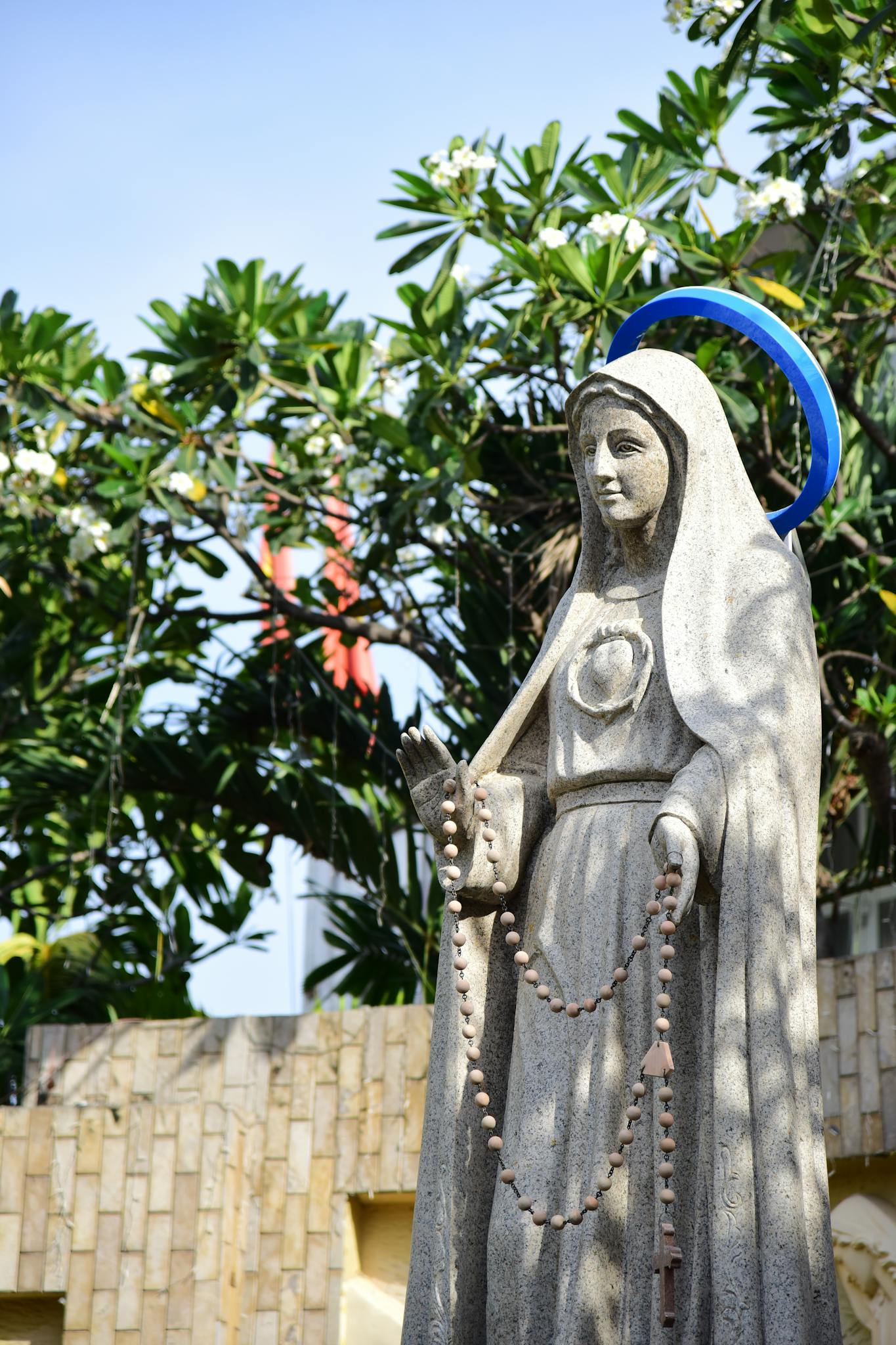
Brown Scapular of Our Lady of Mount Carmel
Devotions
A miniature form of the Carmelite habit, worn as a sign of consecration to Mary — never as a guaranteed ticket to heaven regardless of how one lives.
The Brown Scapular is a Carmelite sacramental, two small panels of brown wool joined by cords and worn over the shoulders as a sign of belonging to Mary and sharing in the spiritual life of the Carmelite family. Its origin is linked to a vision tradition attributed to St. Simon Stock in 1251; the Church presents it as a genuine sacramental support for faith, never as a magical guarantee of salvation apart from a Christian life.
Quick Facts
- Category: Marian Sacramentals — Scapulars & Medals
- Origin: Carmelite Order; linked to a vision tradition attributed to St. Simon Stock, 1251
- Associated saint: Carmelite Order; St. Simon Stock, by tradition
- Country: England / Carmelite Order
- Feast: July 16, Our Lady of Mount Carmel (optional memorial)
- Church status: an established Carmelite sacramental; never to be treated as a magical guarantee of salvation
- Private revelation: rests on later-recorded Carmelite tradition; not required belief
What Is This Devotion?
The Brown Scapular began as a small-scale version of the working scapular worn as part of the Carmelite religious habit, adapted so that laypeople could wear it as a sign of affiliation with the Carmelite family and consecration to Mary under her title Our Lady of Mount Carmel. Made of two small panels of brown wool joined by cords or bands over the shoulders, it functions the way the Church understands every sacramental to function: as an outward sign that supports and expresses an interior life of faith, not as an object with power of its own.
Origin and History
The Carmelite Order traces its roots to hermits living on Mount Carmel in the Holy Land in the twelfth century, who took Mary as their patroness under the title Our Lady of Mount Carmel after relocating to Europe in the following century. According to a long-held Carmelite tradition, on July 16, 1251, an English Carmelite named Simon Stock reported a vision of Mary presenting him with the brown scapular and a promise of protection for those who wore it faithfully. Historians note that the earliest surviving written accounts of this vision date from well over a century after Simon Stock’s death, which is why the Church treats it as a devotional tradition of the Carmelite family rather than a documented historical event. A later tradition, known as the Sabbatine Privilege and associated with a papal bull whose authenticity historians widely dispute, held that Mary promised to free from purgatory, on the Saturday after death, those enrolled in the scapular who lived faithfully. The Holy See has historically treated this specific claim with caution, permitting it to be preached only in a carefully qualified sense that avoids suggesting an automatic guarantee. Since the early twentieth century, the Church has also permitted a blessed Scapular Medal to be worn in place of the cloth scapular once a person has been properly enrolled at least once.
Catholic Theology
The Catechism situates sacramentals like the scapular as signs that prepare people to receive grace and dispose them to cooperate with it, always through the Church’s own prayer, never as a mechanism operating independently of faith (CCC §1667–1673). Worn faithfully, the scapular is meant as a daily, tangible reminder of one’s consecration to Mary and a call to imitate her virtues and persevere in a state of grace — its spiritual fruit depends entirely on the wearer’s living faith, not on the cloth itself.
How to Practice It
- Be formally enrolled by a priest or another minister with the proper faculty; simply obtaining a scapular from a shop does not constitute enrollment.
- Wear it faithfully as a reminder of consecration to Mary and a call to a life of grace.
- Once validly enrolled, you may substitute a blessed Scapular Medal for the cloth version if you prefer.
- Renew your devotion each July 16, the feast of Our Lady of Mount Carmel.
- Treat the scapular as support for prayer and virtue, never as a substitute for the sacraments or a guarantee that operates apart from how you live.
Associated Prayers
When It’s Observed
July 16 is kept as the optional memorial of Our Lady of Mount Carmel on the General Roman Calendar. It is not a holy day of obligation, but many Carmelite parishes and shrines mark it with scapular enrollment ceremonies.
Church Status
The Brown Scapular is an established Carmelite sacramental that the Church has recognized and encouraged for centuries. At the same time, the Church is equally clear that no sacramental — this one included — functions as a magical guarantee of salvation irrespective of how a person lives. Its value lies entirely in what it signifies and supports: real, persevering faith.
Private Revelation
The vision tradition connecting St. Simon Stock to the scapular’s origin is a longstanding element of Carmelite devotional history, first attested in writing generations after the event it describes. As with every private revelation, no Catholic is required to accept this account as documented historical fact in order to wear the scapular with genuine devotion. The related Sabbatine Privilege tradition rests on even more disputed historical grounds and should be presented, if at all, with real caution rather than as a guaranteed promise.
Promises and Indulgences
The scapular is popularly associated with a dramatic promise — that whoever dies wearing it will not suffer eternal fire — traced to the Simon Stock vision tradition. The Church’s authentic teaching does not treat this as an automatic guarantee detached from how a person actually lives; it situates the scapular within ordinary sacramental theology, where its fruit depends on a persevering life of faith and grace, not on the wool itself. Any specific indulgence or promise claimed on an older prayer card should be verified against the Church’s current Enchiridion Indulgentiarum or the Carmelite Order directly rather than assumed still to be in force.
Common Misconceptions
“Wearing the Brown Scapular guarantees heaven no matter how I live.”
No sacramental works this way. The scapular supports and expresses a life of faith; it cannot substitute for one.
“The Simon Stock vision is a matter of Catholic dogma.”
It is a cherished Carmelite tradition, first written down long after the event it describes, not a doctrine the Church requires anyone to believe.
Frequently Asked Questions
Do I need a priest to be enrolled in the scapular?
Yes — valid enrollment requires investiture by a priest or another minister with the proper faculty; simply purchasing or wearing a scapular without this step is not the same as formal enrollment.
Can I wear a medal instead of the cloth scapular?
Yes, once properly enrolled with the cloth scapular at least once, the Church permits a blessed Scapular Medal to be worn in its place.
Is the Sabbatine Privilege official Church teaching?
It is a longstanding but historically disputed tradition. The Holy See has permitted it to be spoken of only in a carefully qualified way, never as an unconditional guarantee.
What does “Our Lady of Mount Carmel” mean?
It is Mary’s title as patroness of the Carmelite Order, which traces its roots to hermits on Mount Carmel in the Holy Land.
Sources
- Directory on Popular Piety and the Liturgy: Principles and Guidelines (2001)
- Catechism of the Catholic Church, §1667–1676
- Discalced Carmelite Order / Carmelite shrine sources