
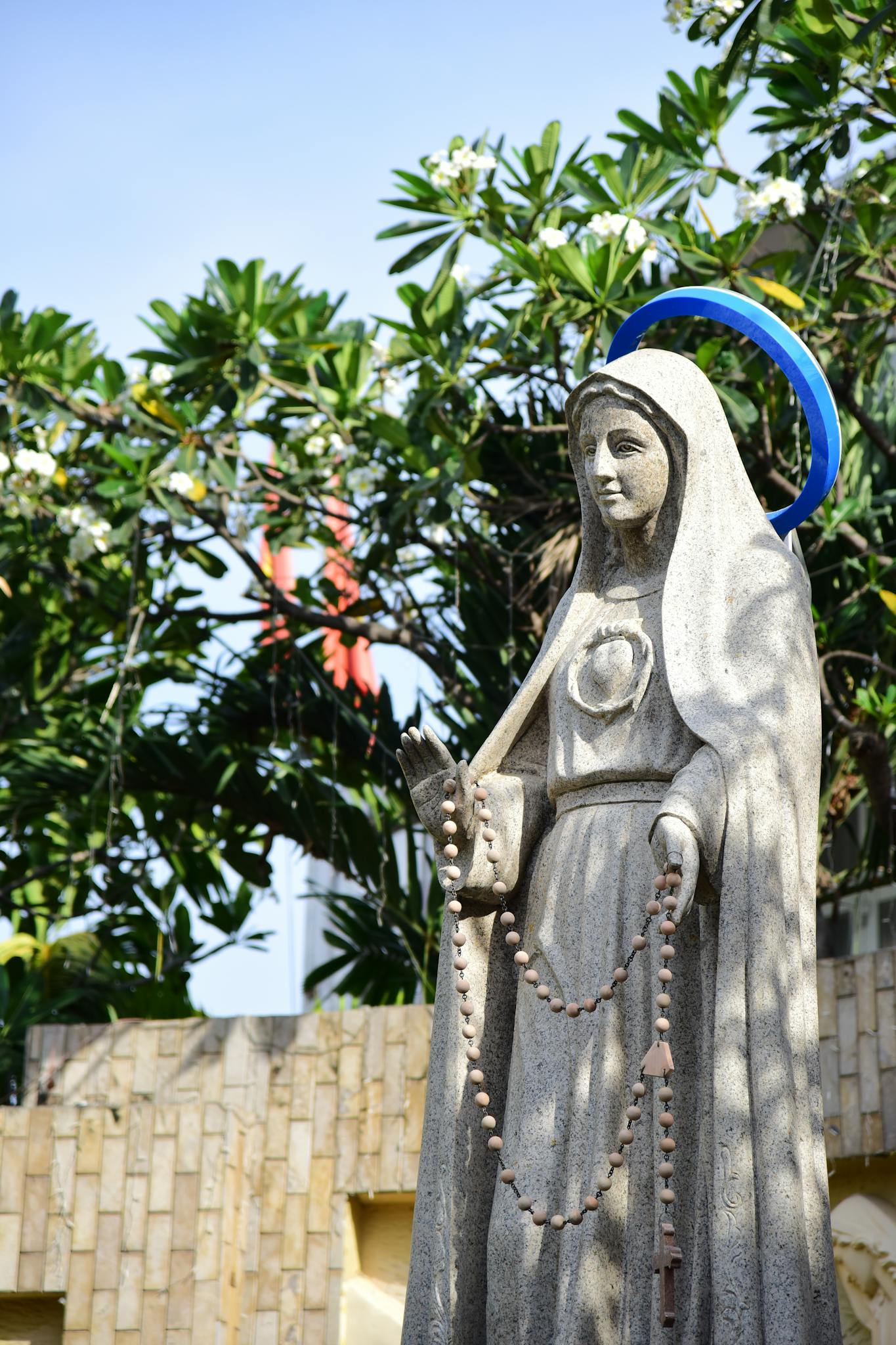
Blue Scapular of the Immaculate Conception
Devotions
A sky-blue sacramental traced to a Neapolitan hermit’s reported vision, worn as a sign of devotion to Mary’s Immaculate Conception.
The Blue Scapular of the Immaculate Conception is a Marian sacramental traced to Venerable Ursula Benincasa, a Neapolitan hermit who founded the Theatine-affiliated Oblates of the Immaculate Conception and, according to tradition, reported a vision connected to the scapular’s origin around 1617, near the end of her life. Pope Clement X approved its blessing and investiture in 1671, and it is worn as a sign of devotion to Mary conceived without sin, requiring formal investiture by a priest, unlike the Green Scapular.
Quick Facts
- Category: Marian Sacramentals — Scapulars and Medals
- Origin: Traced to Venerable Ursula Benincasa, foundress of the Theatine-affiliated Oblates of the Immaculate Conception in Naples, and a reported vision dated by most accounts to around 1617
- Feast: Not tied to a separate feast day of its own; devotion follows the December 8 Solemnity of the Immaculate Conception generally
- Church status: An approved Marian sacramental, with blessing and investiture authorized by Pope Clement X in 1671
- Private revelation: Traced to a vision tradition reported by Venerable Ursula Benincasa; sources vary on its exact date, and belief in it is not required to wear the scapular with genuine devotion
What Is This Devotion?
The Blue Scapular of the Immaculate Conception is a small sacramental of sky-blue wool, bearing an image of the Immaculate Conception on one side and the name of Mary on the other, worn as a sign of devotion to the truth that Mary was conceived without the stain of original sin. Its origin lies with Venerable Ursula Benincasa, a Neapolitan woman who lived much of her adult life as a hermit consecrated to Mary’s Immaculate Conception before founding two religious communities that carried this devotion forward.
Origin and History
Ursula Benincasa was born around the middle of the sixteenth century in Naples and died there on October 20, 1618. In 1583 she founded the Oblates of the Immaculate Conception, an active community of women consecrated to Mary under this title, and later in life she also established a more contemplative community, sometimes called the Hermitage, whose sisters eventually affiliated with the Theatine order. According to Theatine tradition, Benincasa reported a vision, most commonly dated to around 1617, not long before her death, connected both to the founding of this stricter community and to the origin of the Blue Scapular devotion; some older accounts place a formative vision earlier, closer to the 1580s founding of her first community, and readers should treat the exact year as a matter of pious tradition rather than settled historical record.
Pope Pius VI recognized Benincasa’s heroic virtue and declared her Venerable on August 7, 1793, the formal step she has reached in the Church’s process toward canonization; she has not been beatified or canonized. The Rule of the communities she founded received papal approval from Pope Gregory XV in 1623, five years after her death, and Pope Urban VIII formally authorized her contemplative community’s affiliation with the Theatine order in 1633. Pope Clement X approved the blessing and investing of the Blue Scapular in January 1671, and a confraternity connected to it, first established at the original monastery in 1734, was formally raised to an archconfraternity at the church of Sant’Andrea della Valle in Rome in 1894; a further indulgence was approved in 1882. In 1992, the Marian Fathers of the Immaculate Conception received permanent permission from the Theatine Fathers to bless and confer the scapular, continuing the devotion into the present day.
Catholic Theology
The Blue Scapular expresses devotion to a truth the Church would only formally define as dogma in 1854, more than two centuries after Clement X’s approval of the scapular: that Mary was preserved free from original sin from the first moment of her existence, in view of the merits of her Son. As a sacramental, it disposes the wearer toward grace through the Church’s own intercessory prayer, calling to mind Mary’s sinlessness as a model of the holiness every Christian is called to grow toward, never as an object that confers grace automatically or apart from the wearer’s own faith and manner of life.
How to Practice It
- Be formally invested by a priest with the proper faculty; the Blue Scapular, unlike the Green Scapular, requires this original blessing and investiture.
- Wear it faithfully as a sign of devotion to Mary’s Immaculate Conception and a call to imitate her purity of life.
- Once validly invested, you may substitute a blessed Scapular Medal for the cloth version if you prefer, following the Church’s general provision for approved scapulars.
- Mark December 8, the Solemnity of the Immaculate Conception, with particular devotion, since it names the truth this scapular signifies.
Associated Prayers
When It’s Observed
The Blue Scapular is not tied to a separate feast day of its own; devotion to it is generally kept alongside the December 8 Solemnity of the Immaculate Conception, and it is not on the General Roman Calendar for the universal Church as a distinct observance.
Church Status
The Blue Scapular of the Immaculate Conception is an approved Marian sacramental with a documented institutional history: blessing and investiture authorized by Pope Clement X in 1671, an archconfraternity formally erected in Rome in 1894, and continuing faculties granted to a religious congregation as recently as 1992. Venerable Ursula Benincasa herself has been declared Venerable, meaning the Church has recognized her heroic virtue, but she has not been beatified or canonized; the vision tradition connected to the scapular’s origin, dated by most accounts to around 1617, rests on later Theatine tradition rather than a case examined under the Church’s modern private-revelation norms, and no Catholic is required to accept its details as documented history in order to wear the scapular with genuine devotion.
Common Misconceptions
“The Blue Scapular can be worn like the Green Scapular, without any formal blessing or investiture.”
It cannot. Unlike the Green Scapular, which requires no priestly investiture, the Blue Scapular of the Immaculate Conception follows the ordinary rule for most scapulars: a person must be validly blessed and invested by a priest with the proper faculty at least once before wearing it as a sacramental with the Church’s intended meaning, after which a blessed medal may be substituted for the cloth.
Frequently Asked Questions
Who was Venerable Ursula Benincasa?
A Neapolitan woman, born around the middle of the sixteenth century and died in 1618, who lived much of her life as a hermit consecrated to Mary’s Immaculate Conception and founded two religious communities before Pope Pius VI declared her Venerable in 1793.
Is the Blue Scapular the same as the Brown Scapular of Mount Carmel?
No. They are separate sacramentals with separate origins: the Brown Scapular derives from the Carmelite religious habit and a vision tradition connected to St. Simon Stock, while the Blue Scapular derives from Venerable Ursula Benincasa’s Theatine-affiliated tradition in Naples and specifically signifies devotion to the Immaculate Conception.
Can I wear a medal instead of the cloth Blue Scapular?
Yes. Once properly invested with the cloth scapular at least once, the Church permits a blessed Scapular Medal to be worn in its place, under the same general provision that applies to other approved small woolen scapulars.
Sources
- Catholic Encyclopedia — Scapular
- Catholic Culture — Different Kinds of Scapulars
- Catechism of the Catholic Church, section 1667 through 1676