
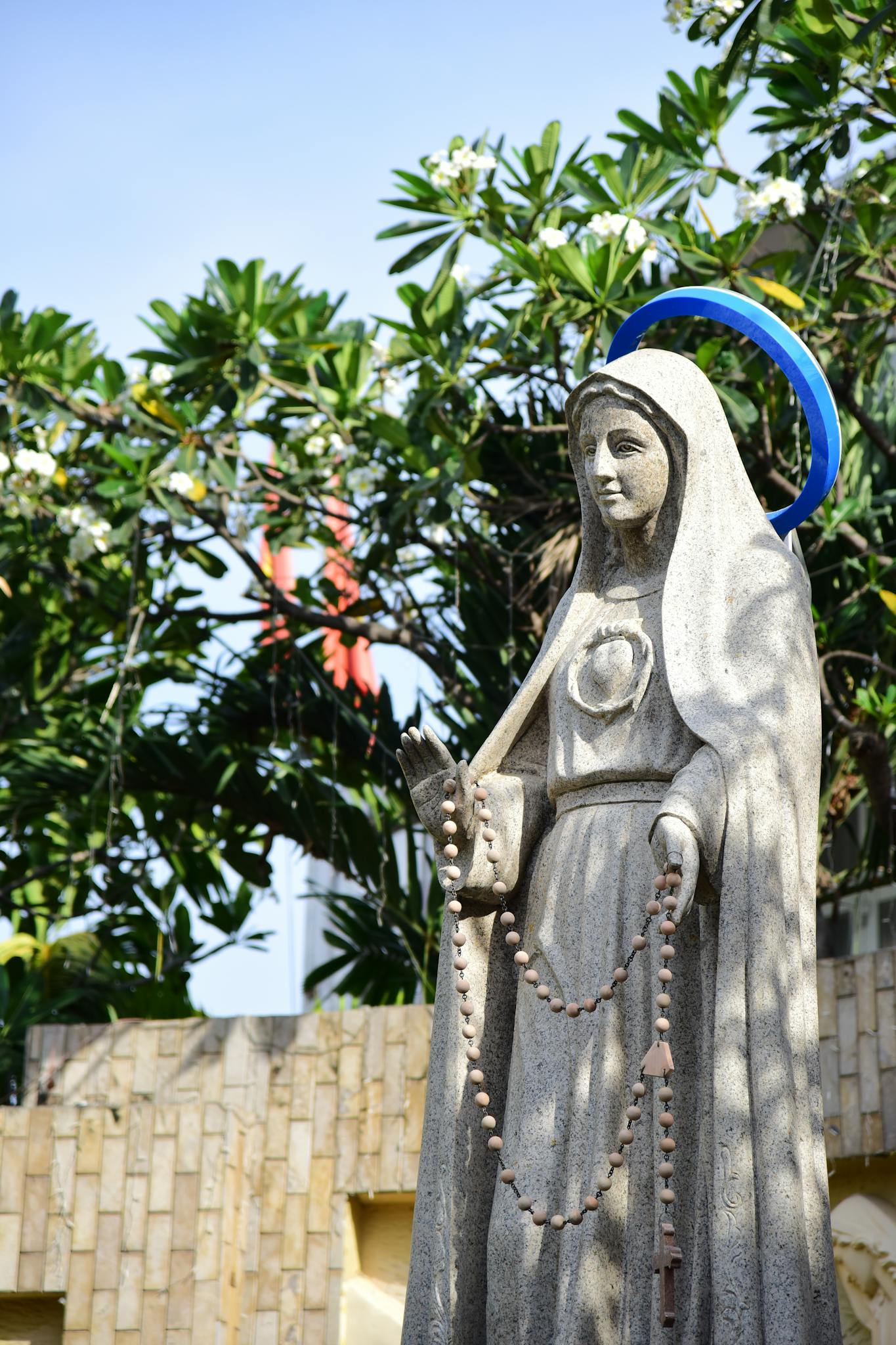
Consecration to St. Joseph
Devotions
A formal act of entrusting oneself to St. Joseph’s fatherly care, usually prepared for with a period of preparatory prayer.
Consecration to St. Joseph is a formal act of entrusting oneself, one’s family, or one’s needs to St. Joseph’s intercession and fatherly protection, typically preceded by a period of preparatory prayer. It draws on centuries of Catholic veneration of Joseph and is strongly supported by the Magisterium, though it is not dependent on any private revelation.
Quick Facts
- Category: St. Joseph — Devotions to St. Joseph
- Origin: rooted in centuries of veneration of St. Joseph, given renewed popular form especially since 2020
- Associated saint: St. Joseph
- Country: Universal Church
- Feast: March 19 (Solemnity of St. Joseph); May 1 (St. Joseph the Worker, where kept)
- Church status: an established devotion strongly supported by the Magisterium
- Private revelation: not dependent on private revelation
What Is This Devotion?
Consecration to St. Joseph is a formal act of entrusting oneself, one’s family, or a particular need to St. Joseph’s fatherly care and intercession, asking to grow in the virtues that marked his own life: obedience, chastity, humility, quiet fidelity, and trust in God’s providence. It is usually preceded by a set period of preparatory prayer and reflection, loosely modeled on the pattern of Marian consecration, but directed to Joseph as spiritual father rather than to Mary. The act itself is a private devotional practice rather than a formal canonical rite — it requires no juridic enrollment or approval, only sincere intention — and it can be renewed as often as a person wishes, most naturally on a feast connected to St. Joseph.
Origin and History
Entrusting individuals, families, and even whole dioceses to St. Joseph’s patronage has a long history in Catholic devotional life, reinforced decisively when Pope Pius IX declared him Patron of the Universal Church in 1870. Many saints — among them Teresa of Ávila, Francis de Sales, and Vincent de Paul — are remembered for their own strong personal confidence in Joseph’s intercession. Renewed attention to formal consecration in particular grew markedly around Pope Francis’s Year of St. Joseph, proclaimed in the December 2020 apostolic letter Patris Corde to mark the 150th anniversary of the 1870 declaration. In the years since, structured thirty-three-day preparation programs for consecration to St. Joseph — most visibly a widely used program and book by Fr. Donald Calloway — have become popular, though such programs are devotional aids rather than Magisterial texts in themselves.
Catholic Theology
Entrusting oneself to a saint’s intercession is an exercise of the Church’s teaching on the Communion of Saints, not a bypassing of Christ; it is a path toward deeper configuration to Christ through imitation of a particular saint’s own fidelity. Joseph’s whole life was itself a total gift of self in service to Jesus and Mary, which is precisely why the Church presents him as a father figure the faithful can confidently ask to intercede and to form them in his own virtues. His example also speaks beyond individual devotion: the Church has long held him up as a model for fathers, for priests and religious superiors exercising a form of spiritual fatherhood, and for anyone called to protect and nurture the life of grace in others, since his own fatherhood of Jesus was entirely a matter of loving service rather than a biological claim.
How to Practice It
- Choose a sound, Church-consistent consecration text or preparation program; several good options exist, and the Church has not mandated a single official formula.
- Set aside a defined period of preparatory prayer — commonly thirty-three days — meditating on an aspect of St. Joseph’s life or virtue each day.
- On the chosen day, often March 19 or another feast connected to St. Joseph, pray a formal Act of Consecration.
- Continue a daily practice afterward — a short prayer, wearing a medal, or entrusting each day’s decisions to his intercession — to live out the consecration rather than treat it as a single completed event.
- Consider renewing the consecration each year, commonly on March 19.
Associated Prayers
When It’s Observed
There is no single universal date on which the consecration itself must be made; it is a personal or family devotional act, though many choose to have it culminate on March 19, the Solemnity of St. Joseph, or on another feast connected to him, such as May 1.
Church Status
Devotion to St. Joseph carries strong and consistent Magisterial support, and consecration to him fits naturally within that established devotion. It is worth distinguishing the Church’s broad support for devotion to Joseph as a person and patron from any one specific popular preparation program or book, which — however widely used and spiritually fruitful — is a devotional aid rather than a Magisterial text in itself. Making a consecration to St. Joseph is likewise a private act of devotion, not a canonical or juridic act comparable to religious profession, and it carries no formal Church enrollment of its own.
Common Misconceptions
“There is one official, Church-mandated consecration prayer to St. Joseph.”
There is not. Several sound, approved texts and preparation programs exist, and the Church strongly supports devotion to Joseph without requiring a single official formula.
“Consecrating yourself to St. Joseph means worshipping him.”
No. The honor given to Joseph, like that given to any saint, is veneration, not the adoration owed to God alone. Consecration to him is an act of trust in his intercession, always directed ultimately toward Christ.
Frequently Asked Questions
What does “consecration” mean in this context?
A formal act of entrusting oneself to St. Joseph’s care and intercession, asking to grow in his virtues and to live under his particular patronage.
How long does the preparation take?
Most popular programs use a thirty-three-day period, though this is a devotional convention rather than a fixed Church requirement.
Do I need a priest to make this consecration?
No — it is typically a personal or family act of prayer that does not require a priest to perform, though a priest’s guidance can certainly help in choosing or preparing for it.
Can I renew my consecration each year?
Yes, and many devotees do, often choosing March 19 as the natural annual date.
Is this the same as joining a confraternity of St. Joseph?
No — a confraternity is a more formal association a person may separately join, often through a parish or religious order. A personal consecration is simply an act of prayer and does not itself enroll you in any organization.
Sources
- Directory on Popular Piety and the Liturgy: Principles and Guidelines (2001)
- General Roman Calendar
- Roman Martyrology / official canonization records