
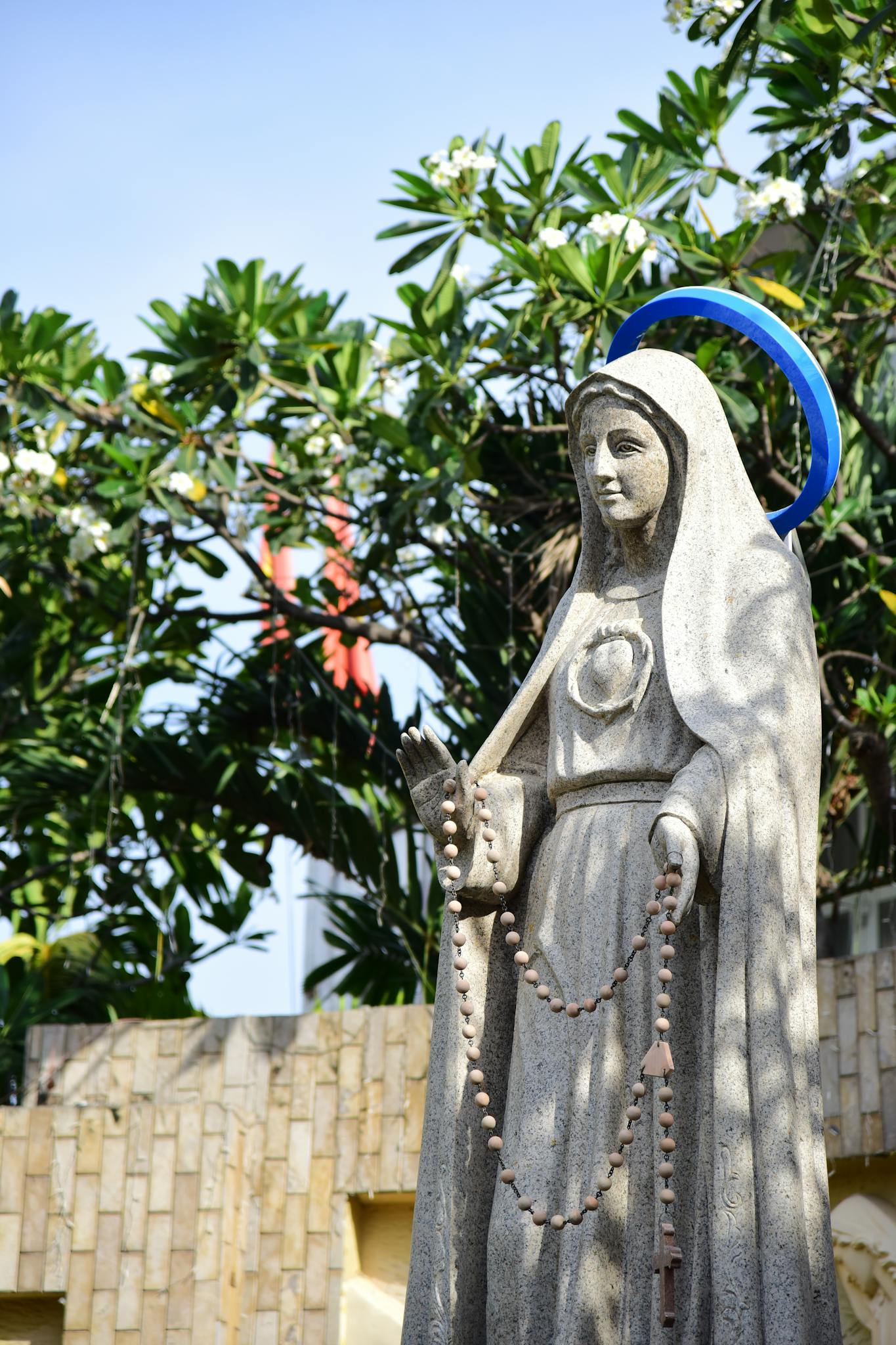
St. Joseph, Patron of a Happy Death
Devotions
A patronage resting on the traditional belief that Joseph died in the presence of Jesus and Mary, inferred from his absence in the Gospels once Jesus’s public ministry begins.
St. Joseph is honored as the patron of a happy death on the traditional belief that he died in Nazareth in the presence of Jesus and Mary, comforted by both. No Gospel actually narrates his death; the belief is an inference drawn from his complete absence from every account of Jesus’s public ministry after he is last mentioned finding the boy Jesus in the Temple, including his notable absence at the crucifixion, where Jesus commends Mary to the beloved disciple rather than to Joseph. Pope Francis addressed this directly in a 2022 general audience, stating plainly that “there is no historical data” about Joseph’s death while affirming the traditional belief that he died accompanied by Jesus and Mary.
Quick Facts
- Category: St. Joseph — Devotions to St. Joseph
- Origin: A patronage resting on a traditional inference from the Gospels’ silence about St. Joseph after the finding in the Temple, rather than on any Gospel narrative of his death
- Feast: March 19; invoked especially at the hour of death and on behalf of the dying generally
- Church status: A longstanding pastoral title, recently the subject of Pope Francis’s own catechesis
- Private revelation: Not dependent on private revelation; rests on scriptural inference and Tradition rather than a reported vision
What Is This Devotion?
Under this title, Catholics ask St. Joseph’s intercession for the grace of a happy death — meaning not necessarily a painless one, but a death met in the state of grace, reconciled with God, and ideally accompanied by the comfort of the sacraments and of loved ones. The devotion draws its force from the traditional belief that Joseph himself died in the most consoling circumstances a Christian could hope for, with Jesus and Mary at his side.
Origin and History
No Gospel recounts St. Joseph’s death directly. He is last named in an active role at the finding of the boy Jesus in the Temple (Luke 2:41–51), and he is entirely absent from every subsequent Gospel scene of Jesus’s public ministry, including the crucifixion, where Jesus commends his mother to the beloved disciple rather than to Joseph. From this silence, Christian tradition has long inferred that Joseph died before Jesus began his public ministry, cared for in his final hours by Jesus and Mary in Nazareth.
Pope Francis addressed this directly in a general audience catechesis on February 9, 2022, dedicated to Saint Joseph as patron of a good death. He acknowledged plainly that “there is no historical data” about how Joseph died, explaining that because Joseph disappears from the Gospel narrative once Jesus’s public life begins, “it is believed that he died there, with his family,” adding that Joseph “expired in the presence of Jesus and Mary.” His language keeps the traditional belief clearly framed as a pious inference from scriptural silence, not an event Scripture itself describes.
Catholic Theology
In the same 2022 catechesis, Pope Francis tied this patronage to the wider Christian meaning of death: faith in Christ’s resurrection is what allows death to be faced without despair, as a passage rather than an end, and contemplating one’s own mortality is meant to reorder priorities toward charity and reconciliation rather than toward material accumulation. Devotion to Joseph under this title fits within the Church’s broader pastoral concern to accompany the dying with dignity, through the sacraments the Church actually provides for that hour — confession, Anointing of the Sick, and Viaticum — rather than through Joseph’s intercession taken as a substitute for them.
How to Practice It
- Pray to St. Joseph for the grace of final perseverance and a peaceful, sacramentally prepared death, for yourself and for those close to you.
- Invoke him especially on behalf of those who are actively dying, alongside the Church’s own Commendation of the Dying.
- Keep the sacraments of Confession, Anointing of the Sick, and Viaticum central to preparing for death, rather than treating devotion to Joseph as a substitute for them.
- Pray for those who face death without anyone at their side, asking Joseph’s particular intercession given how he himself is believed to have been accompanied.
Associated Prayers
When It’s Observed
This patronage is chiefly associated with the March 19 Solemnity of St. Joseph rather than with a feast day of its own, though Joseph is invoked under this title at any time, particularly for those near death.
Church Status
This is a longstanding pastoral title within Catholic devotional life, and Pope Francis gave it renewed, direct magisterial attention in his February 2022 general audience catechesis. It rests on Tradition and on a reasoned inference from scriptural silence rather than on any reported apparition, and the Church has never presented it as a matter Scripture itself narrates.
Common Misconceptions
“The Gospels describe St. Joseph’s death and his final moments with Jesus and Mary.”
No Gospel narrates Joseph’s death. The belief that he died surrounded by Jesus and Mary is a traditional inference drawn from his disappearance from the Gospel narrative after the finding of the boy Jesus in the Temple, a point Pope Francis himself acknowledged directly in 2022, distinguishing the pious tradition clearly from any scriptural account.
Frequently Asked Questions
Does the Bible describe how St. Joseph died?
No. Scripture never narrates his death. The belief that he died before Jesus’s public ministry began, in the presence of Jesus and Mary, is a traditional inference drawn from his complete absence from the Gospels after the finding in the Temple.
Why is St. Joseph considered the patron of a happy death specifically?
Because tradition holds that he died accompanied by Jesus and Mary — the most consoling circumstances a Christian could hope for at the hour of death — Catholics ask his intercession for a similarly peaceful and well-prepared passing.
What does “happy death” mean in Catholic devotion?
It does not necessarily mean a death free of suffering. It means dying in the state of grace, reconciled with God and others, and ideally fortified by the sacraments — the outcome Catholic teaching on the four last things holds up as the true goal, whatever the physical circumstances of the death itself.
Sources
- Pope Francis, General Audience, February 9, 2022: Saint Joseph, Patron of Good Death
- Catechism of the Catholic Church §§1667–1676
- Directory on Popular Piety and the Liturgy: Principles and Guidelines (2001)