
Can Catholics Attend a Nondenominational Praise-and-Worship Night?
Can Catholics pray with Protestant friends? A practical guide to worship evenings, shared prayer, Communion and the Sunday Mass obligation.
A Catholic may, in appropriate circumstances, attend a nondenominational praise-and-worship evening. Shared Christian prayer is not automatically forbidden. But the event’s teaching, the actions you are asked to take and your own formation matter. Such an evening does not replace Sunday Mass, and participating in songs or prayer does not make every form of sacramental sharing permissible.
A friend invites you to a worship night. You appreciate the friendship and recognise some of the songs. Then another person warns, “A Catholic must never go into that church.” You are left wondering whether accepting the invitation would betray your faith.
Catholic teaching allows a more careful answer than either “everything is the same” or “never pray with another Christian.” It asks us to seek unity truthfully, with charity and an understanding of the differences that still exist.
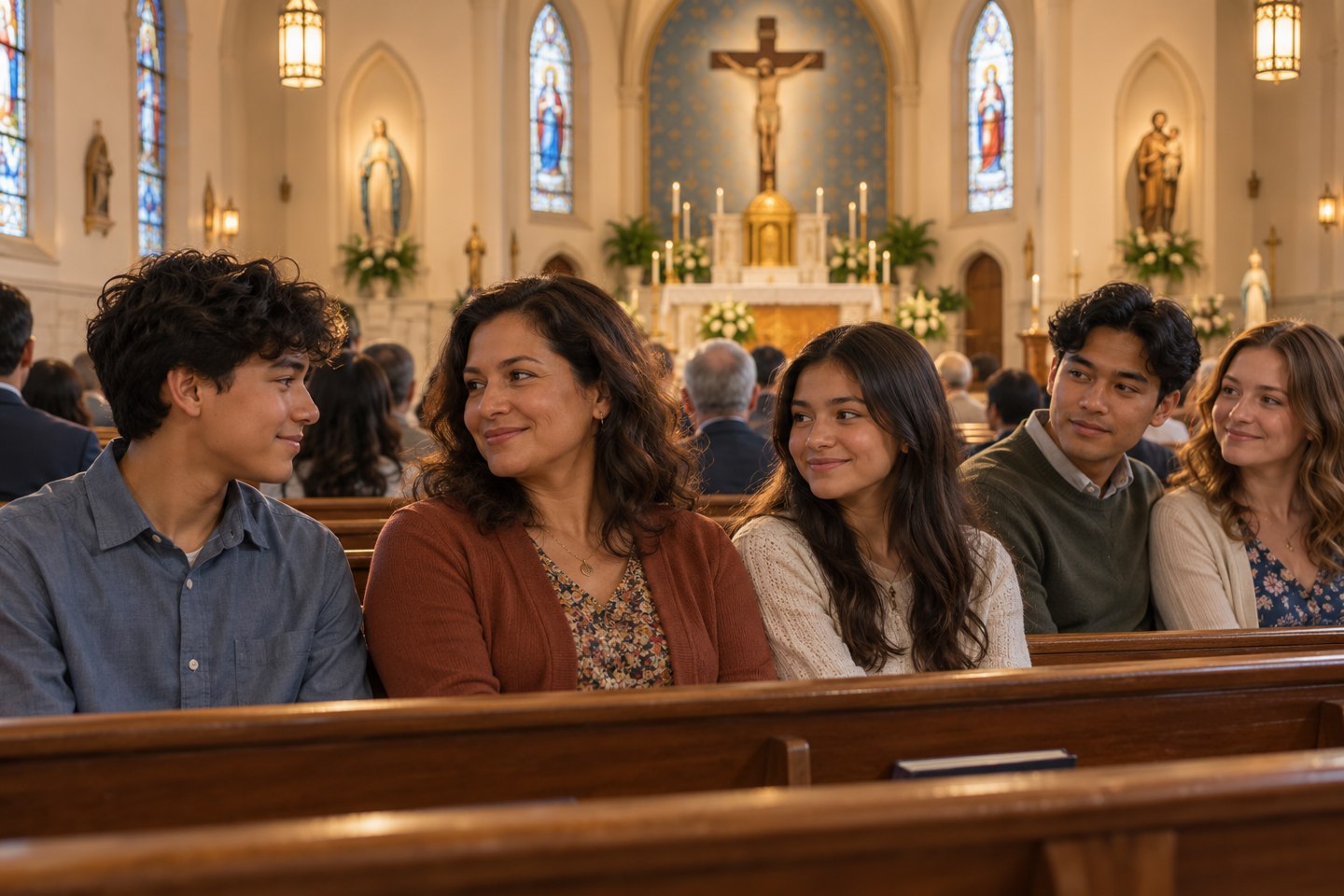
Why Catholics can pray with other Christians
The Second Vatican Council recognised real bonds between Catholics and other baptised Christians. It encouraged prayer for unity while warning against indiscriminate sharing that obscures the Church’s faith and sacramental life. Unitatis Redintegratio, especially 3 and 8, provides the foundation.
This means that a common prayer, a hymn to Christ or a reading of Scripture can express something genuinely shared. You do not need to pretend your Protestant neighbour has no relationship with Jesus in order to remain Catholic.
It also means that Christian unity cannot be built by declaring every disagreement irrelevant. Friendship becomes stronger when people can explain their commitments without attacking one another or hiding what they believe.
“Nondenominational” does not tell you everything
The label covers communities with different beliefs, worship practices and expectations. One evening may consist of songs, Scripture and intercessions. Another may include a sermon against Catholic teaching, a communion service, a membership invitation or pressure to be baptised again.
Ask your friend what normally happens. Is it a concert, a prayer meeting or the community’s principal service? Is communion included? Will visitors be invited to make a public profession with a particular doctrinal meaning?
These are ordinary questions, not accusations. A host who understands your situation can help you participate respectfully without awkward surprises. If the event is connected with a group that actively pressures Catholics to reject their Church, that is relevant to your decision.
What about the Sunday obligation?
For Catholics bound by it, attendance at Mass on Sundays and holy days is a distinct obligation. Canons 1247–1248 describe it and recognise situations in which participation is impossible for a serious reason.
A worship night, however moving, is not Catholic Mass. Going to it does not substitute for Mass because the music feels more engaging or because attending both would be inconvenient. Plan your weekend so that friendship and Catholic worship are not unnecessarily placed in competition.
Where illness, deployment, lack of access or another serious circumstance prevents Mass, ask your parish about appropriate guidance. The solution is not to reclassify a different service as a Catholic Eucharistic celebration.
Shared prayer is different from receiving communion
The Church’s rules for receiving sacraments from non-Catholic ministers are specific. Canon 844 does not give a general permission for Catholics to receive communion at any Christian gathering simply because the host welcomes everyone.
At an ordinary Protestant or nondenominational communion service, a Catholic should refrain from receiving. This is not a judgment about the sincerity of the congregation. Communion expresses a unity of faith and sacramental life that is not yet fully shared.
Do not apply the exceptional provisions concerning Churches with valid sacraments casually to a nondenominational event. If an unusual case genuinely arises, consult a Catholic priest who understands the circumstances rather than improvising your own exception.
Our explanation of which sacraments a Catholic or non-Catholic may receive provides a fuller introduction. The important point here is that singing alongside a friend and receiving a sacrament are different actions with different meanings.
An original illustration: guests at a family table
Imagine two families who have been estranged for years but have begun meeting again. They share a meal, tell stories and discover how much affection remains. One family has an important inherited promise that shapes its household. The other does not share it.
They can enjoy the evening without pretending the promise never existed. Indeed, the most honest guest is the one who says kindly, “I am grateful to be here, but that particular commitment is not mine to make.”
This original illustration has limits: the Eucharist is much more than an ordinary family custom. Its point is that hospitality does not require every boundary to disappear. Truthful participation can be more loving than a gesture whose meaning you do not actually share.
How to decide what to join in
You can generally join prayers that genuinely express Christian faith you share. Listen to the words, however. A familiar melody does not make every lyric a statement you can affirm. If a prayer denies a Catholic teaching, remain respectfully silent rather than speaking against your conscience.
Similarly, understand an “altar call” or invitation before responding. In one setting, coming forward may mean asking for prayer. In another, it may signify joining the community, rejecting a previous baptism or professing a particular doctrine. There is no need to perform a public gesture first and investigate its meaning later.
You can say, “I am Catholic and would appreciate your prayers, but I am not seeking rebaptism or membership.” Baptism is not something Catholics repeat to show renewed enthusiasm; see our article on Baptism and lifelong Christian growth.
What if the evening feels spiritually powerful?
Be grateful for anything that helps you turn towards Christ, but do not use intensity of feeling as the only test of truth. Music, companionship and atmosphere can affect us deeply. A quiet Mass and an emotionally vivid worship night may feel different without the difference deciding their theological meaning.
If the experience exposes a real need—friendship, better understanding of Scripture, opportunities to sing or a more active prayer life—bring that need back into your Catholic life. Speak with your parish about a Bible group, choir, young-adult community or spiritual direction.
Our guide I pray but feel nothing: is God listening? explains why emotion and faithfulness should not be treated as identical. God is not absent simply because worship feels ordinary.
A practical way to accept or decline
Before attending, ask what the evening includes and arrange your Mass attendance. Tell your friend that you are glad to share appropriate prayer while remaining Catholic. During the event, participate honestly, refrain where necessary and leave calmly if there is pressure or sustained hostility towards your faith.
Afterwards, thank your host for the invitation. If a question troubles you, write it down and discuss it with a well-formed Catholic teacher or priest. A single unfamiliar statement need not become either a crisis or an immediate conversion argument.
Declining can also be charitable: “Thank you for thinking of me. I am not comfortable with that particular event, but I would love to meet another time.” You are not obliged to accept every religious invitation in order to prove goodwill.
Questions readers often ask
Is entering a Protestant church itself a sin?
No general Catholic rule makes entering the building sinful. The purpose, circumstances and actions involved matter. Attending a friend’s wedding, listening to a concert and making a profession that rejects Catholic faith are not equivalent acts.
Can a Catholic join a regular non-Catholic group?
The content and effect of the group matter. A one-off invitation and a long-term commitment that gradually replaces parish life deserve different levels of discernment. Discuss recurring participation with your priest if teaching or membership expectations are unclear.
What if my friend feels rejected when I do not receive communion?
Explain the reason before the service if possible. “I value our friendship. My Church asks me to respect what receiving communion signifies, so I will pray with you without receiving.” A gentle explanation usually communicates more than an unexplained refusal.
Seeking unity without losing your footing
Christian friendship can make faith more visible through prayer, service and patient conversation. You can welcome that gift while remaining rooted in Catholic sacramental life. Unity is worth praying for precisely because it is both real in some respects and still incomplete in others.
Lord Jesus, teach us to love other Christians without suspicion and to speak truth without pride. Deepen our fidelity and lead Your disciples towards the unity You desire. Amen.
Sources and further reading
- Vatican II: Unitatis Redintegratio, especially 3–4 and 8
- Code of Canon Law: Canons 1244–1253
- Code of Canon Law: Canons 834–878, including canon 844
Sources checked 26 September 2026. Original illustrative stories are teaching aids, not reported events or quotations from Scripture. This article offers general formation; personal sacramental, legal and health questions require the appropriate qualified adviser.
