
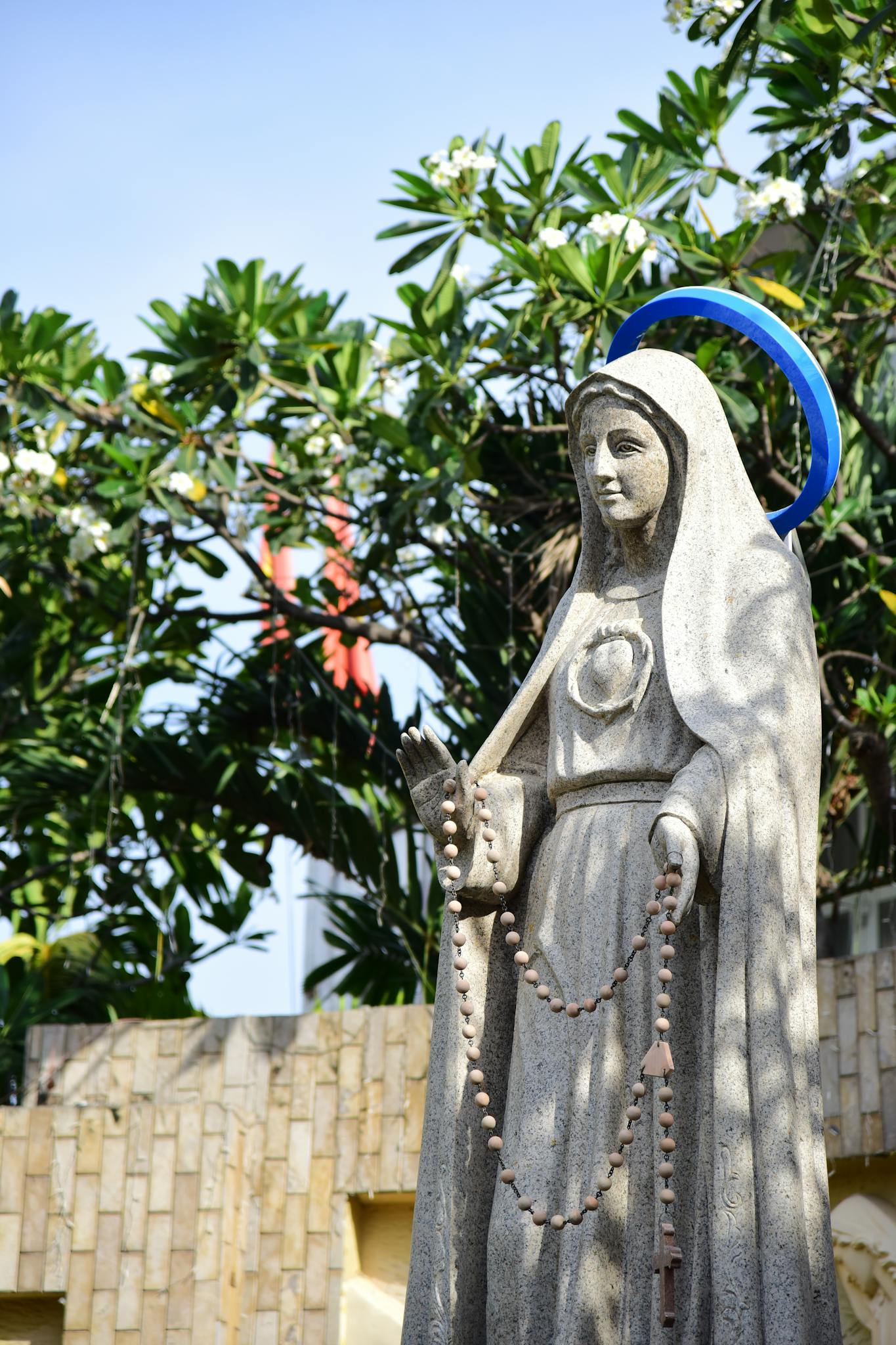
Rosary of the Seven Sorrows
Devotions
A distinct Servite chaplet of forty-nine Hail Marys, one set of seven for each of Mary’s traditional sorrows.
The Rosary of the Seven Sorrows, also called the Servite Rosary or the Chaplet of the Seven Sorrows, is a distinct set of prayer beads and its own devotion — seven groups of seven Hail Marys, one group for each of Mary’s traditional sorrows — developed within the Servite Order alongside its broader devotion to Mary’s sorrows. It is a different physical chaplet from the five-decade Holy Rosary, with its own separate history of papal approval and indulgences.
Quick Facts
- Category: Marian Devotions — Sorrows and Joys of Mary
- Origin: Developed within the Servite Order alongside its broader devotion to Mary’s sorrows
- Feast: September 15, shared with the broader devotion to Our Lady of Sorrows
- Church status: an established Marian chaplet with a long history of Church approval
- Private revelation: not generally dependent on private revelation
What Is This Devotion?
This is a specific chaplet, physically distinct from the Holy Rosary: a set of beads arranged as seven groups of seven, each group preceded by a single bead, followed by three additional closing beads, used to meditate one at a time on the traditional Seven Sorrows of Mary. This page focuses on the chaplet itself — its structure, history, and how to pray it — while our separate page on the Seven Sorrows of Mary covers the seven sorrows in full detail as their own devotion and shared feast day.
Origin and History
The Servite Order (the Order of Servants of Mary), founded near Florence in 1233, made devotion to Mary’s sorrows central to its life from the beginning, and the chaplet grew out of that same charism over the following centuries as a structured way of praying through the seven sorrows one at a time. In 1668, the Holy See granted the Servites permission to keep a feast of the Seven Dolors on the third Sunday of September, closely tied to the order’s promotion of this chaplet. Pope Pius VII extended that same September feast to the universal Church in 1814, and it was later fixed to its current date, September 15, as part of Pope St. Pius X’s early twentieth-century calendar reforms. A separate, older feast of Mary’s sorrows, kept on the Friday before Palm Sunday, had already been extended to the universal Church even earlier, by Pope Benedict XIII in 1727, though that particular date is no longer part of the current universal calendar. Popes granted indulgences to those who prayed the chaplet devoutly at various points across this history.
Catholic Theology
Praying seven Our Fathers and forty-nine Hail Marys, plus three more in honor of Mary’s tears, structures meditation the way the Holy Rosary’s decades do, but slows the pace further, dwelling on a single sorrowful scene at a time. As with the broader devotion to Our Lady of Sorrows, the purpose is to unite the one praying with Mary’s own compassion — her suffering-with Christ — as a way into Christ’s Passion itself, not as an exercise in sorrow for its own sake.
How to Practice It
- Begin with an Act of Contrition or another opening prayer.
- For each of the seven sorrows in turn, pray one Our Father and seven Hail Marys while meditating on that sorrow.
- Conclude with three additional Hail Marys in honor of Mary’s tears.
- Close with a final prayer, often asking to share in Mary’s own compassion and fidelity.
Associated Prayers
When It’s Observed
This chaplet can be prayed at any time and is especially associated with Fridays and Lent. It shares its principal feast, September 15, with the broader Our Lady of Sorrows devotion on the General Roman Calendar.
Church Status
This is a long-approved Servite chaplet, historically indulgenced, and tied to a genuine universal feast day. Like any chaplet, it remains a form of popular piety that supports, and never replaces, the liturgy.
Common Misconceptions
“This chaplet is simply the Holy Rosary with different meditations.”
It has its own distinct set of beads — seven groups of seven Hail Marys rather than five decades of ten — and its own separate history within the Servite tradition, even though both forms share the basic Catholic pattern of vocal prayer paired with meditation.
Frequently Asked Questions
How is this different from the Seven Sorrows of Mary devotion generally?
This page focuses specifically on the chaplet and its structure. Our separate page on the Seven Sorrows of Mary covers the traditional list of seven sorrows themselves and their broader devotional and liturgical history.
Do I need special beads to pray this chaplet?
A set of Servite beads, arranged in seven groups of seven, is the traditional form, though the same sequence of prayers can also be counted on an ordinary Rosary or on the fingers.
Is there a current indulgence for praying this chaplet?
Various indulgences were historically attached to it, but such grants change over time, so any current claim should be verified against the Church’s present Enchiridion Indulgentiarum rather than assumed from an older prayer card.
Is this the same as the Via Matris?
No. The Via Matris (Way of the Mother) is a related but separate devotion, structured more like the Stations of the Cross, walking physically between stations representing Mary’s sorrows rather than praying a fixed chaplet in one place.
Sources
- Directory on Popular Piety and the Liturgy: Principles and Guidelines (2001)
- Catechism of the Catholic Church, §§1667–1679
- Enchiridion Indulgentiarum / Manual of Indulgences
- Order of Servants of Mary (Servite Order) — official website