
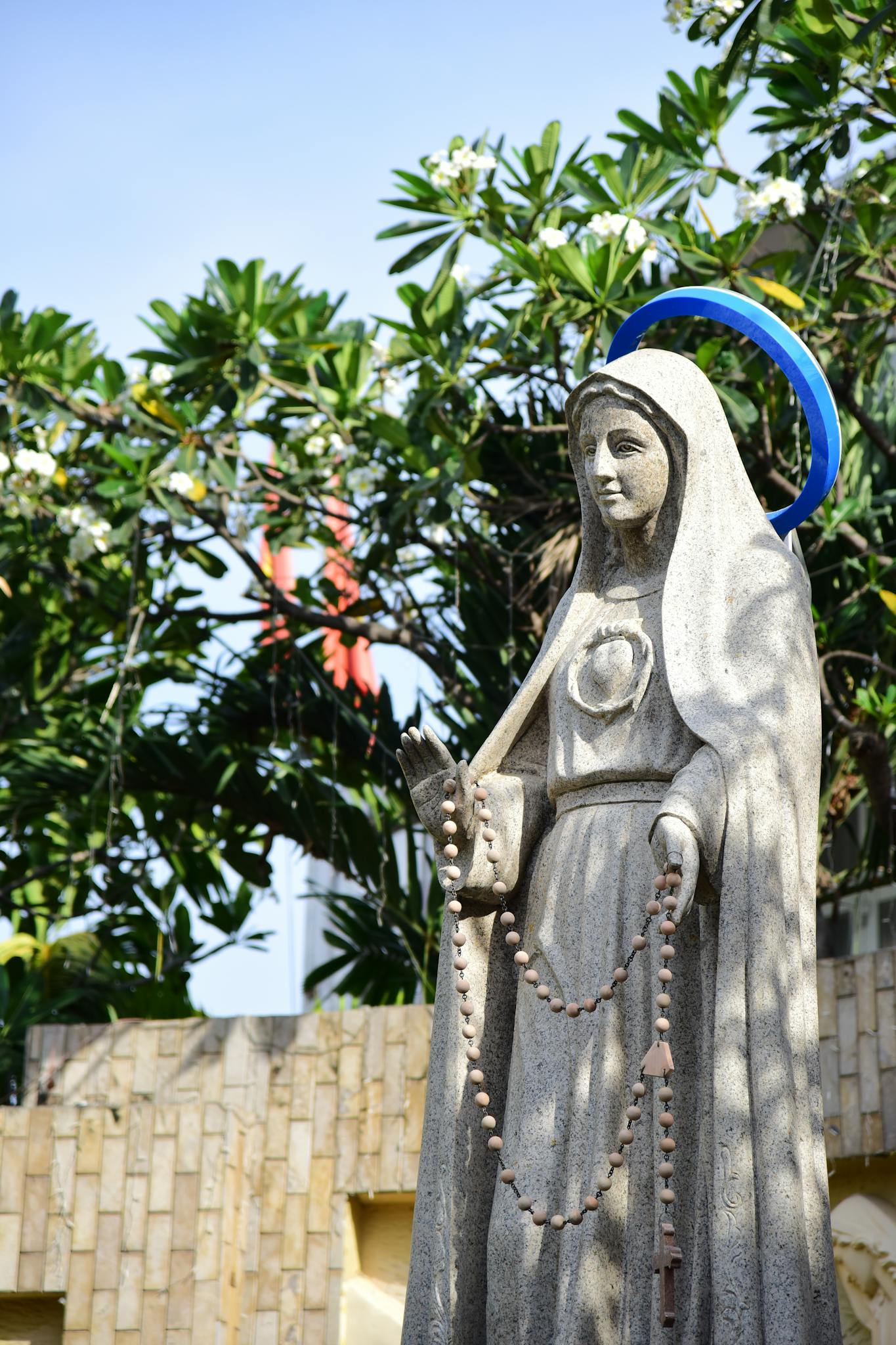
Devotion to Our Lady of Sorrows
Devotions
Honoring Mary’s compassionate suffering alongside her Son, from Simeon’s prophecy to the foot of the cross.
Devotion to Our Lady of Sorrows honors the Blessed Virgin Mary in her sorrowful union with the sufferings of Christ, especially at the cross. It grew out of medieval piety and was carried forward for centuries by the Servite Order, and it is kept liturgically each year on September 15, the day after the Exaltation of the Holy Cross.
Quick Facts
- Category: Marian Devotions — Sorrows and Joys of Mary
- Origin: Medieval devotion, carried forward especially by the Servite Order
- Feast: September 15
- Church status: an established Marian devotion and Obligatory Memorial on the General Roman Calendar
- Private revelation: not generally dependent on private revelation
What Is This Devotion?
Devotion to Our Lady of Sorrows, sometimes called devotion to the Mater Dolorosa (Sorrowful Mother), meditates on the suffering the Blessed Virgin Mary shared as she stood by her Son through his Passion. It is not a devotion to suffering for its own sake; it holds up Mary’s compassion — literally, her suffering-with Christ — as a model of faith that stays present in grief rather than fleeing from it, and it points always back to the redemptive suffering of Jesus that her sorrow accompanies.
Origin and History
Meditation on Mary’s sorrows developed gradually in the medieval Church, drawing on Simeon’s prophecy in the Gospel of Luke that a sword would pierce her heart, and on her presence at the foot of the cross recorded in the Gospel of John. The devotion found one of its strongest homes in the Servite Order (the Order of Servants of Mary), founded in Florence in 1233, whose members made devotion to Mary’s sorrows central to their spiritual life for the centuries that followed and were among its principal promoters. The great medieval hymn Stabat Mater, traditionally associated with this devotion and still sung during Lent and at the Stations of the Cross, meditates on Mary standing at the cross.
The feast itself has a documented liturgical history: various local observances of Mary’s sorrows existed for centuries before Pope St. Pius X’s calendar reforms fixed the current date, September 15, the day after the Exaltation of the Holy Cross — a deliberate pairing of the cross with the mother who stood beneath it.
Catholic Theology
The Church presents Mary’s sorrow as inseparable from her faith rather than as despair: she suffers with her Son without losing hope in him. Devotion to Our Lady of Sorrows therefore functions the way Marian devotion generally does — it draws the believer toward Christ and his Passion, using Mary’s compassion as a way in, rather than treating her sorrow as a devotion complete in itself apart from him.
How to Practice It
- Meditate on Mary’s sorrow at the cross, especially during Lent and Holy Week.
- Pray or sing the Stabat Mater, particularly at the Stations of the Cross.
- Observe September 15 with a visit to a church, Mass, or private prayer before an image of Our Lady of Sorrows.
- Pray the Rosary or a chaplet centered on Mary’s sorrows (see the related Seven Sorrows devotion) as a way of uniting one’s own griefs to hers.
Associated Prayers
When It’s Observed
September 15 is kept as an Obligatory Memorial on the General Roman Calendar, immediately following the Exaltation of the Holy Cross on September 14. In some older or local calendars, Mary’s sorrows were also traditionally recalled on the Friday before Palm Sunday, though that particular observance is not part of the current universal calendar.
Church Status
This is a long-established Marian devotion with its own place on the General Roman Calendar as an Obligatory Memorial, well short of the rank of a Solemnity but a genuine, universal liturgical observance rather than a merely local custom. Like other Marian devotions, it is meant to remain ordered toward the liturgy and toward Christ rather than becoming a separate spiritual track.
Common Misconceptions
“Devotion to Our Lady of Sorrows means dwelling on suffering for its own sake.”
The devotion holds suffering and hope together: Mary’s sorrow at the cross is inseparable, in Catholic reflection, from her faith that God’s promises would still be fulfilled. The point is compassion and perseverance, not despair.
Frequently Asked Questions
How is this different from the Seven Sorrows of Mary devotion?
This page covers the broader devotion and title honoring Mary’s sorrowful compassion generally. The Seven Sorrows of Mary is a related but distinct devotion built around a specific traditional list of seven sorrowful events in Mary’s life, with its own chaplet; see our separate page on that devotion for the full list and its history.
Why is the feast placed right after the Exaltation of the Holy Cross?
The pairing is deliberate: September 14 honors the cross itself, and September 15 honors the mother who stood beneath it, so the two days together hold the Passion and Mary’s compassion side by side on the calendar.
Is there a specific prayer or hymn connected with this devotion?
The Stabat Mater, a medieval Latin hymn meditating on Mary at the foot of the cross, is the hymn most closely associated with this devotion and is still commonly sung during Lent and at the Stations of the Cross.
Sources
- Directory on Popular Piety and the Liturgy: Principles and Guidelines (2001)
- Catechism of the Catholic Church, §§1667–1679
- General Roman Calendar
- Order of Servants of Mary (Servite Order) — official website