
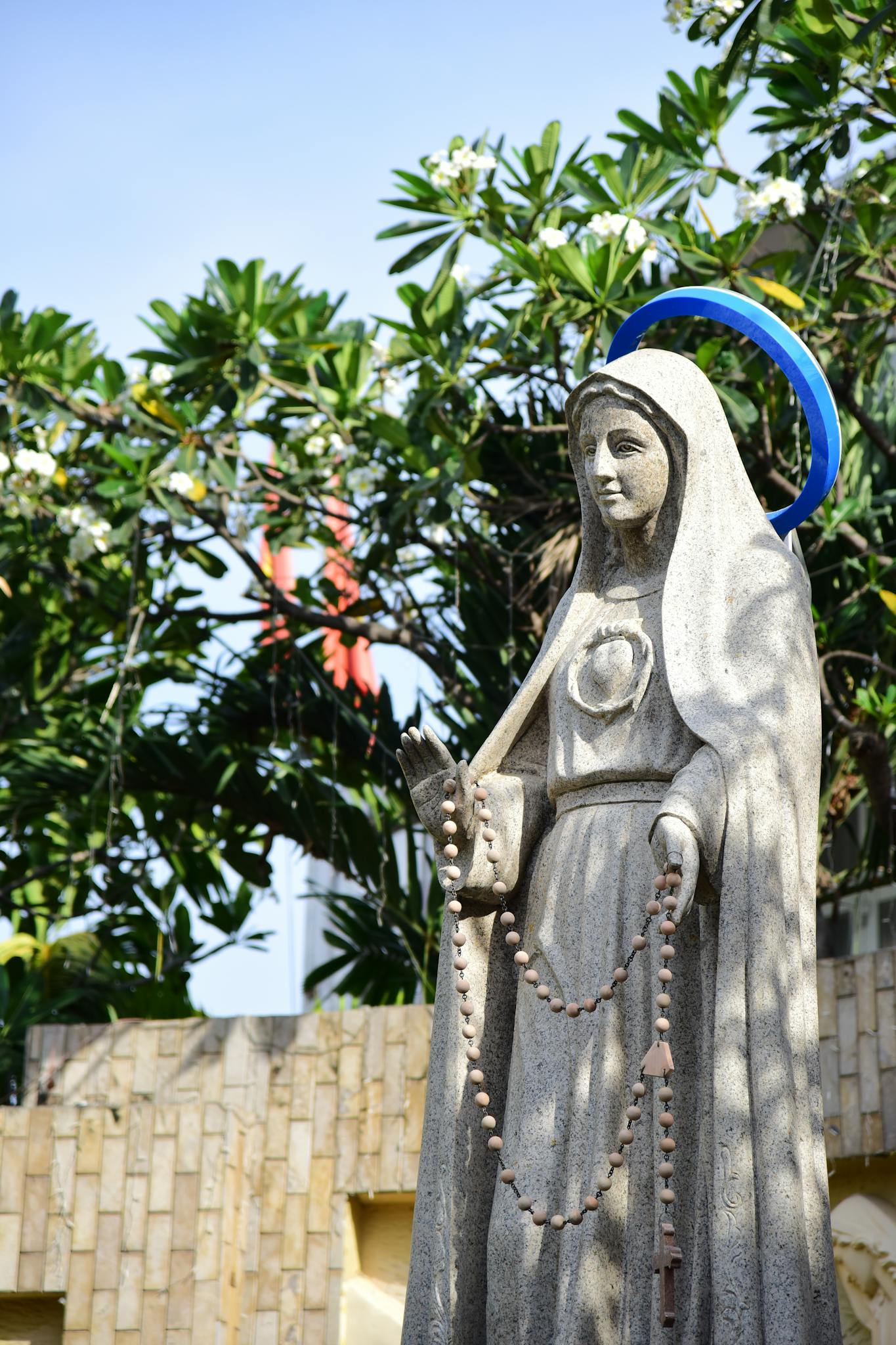
Rosary Beads as a Sacramental
Devotions
Why a blessed set of rosary beads is a Catholic sacramental in its own right, distinct from the prayer it is used to count.
Rosary beads as a sacramental refers to the physical string of beads itself — once blessed by a priest or deacon — considered as a sacred object of Catholic devotional life, separate from the Rosary prayer it is used to pray. A blessed rosary is treated with the same basic reverence given to any sacramental: it is not a good-luck charm or a source of automatic power, but a sign that disposes the person carrying or praying it toward grace, in dependence on the prayer and faith of the one who uses it.
Quick Facts
- Category: Sacramentals & Devotional Practices — Sacred Objects & Domestic Piety
- Origin: Historic Catholic sacramental and domestic devotional tradition
- Associated saint: Popularly linked to St. Dominic in devotional tradition; not formally required
- Country: Universal
- Feast/observance: Not tied to a single date
- Church status: An approved sacramental when blessed; used according to the Church’s norms, never as a charm or superstition
- Private revelation: Not dependent on private revelation
What Is This Devotion?
This page is about the rosary as a physical object — a string of beads, most often arranged in five decades with a crucifix and medal — once it has received the Church’s blessing and become a sacramental. That is a different subject from praying the Rosary itself, which is covered on our pages for the Joyful, Sorrowful, Glorious and Luminous Mysteries, and on our Family Rosary and Living Rosary pages. Here the focus stays on the beads themselves: what the blessing does, how a blessed rosary is properly treated, and what happens when one wears out.
Like any sacramental, a blessed rosary is not a device that produces effects on its own. The Church distinguishes clearly between a sacrament, which confers grace by the power of the rite itself, and a sacramental, which prepares a person to receive grace and disposes them to cooperate with it through the prayer of the Church and their own faith.
Origin and History
Strings or cords of beads used to count repeated prayers — sometimes called paternoster cords, since they were often used to count Our Fathers — were common devotional tools in the medieval Latin Church well before the Rosary took its familiar fifteen- or twenty-mystery shape. Popular devotional tradition credits St. Dominic (d. 1221) with receiving the Rosary directly from the Blessed Virgin Mary; this account, most closely associated with later Dominican preachers, is pious legend rather than a documented historical event, and it is treated as such by serious Church historians even while the Dominican Order’s own central role in promoting the Rosary from the late Middle Ages onward is well documented.
The practice of having a priest bless a set of rosary beads specifically — as distinct from praying the Rosary prayer — grew alongside the wider Catholic custom of blessing devotional objects such as medals, crucifixes and scapulars, formalized over centuries in the Church’s various rituals for blessings and eventually gathered into modern liturgical books that provide an official blessing for rosaries.
Catholic Theology
The Catechism situates sacramentals like a blessed rosary within popular piety’s broader relationship to the liturgy: they extend the grace of the sacraments into everyday life and sanctify different circumstances, but they never replace the sacraments themselves. A blessed rosary is therefore an aid to prayer, not a substitute for it — carrying one in a pocket or hanging one in a car is a fitting Catholic custom, but it does no spiritual work by itself apart from the prayer, faith and trust in God of the person who uses or carries it.
How to Practice It
- Have a new rosary blessed by a priest or deacon; this is a simple, routine request most clergy are glad to fulfill.
- Treat a blessed rosary with basic reverence — avoid using it as ordinary jewelry or a plaything, and keep it in a clean, respectful place such as a pocket, purse or prayer corner.
- Understand that the blessing does not need to be repeated each time the rosary is prayed; a rosary remains blessed until it is so damaged that it can no longer be used as a rosary.
- If a blessed rosary is lent, given as a gift, or purchased already blessed, no further action is required unless you wish to have it blessed again yourself.
Promises and Indulgences
The Church’s Enchiridion Indulgentiarum (Manual of Indulgences) attaches a partial indulgence to the pious recitation of the Rosary, with a plenary indulgence available under the Church’s usual general conditions when it is prayed in a church or oratory, in a family, in a religious community, or in a pious association, and when the mysteries are also meditated upon. These indulgences attach to the act of praying the Rosary devoutly, not automatically to the mere possession of a blessed set of beads, and any specific indulgence historically printed on an old prayer card or attached to a particular rosary style should be checked against the Church’s current, official list rather than assumed to still apply.
Feast Day / When Observed
There is no specific feast day attached to rosary beads as an object. The blessing may be requested at any time; the Rosary prayer itself is especially associated with October, the Month of the Holy Rosary, and with the October 7 Memorial of Our Lady of the Rosary.
Church Status
A blessed rosary is a recognized Catholic sacramental, and its blessing follows the Church’s approved liturgical books for blessings, governed by the general norms in the Code of Canon Law for sacred objects and sacramentals (SRC-02; SRC-12).
Common Misconceptions
“A blessed rosary protects the person carrying it from harm on its own.”
It does not function as a good-luck charm or automatic protection. A sacramental disposes a person toward grace through the Church’s prayer and the person’s own faith; treating a blessed object as though it carried independent power, regardless of prayer or disposition, shades into superstition, which the Church has consistently warned against.
“An unblessed rosary does not ‘count’ for prayer.”
This is false. The Rosary may be validly and fruitfully prayed on any set of beads, blessed or not, or even on the fingers with no beads at all. The blessing sets the object apart as a sacramental; it does not gate whether the prayer itself is heard.
Frequently Asked Questions
Does a rosary have to be blessed to be used?
No. The Rosary prayer can be prayed with any beads, blessed or unblessed, though many Catholics choose to have their rosary blessed as a mark of reverence for an object used so often in prayer.
Can a Catholic bless their own rosary?
The Church’s formal blessing of a rosary is reserved to a priest or deacon. A lay Catholic may certainly offer a simple personal prayer over a rosary, but this is distinct from the Church’s own sacramental blessing.
Does a rosary lose its blessing if someone else touches it?
No. A blessing is not removed by ordinary handling by another person. It ends, practically speaking, only when the object itself is destroyed or so damaged it can no longer serve as a rosary.
What should I do with a broken or worn-out rosary?
If it can be repaired, many Catholic shops and some parishes offer rosary repair. If it cannot be repaired, a blessed sacramental that is beyond use should be disposed of reverently — commonly by burying it or burning it — rather than thrown in the household trash, following the same basic respect given to other worn-out sacramentals such as palms or blessed medals.
Is it wrong to wear a rosary as jewelry?
Wearing a rosary purely as a fashion accessory, detached from its purpose as an aid to prayer, is discouraged by the Church as a misuse of a sacred object; carrying or wearing one visibly as a sign of faith and readiness to pray is a different matter and is a long-honored Catholic custom.
Sources
- Catechism of the Catholic Church, §§1667-1676
- Directory on Popular Piety and the Liturgy: Principles and Guidelines (2001)
- Code of Canon Law — sacred places, shrines and sacramentals
- Enchiridion Indulgentiarum (Manual of Indulgences), Apostolic Penitentiary — for current indulgence norms