
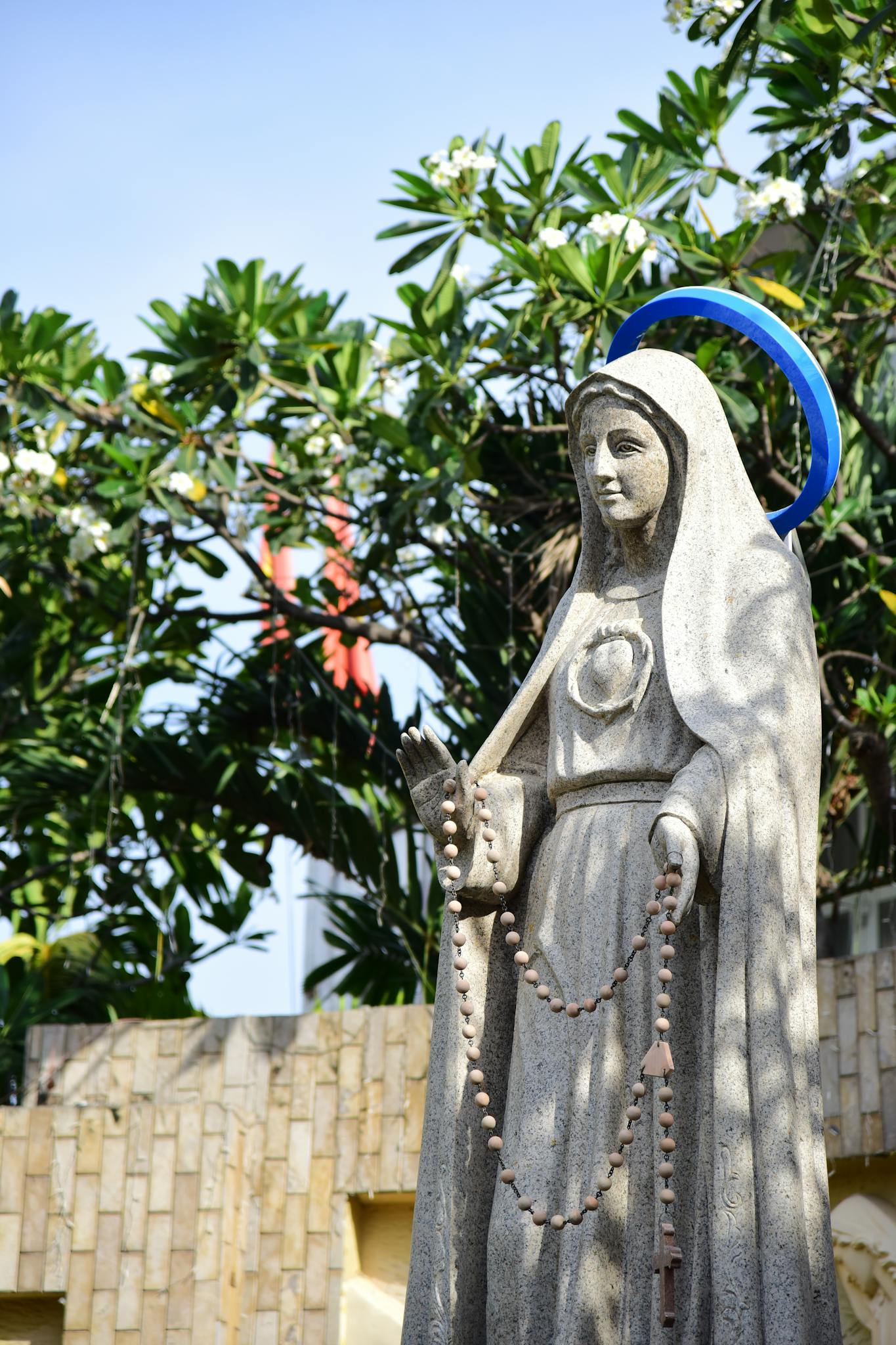
Family Rosary
Devotions
The practice of a household praying the Rosary together, given a defined modern identity by Venerable Patrick Peyton’s twentieth-century Family Rosary Crusade.
The Family Rosary is the practice of praying the Rosary together as a household, uniting parents and children in a shared daily act of prayer. While families have prayed together informally for centuries, the practice gained its modern organized identity chiefly through Venerable Patrick Peyton, a priest of the Congregation of Holy Cross whose Family Rosary Crusade, launched in 1947, popularized the slogan “The family that prays together stays together.”
Quick Facts
- Category: Marian Devotions — Rosary
- Origin: Historic Marian piety of the Catholic Church, given modern organized form by Fr. Patrick Peyton’s 1947 Family Rosary Crusade
- Observance: A daily household devotion, not tied to a single date
- Church status: an established Marian devotion, warmly encouraged as a support to family life
- Private revelation: not dependent on private revelation
What Is This Devotion?
The Family Rosary is simply the Rosary prayed together by a household — parents and children praying the same decades, aloud, at a regular time each day. Its distinguishing feature is not a different prayer but a particular setting: the Rosary as a shared, daily act of the domestic household rather than an individual devotion practiced alone.
Origin and History
Families praying together has old roots in Catholic home life generally, but the Family Rosary gained a defined modern identity and organized promotion chiefly through Fr. Patrick Peyton, C.S.C. (1909–1992), an Irish-born priest of the Congregation of Holy Cross. Peyton attributed his own recovery from serious illness as a seminarian to Mary’s intercession and devoted much of his priestly ministry afterward to promoting the family Rosary, beginning radio broadcasts in the mid-1940s and formally launching the Family Rosary Crusade on January 25, 1947, in Albany, New York. Over the following decades his crusade drew enormous public rallies across the United States and eventually many other countries, aided by Hollywood connections and a media campaign built around the slogan “The family that prays together stays together,” credited to advertising executive Al Scalpone and displayed on more than 100,000 billboards nationwide. Pope Francis declared Peyton Venerable in December 2017, recognizing his heroic virtue; his cause for canonization continues under that title.
Catholic Theology
Church teaching describes the Christian family as a “domestic church,” the first and most basic community in which faith and prayer are handed on (CCC §2685). The Family Rosary gives that teaching a concrete daily shape: because the Rosary’s vocal prayers are simple enough for young children to join and its mysteries walk through the whole of the Gospel, it is especially well suited to a household of mixed ages praying together, forming children in the faith not chiefly through explanation but through the lived rhythm of shared prayer.
How to Practice It
- Set a regular time each day — after dinner or before bed are common choices — rather than leaving it to chance.
- Pray five decades together where possible, but do not hesitate to pray one decade, or even one Hail Mary, with very young children and build from there.
- Let children take turns leading a decade as they are able.
- Keep the practice brief and consistent rather than long and irregular; a short daily Rosary forms a habit more effectively than an occasional lengthy one.
- Adapt pace and length to the youngest participant capable of joining in.
Associated Prayers
When It’s Observed
The Family Rosary is a daily household devotion rather than an observance tied to a particular date on the liturgical calendar. Many families and parishes give it special emphasis during October, the Month of the Holy Rosary, but the practice itself is meant to be an ordinary, year-round rhythm of family life.
Church Status
This is an established and warmly encouraged form of Marian popular piety, praised repeatedly by the Church for its role in forming children in prayer and strengthening family life. It carries no separate liturgical rank; its status is simply that of the Rosary itself, prayed in a particular and highly valued setting — the home.
Common Misconceptions
“Family Rosary means every member must recite all five decades perfectly and in silence, like a formal rite.”
It does not. Especially with young children, adaptability is expected and encouraged — a single decade prayed with wandering attention from a toddler is a real beginning, not a failure. The point is a shared daily habit of prayer, not liturgical precision.
“Fr. Peyton invented the idea of families praying the Rosary together.”
He did not invent the practice, which predates him by centuries in Catholic home life; what Peyton did was organize, popularize, and give lasting public visibility to family Rosary prayer through a mass media campaign in the mid-twentieth century.
Frequently Asked Questions
Who started the Family Rosary movement?
Venerable Patrick Peyton, C.S.C., an Irish-American priest, launched the Family Rosary Crusade in 1947 and spent decades promoting family prayer of the Rosary through radio, rallies, and media campaigns.
Do we have to pray all five decades every day?
No. Many families begin with one decade, especially with young children, and build up gradually. Consistency matters more than length.
What if my children are too young to sit through it?
Start small — even a single Hail Mary prayed together counts as a real beginning — and let participation grow with the children’s age and attention span.
Where does the phrase “the family that prays together stays together” come from?
It was coined by advertising executive Al Scalpone for Fr. Patrick Peyton’s Family Rosary Crusade and became one of the most widely recognized religious slogans of twentieth-century America.
Sources
- Directory on Popular Piety and the Liturgy: Principles and Guidelines (2001)
- Catechism of the Catholic Church, §§1667–1679
- General Roman Calendar
- Holy Cross Family Ministries — official website