
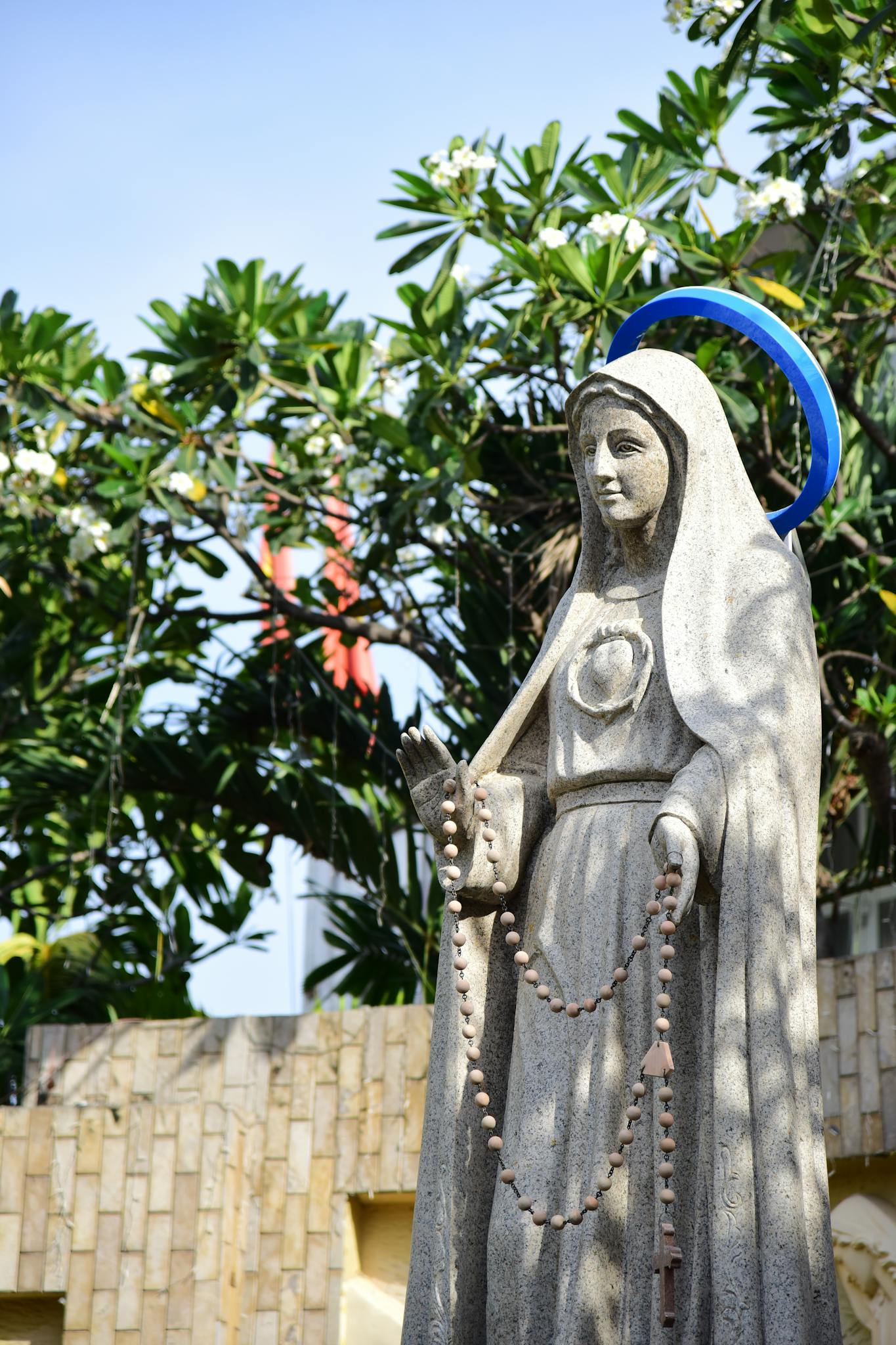
Our Lady of the Miraculous Medal
Devotions
The Marian title tied to St. Catherine Labouré’s reported 1830 visions in Paris and the medal struck from them.
Our Lady of the Miraculous Medal is the Marian title connected to a series of apparitions reported by St. Catherine Labouré, a novice of the Daughters of Charity, at the Rue du Bac convent in Paris in 1830. Mary is said to have asked that a medal be struck showing her with rays of grace streaming from her hands, and devotion to that medal has since spread throughout the Catholic world.
Quick Facts
- Category: Marian Titles — Doctrinal and Devotional Titles
- Origin: Connected to apparitions reported by St. Catherine Labouré in Paris in 1830
- Feast: November 27 (traditional/local observance, marking the medal’s design)
- Church status: a Catholic Marian devotional title with an approved sacramental at its center, kept locally rather than on the universal calendar
- Private revelation: not dependent on private revelation; the devotion’s own standing does not require belief in every detail of the reported visions
What Is This Devotion?
Devotion under this title centers on a specific sacramental: a small oval medal, worn or carried, showing Mary standing on a globe with rays of light streaming from her outstretched hands, encircled by the words O Mary, conceived without sin, pray for us who have recourse to thee. The reverse bears twelve stars, a cross, and the letter M intertwined with the Sacred and Immaculate Hearts of Jesus and Mary. Like any sacramental, the medal is a sign meant to support prayer and trust in Mary’s intercession, not an object that acts on its own apart from the faith of the one who wears it.
Origin and History
St. Catherine Labouré, a young novice of the Daughters of Charity, reported a series of visions in the community’s motherhouse chapel on the Rue du Bac in Paris in 1830. In the first, on the night of July 18–19, she reported being awakened and led to the chapel, where she described an extended encounter with Mary. On November 27 of that same year, during evening prayer, she reported seeing Mary standing on a globe with rays streaming from her hands, framed within an oval bearing the prayer later inscribed on the medal, and heard an instruction to have a medal struck after this design, promising graces to those who would wear it with confidence.
Catherine reported these experiences only to her confessor, Fr. Jean-Marie Aladel, who investigated cautiously before bringing the matter to the Archbishop of Paris. After his own review, the archbishop permitted the medal to be struck; the first medals were minted in June 1832, and devotion spread with striking speed, aided by widely publicized accounts of favors attributed to it, which is how it came to be popularly called the Miraculous Medal rather than by its original, more formal name, the Medal of the Immaculate Conception. Catherine Labouré kept her identity as the visionary private for decades, and Pope Pius XII canonized her in 1947, after a formal canonical process that included examining the reported apparitions. Pope Leo XIII approved a proper feast for the devotion, kept on November 27, in 1894.
Catholic Theology
The medal’s imagery is a compact catechesis: Mary’s outstretched hands and streaming rays represent the graces the Church teaches she obtains through her intercession for those who ask, while the surrounding prayer names the specific truth of her Immaculate Conception, defined as dogma by Pope Pius IX in 1854 — itself already implied on the medal a full twenty-four years earlier. As with any sacramental, Catholic teaching is explicit that the medal itself has no automatic power; its spiritual fruit depends entirely on the faith, prayer and ongoing conversion of the person who wears it, not on the object considered apart from that faith.
How to Practice It
- Wear or carry a Miraculous Medal as a sign of trust in Mary’s intercession.
- Pray the short invocation inscribed on the medal: O Mary, conceived without sin, pray for us who have recourse to thee.
- Pray a novena to Our Lady of the Miraculous Medal, especially in the nine days before November 27.
- Learn the story of St. Catherine Labouré as an example of quiet, hidden faithfulness — she kept her role as the visionary secret for most of her life.
Associated Prayers
When It’s Observed
November 27 is kept as a devotional feast marking the anniversary of the reported vision of the medal’s design; it is not part of the General Roman Calendar for the universal Church, but is widely observed in parishes, shrines and communities with particular devotion to this title, especially the Congregation of the Mission and the Daughters of Charity, the religious families St. Catherine Labouré belonged to and served.
Church Status
This is a well-documented modern Marian devotion: the reported apparitions were investigated by ecclesiastical authority at the time, the medal’s use was formally permitted, and the visionary herself was canonized after a further Church process examining her account. The medal is a genuine and widely used Catholic sacramental, subject to the same rule as every sacramental — a sign that supports faith, never a substitute for it.
Common Misconceptions
“Wearing the medal guarantees protection or conversion regardless of how a person lives.”
The Church has never taught that any sacramental works automatically or apart from a person’s free response to grace. The medal’s reported promise of graces to those who wear it with confidence is properly understood as encouragement toward trust in Mary’s intercession, lived out through prayer and the sacraments, not a substitute for either.
Frequently Asked Questions
Why is it called the Miraculous Medal rather than its original name?
It was formally titled the Medal of the Immaculate Conception, but the popular name Miraculous Medal took hold quickly in the nineteenth century because of the many favors people reported after wearing it, and that name has stuck ever since.
Do I need to be formally enrolled to wear the Miraculous Medal?
No formal enrollment rite is required, unlike the Brown Scapular; the medal is typically simply blessed by a priest and then worn or carried as a sign of trust in Mary’s intercession.
Is the vision behind the Miraculous Medal the same as Our Lady of Grace?
They are closely related in imagery — both depict Mary with hands extended and rays of grace — but Our Lady of the Miraculous Medal refers specifically to this documented 1830 devotion connected to St. Catherine Labouré, while Our Lady of Grace is a broader, older title used for many separate local images and devotions.
Sources
- Directory on Popular Piety and the Liturgy: Principles and Guidelines (2001)
- General Roman Calendar
- Sanctuary of Our Lady of the Miraculous Medal, Rue du Bac, Paris — official shrine website