May Crowning
Devotions
The ceremony of crowning an image of Mary with flowers, usually once during her month, as a sign of her queenship.
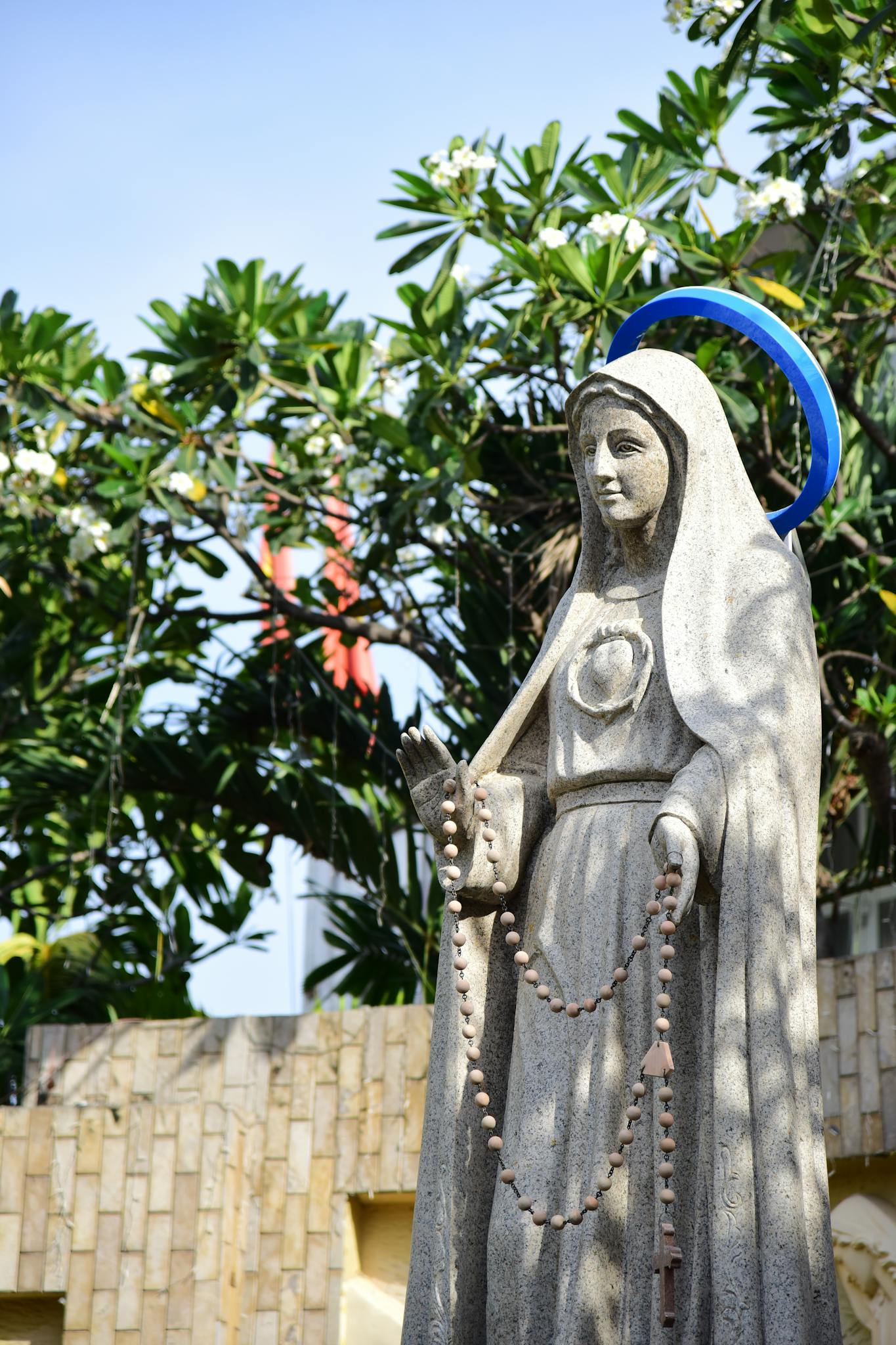
May Crowning is the ceremony of placing a wreath of flowers on a statue or image of Mary, typically once during the month of May, accompanied by hymns and prayers as an expression of Mary’s queenship. It grew up alongside the broader custom of May Devotions and became a familiar fixture of parish and school life especially from the nineteenth century onward.
Quick Facts
- Category: Marian Devotions — Traditional Marian Prayers and Practices
- Origin: Grew out of the broader May devotion movement, especially popularized from the nineteenth century onward
- Observance: Typically once during May
- Church status: an established, locally organized Marian ceremony rather than a universal liturgical rite
- Private revelation: not dependent on private revelation
What Is This Devotion?
May Crowning is a ceremonial act, usually held once during May, in which a statue or image of Mary is processed in and then crowned with a wreath of flowers, often by a child chosen from a parish or school. Hymns and prayers accompany the crowning, and the whole ceremony is a focused, visible expression of the broader month of May Devotions, honoring Mary specifically under her title as Queen.
Origin and History
The ceremony grew directly out of the broader eighteenth and nineteenth-century May devotion movement (see our separate page on May Devotions to Mary for that fuller history). The specific act of physically crowning an image became a familiar fixture of parish and school life especially from the nineteenth century onward, particularly in Europe and later throughout the English-speaking Catholic world, commonly paired with hymns written for the occasion, among them the well-known Bring Flowers of the Rarest. Like many devotional customs, May Crowning saw a marked decline in the years following the Second Vatican Council, as parish devotional life shifted in other directions, before experiencing a notable revival in recent decades.
Catholic Theology
The crowning symbolizes Mary’s queenship, itself grounded in her role as Mother of the King and in her own perfect union with Christ’s redemptive work (see our dedicated page on the Queenship of Mary for the fuller doctrine). The flowers offered represent the prayers and virtue of the community doing the crowning, not some good-luck object with power of its own — the ceremony is a symbolic, devotional act, and like every Marian devotion it is meant to point toward Christ the King through honoring his mother, not to stand as an isolated spectacle apart from that meaning.
How to Practice It
- Choose a day during May, often a Sunday, for the ceremony.
- Process a statue or image of Mary to a place of honor.
- Crown the image with a wreath of flowers, often placed by a child chosen for the occasion.
- Sing Marian hymns and pray the Rosary or a litany as part of the ceremony.
- At home, a simpler version can be kept before a family image of Mary.
Associated Prayers
When It’s Observed
Typically once during the month of May, often on a Sunday chosen by the parish or school; there is no single fixed universal date, since this is a devotional ceremony rather than a day on the Church’s liturgical calendar.
Church Status
May Crowning is a legitimate and long-received expression of Marian devotion, tied to the defined doctrine of Mary’s queenship, but it is not itself a rite found in the Church’s official liturgical books the way a votive Mass is. Its exact form is left to local pastoral judgment, in keeping with the Directory on Popular Piety and the Liturgy’s general principle that popular devotions should support, and never be confused with, the Church’s formal liturgy.
Common Misconceptions
“May Crowning is an official rite of the Mass.”
It is a devotional, paraliturgical ceremony, not part of the Mass itself, even though it is sometimes held in connection with Mass or Benediction. The crown placed on the statue is a symbolic gesture of honor, not a ritual object believed to carry power of its own.
Frequently Asked Questions
Who gets to place the crown?
This varies entirely by local custom. Many parishes and schools choose a child, often a girl who has recently received First Communion, though the specific choice is a matter of local tradition rather than any universal Church rule.
Is May Crowning only for children and schools?
No. While it is especially associated with Catholic schools and parish children’s groups, families and adult parish groups also keep the custom, and it can be observed simply at home before a Marian image.
What is the connection between May Crowning and the Queenship of Mary?
The crowning gesture visibly expresses the doctrine that Mary shares, in a derived and entirely creaturely way, in her Son’s kingship — a title Pope Pius XII gave its own feast day in 1954. See our separate page on the Queenship of Mary for the fuller teaching.
Sources
- Directory on Popular Piety and the Liturgy: Principles and Guidelines (2001)
- Catechism of the Catholic Church, §§1667–1679
- General Roman Calendar