Marian Processions
Devotions
Public, communal prayer in motion, honoring Mary by processing with her image through a church, shrine, or town.
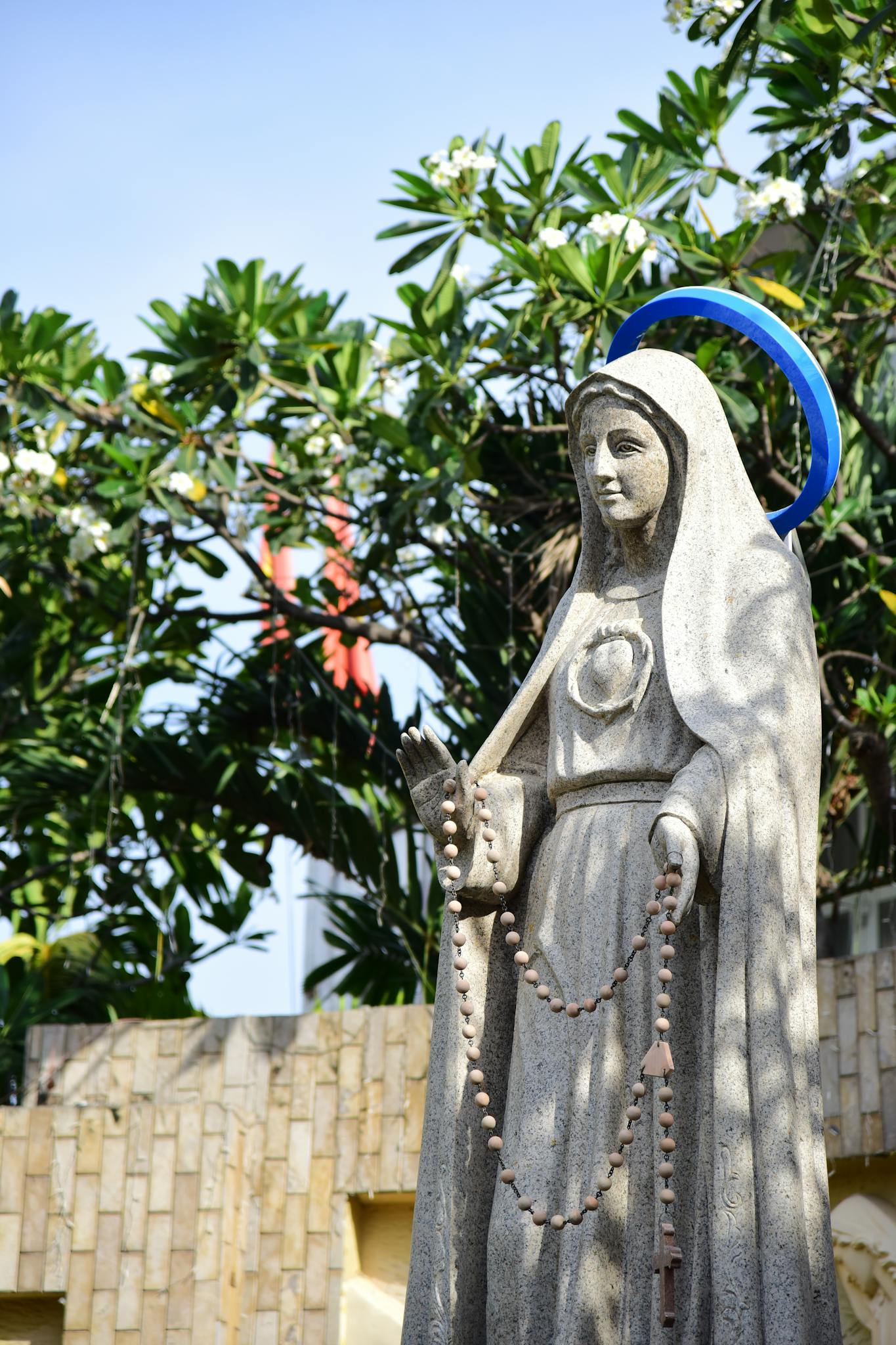
Marian Processions are communal, public expressions of Marian devotion in which the faithful process with an image, statue, or sometimes a relic connected to Mary, accompanied by hymns and prayer such as the Rosary. Rooted in the early Church’s general processional prayer and later developed around specific Marian feasts and shrines, they remain a recognized, bishop-regulated form of Catholic popular piety.
Quick Facts
- Category: Marian Devotions — Traditional Marian Prayers and Practices
- Origin: An ancient form of Catholic popular piety, rooted in the early Church’s processional prayer and pilgrimage customs
- Observance: Held on various Marian feasts and throughout Marian-themed months, especially May and October
- Church status: an established and bishop-regulated form of popular piety
- Private revelation: not dependent on private revelation, though some individual processions are tied to particular shrines with their own apparition history
What Is This Devotion?
A Marian procession is communal, public prayer carried out in motion: the faithful walk together, honoring Mary by processing with her image, a statue, or occasionally a relic or copy of a well-known icon, typically through a church, shrine grounds, or the streets of a town. Hymns, the Rosary, and sometimes candles accompany the walk. Unlike a private devotion said alone, a procession is inherently communal and public, and it often overlaps with pilgrimage, since both involve the Church physically on the move in prayer.
Origin and History
Processions of this general kind go back to the early Church’s wider practice of processional liturgy, including the ancient Roman custom of station-day gatherings that moved between different churches of the city. Distinctly Marian processions developed over the medieval period alongside the growth of Marian shrines and feast days, and the Directory on Popular Piety and the Liturgy treats processions, together with pilgrimage, as one of the Church’s long-recognized forms of popular piety. Many of the best-known Marian processions today grew up around the history of a particular shrine — such as the candlelight processions long associated with Lourdes, or the monthly and pilgrimage-season processions at Fatima — and those individual histories are covered on this site’s dedicated pages for each shrine.
Catholic Theology
Processions embody the Church as a pilgrim people, praying with the whole body and not only the voice, echoing biblical processions such as the movement of the Ark of the Covenant. A Marian procession specifically holds Mary up as a model of the pilgrim Church’s own journey of faith. As with every form of popular piety, the Directory’s general principle applies: a procession is meant to lead back to Christ and the liturgy, not to stand as an isolated spectacle detached from either.
How to Practice It
- Join a parish or diocesan Marian procession, often around a feast day.
- Pray the Rosary or a litany while processing.
- Carry a candle or flowers as a visible sign of devotion.
- Where no local procession exists, join one during a pilgrimage to a Marian shrine.
Associated Prayers
When It’s Observed
Timing varies by locality and occasion. Common times include specific Marian feast days, the month of May, and the month of October, though a given parish or shrine may hold a procession on a schedule of its own.
Church Status
The Directory on Popular Piety and the Liturgy explicitly names processions, alongside pilgrimage, as a legitimate and ancient form of popular piety. Public processions are subject to the local bishop’s oversight and the Church’s general norms governing public prayer and sacred places, precisely to safeguard good order and sound doctrine. A procession is not itself a liturgical rite of the Mass, though it can be connected with one, for example preceding or following a celebration of the Eucharist.
Common Misconceptions
“Any public gathering with a statue of Mary counts as an approved Church procession.”
A legitimate liturgical or devotional procession is organized with the local pastor’s or bishop’s oversight. The Church’s general norms on public prayer and sacred places exist specifically to keep such gatherings orderly and doctrinally sound, rather than leaving the form entirely open to whoever wishes to organize one.
Frequently Asked Questions
What is the difference between a procession and a pilgrimage?
A pilgrimage is a journey, often over some distance and time, to a shrine or sacred place. A procession is typically a shorter, more localized movement — through a church, its grounds, or nearby streets — though the two often overlap, since pilgrimages frequently include a procession at their destination.
Who authorizes a Marian procession?
Ordinarily the local pastor or bishop, consistent with the Church’s general norms for public prayer and the use of sacred images and places.
Are Marian processions only held in traditionally Catholic countries?
No. While they are especially prominent and visible in Mediterranean, Latin American, and Filipino Catholic culture, parishes and shrines around the world hold Marian processions, adapted to local custom and circumstance.
Sources
- Directory on Popular Piety and the Liturgy: Principles and Guidelines (2001)
- Catechism of the Catholic Church, §§1667–1679
- Code of Canon Law — sacred places and related norms