
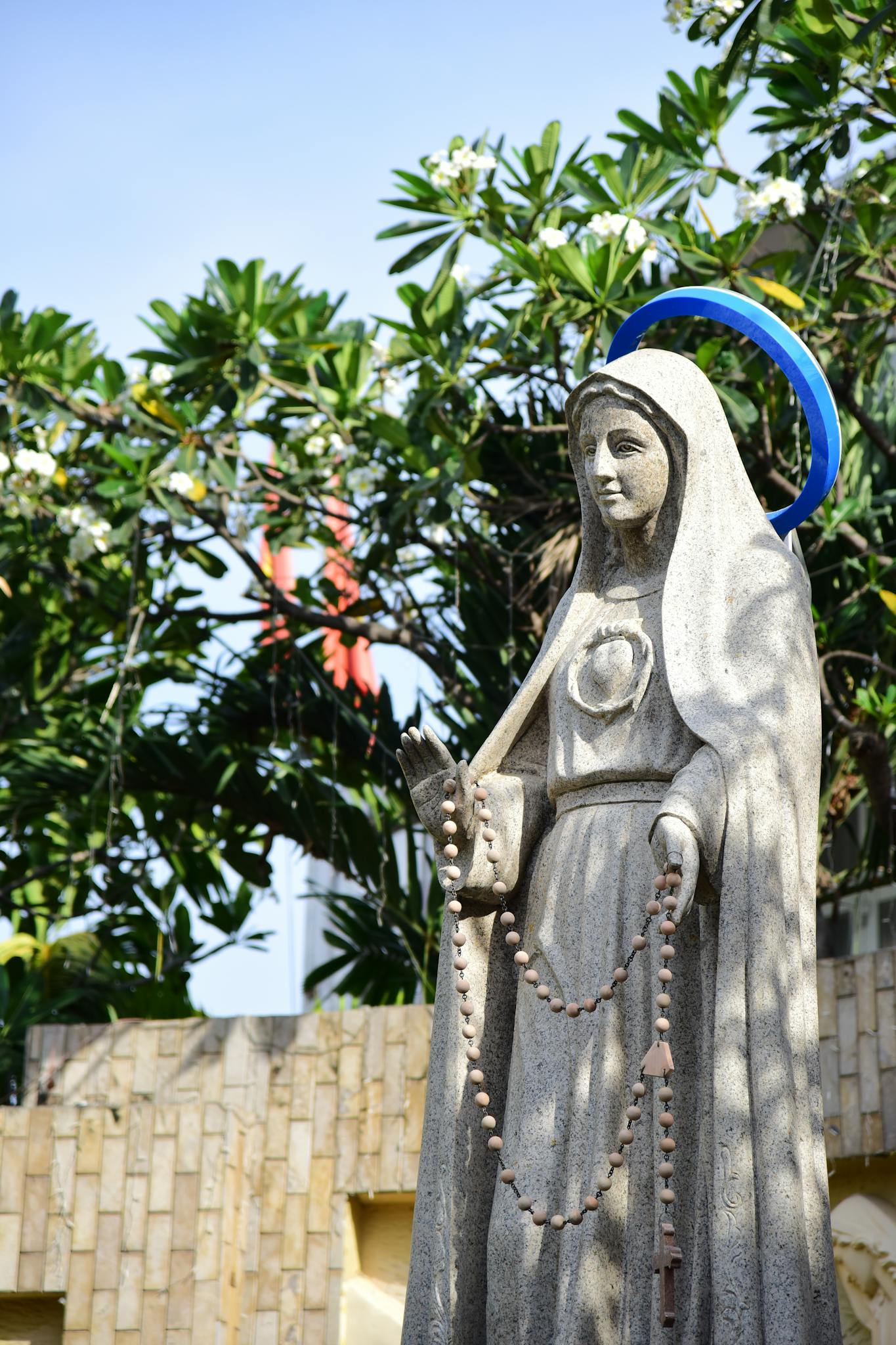
Guardian Angel Prayer and Devotion
Devotions
The Catholic practice of daily prayer to one’s personal guardian angel, centered on the traditional prayer beginning ‘Angel of God, my guardian dear.’
Guardian Angel Prayer and Devotion is the Catholic practice of turning daily to the angel Church tradition holds God assigns to every person, asking for protection, guidance and companionship on the path toward heaven. Its most familiar expression is the short prayer beginning “Angel of God, my guardian dear,” known in Latin as the Angele Dei, whose exact author and date are not definitively documented despite centuries of widespread use. The devotion rests on the Church’s constant teaching that each believer has a guardian angel (Catechism 336) rather than on any apparition, and is kept liturgically on October 2, the Feast of the Holy Guardian Angels.
Quick Facts
- Category: Holy Angels — Angelic Devotions
- Origin: Rooted in the Church’s teaching that each believer has a personal guardian angel; the familiar “Angel of God” prayer is of uncertain and undocumented authorship despite its long use
- Feast: October 2 (The Holy Guardian Angels); the prayer itself is traditionally said daily, especially morning and night
- Church status: An established Catholic devotion grounded in constant Church teaching (CCC 336) rather than in a local or order-specific practice
- Private revelation: Not dependent on any private revelation or apparition
What Is This Devotion?
Where devotion to the holy angels as a group honors angels broadly, this devotion is personal: Catholic tradition holds that God assigns each person a guardian angel from the beginning of life, a spiritual companion charged with protecting the soul and helping it toward salvation. The short prayer known in English as “Angel of God” and in Latin as the Angele Dei is usually the first form this devotion takes, often taught to children as one of their earliest prayers and continued into adulthood as a simple daily habit of trust.
Origin and History
Belief in a personal guardian angel has roots in Scripture — Christ’s own words that children’s “angels always behold the face of my Father” (Matthew 18:10), the psalmist’s assurance that God “will give his angels charge over you” (Psalm 91:11), and the account in Acts where the early Christians assume Peter’s “angel” might be at the door (Acts 12:15) — and several Church Fathers wrote of the idea that each person receives a guiding angel. The feast itself is traditionally traced to a 1608 decree of Pope Paul V permitting it in certain dioceses, with Pope Clement X extending it to the universal Church in 1670, though this site could not independently re-confirm those precise dates against a primary Vatican document.
The “Angel of God” prayer’s own history is harder to pin down than the feast’s. Versions of it have circulated for centuries across many Catholic countries and languages, standardized over time into the form most English-speaking Catholics know today, but no single documented author or date of composition survives. Devotional books and encyclopedias sometimes offer confident-sounding origin stories for the prayer; this site treats none of them as verified and simply notes the prayer’s long, widespread and undocumented use.
Catholic Theology
Devotion to one’s guardian angel expresses, in a very personal way, the Church’s teaching on God’s individualized providence: that God’s care for each soul is not abstract but concrete enough to include a spiritual guardian assigned to that person alone. The angel’s task is to protect from spiritual and, at times, physical harm and to help guide the person toward God, not to grant wishes or predict the future — a devotion of trust and companionship, not a private source of supernatural favors apart from ordinary Catholic prayer.
How to Practice It
- Pray the “Angel of God” prayer each morning and night as a simple way of beginning and ending the day.
- Ask your guardian angel’s intercession before difficult decisions, travel, or dangerous situations.
- Teach the prayer to children as an accessible, memorable introduction to a lifelong habit of prayer.
- Avoid treating the guardian angel as a source of predictions, hidden messages, or powers apart from ordinary Catholic prayer and discernment.
Associated Prayers
When It’s Observed
October 2 is kept as the Feast of the Holy Guardian Angels on the General Roman Calendar for the universal Church. Personal prayer to one’s own guardian angel has no fixed day or hour and is traditionally offered daily.
Church Status
The Church’s teaching that each believer has a guardian angel is solid, constant doctrine (CCC 336), not a devotional option Catholics may take or leave. What remains pious custom rather than doctrine is the embellishment sometimes added in popular piety — treating the angel as having a knowable personal name, for instance — which should never be presented as required Church teaching.
Common Misconceptions
“Everyone’s guardian angel has a specific personal name that can be discovered, like Michael or Gabriel.”
The Church teaches no such thing. The only angels the Church names in approved liturgy and devotion are the three archangels given names in Scripture. Giving one’s own guardian angel a private, invented name is at most a harmless personal habit, not Church teaching, and readers should be wary of “guardian angel name” quizzes or generators that present a made-up name as though it were a real, discoverable fact.
Frequently Asked Questions
Does every person really have a guardian angel, according to Catholic teaching?
Yes. The Catechism teaches that “beside each believer stands an angel as protector and shepherd” (CCC 336), a teaching with deep roots in Scripture and constant Church tradition. Catholic theologians have generally extended this teaching to every human person, not only the baptized, though the Church has not defined every detail of its scope with formal dogmatic precision.
What is the “Angel of God” prayer, and where does it come from?
It is the short, traditional prayer asking one’s guardian angel for light, guard, rule and guidance throughout the day. Its exact author and date of composition are not documented despite centuries of use across many Catholic countries; see this site’s prayer page for the full traditional text.
Can a guardian angel “leave” someone because of sin?
No. Traditional Catholic teaching holds that the guardian angel does not abandon the person even in serious sin, continuing to intercede and to try to draw the person back toward good. Sin can make a person less attentive or receptive to that guidance, but it does not cause the angel to depart.
Sources
- Directory on Popular Piety and the Liturgy: Principles and Guidelines (2001)
- Catechism of the Catholic Church §§1674–1676
- General Roman Calendar