
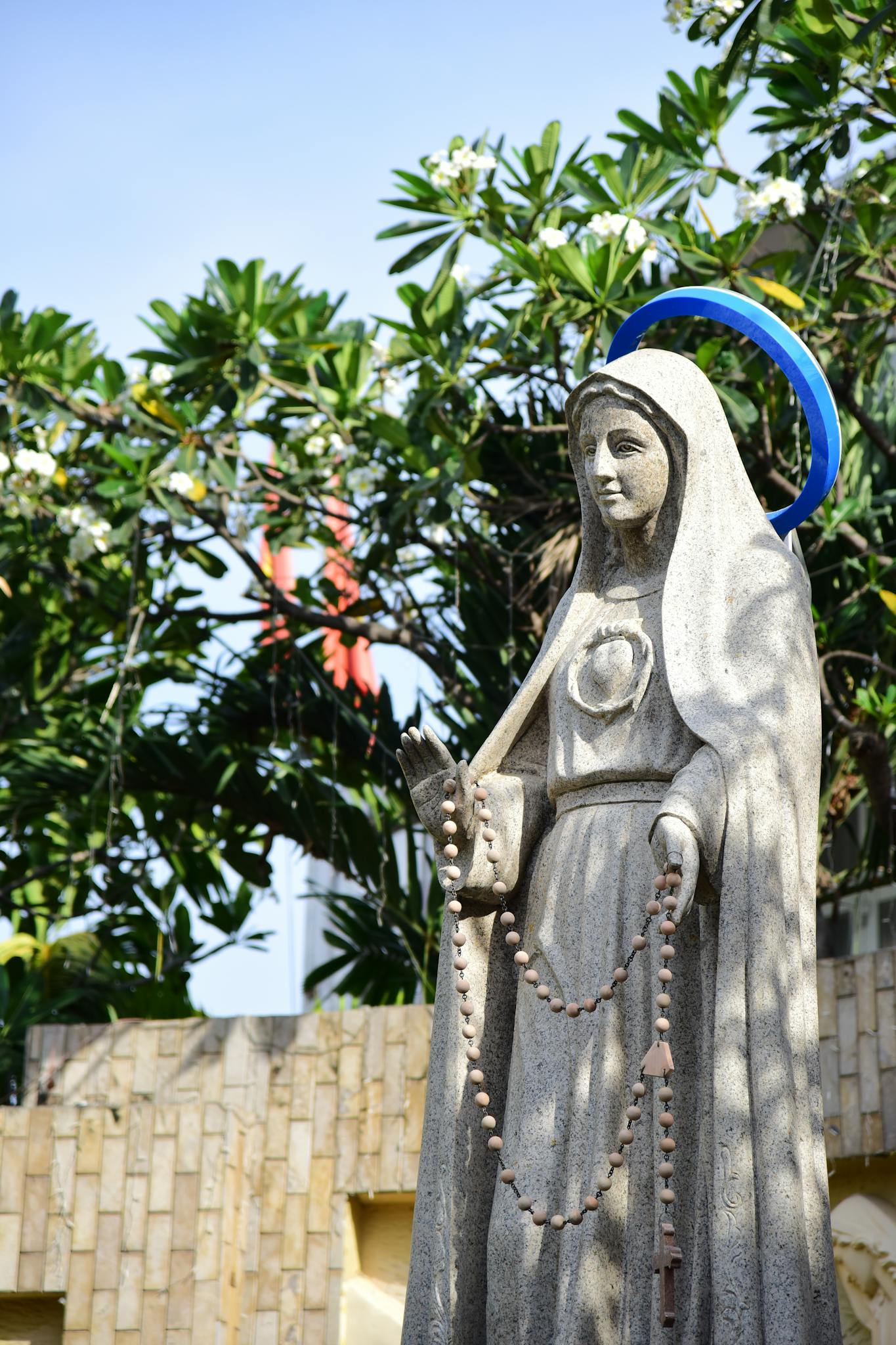
Advent Rosary
Devotions
Praying the Rosary during Advent with special attention to the Joyful Mysteries, often paired with the lighting of the Advent wreath.
The Advent Rosary is the customary practice of praying the Rosary during the Advent season with deliberate attention to the Joyful Mysteries, since their events — the Annunciation, the Visitation, the Nativity, the Presentation and the Finding in the Temple — mirror Advent’s own themes of expectant waiting for Christ’s birth. In many homes and parishes it is combined with the weekly lighting of the Advent wreath, giving each Sunday of the season both a visual and a prayed marker of its approach to Christmas. It is a devotional custom rather than a separate set of mysteries or a distinct liturgical rite, and is not dependent on any private revelation.
Quick Facts
- Category: Liturgical Year — Advent & Christmas
- Origin: Historic popular piety accompanying the Roman liturgical year, applying the existing Rosary to the season of Advent
- Observed: Throughout Advent, often on its four Sundays (movable, tied to the start of Advent)
- Church status: Recognized/encouraged popular piety when harmonized with the liturgy
- Private revelation: Not dependent on private revelation
What Is This Devotion?
Praying an Advent Rosary means taking up the Church’s ordinary Rosary devotion during the season of Advent, typically favoring the Joyful Mysteries because their content — Mary’s own Advent, so to speak, from the Annunciation through the events surrounding Christ’s birth and childhood — matches the season’s spirit of expectant waiting more closely than the Sorrowful or Glorious Mysteries usually would.
The custom is often woven together with the Advent wreath: some families pray a decade of the Rosary each week as a candle is lit, or gather the household to pray together after the wreath’s weekly blessing, uniting two of the season’s best-known devotions into a single family practice.
Origin and History
The Rosary itself developed gradually over the medieval period into its now-familiar form of mysteries grouped in sets, with the assignment of the Joyful Mysteries to Mondays and Saturdays (and, before Pope St. John Paul II’s 2002 addition of the Luminous Mysteries, to Sundays of Advent and Christmastide as well) becoming standard Catholic custom well before the Advent Rosary was named as a devotion in its own right. The specifically Advent-themed application of the Rosary is less a separate historical development than a natural, long-recognized alignment between the Joyful Mysteries’ content and the liturgical season, reinforced in modern times by its pairing with the popular Advent wreath.
Catholic Theology
The Rosary is a Scripture-based meditation on the life of Christ prayed through Mary’s eyes, and the Church’s Directory on Popular Piety and the Liturgy encourages adapting such devotions to the rhythm of the liturgical year so that popular piety and liturgy reinforce one another (CCC §§1674-1676). Praying the Joyful Mysteries during Advent lets the Rosary’s meditative structure walk alongside the season’s own liturgical readings, which likewise turn attention to the Annunciation and the events leading to Bethlehem as Christmas approaches.
How to Practice It
- Pray the Joyful Mysteries of the Rosary during Advent, individually or as a family.
- Consider praying one decade each week alongside the lighting of the Advent wreath, building toward a full Rosary by the fourth Sunday.
- Use Scripture readings tied to each mystery to deepen meditation, since the Joyful Mysteries are directly grounded in the infancy narratives of Luke’s Gospel.
- Where helpful, use a scriptural or family Rosary format to keep young children engaged through the season.
Associated Prayers
When It’s Observed
The Advent Rosary is prayed throughout the season of Advent, most often on its four Sundays alongside the wreath, a movable period that begins on the Sunday nearest November 30 each year. It is a devotional custom rather than a date fixed by the liturgical calendar itself.
Church Status
This is recognized popular piety applying the Church’s approved Rosary devotion to a particular liturgical season, rather than a distinct rite or a separate set of officially mandated mysteries. Praying any set of mysteries at any time remains entirely legitimate; the Advent emphasis on the Joyful Mysteries is a widely followed custom, not a requirement.
Common Misconceptions
“There is a special, separate set of Advent Mysteries.”
There is not. The Advent Rosary uses the same Joyful Mysteries prayed throughout the rest of the year; what changes is simply the season’s emphasis and timing, not the content of the mysteries themselves, which the Church has not supplemented with any additional Advent-specific set.
Frequently Asked Questions
Why are the Joyful Mysteries associated with Advent?
The Joyful Mysteries recount the Annunciation, the Visitation, the Nativity, the Presentation and the Finding in the Temple — events that closely mirror Advent’s own themes of awaiting and then receiving Christ, making them a natural fit for the season’s meditation, even though they are also prayed on their assigned days throughout the rest of the year.
Do I have to pray the Rosary during Advent to observe the season properly?
No. The Advent Rosary is an optional, widely recommended devotion, not an obligation; Advent’s liturgy itself, along with simple personal prayer, is sufficient for keeping the season, and the Rosary is offered as one especially fitting way to deepen that observance.
How does the Advent Rosary relate to the Advent wreath?
The two devotions are often paired in home and parish practice, with a decade of the Rosary prayed as each wreath candle is lit, though neither devotion requires the other; each can be practiced entirely on its own.
Sources
- Directory on Popular Piety and the Liturgy: Principles and Guidelines (2001)
- Catechism of the Catholic Church, on sacramentals and popular piety
- Sacred Scripture (Luke 1-2), for the events recounted in the Joyful Mysteries