
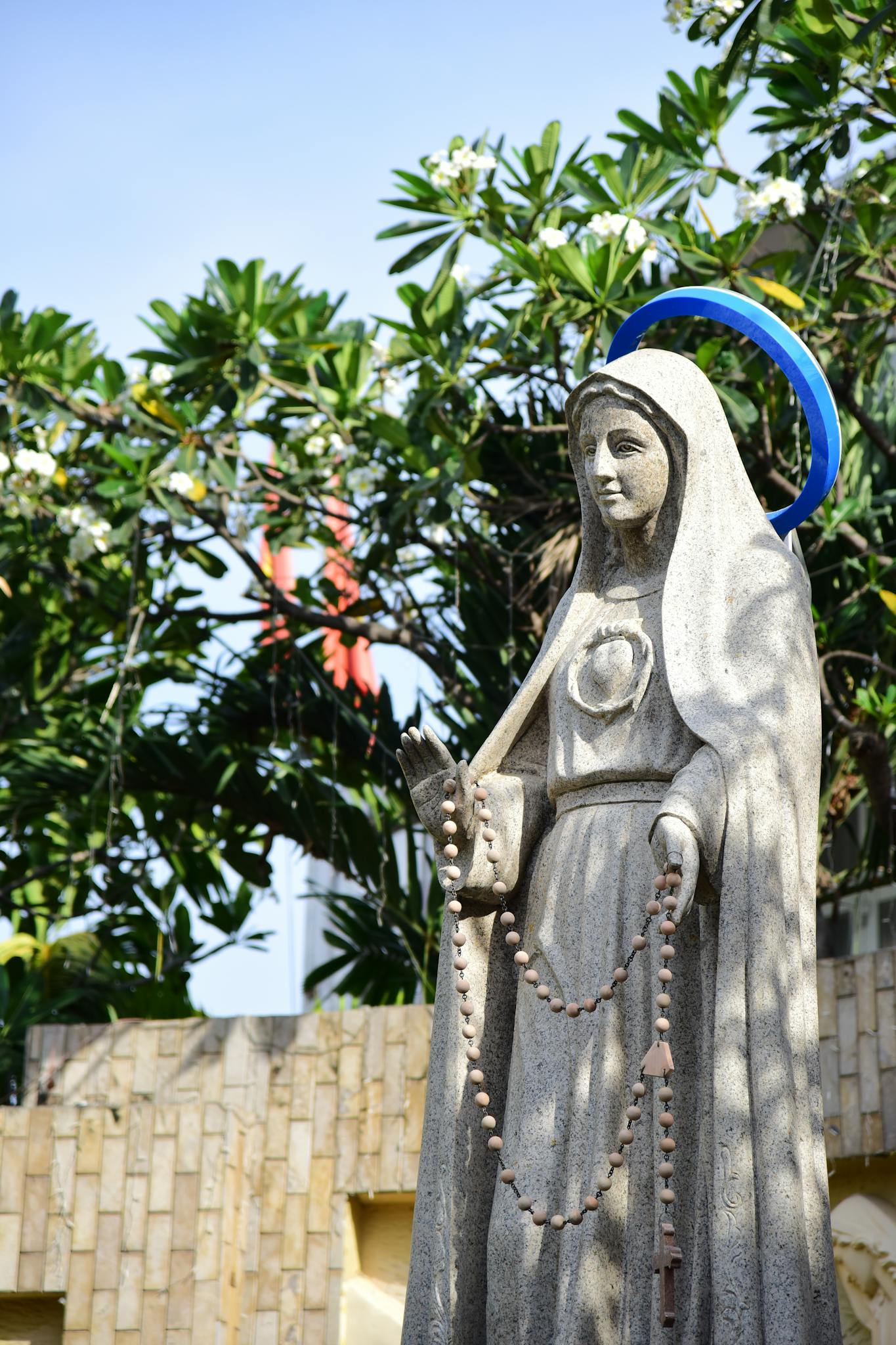
Do Catholics Worship Statues?
Catechism
Catechism 2129–2132, 1159–1162
No. The honour given to an image passes to the person it represents — which is why kissing a photograph of someone you love is not idolatry, and why the Church has always distinguished the two.
What the Church Teaches
The Catechism quotes St. Thomas Aquinas on the point: the honour paid to sacred images is a respectful veneration, not the adoration due to God alone. Religious worship is not directed to images in themselves; it reaches the person they depict (CCC 2132). Whoever venerates an image venerates the person portrayed in it — the formula comes from the Second Council of Nicaea in 787, which settled the question after a long and bitter fight.
Where This Comes From
The objection is a serious one, and Scripture raises it first. The Second Commandment forbids graven images (Exodus 20:4). But the same God who gave that command instructed Moses to place two golden cherubim on the Ark (Exodus 25:18–20), to fill the Temple with carved figures, and to raise a bronze serpent that the people were to look at in order to live (Numbers 21:8–9).
The Church has read those passages together: what is forbidden is worshipping an image as though it were God, not representing holy things. And the decisive change is the Incarnation. God became visible; a faith whose central claim is that the invisible God took a face cannot logically forbid faces (CCC 1159–1160).
Common Misunderstandings
- "The statue is being prayed to." Nobody thinks the plaster hears. The statue does what a photograph on a desk does: it holds the attention on someone real.
- "Catholics removed the Second Commandment." The numbering differs between traditions — Catholics and Lutherans follow one division of Exodus 20, most Protestants another. Nothing was deleted; the prohibition of idolatry is taught in full (CCC 2112–2114).
- "It’s superstition." It can become that, and the Church says so plainly: superstition is a deviation of religious feeling, and attributing power to the object itself is exactly what she warns against (CCC 2111).
What It Means in Practice
Keep an image where you actually pray. Bless it if you can. Treat it as a reminder, never as a charm — the same rule that governs every sacramental, from the brown scapular to holy water.
Pray With This
- Prayer Before a Crucifix
- Blessing of a Home
- The St. Benedict Medal — what a sacramental is and is not
In the Catechism
- 2129–2132 — images and the honour given to them
- 2110–2114 — idolatry and superstition, stated bluntly
- 1159–1162 — sacred images in the liturgy
Read the full text at vatican.va.