
What Bible Do Catholics Use, and Why Does It Have More Books?
Catholic Bibles have 73 books, Protestant Bibles 66. Here are the seven extra books, where they came from, why Protestant Bibles dropped them, and which Catholic translation to choose.
If you have ever picked up a Catholic Bible and flicked through the Old Testament, you may have found books you never saw in your church growing up: Tobit, Judith, Wisdom, Sirach, Baruch, and two books of Maccabees. It is natural to wonder whether Catholics added them. Or perhaps you are a new Catholic, standing in a bookshop, wondering which of the many translations to buy. This article explains which Bible Catholics use, what the extra books are and what they contain, where they came from, how the early Church decided which books belonged in the Bible, how and when Protestant Bibles became shorter, the strongest objections, and how to choose a good Catholic Bible.
1. The same Bible, with seven more books
Catholics use the same Bible as other Christians, with seven more books in the Old Testament: seventy-three books in all, compared with sixty-six in most Protestant Bibles. The New Testament is identical. Catholics may use any of several translations approved by the Church.
The first great English Catholic Bible was produced by exiles. In the reign of Elizabeth I, English Catholic scholars who had fled abroad published a New Testament at Rheims in France in 1582, and the Old Testament at Douai in Flanders in 1609-1610, a year before the King James Version appeared. The “Douay-Rheims” Bible, as revised in the eighteenth century by Bishop Richard Challoner, remained the standard English Catholic Bible for nearly two hundred years, and is still loved for its old-fashioned beauty.
In the twentieth century, Catholic scholars produced new translations from the original languages. The Jerusalem Bible of 1966, based on the work of the French Dominican École Biblique in Jerusalem, had a famous contributor: J. R. R. Tolkien, author of The Lord of the Rings, who translated the Book of Jonah. Other approved translations include the New American Bible (used at Mass in the United States), the Revised Standard Version Catholic Edition and the New Revised Standard Version Catholic Edition.
Catholics and Protestants increasingly share translations. In Advent 2024, the Catholic bishops of England and Wales, and of Scotland, began using a new lectionary for Mass based on the English Standard Version Catholic Edition, a translation that began among evangelical Protestants and was adapted, with the seven additional books, for Catholic use.
2. What the seven books are
The seven books found in Catholic but not most Protestant Old Testaments are Tobit, Judith, Wisdom (or the Wisdom of Solomon), Sirach (also called Ecclesiasticus), Baruch, and First and Second Maccabees. Catholic Bibles also contain some extra passages in the books of Esther and Daniel, including the stories of Susanna and of Bel and the Dragon, and the hymn of the three young men in the fiery furnace. Catholics call these books “deuterocanonical”, meaning “of the second canon”, not because they are less inspired but because their place in the canon was settled later. Protestants usually call them “the Apocrypha”.
The books contain some of the most moving passages in the Old Testament. Second Maccabees tells of a mother who watched her seven sons tortured to death, one after another, for refusing to eat pork in defiance of God’s law under the Greek king Antiochus IV. She encouraged each of them to stay faithful, saying that the Creator who had formed them in the womb would give them back breath and life (2 Maccabees 7). It is one of the clearest expressions of belief in the resurrection anywhere in the Old Testament.
The Book of Tobit tells the story of young Tobias, who, guided by the angel Raphael, travels to a distant city and marries his kinswoman Sarah. On their wedding night, the couple rise from bed to pray together, asking God to have mercy on them and let them grow old together (Tobit 8:4-9). The passage is often read at Catholic weddings.
First Maccabees records the rededication of the Temple in Jerusalem in 164 BC, after it had been defiled by Antiochus, and the institution of an eight-day festival to celebrate it (1 Maccabees 4:36-59). Jews still celebrate it as Hanukkah. John’s Gospel notes that Jesus was walking in the Temple, in Solomon’s porch, during “the feast of the dedication” (John 10:22-23). The only historical account of the origin of the feast that Jesus attended is in a book most Protestants do not have in their Bibles.
3. Where the books came from: the Greek Old Testament
These books come from the Septuagint, the Greek translation of the Old Testament used by Greek-speaking Jews in the centuries before Christ and by the first Christians.
In the third century BC, Jewish scholars in Alexandria, Egypt, began translating the Hebrew Scriptures into Greek, the common language of the Mediterranean world. According to a famous ancient tradition recorded in the Letter of Aristeas, seventy-two translators, six from each tribe of Israel, did the work at the request of King Ptolemy II. The translation was named the Septuagint, from the Latin for “seventy”. Its collection of books included the seven books now in Catholic Bibles.
The New Testament writers quote the Septuagint constantly, and they seem to know the extra books. The Letter to the Hebrews, listing the heroes of faith, speaks of those who “were racked, not accepting deliverance, that they might find a better resurrection” (Hebrews 11:35). Most scholars see this as an allusion to the Maccabean martyrs of 2 Maccabees 7, who refused release and died in hope of the resurrection.
Archaeology has added an important piece of evidence. Since 1947, when Bedouin shepherds discovered the first Dead Sea Scrolls in caves at Qumran near the Dead Sea, fragments of Tobit in Hebrew and Aramaic, and of Sirach in Hebrew, have been found among the scrolls. (Sirach was also found at the fortress of Masada.) These two books were not late Greek inventions; they were read by Jews in Palestine in Hebrew and Aramaic before the time of Christ.
4. How the early Church decided
The early Church took several centuries to settle exactly which books belonged in the Bible, for both the Old and New Testaments. When it did, the lists included the seven books.
In 393 and 397, bishops of North Africa met in councils at Hippo and Carthage. St Augustine, then a priest and soon to be bishop of Hippo, took part. They drew up a list of the books of Scripture to be read in church. Their Old Testament included Tobit, Judith, the books of Maccabees, Wisdom, Sirach and the rest; their New Testament listed exactly the twenty-seven books Christians still use. They agreed to consult the church across the sea in Rome to confirm the list.
In 405, Bishop Exsuperius of Toulouse in Gaul wrote to Pope Innocent I asking which books should be received as Scripture. Innocent replied with a list identical to the African one, including the seven books.
The oldest surviving nearly complete Christian Bibles tell the same story. The Codex Vaticanus, kept in the Vatican Library, and the Codex Sinaiticus, discovered at St Catherine’s Monastery on Mount Sinai, both date from the fourth century. Both include several of these books among the other Old Testament books, without setting them apart as a separate category.
5. Honest doubts, then a final definition
It would be misleading to suggest that everyone in the Church always agreed. Some respected Catholic scholars had doubts about these books for centuries, and the Church defined the list solemnly only in 1546.
The most famous doubter was St Jerome, the great biblical scholar who translated the Bible into Latin around 400. Jerome had learned Hebrew from Jewish teachers and preferred the shorter Hebrew list of books. In his preface to the books of Samuel and Kings, known as the “Helmeted Prologue” (c. 391), he said that books outside the Hebrew canon should be set apart. Yet he translated Tobit and Judith at the request of bishops, and in later writings he deferred to the Church’s practice of reading them.
A century before the Reformation, the question came up during efforts to reunite the Church. In 1442, the Council of Florence, seeking reunion with the Coptic Christians of Egypt, issued a decree (Cantate Domino, 4 February 1442) listing all the books of Scripture, including the seven, as inspired by the same Holy Spirit.
When the Reformers challenged these books, the Council of Trent defined the canon as a matter of faith. On 8 April 1546, it issued a decree listing all seventy-three books, repeating the list already given at Carthage and Florence, and declaring that they are to be received as sacred and canonical in their entirety (Session 4).
6. How Protestant Bibles became shorter
Many people assume that the Reformers simply removed these books. In fact, Protestant Bibles became shorter gradually, over three centuries.
Martin Luther doubted that the seven books were Scripture, partly because they were not in the Hebrew Bible, and partly because 2 Maccabees supported prayer for the dead. But he did not throw them away. His complete German Bible, published in Wittenberg in 1534, gathered them in a section between the Old and New Testaments under the heading “Apocrypha: that is, books which are not held equal to the Holy Scriptures, and yet are profitable and good to read.”
The original King James Version of 1611, the most famous of all English Protestant Bibles, also printed the Apocrypha between the Testaments. Its calendar of daily readings even assigned passages from these books to be read in church. The Church of England’s Thirty-Nine Articles say these books are read “for example of life and instruction of manners”, though not to establish doctrine (Article VI).
The decisive change came in the nineteenth century. In 1826, after a bitter controversy, the British and Foreign Bible Society, which printed and distributed Bibles all over the world, resolved to stop funding any edition that included the Apocrypha. Other publishers followed, partly to save on printing costs. Within a generation, most English-speaking Protestants had never seen these books. That is why many people today assume Catholics “added” them, when in fact Protestant publishers dropped them.
7. “The Jews never accepted them”
The strongest Protestant objection is that the Jews never included these books in their Scriptures, and that Christians should accept the Old Testament as the Jews themselves defined it. This is a serious argument.
The best ancient evidence for the shorter list comes from the Jewish historian Flavius Josephus. Writing around AD 95, in his work Against Apion, he said that the Jews had only twenty-two sacred books (counting several books together), all written before the time of the Persian king Artaxerxes (Against Apion 1.8). His list appears to match the shorter Hebrew canon.
Catholics reply that the Jewish canon was still being debated at the time of Christ and afterwards, and that different Jewish communities used different collections. The Mishnah, the great collection of Jewish law compiled around AD 200, records rabbis still arguing about whether the books of Ecclesiastes and the Song of Songs were holy Scripture. The famous Rabbi Akiva defended the Song of Songs passionately, declaring that “all the Writings are holy, but the Song of Songs is the holy of holies” (Mishnah Yadayim 3:5). If Jews were still debating such books in AD 200, Catholics argue, the Church was not bound by a canon fixed by later rabbis.
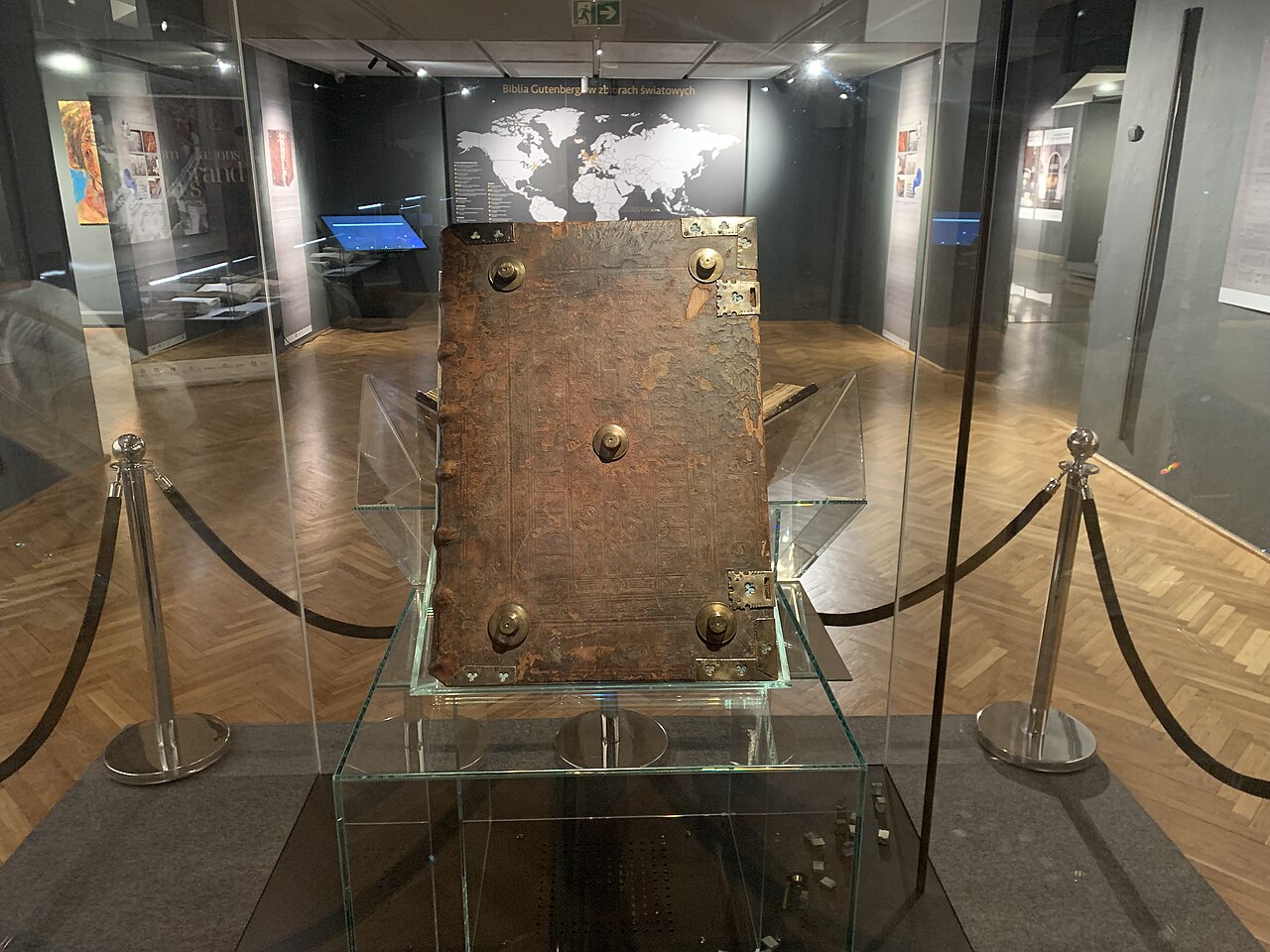
Catholics also note that, for a thousand years and more, Christians used Bibles that contained the seven books without controversy. When Johann Gutenberg printed the first great printed book in Europe at Mainz around 1455, it was a Latin Bible containing all seventy-three books, more than sixty years before Luther’s protest.
8. Translated from the original languages
Another common misunderstanding is that Catholic Bibles are translated only from the Latin Vulgate. Modern Catholic Bibles are translated from the original Hebrew, Aramaic and Greek.
The Latin Vulgate itself was a translation into the everyday language of its time. In 382, Pope Damasus asked his secretary, the scholar Jerome, to revise the old Latin translation of the Gospels. Jerome went on to translate most of the Old Testament from the Hebrew. His translation became known as the Vulgate, from the Latin vulgata, “common”, because it was in the language of ordinary people in the West.
For centuries Catholic translations into modern languages were often made from the Latin. That changed in the twentieth century. On 30 September 1943, in the middle of the Second World War, Pope Pius XII issued the encyclical Divino Afflante Spiritu, sometimes called the Magna Carta of Catholic biblical scholarship. He urged Catholic scholars to translate from the original languages and to study the ancient literary forms in which the Bible was written.
The Second Vatican Council went further. It asked for “suitable and correct translations” to be made into different languages, “especially from the original texts of the sacred books”, and added that, with the approval of the Church, such translations may be made in cooperation with other Christians, so that all Christians can use them (Dei Verbum 22).
9. Other small differences
Besides the seven books, there are a few other small differences between Catholic and Protestant Bibles.
Psalm numbers. The Hebrew and Greek Bibles divide some psalms differently, so the numbering of most psalms differs by one. King David’s great psalm of repentance, written after his sin with Bathsheba and the prophet Nathan’s rebuke (2 Samuel 12), is Psalm 51 in most modern Bibles, but Psalm 50 in the Vulgate and Douay-Rheims. Many modern Catholic Bibles now follow the Hebrew numbering, often with the other in brackets.
Chapter divisions. Interestingly, the chapter divisions used by all Christians today were devised by a Catholic: Stephen Langton, who later became Archbishop of Canterbury, while he was teaching at the University of Paris around 1205. (Verse numbers came later, from a Protestant printer, Robert Estienne, in the 1550s.)
Notes. Catholic editions must include explanatory notes, and some book names differ in older Catholic Bibles (for example, 1 and 2 Samuel were called 1 and 2 Kings in the Douay-Rheims).
Orthodox Bibles contain even more books than Catholic ones, including 3 Maccabees, 1 Esdras and the Prayer of Manasseh. In 1672 an Orthodox council, the Synod of Jerusalem, reacting against Calvinist influence on some Orthodox theologians, affirmed that the longer Old Testament is Scripture.
10. How to choose and start reading
If you want a Catholic Bible, choose an edition approved by the Church. Church law requires that editions of Scripture published for Catholics be approved by the Holy See or the bishops’ conference, and that translations include suitable explanatory notes (Code of Canon Law, canon 825). Look for the words Nihil obstat and Imprimatur on the copyright page. Good choices for beginners include the New American Bible Revised Edition, the Revised Standard Version Second Catholic Edition and the New Revised Standard Version Catholic Edition, often in a study edition with introductions and notes.
The Bible was always meant to be read with a guide. After the Jews returned from exile in Babylon, the scribe Ezra stood on a wooden platform in Jerusalem and read the Law aloud to the people “from the morning until midday”, while the Levites “read in the book of the law of God distinctly and plainly to be understood” (Nehemiah 8:3, 8). Catholics read Scripture with the Church that gathered these books together.
The best place to start is with one of the Gospels: Mark is the shortest, Luke the most story-filled. Read it straight through, a chapter a day.
The most famous Bible-reading moment in Christian history happened in a garden in Milan in 386. A young professor of rhetoric named Augustine, torn between his desire for God and his attachment to his old life, was weeping under a fig tree when he heard a child’s voice from a nearby house chanting, “Take up and read; take up and read.” He picked up the book of St Paul’s letters, opened it at random, and read: “put ye on the Lord Jesus Christ, and make not provision for the flesh” (Romans 13:14). “No further would I read,” he wrote, “nor needed I” (Confessions 8.12). St Augustine became one of the greatest saints of the Church.
Frequently asked questions
Is the Catholic Bible the same as the King James Bible? The New Testament books are the same, but the Catholic Bible has seven more Old Testament books, and the translations differ. The original 1611 King James Bible did include these books, as the “Apocrypha”.
Can Catholics read Protestant Bibles? Catholics may read them, but should prefer an approved Catholic edition with notes, which contains all the books.
What Bible is read at Mass? It depends on the country. In the United States the New American Bible is used; in England, Wales and Scotland, the English Standard Version Catholic Edition since 2024.
Why are some verses missing in modern Bibles? See our article Why Are Some Verses Missing from Modern Catholic Bibles?
You may also like Do Catholics Read the Bible?
Sources and further reading
- The Bible: Nehemiah 8:1-8; Tobit 8:4-9; 1 Maccabees 4:36-59; 2 Maccabees 7; Psalm 51 (50); John 10:22-23; Romans 13:14; Hebrews 11:35.
- Councils of Hippo (393) and Carthage (397); Pope Innocent I, Letter to Exsuperius of Toulouse (405); Council of Florence, Cantate Domino (1442); Council of Trent, Session 4 (8 April 1546).
- Pius XII, Divino Afflante Spiritu (1943); Second Vatican Council, Dei Verbum 22 (1965); Code of Canon Law (1983), canon 825.
- St Jerome, Prologus Galeatus (c. 391); St Augustine, Confessions 8.12.
- Flavius Josephus, Against Apion 1.8; Mishnah, Yadayim 3:5; Letter of Aristeas.
- Luther Bible (1534); King James Version (1611); Thirty-Nine Articles, Article VI.
- Gary Michuta, The Case for the Deuterocanon (2015); Bruce M. Metzger, An Introduction to the Apocrypha (1957).
