Can I Go to Catholic Mass If I Am Not Baptised? A First-Visit Guide
Yes. You can attend Catholic Mass if you are not baptised. You do not need to become Catholic first, know all the…
Yes. You can attend Catholic Mass if you are not baptised. You do not need to become Catholic first, know all the prayers or arrive with someone who belongs to the parish. You can come to listen, observe and pray as you are able.
The important distinction is Holy Communion. If you are not baptised, you should not receive Communion. You can remain in your place while others go forward. The US bishops' Communion guidelines welcome people who do not share the Catholic faith while explaining this boundary.
For your first visit, check the Mass time, arrive a little early and choose a seat where you feel comfortable. You do not need to master everything before walking through the door. This guide mainly describes a typical Roman Catholic parish Mass; Eastern Catholic liturgies and some local customs will look different.
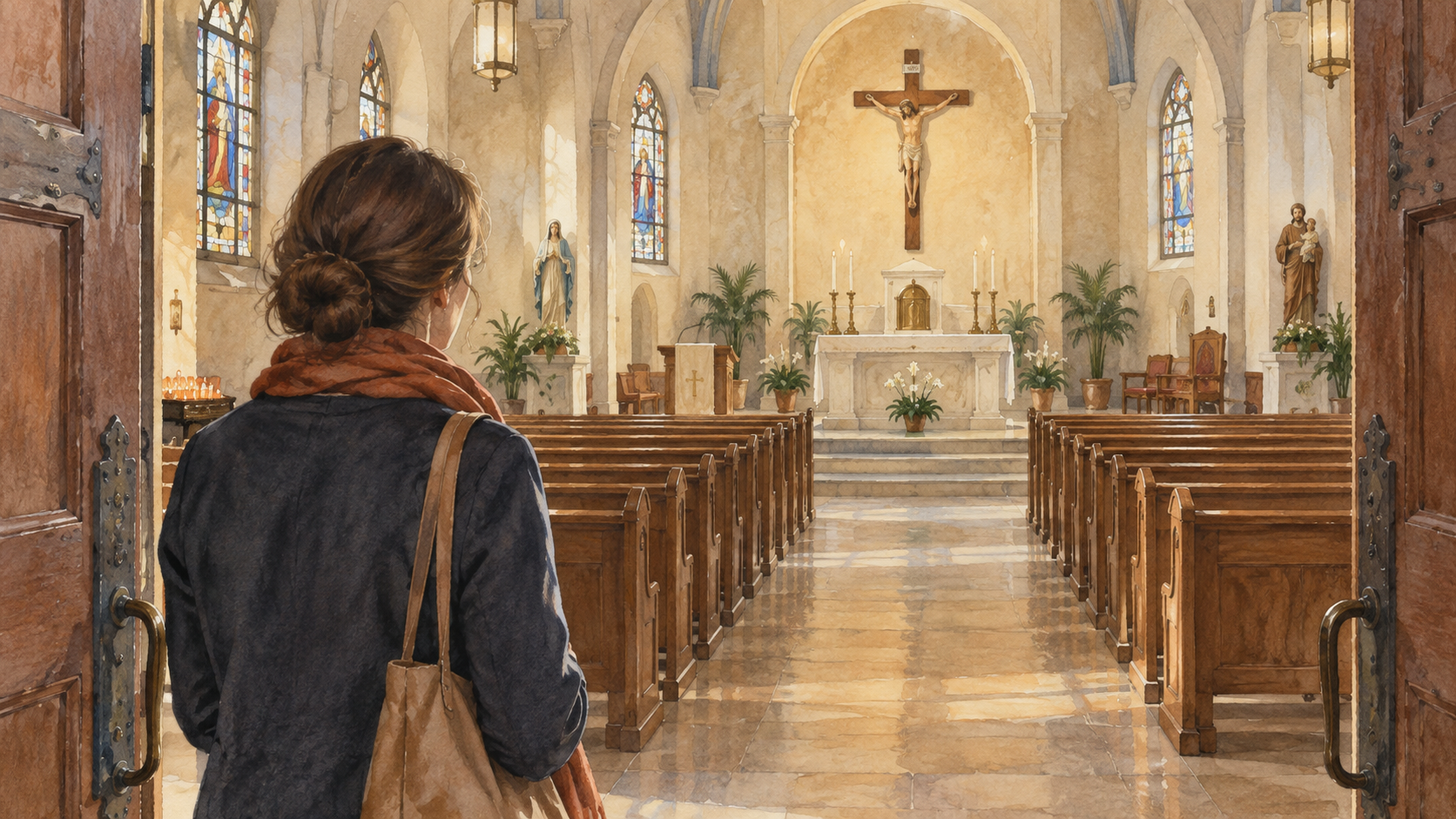
Do I need permission or an invitation to attend Mass?
For an ordinary public parish Mass, you can generally just come. You do not need to sign up for classes, register as a parishioner or explain your beliefs at the door. Check the parish notice if you are attending a special event with limited seating or different arrangements.
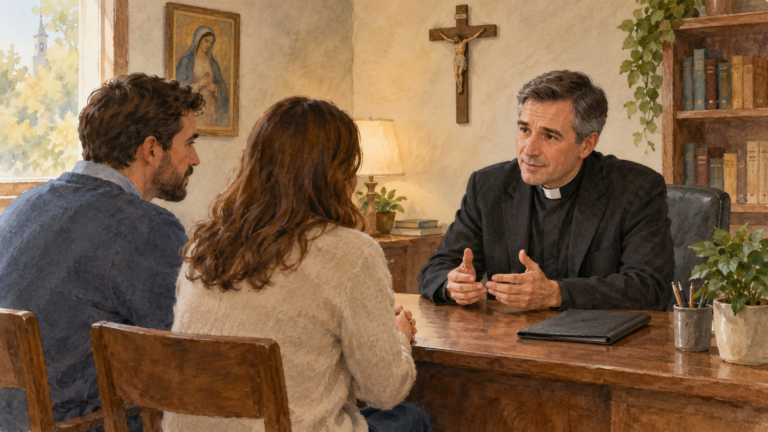
If you would feel more comfortable contacting the parish beforehand, you can do so. A short message is enough: “I have never attended Catholic Mass and would like to visit. Is there anything practical I should know?”
You do not need to disclose your personal history. You might be curious, supporting a friend, exploring Christianity or returning to questions you set aside years ago. A first visit can be a first visit.
If you want someone to sit with you, ask whether the parish has a welcome volunteer or someone from its adult faith team. This is especially useful if you are anxious about finding the right entrance or following the service.
You may also prefer to attend quietly on your own. There is no need to turn your arrival into a public announcement.
How should I choose a Mass for my first visit?
Start with a nearby Catholic parish and check its own website or contact details. Search results and old social posts can contain outdated times, especially around holidays.
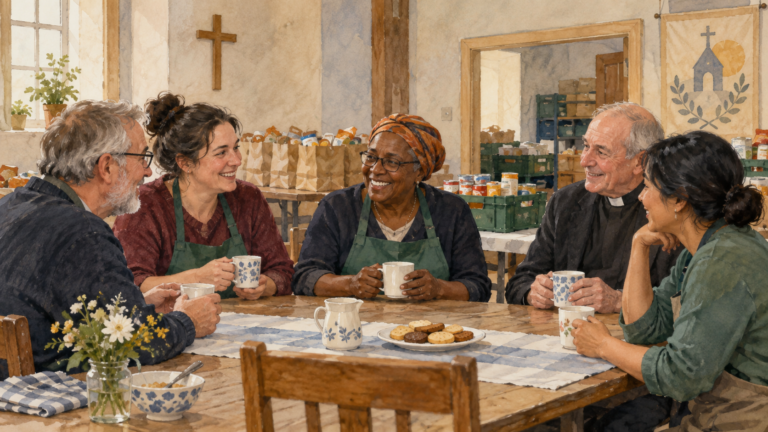
A Sunday Mass lets you experience the parish's main weekly gathering. A weekday Mass is often shorter and quieter, although arrangements vary. If you want to meet people afterwards, ask which Mass usually has refreshments or a welcome gathering.
Consider practical needs too. Is the church accessible? Is there a hearing loop or a service in a language you understand? Can you arrive by public transport? Is there space for a pushchair or somewhere to step out with a child?
These details can affect how easy it is to pay attention. Asking about them is reasonable. You do not need to apologise for needing access, a clear direction or a suitable seat.
If you have a Catholic friend, ask whether they would come with you and explain a few things beforehand. You can agree that you would rather listen during Mass and save most questions for afterwards.
What should I wear and bring?
Choose clean, comfortable clothing that feels respectful for a place of worship. Local expectations differ, so there is no single outfit that suits every parish and culture. You do not need to buy special clothes for a first visit.
Bring what you need for your health, mobility or children. You may want a small notebook for questions afterwards, but there is no need to take detailed notes throughout the Mass.
Silence your phone before the service begins. If you use it for a reading aid or translation, keep the screen and sound unobtrusive. Ask before photographing people, and avoid treating worship as a sightseeing photo session.
You do not need to bring money in order to attend. If a collection is taken, you can let the basket pass. A donation is not an entrance fee, and giving does not determine whether you are welcome.
Arrive perhaps ten or fifteen minutes early if you can. That leaves time to find the entrance, use the toilet if needed and settle without feeling that everyone is watching you hurry in.
Where should I sit, and what do I do on entering?
Choose a place where you can see and feel at ease. Near the middle or towards the back may help you follow the congregation, but you do not have to hide. An aisle seat can be useful if you may need to step out.
You may see people use holy water, make the Sign of the Cross, bow or genuflect. These gestures have religious meaning. You can observe respectfully without imitating a gesture you do not yet understand.
If someone hands you a booklet, take a moment to look at it. It may contain the prayers, readings or hymn numbers. You can ask quietly, “Is this what I use to follow the Mass?”
Some churches are very quiet before the service. Others have more movement and conversation. Let the setting help you judge the appropriate volume, and save longer discussions for outside the worship space.
Once seated, you can simply take in your surroundings. You might offer a short prayer such as, “God, help me understand what I am seeing.” If you are uncertain whether you believe in God, you can bring that uncertainty honestly too.
What actually happens during Mass?
You will follow more easily if you know the broad shape rather than every response. The US bishops' Order of Mass guide outlines the main parts of the Roman Rite.
Mass begins with introductory prayers that gather the congregation for worship. There is usually an entrance procession or song, a greeting and prayers that prepare people to listen and worship together.
The Liturgy of the Word includes readings from the Bible, a psalm and the Gospel. A priest or deacon normally gives a homily, explaining the readings and their connection to Christian life. On Sundays and certain other days, the congregation professes the faith through the Creed.
During the Liturgy of the Eucharist, gifts of bread and wine are brought forward and the Eucharistic Prayer is offered. Catholics believe that through the consecration the bread and wine become Christ's Body and Blood. The Lord's Prayer and Communion follow within this part of the Mass.
The Mass ends with a blessing and dismissal. There may also be parish notices and a closing hymn.
At your first Mass, it is enough to recognise these broad movements. If you lose your place in the booklet, listen for a while. You have not failed because you missed a response or turned the wrong page.
Do I have to stand, kneel and say the prayers?
You can follow the congregation's posture where you feel comfortable and are physically able. If kneeling or standing is difficult, remain seated as needed. You do not have to explain a health condition to the people around you.
If you are unsure about a response, listen. Nobody expects a newcomer to know the words. You can learn them gradually over future visits.
Do not feel pressured to say words that claim a belief you do not yet hold. You can remain respectfully quiet during the Creed while listening to what Catholics profess. Honest attention is a better starting point than pretending to understand or believe everything immediately.
During the sign of peace, people may turn to those nearby with a brief greeting. Follow the local practice in a way that respects your comfort and health. A simple nod and kind expression can communicate goodwill.
If something feels unfamiliar, make a mental note and ask later. A gesture that seems puzzling during your first visit may make more sense once someone explains its purpose.
Why should I not receive Communion if I am not baptised?
For Catholics, Communion expresses a shared sacramental faith and communion with the Church. It carries a meaning beyond general hospitality. Baptism is also the gateway to the other sacraments. The Church's rules about who may receive therefore matter even when a visitor is warmly welcomed.
The Code of Canon Law, canon 912, speaks of admission to Communion for baptised persons who are not prohibited by law. Baptism alone does not mean that every Christian visitor should receive; further Catholic norms apply.
If you are unbaptised, remain in your place during Communion. You can sit or kneel as appropriate, listen to the music and pray if you wish. You do not need to leave the church or explain yourself to anyone.
Even Catholics may remain in the pew for various reasons. Try not to assume that others are studying your decision. Your task is simply to respect the meaning of what is taking place.
Can I go forward for a blessing instead?
Some parishes invite people who are not receiving Communion to come forward for a blessing. Others do not follow that practice. Crossing your arms is not a universal instruction that works the same way everywhere.
If you would like to do this, ask a parish minister before Mass what the local practice is. If you are unsure, remaining in your place is a clear and respectful choice.
You still share in being present for the prayers and the final blessing. You are not missing your only chance to be included because you stay seated during the Communion procession.
This is also a useful question to ask if you are bringing an unbaptised child. Get local guidance beforehand instead of trying to work it out while the line is moving.
What if I feel out of place or make a mistake?
You may stand at the wrong time. You may lose the hymn number or say a response a moment late. Small mistakes are part of entering an unfamiliar setting.
If someone gives you a brief direction, accept it calmly if it is helpful. You do not need to apologise repeatedly. Most practical confusion can be resolved with a quiet question.
Feeling out of place does not necessarily mean you are unwelcome. The people around you may have followed these routines for years and forget how unfamiliar they appear to someone new. A person who seems distant may simply be praying or trying to manage their own family.
At the same time, a rude interaction can hurt. You do not have to pretend otherwise. If something concerns you, speak with the parish office or priest afterwards. One awkward encounter does not have to answer every question you have about the Catholic faith.
Give yourself permission to learn in stages. The first visit may leave you with more questions than answers, and that can still be a worthwhile beginning.
How can I learn more about becoming Catholic?
Contact the parish and ask about adult inquiry or OCIA, the Order of Christian Initiation of Adults. You may still see the older term RCIA in some places. The US bishops' adult initiation overview explains the path through inquiry, formation and preparation for the sacraments.
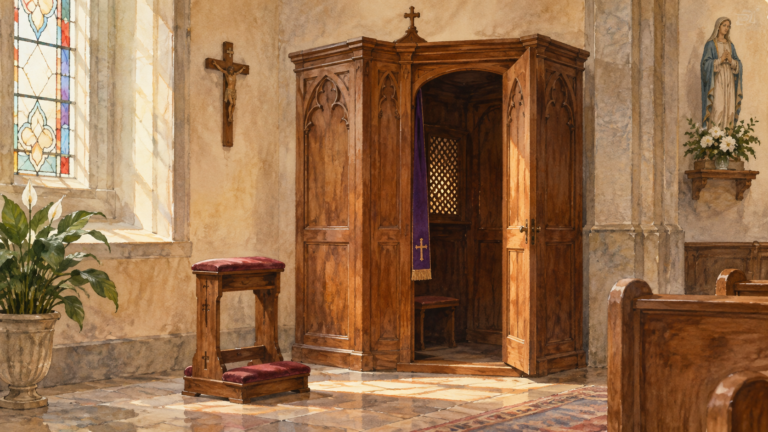
Tell the team whether you have been baptised, including any uncertainty. Your background affects the appropriate preparation. If you have never been baptised, do not assume that you need to go to sacramental Confession before beginning the inquiry process; ask the team to explain the order of preparation.
You can ask questions before making a commitment. Find out how meetings work, what happens if your work schedule changes and whom you can contact privately about sensitive concerns.
If you have a previous marriage or a complicated family situation, arrange a private conversation early. The team can help you find the right person to advise you. You do not need to announce personal details to the whole group.
Related questions about attending your first Mass
Can I attend Mass if I am not sure I believe in God?
Yes. You can attend respectfully while exploring your questions. You do not need to pretend to have faith you do not yet have. Listen, observe and ask thoughtful questions afterwards. An inquiry conversation can help you explore what you found interesting or difficult.
Can I bring my children?
Yes, children can attend Mass. Ask about access, toilets and any practical arrangements that would help your family. Bring quiet essentials if needed. If you need to step out briefly, you can return when ready. A child's presence is not a mistake to apologise for.
How long does Mass last?
It varies with the parish, music, preaching and occasion. Ask the parish if you need a reliable estimate for transport, childcare or work. Allow some extra time for your first visit so that you do not spend the whole service worrying about a tight deadline.
Will someone ask me to become Catholic immediately?
An ordinary visit does not commit you to conversion. Someone may welcome you or invite you to learn more. You can say, “Thank you, I am just visiting today,” or ask for the contact details to use later. You can take time to understand what you are considering.
What should I do after my first visit?
Write down one thing you noticed and one question you want answered. If you would like to return, check the next Mass time. If you want a conversation, introduce yourself or contact the parish during the week. You can begin with the same simple honesty that brought you through the door.