Returning to Confession After Years: What If I Cannot Remember All My Sins?
You can return to Confession even if you cannot remember every sin from the years you have been away. Prepare honestly, confess…
You can return to Confession even if you cannot remember every sin from the years you have been away. Prepare honestly, confess the serious sins you remember, and tell the priest where your memory is uncertain. God does not require a perfect memory. Deliberately hiding a serious sin is different from sincerely forgetting one.
You can begin with a simple sentence: “Father, it has been many years since my last Confession. I do not remember how to do this, and I need some help.” You do not need to explain your whole life before you are allowed to begin.
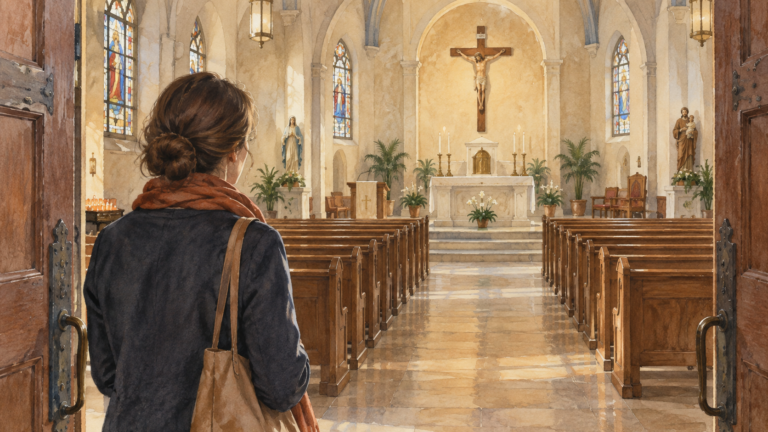
Perhaps you have been thinking about returning for months. You check the parish timetable, imagine what you might say, and then find another reason to wait. The longer you have been away, the larger the task can seem. But you can take the next step before all your questions are settled.
What does the Church actually ask you to remember?
The Church asks for an honest examination of conscience. That means looking at your life before God and acknowledging the wrong you have freely done. It does not mean recovering every conversation, thought and mistake from childhood onwards.
The Catechism, paragraphs 1454–1456, teaches that we should prepare and confess the mortal sins we remember after a careful examination. It also distinguishes sincere confession from knowingly withholding a sin. That distinction matters when anxiety tells you that an imperfect memory must mean an imperfect return to God.
Think about the difference between saying, “I genuinely cannot remember how often this happened,” and deciding, “I remember this, but I will make sure the priest never hears it.” Those are different choices. Explain uncertainty plainly instead of trying to remove it by guessing.
You might remember a pattern more clearly than separate events. Perhaps you repeatedly lied at work, neglected a serious responsibility or treated someone cruelly. Describe what you remember in ordinary language. If a detail matters, the priest can ask a careful question.
How should I prepare after ten or twenty years away?
Choose a quiet period when you can think without being rushed. Begin with a short prayer: “God, help me see my life truthfully and trust your mercy.” Then use one sound Catholic examination of conscience, perhaps one your parish recommends.
Using five different lists can leave you more confused than using one carefully. You are preparing to speak honestly, rather than trying to complete the largest possible questionnaire.
Consider the main relationships and responsibilities in your life. How have you treated God, your family, other people and yourself? Where have you caused harm? What duties have you knowingly avoided? Where have dishonesty, resentment, selfishness or a harmful habit become part of your routine?
Look at your own choices. Someone else's wrongdoing may explain the circumstances, but Confession is not the place to build a case against that person. Equally, do not take responsibility for abuse or harm that another person inflicted on you. Being hurt is not itself a sin.
Write a short private list if it helps. Use a few words for each point. You do not need a detailed diary or a speech. Keep the notes secure, and dispose of them safely afterwards if you no longer need them.
If your preparation keeps expanding because you never feel certain enough, tell the priest. Ask him to help you decide what reasonable preparation looks like in your circumstances.
Do I need an appointment?
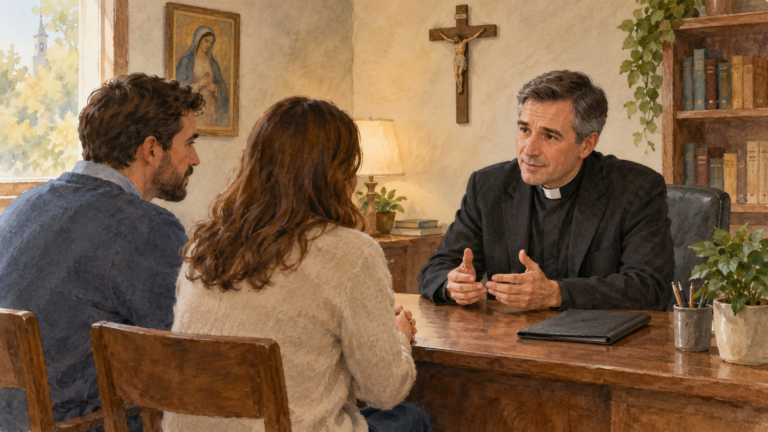
You may use the parish's regular Confession time. However, an appointment can be helpful after a long absence, especially if you need guidance or want to discuss a complicated situation. It gives you room to speak without watching a queue or worrying that Mass will begin in a few minutes.
When you contact the parish, keep the message simple: “I would like to return to Confession after a long time. Could I arrange a time with a priest?” You do not need to describe your sins to the receptionist or include them in an email.
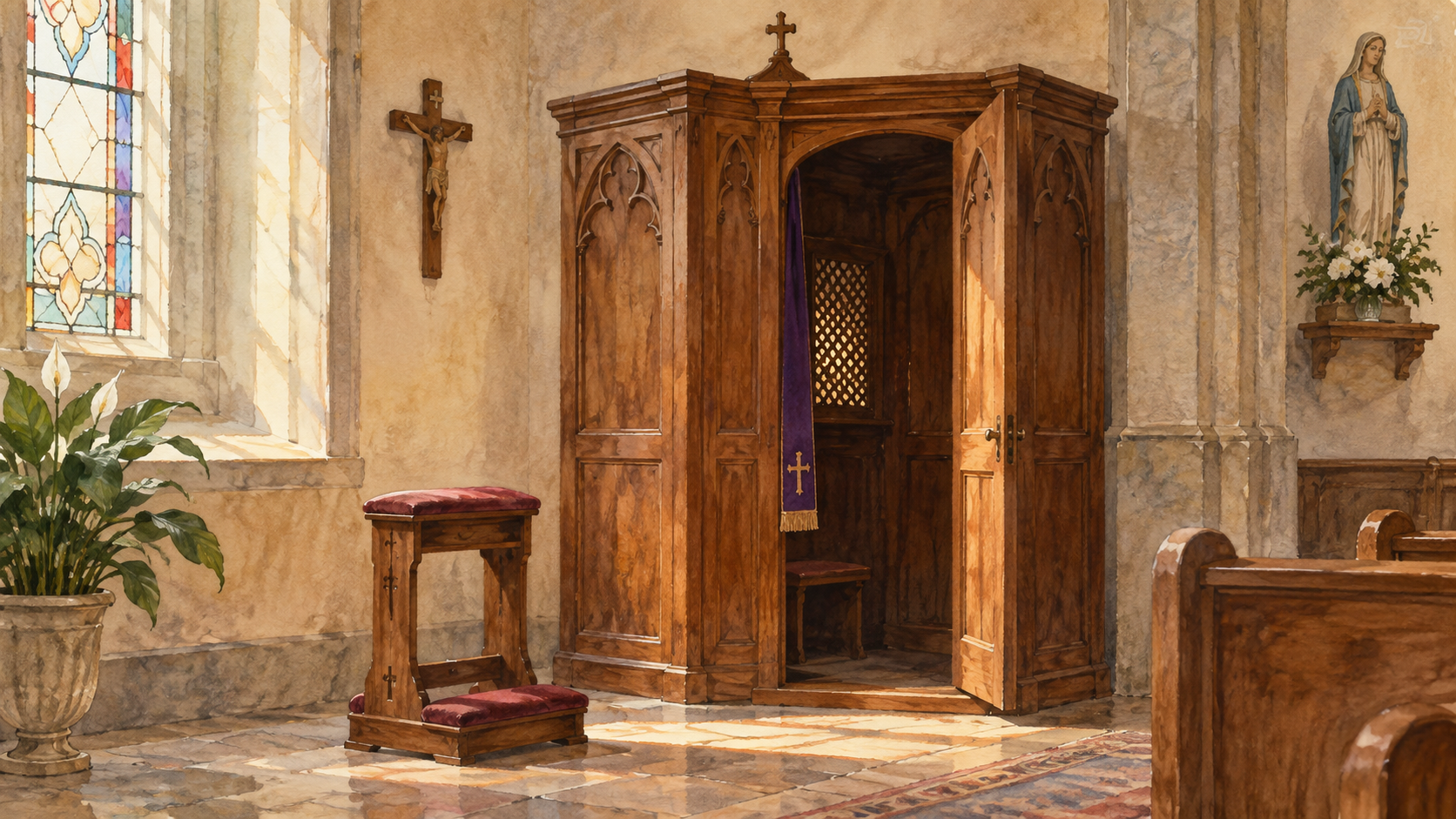
Check where you should go and whether you can use a screen if that would help you feel more comfortable. If hearing, mobility, language or another access need affects you, mention the practical arrangement you need when booking.
You can also separate Confession from a longer pastoral conversation. If you want to discuss grief, family conflict or years of doubt, ask whether another appointment would be better for those subjects. Both conversations can matter, but they do not always fit into the same short visit.
If you arrive and find that the church is closed or the priest is unavailable, make another arrangement. A practical setback can feel especially discouraging when it took courage to come, but it does not tell you anything about whether God wants you to return. Check the current schedule or call the office during its opening hours.
It may help to tell a trusted person that you plan to go, without sharing the contents of your confession. They could help with transport, look after your children or simply encourage you to keep the appointment. Accepting that practical support is a reasonable way to make room for something important.
What do I say when I enter the confessional?
Start by telling the priest how long it has been, approximately. “About fifteen years” is enough if you do not know the date. Tell him that you would appreciate being guided through the prayers.
Then state the sins you remember clearly and simply. You can read from your notes. You can pause, ask a question or say that you are embarrassed. Nervousness does not prevent you from making an honest confession.
For example, you might say: “I repeatedly lied to my family about money. It happened over several years. I cannot give an exact number.” That gives the priest something clear to work with without turning the confession into a long account of every argument.
Avoid language so vague that it hides what happened. “I was not always my best self” could mean almost anything. At the same time, you do not need graphic descriptions or other people's names. If you are unsure how much to explain, ask: “Is that enough detail?”
Listen to the priest's guidance. He will normally give you a penance, ask you to express sorrow through an Act of Contrition, and give absolution if you are properly disposed. If you do not know the prayer, say so. He can help you use a text or express your sorrow in suitable words.
Before leaving, ask about anything you did not understand. That includes a penance you cannot hear clearly or cannot reasonably complete.
What if I cannot remember how many times I committed a sin?
Give an honest estimate or describe the frequency and period involved. You might say “roughly once a month for a year” or “often during those two years, but I cannot remember more precisely.” Make clear that it is an estimate.
Do not invent a number because you think accuracy must look exact. A made-up figure is less helpful than a truthful description of the limits of your memory.
The Church's law asks that known grave sins be confessed in kind and number after diligent examination. It also protects the secrecy of Confession. These requirements appear in canons 988 and 983. If you are unsure how those requirements apply to a long period of your life, let the priest guide you.
Your job is to be honest about what you know. You do not have to turn an uncertain memory into a certainty before you enter the church.
How do I know whether something was a mortal sin?
The Catechism, paragraphs 1857–1860, identifies three conditions together: grave matter, full knowledge and deliberate consent. Something can be seriously wrong while questions remain about a person's knowledge or freedom in a particular situation.
This is one reason you should not diagnose your spiritual condition through a frightening headline or an online comment. If you are unsure, describe the action and say that you do not understand its seriousness. A priest can help you form your conscience.
Avoid both extremes: dismissing everything because you feel uncomfortable, or treating every unwanted thought as a freely chosen grave sin. Temptation, an intrusive thought and a deliberate decision are not interchangeable.
You also do not need to resolve every difficult moral question alone before seeking the sacrament. Bring the question with you. Confession can be part of learning to see your life more clearly.
What if I remember a serious sin after Confession?
If you sincerely intended to confess your mortal sins and honestly forgot one, that forgotten sin does not make an otherwise valid confession invalid. Mention the remembered mortal sin at your next regular Confession. You do not need to repeat everything already confessed or assume that remembering has put you back into mortal sin. A priest explains this distinction in Regnum Christi's guidance on forgotten sins.
You can say: “After my last Confession, I remembered something serious that I had genuinely forgotten.” Then explain it simply.
If you deliberately concealed something serious, tell the priest that too. Ask him to guide you through making a good confession. The answer to a past act of hiding is to become honest now, rather than to stay away indefinitely because you feel ashamed.
Once you have received clear guidance, try not to put every sentence of your confession on trial. Replaying the conversation for hours is unlikely to make your memory more reliable.
Do I have to feel deeply sorry?
Sorrow includes recognising that sin is wrong and wanting to turn away from it. Tears may come, but they are not a requirement. You might feel relief, embarrassment, tiredness or very little at all.
The Catechism, paragraphs 1451–1453, explains contrition and distinguishes its forms. The essential concern is your turning from sin towards God, not producing a particular emotional display.
Wanting to change also does not mean you can promise that you will never struggle again. Be honest about repeated habits. Ask what practical change would support your intention: avoiding a particular situation, apologising, returning something, or getting help with a destructive pattern.
Choose an action you can actually take. “I will become a completely different person tomorrow” is less useful than “Tonight I will remove the access that makes this habit so easy.”
What should I do after Confession?
Complete your penance as directed. Take a little time to thank God, even if you feel emotionally flat. Then return to your ordinary responsibilities with a willingness to live differently.
Where you have harmed someone, consider what repair is possible and appropriate. The Catechism, paragraph 1459, connects forgiveness with addressing harm. Ask for guidance when making amends could create further harm or involve a complicated situation.
Do not measure the sacrament only by whether you felt an immediate rush of peace. Sometimes relief is strong. Sometimes a person walks out feeling much as they did when they walked in. Feelings can take time to catch up with a decision.
Before the week ends, decide on one sustainable next step. That might be returning to Sunday Mass, arranging a pastoral conversation or asking the priest how often you should go to Confession. A small, steady practice is easier to carry into normal life than a large plan built on one emotional afternoon.
Related questions about returning to Confession
Will the priest be shocked that I have been away so long?
You cannot predict an individual priest's manner, but helping people return is part of his ministry. State your situation plainly. If you have had a hurtful experience before, you can mention that when arranging an appointment and ask for patient guidance. You may approach another suitable priest if you need to.
Can I bring a written list?
Yes. A short list can help you stay focused when you are nervous. Tell the priest that you have notes. Keep them brief enough to use easily, and do not let editing the list become another reason to delay for weeks.
Can I receive Communion before going to Confession?
A Catholic who is conscious of mortal sin should ordinarily receive sacramental absolution before Communion. There is a narrowly defined exception, explained in Catechism paragraph 1457. Ask a priest about your situation rather than assuming that attending Mass and receiving Communion are the same decision. You can attend Mass while preparing to confess.
What if I keep confessing the same thing because I never feel certain?
Tell a regular confessor about the repeated fear and ask for a clear approach. If obsessive worries or repeated checking are disrupting your daily life, a qualified mental health professional can also help. You do not have to decide by yourself whether the problem is spiritual anxiety, a health concern or both.
What is the smallest step I can take today?
Find the parish contact details and ask for a time. You can write down your opening sentence before making the call. Returning begins with a real act of trust, and sometimes that act is as ordinary as sending a short message: “I would like some help coming back to Confession.”