Becoming Catholic but Feeling Lonely? How to Find Friends at Church
If you are becoming Catholic and feel lonely, start by asking one parish contact to help you meet one or two people….
If you are becoming Catholic and feel lonely, start by asking one parish contact to help you meet one or two people. Attend a manageable activity regularly, follow up after a good conversation and allow friendships time to grow. Joining the Church and feeling socially at home do not always happen at the same pace.
Your loneliness does not, by itself, mean that you have made the wrong decision. It does mean that you need human connection, and that need deserves attention. Faith does not remove the need for someone who knows your name, notices your absence and has time to listen.
Perhaps you attend Mass and then walk home alone. Perhaps everyone in your Rite of Christian Initiation of Adults (RCIA) group seems to have a Catholic spouse or a ready-made circle of friends. You may love what you are learning while still wondering where you fit. Both experiences can exist together.
Why can becoming Catholic feel lonely?
You may be entering a world with unfamiliar language, habits and expectations. Other people know when to stand, which meeting follows Mass and whom to ask about a parish event. You are still working out where the hall is.
At the same time, people close to you may not understand your interest in Catholicism. You might be careful about discussing it at home, especially if family members feel worried or hurt. That can leave you with important thoughts and nobody obvious to share them with.
Even a warm parish can be difficult to enter socially. People often arrive just before Mass and leave for work or family commitments. A friendly greeting at the door may never become a longer conversation unless someone helps make that possible.
Name the particular kind of loneliness you are experiencing. Do you need friends your age? Someone who understands conversion? A person you can sit beside? Support with a practical problem? The clearer you are, the easier it is to ask for useful help.
You may need more than one kind of connection. A study group can answer questions, while a walking companion may help with the quieter need for ordinary company.
What does the Church say about belonging?
The Church describes Christian life in communal terms. The Catechism, paragraphs 781–791, speaks of the People of God and the Body of Christ, with members joined together and different gifts serving the whole.
That teaching gives a parish a reason to care about newcomers. Welcoming someone involves more than providing a timetable. People need opportunities to become known and to take part in the life of the community.
Acts 2:42–47 describes the early Christians learning, praying, sharing meals and caring for those in need. That picture invites us to make room for shared life beyond a weekly greeting. An invitation to lunch or a practical offer of help can be a small way to begin.
However, a theological truth about the Church does not guarantee that every local gathering will feel warm. Parishes are made up of people who can be generous, distracted, shy, tired or thoughtless. Your experience of loneliness may reveal something the community needs to improve.
You can therefore value the Church while being honest about a disappointing experience. You do not have to call isolation a blessing or pretend that a brief greeting has met a deeper need.
Begin with one person who can help you connect
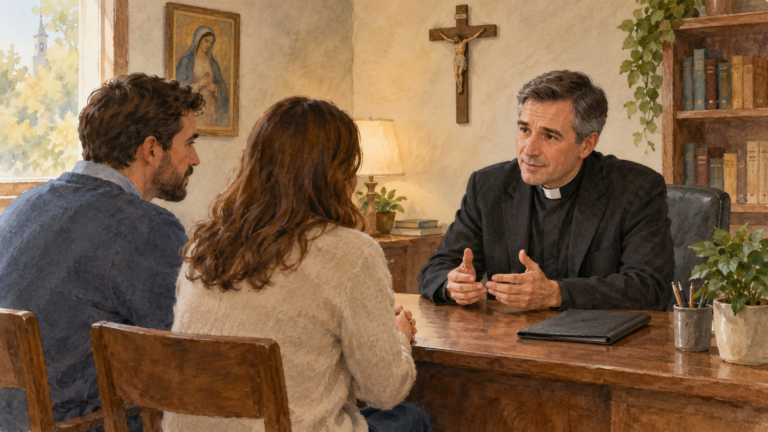
If you are in RCIA, speak to your coordinator, sponsor or catechist. If you have not joined a group, contact the parish office and ask who helps adults exploring the faith.
Make a specific request: “I am enjoying learning about Catholicism, but I do not know anyone outside the meetings. Could you introduce me to someone I could sit with at Mass?”
You could also ask: “Is there a small group where newcomers can join easily?” or “Could someone show me where people gather after Sunday Mass?” These questions give the other person something practical to do.
You do not need to describe every painful feeling in the first conversation. Share enough to make your need clear. If the person seems rushed, ask for a better time rather than trying to fit everything into the doorway.
If you receive no reply, follow up once through the normal parish contact route. An unanswered message can reflect an administrative problem rather than a personal rejection. If that route continues to fail, try another appropriate contact, such as the parish priest or formation leader.
Choose one activity you can attend regularly
Friendship often needs repeated contact. A large event can be enjoyable, but it may be difficult to meet the same people again. A modest, recurring activity gives conversations a chance to continue.
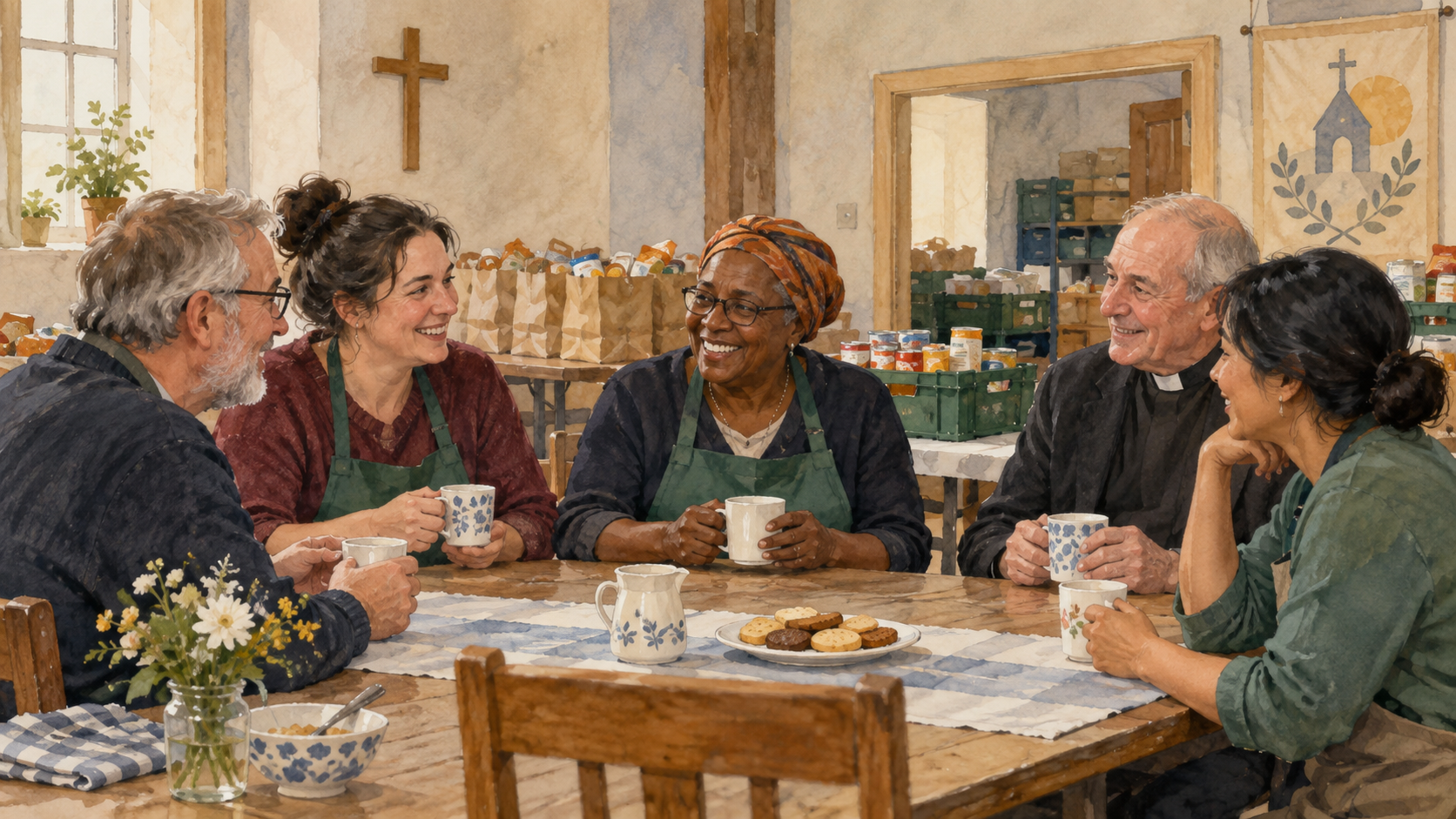
Look for something that fits your life: a Scripture group, parish coffee morning, choir where appropriate, charity project, young adult gathering or a simple social walk. Ask whether the group is open to someone who is still exploring the faith.
Choose according to your actual interests and capacity. If you dislike large discussions, a practical task alongside others may feel easier. If transport is difficult, a nearby activity you can reach consistently may be better than an ideal group far away.
Before attending, find out the location, start time and contact person's name. You can ask the organiser to look out for you. Arriving with one familiar name can reduce the awkwardness of walking into a room alone.
Give the activity a few reasonable chances if the first meeting is simply quiet or unfamiliar. You can also decide that it is not a good fit. Consistency helps, but you do not have to remain in a setting where you are repeatedly treated badly.
Use small invitations instead of waiting for a perfect friendship
After a pleasant conversation, suggest a modest next step. “Would you like to get a coffee after Mass next week?” is easier to answer than a general hope that you will somehow become friends.
You might ask someone from RCIA to arrive ten minutes early next time or invite a fellow volunteer to walk to the bus stop with you. A friendship can begin with very ordinary shared time.
Keep the invitation easy to decline. People may be caring for relatives, managing health problems or rushing between commitments. A refusal does not always tell you anything about your value or their interest in knowing you.
If someone repeatedly declines without suggesting another time, direct your energy elsewhere. You do not need to chase a person until they respond. Mutual interest becomes easier to recognise when you leave room for the other person to take a step too.
When someone does make an effort, respond clearly. Thank them, confirm the arrangement and let them know if you cannot come. Reliability helps a new connection feel safe and uncomplicated.
What if I am shy or find groups exhausting?
You do not have to become outgoing to belong in a parish. Try a smaller setting or a task with a clear beginning and end. Setting out cups with another volunteer may be easier than entering an unstructured social hour.
Prepare one or two ordinary questions: “How long have you been coming here?” or “Have you joined this group before?” You can also comment on the shared activity instead of opening with your conversion story.
Set a manageable goal for the first visit. You might aim to learn one name and stay for twenty minutes. That is a real step, even if you do not leave with a new close friend.
Plan some quiet time afterwards if social contact uses a lot of your energy. Your need to recover does not cancel the value of having gone.
If anxiety makes everyday contact very difficult, consider asking for professional support as well as practical parish help. You deserve assistance with the barrier itself, rather than repeated advice to be more confident.
Can volunteering help me feel part of the parish?
It can create opportunities to work alongside people and contribute something useful. Ask about a small role with clear expectations. You might help prepare a room, sort donated items or support a community event, depending on the parish's needs and eligibility requirements.
Be honest about your availability. “I can help one Saturday a month” is more sustainable than agreeing to every request because you are afraid people will forget you.
Service should not become the price you pay for friendship. You are worthy of welcome before you prove how useful you can be. If you are becoming exhausted or feel unable to say no, reduce your commitments and discuss the problem with someone you trust.
Notice whether the activity includes room for conversation and mutual care. A task can be valuable but still leave you socially isolated if you always do it alone. You may need a separate setting for friendship.
Ask about training, safeguarding and boundaries where the role involves children or vulnerable people. Clear arrangements help everyone participate with confidence.
How do I stay close to family and old friends?
Becoming Catholic does not require you to turn every conversation into a debate. Keep asking about other people's lives. Continue shared interests where you can, and show care in familiar, practical ways.
When someone asks about your faith, explain your own reasons without assuming that you must win an argument. You can say, “This has become important to me, and I am still learning how to explain it.”
If a loved one feels anxious, ask what concerns them. They may fear losing time with you, being judged or seeing family traditions change. Understanding the specific concern can help you respond more thoughtfully.
You do not have to accept mockery or repeated hostility. A calm boundary might be: “I am happy to discuss this respectfully, but I do not want us to insult each other.” If the conversation becomes heated, suggest returning to it later.
Some relationships will need time to adjust. Keep space for ordinary affection while also seeking people who can support your faith. One person or group does not have to meet every need in your life.
Be thoughtful about online Catholic communities
An online group can help you find people who understand a question that nobody nearby seems to share. It can also help you discover events or hear from others who have entered the Church.
Look for spaces where people answer respectfully, distinguish Church teaching from personal opinion and allow reasonable questions. Be cautious when a group turns every disagreement into a loyalty test or pressures members to disclose private details.
You do not need to publish your family history, marriage situation or painful experiences to receive basic support. Share gradually and remember that group posts can travel beyond their original audience.
Notice how you feel and behave after participating. Are you encouraged to pray, learn and treat people well? Or are you spending hours arguing and becoming more suspicious of everyone at your parish?
Use helpful online contact to support your life. Where possible, also build relationships with people you can meet, worship with or call when an ordinary practical need arises.
A gentle plan for the next month
During the first week, identify one parish contact and tell them that you would appreciate help meeting people. Choose a request they can act on, such as an introduction or information about a small group.
During the second week, attend one activity that fits your schedule. Learn the organiser's name and introduce yourself to one other person. You do not need to impress the room.
During the third week, return if the setting seemed healthy and reasonably suitable. Refer back to an earlier conversation. Remembering a small detail shows interest and makes the next exchange less formal.
During the fourth week, offer a simple invitation or discuss a different option with your parish contact. Review what helped and what made participation difficult. Transport, timing or group size may need adjustment.
This is a suggested experiment, not a deadline for making friends. The aim is to create repeated opportunities for connection. If the month remains hard, that is useful information to bring to someone who can help you take the next step.
Related questions about loneliness when becoming Catholic
Does feeling lonely mean I should stop RCIA?
Loneliness alone does not decide whether Catholicism is true or whether you should continue exploring it. Tell your coordinator how you are feeling and ask for support. If you also have questions about belief or readiness, discuss those openly. You do not need to hide doubts to keep your place in the conversation.
What if nobody at the parish is my age?
Friendships across ages can be valuable, while wanting some peers is also reasonable. Ask about nearby parishes, diocesan groups or occasional regional events. Keep the travel and time manageable. You can build local connections while looking for a wider circle that shares your stage of life.
What if my sponsor is kind but very busy?
Tell them what would help, such as a short monthly conversation or sitting together occasionally. Ask what they can realistically offer. Your sponsor does not have to become your only friend or support person. The RCIA team may help you find additional connections.
Should I try another parish?
You can explore another parish if the present setting is persistently unwelcoming or impractical. First clarify whether a particular problem can be addressed. If you are already in a formation process, discuss any move with the relevant teams so that your preparation can continue coherently.
What if I still feel alone after becoming Catholic?
Keep asking for support. Receiving the sacraments does not automatically resolve every social difficulty. Arrange a conversation about what happens after initiation, including ongoing formation and parish life. You deserve opportunities to remain known after the formal preparation ends.
What can I say today without feeling awkward?
Try: “I am new here and would like to get to know people. Is there something small I could join?” You do not need a polished introduction. A clear, ordinary request gives someone the chance to welcome you in a way that goes beyond a smile at the door.