
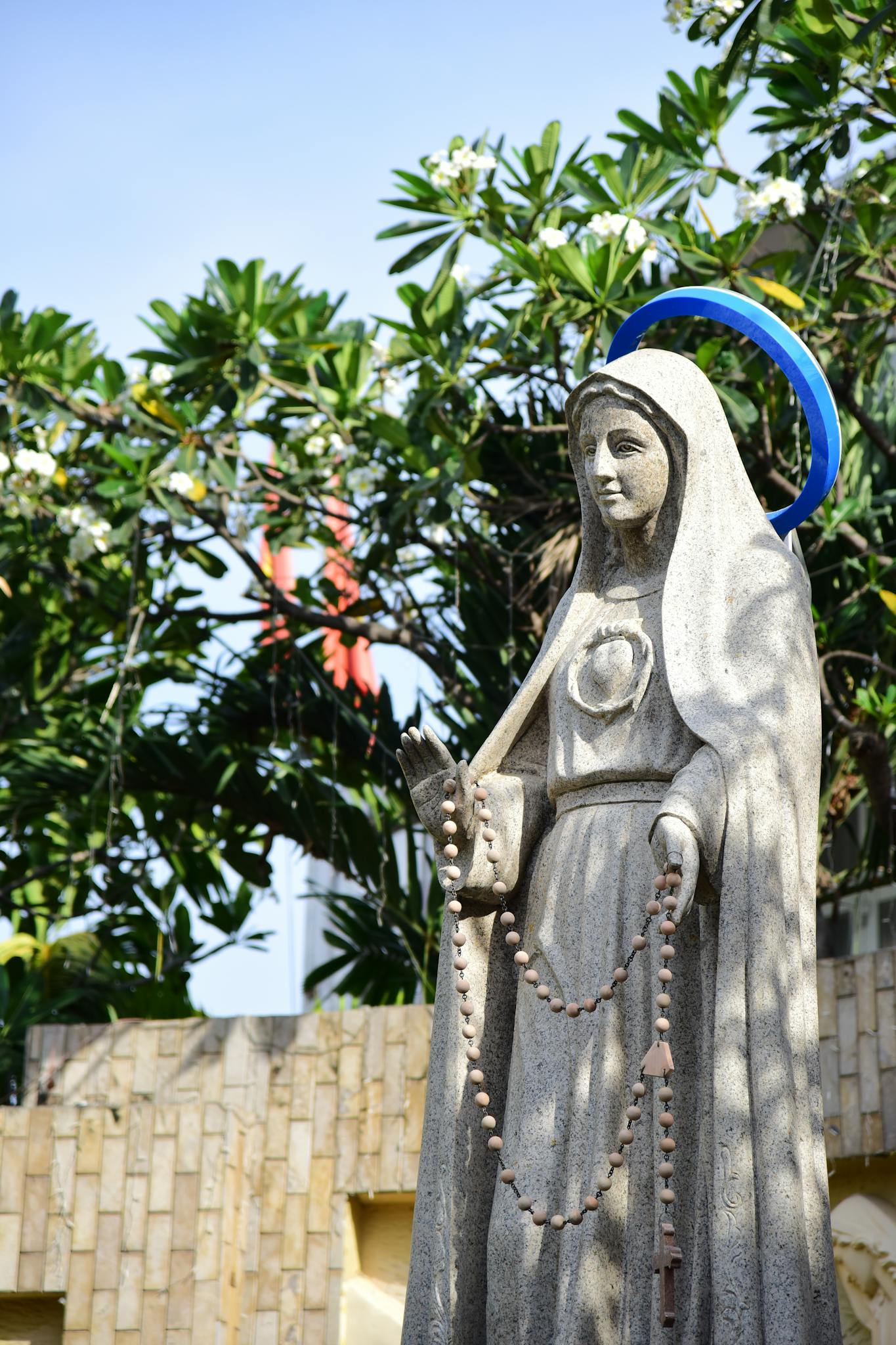
Saint Valery of Leuconay
Saints

A sixth-century monk of Merovingian France who left the world for solitude and ended up founding an abbey whose name still marks a town on the English Channel.
Saint Valery of Leuconay (also called Walaric or Waleric) was a monk and abbot of early medieval France, remembered as the founder of the monastery at Leuconay, at the mouth of the Somme River in Picardy — a settlement that grew into the town of Saint-Valery-sur-Somme, still named for him today. According to his medieval biographers, he was drawn to religious life from humble beginnings, trained in the Columbanian monastic tradition that was reshaping Gaul in his era, and eventually withdrew to the Somme estuary to live as a hermit before a community gathered around him. He died, by tradition, in the early 620s. Centuries later, his shrine became associated with sailors and travelers awaiting favorable winds, most famously in the legend that William the Conqueror’s fleet paused at Saint-Valery in 1066 to pray before crossing to England.
Quick Facts
- Born: date and place unknown; later tradition places his origins in Gaul in the mid-500s
- Died: traditionally dated to around 619, at the monastery he founded at Leuconay (Saint-Valery-sur-Somme), France
- Feast Day: April 1 (the traditional date of his death); December 12 separately commemorates the later translation of his relics
- Canonized: venerated since the early medieval period by popular acclaim; no formal canonization process applies, as he lived centuries before such procedures existed
- Patron of: Saint-Valery-sur-Somme and the Picardy coast; long invoked by sailors and travelers
Who Was Saint Valery of Leuconay?
Saint Valery of Leuconay belongs to the generation of monks who carried the ascetic, missionary spirit of Irish and Frankish monasticism across Gaul in the century after Saint Columbanus arrived on the continent. The surviving accounts of his life, composed well after his death and mixing reliable memory with pious elaboration, describe a man of modest origin who was drawn early to prayer and manual labor, spent time in monastic formation, and eventually sought out a remote spot for solitary asceticism at the mouth of the Somme River. As was common in this period, solitude did not last: disciples gathered, and what began as a hermitage grew into a working monastic community that Valery governed as abbot. The abbey he founded became a durable institution, giving its name — in the form Saint-Valery-sur-Somme — to the town that grew up around it, a name it still carries. Beyond these outlines, precise biographical detail is scarce, and readers should understand the fuller narrative details found in later medieval Lives as devotional tradition rather than verified history.
Historical Setting
Valery’s life unfolded in Merovingian Gaul, a world of fragmented Frankish kingdoms where the Church, and especially its monasteries, provided much of the continuity, learning, and social order that survived from the late Roman world. This was the age when monks trained in the tradition of Columbanus — strict in discipline, mobile in mission, and willing to settle in wilderness or coastal margins — were founding communities across what is now northern France, Belgium, and beyond. Coastal and riverine sites like the mouth of the Somme were valuable both spiritually, as places of retreat, and practically, as points of contact for trade, fishing, and eventually pilgrimage and travel across the Channel.
Why the Church Venerates Saint Valery
Valery is honored chiefly as a founder — one of the many early medieval abbots whose personal austerity and governance gave rise to an institution that long outlasted him and anchored Christian life in a particular place. His abbey became a center of prayer, learning, and hospitality for the surrounding region, and his cultus grew alongside the town that took his name. The devotion attached to his shrine, including its later association with travelers seeking safe passage by sea, reflects how local saints in this period became woven into the practical hopes and anxieties of the communities that kept their memory.
Canonization and Feast Day
Like nearly all saints of the early medieval period, Valery was never subject to a formal canonization process — the Church’s structured procedures for canonization did not exist until centuries after his death. His recognition as a saint arose instead through the organic, informal veneration of the community gathered at his monastery, later confirmed by inclusion in regional and eventually the Roman Martyrology. His feast is kept on April 1, the traditional date of his death; a separate date, December 12, commemorates the later medieval translation of his relics from Saint-Bertin to Saint-Valery, and the two occasions are sometimes conflated in less careful sources.
What Catholics Can Learn Today
Valery’s story, thin as its details are, illustrates a pattern worth sitting with: a life given quietly to prayer and labor in an unglamorous corner of the world can end up shaping a community, a landscape, and even the name people give to a place, for well over a thousand years. His example encourages a kind of trust that faithfulness in obscurity is not wasted, even when — as with Valery himself — history preserves only the outline of a life rather than its details.
A Prayer to Saint Valery
Saint Valery, who left the noise of the world for silence beside the sea, and whose quiet labor became a refuge for others, pray for all who seek a settled place for their restless hearts. Intercede for travelers awaiting safe passage, for those who serve faithfully without recognition, and for any who feel called to a solitude that might, in time, become a gift to many. Amen.
Sources
- the Catholic Encyclopedia (New Advent)
- the Roman Martyrology
- Butler’s Lives of the Saints