
Saint Sylvester Gozzolini
Saints
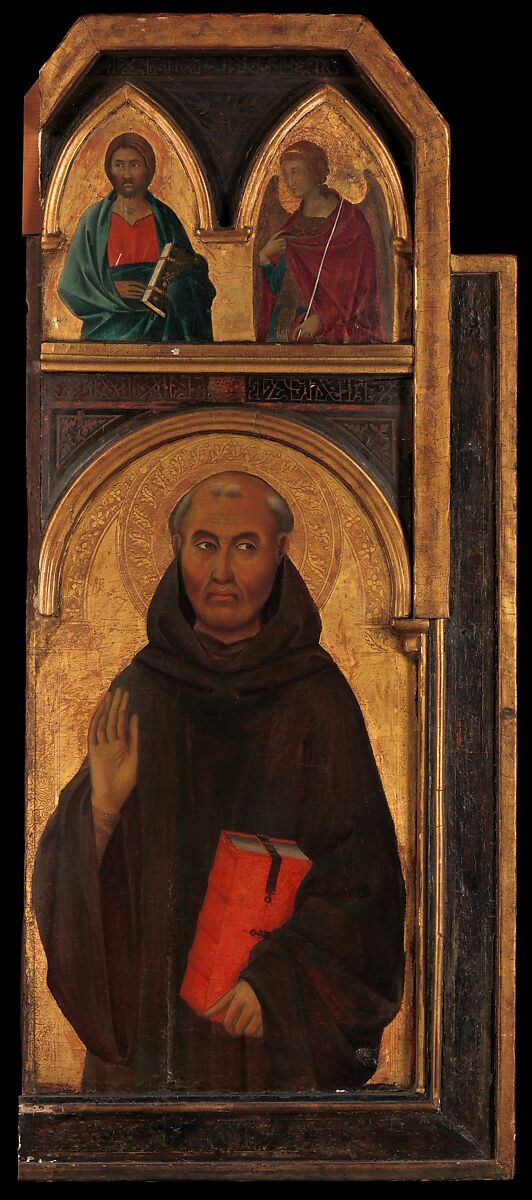
An Italian canon who, moved by the sight of a decayed corpse, embraced eremitical life at fifty and founded the Sylvestrine Benedictine Congregation.
Saint Sylvester Gozzolini (Silvestro Guzzolini) was born around 1177 in Osimo, Italy, and spent much of his early career as a canon attached to the cathedral there. According to a tradition long associated with his life, he was profoundly shaken around the age of fifty by the sight of the decayed body of a kinsman once known for his handsome appearance, an experience that turned him decisively toward a life of prayer and penance. He withdrew to a solitary, ascetic existence in the mountains near Osimo before founding, in 1231, a monastery at Monte Fano dedicated to a strict observance of the Rule of Saint Benedict. This foundation grew into the Sylvestrine Congregation of Benedictine monks, and by the time of his death on November 26, 1267, at around eighty-nine years of age, he had established eleven monasteries. He was canonized in 1598 by Pope Clement VIII.
Quick Facts
- Born: c. 1177, Osimo, Italy
- Died: November 26, 1267, Monte Fano, Italy (traditionally said to have lived about 89 years)
- Feast Day: November 26
- Canonized: 1598, by Pope Clement VIII
- Role: priest, hermit, and abbot; founder of the Sylvestrine Congregation of the Benedictine Order (1231)
Who Was Saint Sylvester Gozzolini?
Saint Sylvester Gozzolini (Silvestro Guzzolini) was born around 1177 in Osimo, Italy, and spent much of his early career as a canon attached to the cathedral there. According to a tradition long associated with his life, he was profoundly shaken around the age of fifty by the sight of the decayed body of a kinsman once known for his handsome appearance, an experience that turned him decisively toward a life of prayer and penance. He withdrew to a solitary, ascetic existence in the mountains near Osimo before founding, in 1231, a monastery at Monte Fano dedicated to a strict observance of the Rule of Saint Benedict. This foundation grew into the Sylvestrine Congregation of Benedictine monks, and by the time of his death on November 26, 1267, at around eighty-nine years of age, he had established eleven monasteries. He was canonized in 1598 by Pope Clement VIII.
Historical Setting
Sylvester’s life spanned the twelfth and thirteenth centuries, an age of remarkable religious ferment across Western Europe. It was the era of the great mendicant movements, as Saint Francis of Assisi and Saint Dominic founded orders that reshaped preaching and poverty as public witnesses within the growing towns of Italy, but it was also a period of renewed eremitical and monastic reform, as older Benedictine observance was reexamined and, in various places, revived in stricter form. Sylvester’s own path, from a comfortable position as a cathedral canon to a hermit’s solitude and eventually to the leadership of a new Benedictine congregation, reflects this wider thirteenth-century hunger for authentic, disciplined religious life amid a rapidly changing society.
Why the Church Venerates Saint Sylvester
Sylvester is venerated above all for the depth and completeness of his conversion, a dramatic turn from a settled and comfortable ecclesiastical career toward radical poverty and penance undertaken relatively late in life. His subsequent founding of eleven monasteries under a renewed Benedictine observance testifies to the lasting fruitfulness of that conversion, giving the Church a durable congregation devoted to prayer, discipline, and simplicity. His life stands as a reminder that sanctity is available at any stage of life, and that even a long-delayed response to grace can bear extraordinary fruit.
Canonization and Feast Day
Saint Sylvester Gozzolini was canonized in 1598 by Pope Clement VIII, more than three centuries after his death, a recognition that followed sustained veneration within the Sylvestrine Congregation and the wider Church in the intervening years. His feast is celebrated on November 26, the anniversary of his death at Monte Fano in 1267.
What Catholics Can Learn Today
Sylvester’s story is a striking reminder that conversion can come at any age, and that a life well underway in comfort and routine can still be radically redirected toward God. The stark encounter with mortality that tradition says moved him to change his life speaks to a truth many people avoid confronting: that worldly comfort and appearance are fleeting, while a life given to God endures. His example encourages Catholics, whatever their age or stage of life, to remain open to a deeper call, even one that requires leaving behind what feels settled and secure.
A Prayer to Saint Sylvester Gozzolini
Saint Sylvester Gozzolini, who at fifty years of age let the sight of death awaken you to new life in God, intercede for all who cling too tightly to comfort and to passing things. Grant me the grace to hear God’s call whenever it comes, even late, and the courage to answer it fully, as you did. Help me to build, in whatever years remain to me, something that will last beyond this life. Amen.
Sources
- the Catholic Encyclopedia (New Advent)
- historical records of the Sylvestrine Congregation
- Butler’s Lives of the Saints
- the Roman Martyrology