
Saint Leonardo Murialdo
Saints
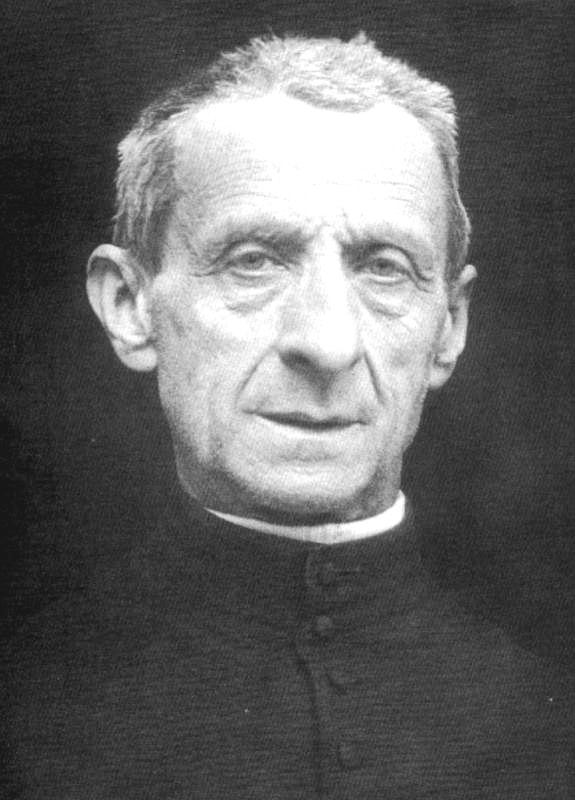
A Turin priest and contemporary of Saint John Bosco who devoted his life to abandoned and working-class youth, founding the Congregation of Saint Joseph to continue his work.
Saint Leonardo Murialdo (1828–1900) was an Italian priest who spent his ministry serving the poor and abandoned youth of industrializing Turin, working alongside and in the same milieu as his better-known contemporary Saint John Bosco. Ordained in 1851, Murialdo directed institutions for orphaned and at-risk boys, including a well-known trade school for young craftsmen, and worked to combine practical vocational training with religious formation so that poor youth could gain both a livelihood and a grounding in Catholic faith. In 1873 he founded the Congregation of Saint Joseph, later known as the Josephites of Murialdo, a community of priests and brothers dedicated to continuing this work of education, vocational training, and pastoral care among poor and working-class young people. He also engaged actively in the wider social questions of his day, supporting Catholic labor associations and charitable initiatives responding to the dislocations of industrialization in Turin. He died in his native city in 1900 at the age of seventy-one, leaving a congregation and network of institutions that carried forward his focus on youth at risk.
Quick Facts
- Born: October 26, 1828, in Turin, Italy
- Died: March 30, 1900, in Turin, Italy, at 71
- Feast Day: March 30
- Beatified: November 3, 1963, by Pope Paul VI
- Canonized: May 3, 1970, by Pope Paul VI
- Founder of the Congregation of Saint Joseph, the Josephites of Murialdo (1873)
Who Was Saint Leonardo Murialdo?
Leonardo Murialdo was born in Turin to a merchant family and, after early education that included time with the Christian Brothers, entered seminary formation and was ordained a priest in 1851. His ministry unfolded in Turin during a period of rapid industrial growth that drew large numbers of poor and often orphaned or abandoned young people into a city struggling to absorb them, a social crisis that also drew the attention of his contemporary and fellow Turin priest Saint John Bosco. Murialdo directed several institutions dedicated to these at-risk youth, most notably a residential trade school known as the Collegio degli Artigianelli, where boys received both practical training in a craft and a solid religious and moral formation intended to prepare them for stable, honest working lives. Convinced that this work needed a permanent religious community to sustain and expand it beyond his own lifetime, he founded the Congregation of Saint Joseph in 1873, gathering priests and brothers committed to the same combination of vocational education and pastoral care for poor youth. Beyond his direct institutional work, Murialdo was active in broader Catholic social engagement in Turin, supporting emerging Catholic worker associations and charitable initiatives responding to the harsh conditions many laborers faced during this period of industrial expansion. He continued to lead his congregation and its associated institutions until his death in Turin in 1900.
Historical Setting
Murialdo’s ministry took place in nineteenth-century Turin, a city at the heart of the Kingdom of Piedmont-Sardinia and later a leading center of Italian industrialization following national unification, conditions that produced both economic opportunity and severe urban poverty, particularly among migrant families drawn from the countryside. Abandoned and orphaned children were a visible and pressing social problem in this environment, prompting a notable cluster of Turin clergy, most famously Don Bosco, to develop new institutional responses combining shelter, vocational training, and religious formation. This period also saw the emergence of early Catholic social thought and labor organizing in response to industrial conditions, concerns that would later be formally addressed in Pope Leo XIII’s 1891 encyclical Rerum Novarum, work that men like Murialdo were already anticipating in practice through direct engagement with Turin’s Catholic worker associations.
Why the Church Venerates Saint Leonardo Murialdo
The Church venerates Leonardo Murialdo for his sustained, practical dedication to some of the most vulnerable young people of his era, providing not just charity but genuine vocational preparation that let poor and abandoned boys build stable, dignified working lives. His engagement with the broader Catholic social movement of his time, supporting labor associations and charitable initiatives beyond his own institutions, reflects an understanding that individual charity needed to be joined to structural efforts addressing the causes of urban poverty. He is also remembered, alongside contemporaries like Don Bosco, as part of a distinctively Turin-centered tradition of priestly ministry to youth that produced lasting educational institutions still active today.
Canonization and Feast Day
Murialdo was beatified by Pope Paul VI on November 3, 1963, and canonized by the same pope on May 3, 1970, following the Church’s recognition of miracles attributed to his intercession through the standard canonization process. His feast is kept on March 30, the anniversary of his death in Turin in 1900, and is celebrated especially by the Congregation of Saint Joseph and the institutions descended from his original work with Turin’s youth.
What Catholics Can Learn Today
Murialdo’s insistence on pairing vocational training with religious and moral formation reflects a holistic concern for young people that speaks directly to contemporary conversations about how best to prepare disadvantaged youth for stable, meaningful futures. His engagement with the labor questions of his own industrializing city also shows that concern for poor youth cannot be separated from concern for the broader economic conditions shaping their families’ lives. For Catholics today, his example encourages a similarly practical, two-pronged approach to serving young people at risk: forming character and faith while also equipping them with real, marketable skills.
A Prayer to Saint Leonardo Murialdo
Saint Leonardo Murialdo, father to Turin’s abandoned and working-class youth, you gave boys without family or prospects both a trade and a faith to build their lives upon. Watch over every young person today who lacks stable family, education, or opportunity, and raise up men and women willing to serve them as patiently as you did. Strengthen all who work in vocational and religious education, and inspire the Church to continue linking charity with the practical tools people need to live in dignity. Amen.
Sources
- Vatican.va
- EWTN
- the Congregation of Saint Joseph (Josephites of Murialdo), congregational history
- Encyclopaedia Britannica