
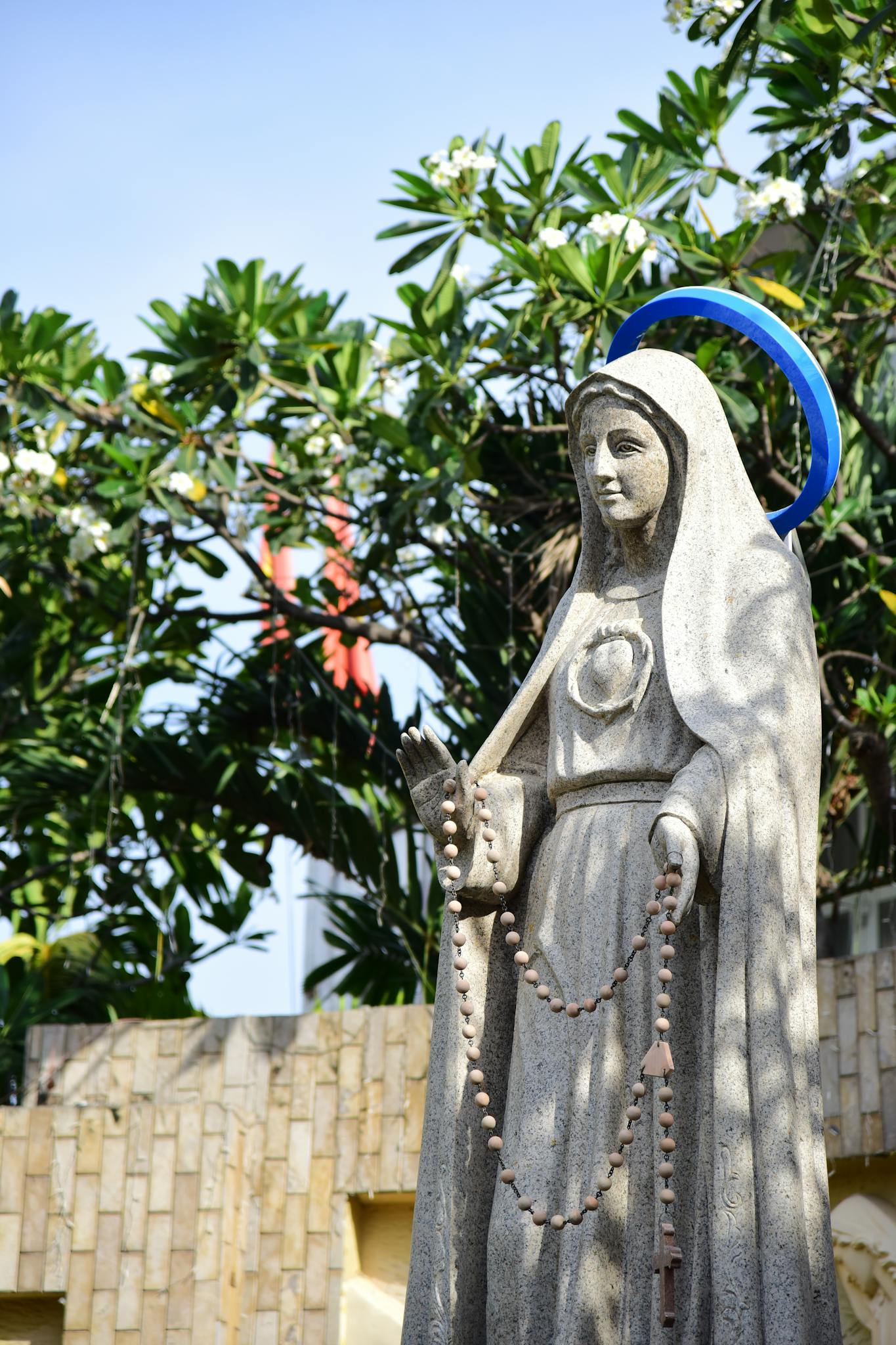
Saint Jeanne de Lestonnac
Saints

The Bordeaux noblewoman and niece of Michel de Montaigne who, after widowhood and a failed monastic attempt, founded a lasting congregation devoted to educating girls.
Saint Jeanne de Lestonnac (1556–1640) was a French noblewoman of Bordeaux, the niece of the essayist Michel de Montaigne, who married young, raised several children, and was widowed after more than two decades of marriage. Once her family responsibilities eased, she sought to enter religious life, first attempting the austere Cistercian observance at Toulouse, but poor health forced her to abandon that path and return home. Rather than abandon her vocation, she instead founded a new congregation in Bordeaux in 1607, the Company of Mary Our Lady, dedicated specifically to the Christian education of girls, at a time when formal schooling for women was rare. The community she founded endured a serious internal crisis when an unstable member, briefly placed in authority, had her removed and confined within her own convent, yet Jeanne was eventually restored and forgave those responsible, continuing to guide the order’s expansion until her death in 1640. She was canonized in 1949.
Quick Facts
- Born: 1556, in Bordeaux, France
- Died: February 2, 1640, in Bordeaux, France, at about 83
- Feast Day: February 2
- Canonized: May 15, 1949, by Pope Pius XII
- Patron of: widows and those who have suffered opposition or betrayal within their own family or community
Who Was Saint Jeanne de Lestonnac?
Jeanne de Lestonnac was born into a prominent Bordeaux family in 1556, niece to the philosopher and essayist Michel de Montaigne, whose skepticism about religious institutions stood in notable contrast to his niece’s eventual life’s work. She married the Baron de Montferrant-Landiras at seventeen and spent more than two decades raising children and managing a household before being widowed. With her children grown, she sought to enter the Cistercian monastery of Toulouse around 1603, drawn to its strict observance, but chronic ill health made the physical rigors of that life impossible, and she was forced to return to Bordeaux, an experience she initially received as a painful failure of vocation. Guided by Jesuit spiritual directors who recognized in her a call to found rather than simply join a religious community, she instead established the Company of Mary Our Lady, also known as the Filles de Notre-Dame, in Bordeaux in 1607, dedicated to the Christian education of girls along lines influenced by Ignatian spirituality. The young congregation soon faced a severe internal crisis when a psychologically unstable religious, briefly elevated to a position of authority within the community, had Jeanne removed from leadership and confined; only after considerable hardship was she restored to her rightful place, and she chose to forgive rather than punish those responsible. She continued to guide the congregation’s growth until her death in Bordeaux in 1640.
Historical Setting
Jeanne de Lestonnac’s life spans the height of the Catholic Reformation in France, a period that saw a flourishing of new active religious congregations dedicated to works the older, strictly cloistered orders could not undertake, particularly the education of girls, an area largely neglected by both church and state institutions of the time. Her congregation’s approach, shaped by Jesuit spiritual direction, paralleled other pioneering women’s teaching communities of the era, such as the Ursulines founded earlier by Angela Merici in Italy, reflecting a broader post-Tridentine conviction that catechesis and literacy for women and girls mattered for the health of Catholic family life.
Why the Church Venerates Saint Jeanne de Lestonnac
The Church venerates Jeanne de Lestonnac for recognizing, at a moment when few institutions offered girls any formal education, that founding schools for them was itself a form of holiness, and for pursuing that vocation even after an earlier attempt at religious life had ended in what looked like failure. Her endurance of betrayal and confinement within her own congregation, followed by genuine forgiveness rather than lasting resentment, is held up as an especially concrete example of Christian charity toward those who wrong us from within our own communities.
Canonization and Feast Day
Jeanne de Lestonnac was beatified by Pope Leo XIII in 1900 and canonized on May 15, 1949, by Pope Pius XII, following the Church’s standard process of examining her life, writings, and miracles attributed to her intercession. Her feast is celebrated on February 2, the anniversary of her death in Bordeaux in 1640, and is observed with particular devotion by the Company of Mary Our Lady, the congregation she founded, which continues its educational mission in several countries today.
What Catholics Can Learn Today
Jeanne’s experience of an apparently failed vocation, forced from the Cistercian life she had sought, becoming instead the doorway to a different and more fruitful calling, offers real encouragement to anyone who has watched a cherished plan collapse. Her later forgiveness of those who had her wrongfully removed and confined within her own convent also models a demanding, specific kind of mercy: reconciliation with harm done by people inside one’s own community, not only by strangers.
A Prayer to Saint Jeanne de Lestonnac
Saint Jeanne de Lestonnac, foundress who turned a closed door into a wider mission, you taught that failure is not always the end of a vocation but sometimes its true beginning. Give us your patience through illness and setback, and your remarkable forgiveness toward those who wronged you from within your own household. Intercede for educators of the young, for widows seeking new purpose, and for all who must forgive where they were betrayed. Amen.
Sources
- Vatican.va
- the Company of Mary Our Lady, official historical records
- the Catholic Encyclopedia (New Advent)
- Butler’s Lives of the Saints