
Saint Jean-Baptiste de la Salle
Saints
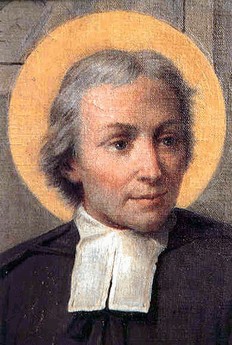
The French canon who renounced wealth and rank to found the Brothers of the Christian Schools, pioneering free education for the poor and becoming patron of teachers.
Saint Jean-Baptiste de la Salle (1651–1719) was a French priest and canon of the cathedral of Reims who abandoned a privileged ecclesiastical career to dedicate his life to educating poor children. Drawn gradually into the work of training lay schoolmasters, he eventually gave up his canonry, his family inheritance, and much of his personal comfort to live alongside the teachers he was forming, founding the Brothers of the Christian Schools around 1680–1684 as a religious community devoted entirely to teaching, with no members ordained to the priesthood. He pioneered methods still recognizable in classrooms today, including teaching in vernacular French rather than Latin, grouping students by ability for simultaneous instruction rather than one-on-one tutoring, and establishing the first training colleges for teachers. He also opened schools for troubled youth and technical training for working boys. Canonized in 1900, he was later declared patron of all who work in education.
Quick Facts
- Born: April 30, 1651, in Reims, France
- Died: April 7, 1719, at Saint-Yon, near Rouen, France, at about 67
- Feast Day: April 7
- Canonized: May 24, 1900, by Pope Leo XIII
- Patron of: teachers and educators (declared Patron of All Teachers by Pope Pius XII in 1950)
Who Was Saint Jean-Baptiste de la Salle?
Jean-Baptiste de la Salle was born into a wealthy and well-connected family in Reims in 1651 and seemed destined for a comfortable ecclesiastical career, becoming a canon of the city’s cathedral while still a teenager and later earning a doctorate in theology. His path changed when he was asked to help oversee a group of poorly trained laymen attempting to run free schools for boys whose families could not afford tuition. Initially involved only at a distance, he grew increasingly convinced that the work required more than occasional supervision, and over several years he took the startling step, for a man of his rank, of inviting the schoolmasters to live in his own household, then giving up his family inheritance to the poor during a famine, and finally resigning his canonry altogether to live in community with the men he was forming as teachers. Around 1680 this loose community began to take the shape of a religious institute, later known as the Brothers of the Christian Schools, whose members took vows but were deliberately not ordained priests, remaining dedicated entirely to teaching. La Salle developed distinctive pedagogical methods, including instruction in French rather than Latin so that poor children could actually read what they were taught, group-based ‘simultaneous’ teaching instead of one pupil at a time, and formal training colleges to prepare new teachers, alongside Sunday academies for working youths and schools for delinquent boys. He died at the community’s house near Rouen in 1719.
Historical Setting
La Salle’s work took shape in the France of Louis XIV, a society of sharp social stratification in which education beyond basic literacy was largely reserved for the wealthy, while the children of artisans and the poor had little or no access to schooling, and the training of teachers was left to informal, often inadequate arrangements. His educational reforms belong to a broader current of French Catholic charitable renewal in this period, following in spirit the earlier work of Vincent de Paul, and responded directly to a real gap in provision for the urban and rural poor that neither the state nor the existing Church structures had systematically addressed.
Why the Church Venerates Saint Jean-Baptiste de la Salle
The Church venerates Jean-Baptiste de la Salle for recognizing that education was itself a work of mercy and a matter of justice for the poor, and for the radical personal cost he accepted, giving up rank, income, and security, to make that recognition concrete and lasting. His founding of a teaching order composed entirely of brothers rather than priests, unusual for the time, and his development of practical, replicable teaching methods gave the Church durable tools for large-scale popular education that shaped Catholic schooling worldwide long after his death.
Canonization and Feast Day
La Salle was beatified by Pope Leo XIII in 1888 and canonized by the same pope on May 24, 1900, following the Church’s established process of examining his life, writings, and miracles attributed to his intercession. His feast is celebrated on April 7, the anniversary of his death near Rouen in 1719, and is marked with particular devotion in the many schools worldwide operated by the Institute of the Brothers of the Christian Schools that bears his charism.
What Catholics Can Learn Today
La Salle’s willingness to strip away comfort and status once he recognized where God was calling him challenges the assumption that a vocation must remain within one’s original plans, however respectable those plans may be. His conviction that every child, regardless of family income, deserves a genuinely good education remains a direct and practical measure of Catholic social commitment today, wherever access to quality schooling is still unequal.
A Prayer to Saint Jean-Baptiste de la Salle
Saint Jean-Baptiste de la Salle, patron of teachers, you gave up rank and wealth to sit among the poor and teach their children to read. Kindle in every teacher your patience and your conviction that no child is beyond reach. Give us your courage to set aside comfort when love demands it, and intercede for all who labor, often unseen, in classrooms for the young. Amen.
Sources
- Vatican.va
- the Institute of the Brothers of the Christian Schools, official historical archives (lasalle.org)
- the Catholic Encyclopedia (New Advent)
- Encyclopaedia Britannica