
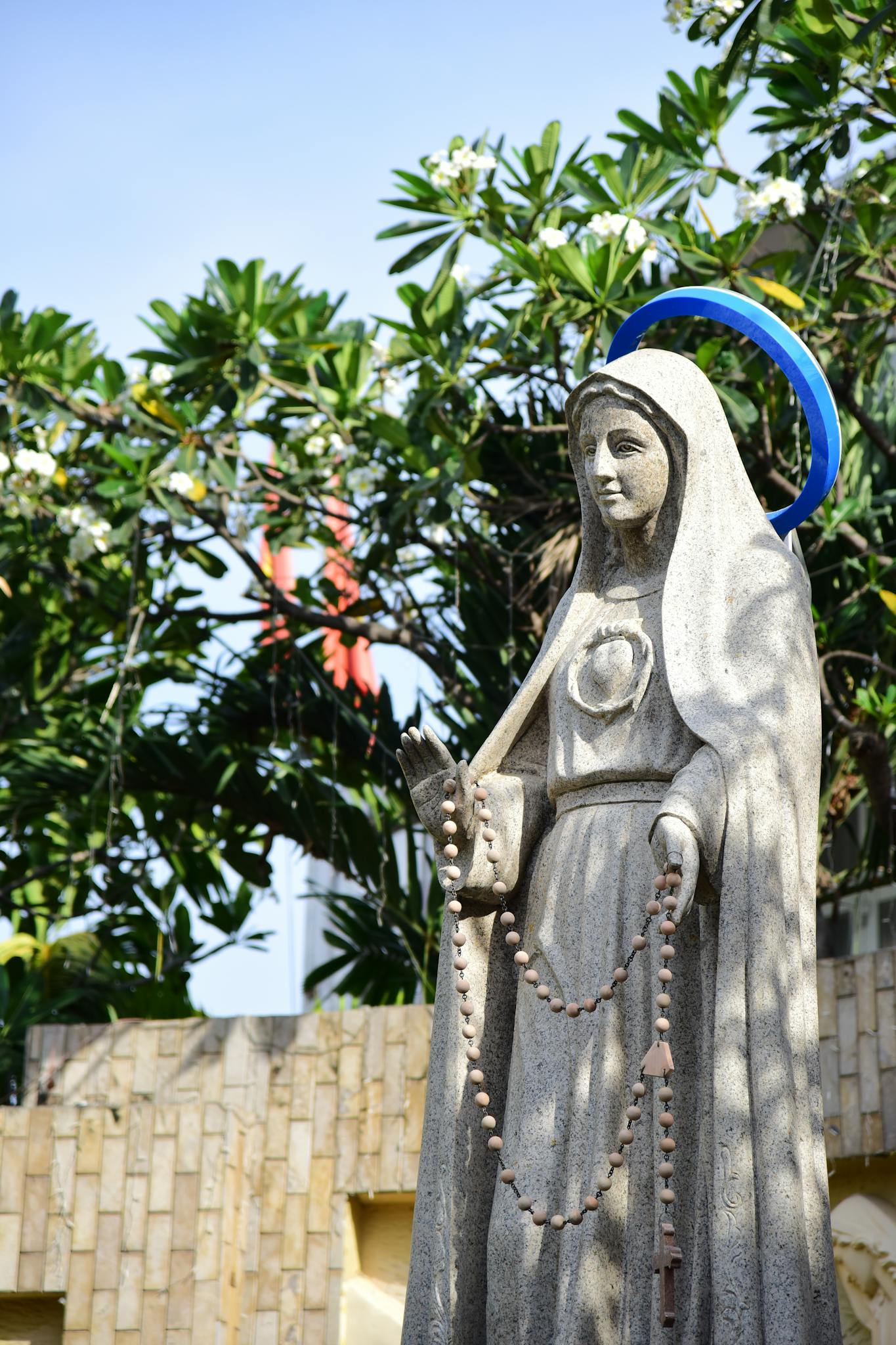
Saint Germer of Fly
Saints

A Frankish nobleman and royal councillor who, after the death of his young son, embraced monastic life under Saint Ouen and founded the abbey of Fly in the Beauvais region of France.
Saint Germer of Fly (c. 608-658) was a nobleman of Merovingian Francia who served as a royal councillor at the courts of Kings Dagobert I and Clovis II before turning, in mid-life, to a life of monastic discipline. Married to a devout woman named Domana, he lost his young son Amalbert, and it was the estate that reverted to him from his son’s death that he used to endow a monastic foundation. He then entered religious life himself under the guidance of Saint Ouen (Audoenus), the influential bishop of Rouen, at the monastery of Pentale in Normandy, and there embraced the ascetic reforms associated with that community. Later in life he withdrew to found his own monastery at Fly, in the Beauvaisis region of northern France, which became known after him as Saint-Germer-de-Fly and developed into an important center of Benedictine monastic life for centuries afterward. He died at the abbey he had founded, traditionally dated to around 658, and was venerated locally as its founder and patron.
Quick Facts
- Born: date unknown, Merovingian Francia
- Died: traditionally September 24, c. 658, Fly (Flay), France
- Feast Day: September 24
- Canonized: no formal canonization process; venerated locally from an early date as founder of Fly Abbey
- Patron of: the abbey and town of Saint-Germer-de-Fly, Oise, France
Who Was Saint Germer de Fly?
What is remembered of Germer’s life comes almost entirely from later monastic tradition rather than from contemporary documentation, and it should be read with that caution in mind. According to this tradition, Germer belonged to the prime nobility of the Beauvais region and, in the ordinary course of life for a man of his rank, served as a royal councillor at the courts of Kings Dagobert I and Clovis II, alongside figures such as Saint Eloi and Saint Ouen, while married to a devout woman named Domana. The couple had children, including a son, Amalbert, who died young; it was the estate that reverted to Germer from his son’s death that he used to found and endow a monastery while still a layman. Not long afterward he set aside his court career altogether, sought out Saint Ouen, the reforming bishop of Rouen and a central figure in the monastic revival of seventh-century Normandy, and under his direction entered the monastery of Pentale in Normandy, embracing a life of prayer, manual labor, and ascetic discipline in place of his former career. In time, seeking greater solitude or responding to a call to found a new community, Germer moved into the Beauvaisis, the region around Beauvais in northern France, and there established a monastery at a place called Fly, on the edge of the forest that gave the region its wilder character in that era. This community grew under his direction and, after his death around 658, took his name, becoming known as Saint-Germer-de-Fly, an abbey that would remain an active center of religious life for many centuries and preserve his relics as a focus of local devotion.
Historical Setting
Germer’s life belongs to the vigorous monastic expansion of Merovingian Gaul in the seventh century, a period in which noble converts — men and women who set aside considerable wealth, family status, and, in Germer’s case, a prominent position at the royal court — founded a wave of new monasteries across northern France under the influence of reforming bishops such as Ouen of Rouen and the wider Columbanian monastic movement that had spread from Ireland. These foundations combined manual labor, strict prayer schedules, and often missionary or charitable work among the surrounding rural population, and they served as crucial centers of stability, learning, and Christian formation in a still only partially Christianized countryside. As with many founders of this era, the surviving account of Germer’s life was likely composed well after his death to serve the abbey’s own sense of its origins, so specific details of chronology and biography should be treated as traditional rather than strictly documented.
Why the Church Venerates Saint Germer de Fly
Germer is venerated chiefly as the founder of a monastery that endured as a significant religious house for centuries, and as an example of the Merovingian nobility’s capacity for radical conversion, setting aside status, wealth, and a career at the royal court for a life of penance and service to God. His story, transmitting the monastic reform associated with Saint Ouen to a new foundation of his own, situates him within a network of seventh-century saints — bishops, abbots, and converted laypeople — whose collective efforts shaped the religious landscape of early medieval France. The abbey that bore his name preserved his memory as its spiritual founder, and it was this local, sustained devotion, rather than any wider fame, that secured his lasting place among the saints.
Canonization and Feast Day
Like most saints of the Merovingian period, Germer predates the Church’s formal canonization procedures by many centuries; his recognition as a saint rests entirely on the ancient and continuous veneration maintained at the abbey of Saint-Germer-de-Fly, which claimed him as its founder and kept his feast within its own liturgical calendar. That feast is traditionally observed on September 24.
What Catholics Can Learn Today
Germer’s transition from a life of court service and worldly rank to one of prayer and founding community offers a model of conversion that is never too late and never wasted, whatever a person’s earlier choices or career may have been. His example encourages readers to see loss and grief, such as the death he experienced of his young son, not only as sources of sorrow but as moments that can, with grace, open a new and unexpected direction toward a deeper life of faith and service to others.
A Prayer to Saint Germer de Fly
Saint Germer of Fly, who set aside a councillor’s place at the royal court to take up the discipline of a monk, be near to all who are searching for a new direction after loss or sorrow. You who turned the grief of a father, mourning his young son, into the founding of a home for prayer, help me to trust that God can bring new purpose even from what feels like an ending. Intercede for those who founded lasting works of faith in quiet, forested places far from worldly notice, and teach me to build something of lasting good, however small, wherever I am planted. Amen.
Sources
- the Catholic Encyclopedia (New Advent)
- the Roman Martyrology
- Butler’s Lives of the Saints
- the historical record of the Abbey of Saint-Germer-de-Fly