
Saint Genoveva Torres Morales
Saints
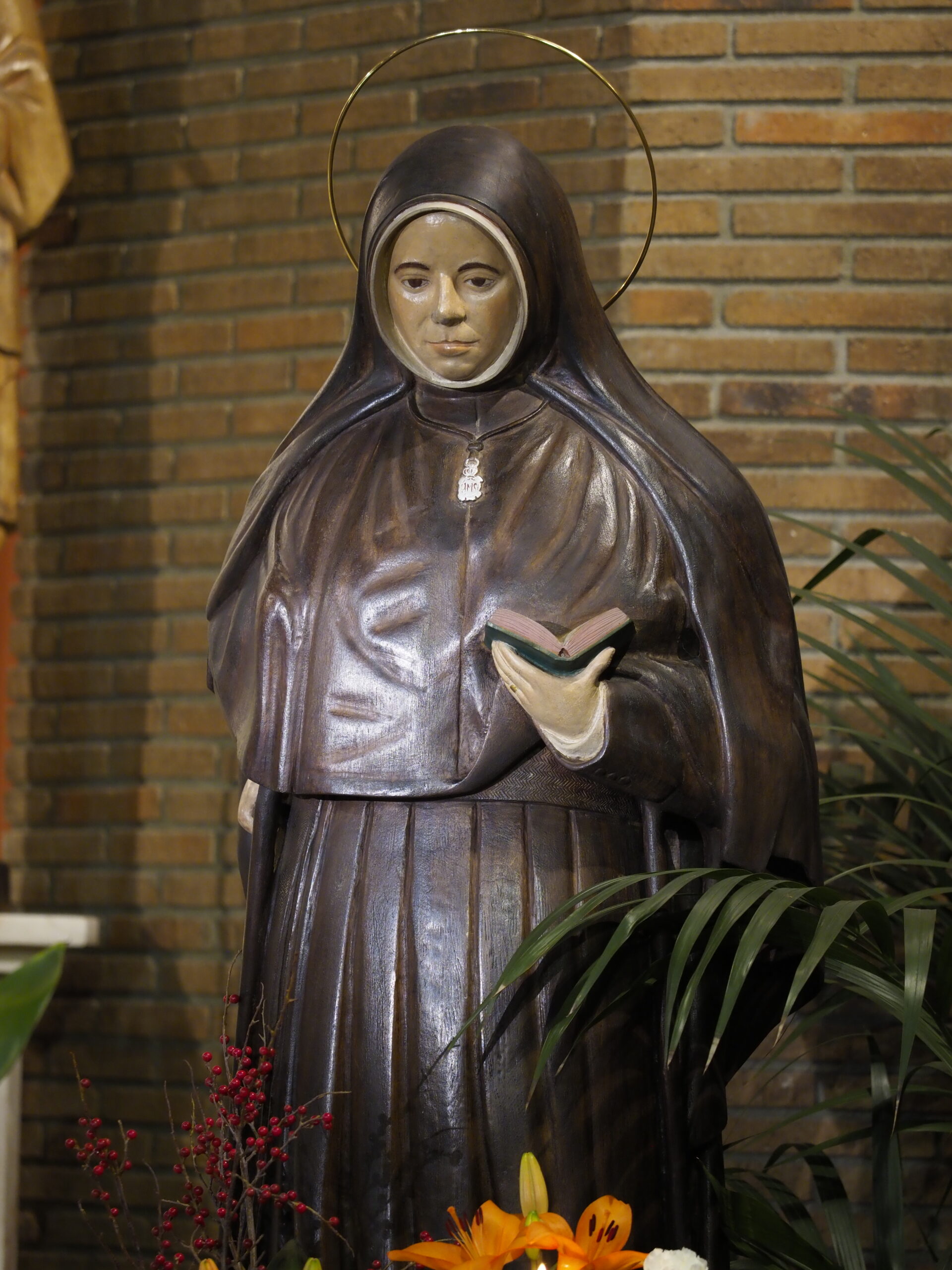
A Spanish orphan disabled by illness in childhood became the foundress of a religious congregation devoted to sheltering women who, like her, had no family to fall back on.
Saint Genoveva Torres Morales (1870–1956) was a Spanish religious foundress whose own experience of loss and disability became the foundation of her life’s work. Orphaned as a young child and raised in a charitable hospice in Valencia, she contracted a severe bone infection that led to the amputation of part of one leg, leaving her permanently disabled. Rather than retreating from the world, she trained as a seamstress and, in 1911, gathered a small community of women committed to providing safe, family-like homes for young working women, the elderly, and others who had no relatives to shelter them. That community grew into the Sisters of the Sacred Heart of Jesus and of the Holy Angels, popularly called the Angelicas, which spread to several Spanish cities during her lifetime. She died in Zaragoza on January 5, 1956, and was canonized by Pope John Paul II in 2003.
Quick Facts
- Born: January 3, 1870, Almenara, Castellón, Spain
- Died: January 5, 1956, Zaragoza, Spain, at about 86 years old
- Feast Day: January 5
- Canonized: May 4, 2003, by Pope John Paul II
- Patron of: the disabled, orphans, and women living alone
Who Was Saint Genoveva Torres Morales?
Genoveva Torres Morales was born in 1870 in the Valencian village of Almenara and lost her mother while still very young, followed soon after by her father, leaving her and her sisters to be raised largely by relatives and, eventually, by a Valencia hospice for the poor. As a girl she contracted a tubercular infection of the bone that spread through one of her legs; despite repeated medical treatment, part of the limb ultimately had to be amputated, and she lived with the resulting disability, and considerable ongoing pain, for the rest of her life. Rather than allowing this suffering to isolate her, she apprenticed as a seamstress and became especially attentive to the loneliness of other women in similar circumstances: young workers who had come to the city without family, the elderly without means, and women who, for whatever reason, had no household of their own. In 1911, together with a small circle of companions who shared this concern, she opened the first of what would become a network of residential homes offering not merely shelter but a genuine sense of family life, rooted in prayer and mutual care. This initiative was formally recognized as a religious congregation, the Sisters of the Sacred Heart of Jesus and of the Holy Angels, popularly known from early on as the Angelicas. Genoveva served as its superior for decades, guiding its expansion to Valencia, Zaragoza, and other Spanish cities, all while continuing to bear the physical limitations of her youth. She died in Zaragoza on January 5, 1956, having spent more than four decades building homes for those the world had left without one.
Historical Setting
Genoveva’s life spanned a period of rapid social change in Spain, as industrialization drew growing numbers of young women away from rural villages into cities to work as servants, seamstresses, and factory hands, often without any relative nearby to look after their welfare or reputation. This same era saw the rise of new, more mobile forms of Catholic religious life dedicated to concrete social needs — hospitals, schools, and above all residences — rather than the traditional cloistered contemplative model, echoing the broader Catholic social teaching associated with Pope Leo XIII’s 1891 encyclical Rerum Novarum. Her congregation took shape against the backdrop of mounting anticlerical tension in Spain that would eventually erupt into open persecution of the Church during the 1930s, though her own community’s quiet, practical charitable work continued largely undisturbed through her lifetime.
Why the Church Venerates Saint Genoveva Torres Morales
Genoveva is honored chiefly as an example of how personal suffering, rather than becoming an excuse for bitterness or withdrawal, can be transformed into a wellspring of compassion for others in similar need. Having known firsthand what it meant to be without parents, without full physical health, and without a stable home, she built her entire vocation around providing exactly what she had once lacked, and did so with a notable absence of self-pity or public complaint. The Church also holds her up as a model of the many founders of modern active congregations who recognized new social vulnerabilities — in her case, the isolation of single working women in the growing industrial city — and responded with concrete, sustainable institutions rather than only spiritual counsel.
Canonization and Feast Day
Genoveva Torres Morales was beatified by Pope John Paul II in Rome on January 29, 1995, and canonized by the same pope on May 4, 2003, following the Church’s standard process of investigating her life, virtues, and two miracles attributed to her intercession. Her liturgical feast is celebrated on January 5, the anniversary of her death in Zaragoza.
What Catholics Can Learn Today
Genoveva’s story speaks directly to anyone who has ever felt that hardship disqualifies them from being useful to others; her own wounds, physical and emotional, became instead the very lens through which she recognized and answered the needs around her. Her legacy invites modern readers to consider how their own difficult experiences, rather than being hidden away, might be offered in service of people facing something similar, and it reaffirms the quiet but essential value of simply providing another person with a safe place to belong.
A Prayer to Saint Genoveva Torres Morales
Saint Genoveva Torres Morales, who turned the sorrow of your own childhood into a home for those who had none, look with tenderness on all who feel forgotten, disabled, or alone tonight. You who bore pain in your body without letting it harden your heart, teach me to welcome my own wounds as a doorway to compassion rather than a wall against it. Intercede for orphans, for the elderly without family, and for every woman far from home and without protection, that they may find, as you provided for so many, a place of safety and belonging. Help me to see the lonely person near me and to offer, however small, the shelter of my own care. Amen.
Sources
- Vatican.va, biography and canonization homily for Saint Genoveva Torres Morales
- Encyclopaedia Britannica
- EWTN, Saints and Angels
- the Sisters of the Sacred Heart of Jesus and of the Holy Angels’ own congregational history