Saint Francis of Paola
Saints
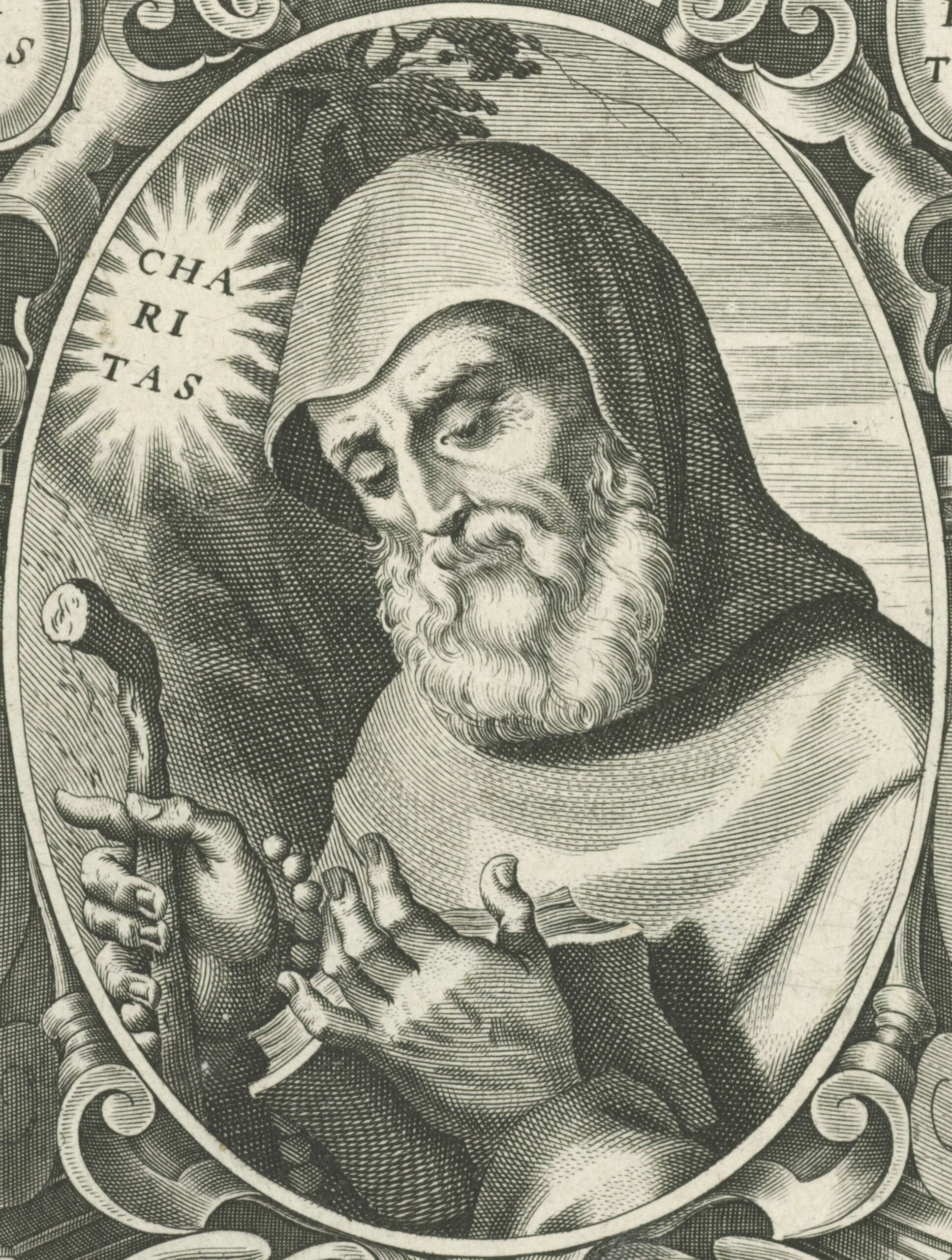
A Calabrian hermit famed for austerity and miracles, Francis founded the Order of Minims and became a trusted, unlikely counselor to the kings of France.
Saint Francis of Paola (1416–1507) was an Italian hermit and founder who began living a life of extreme penance and solitude near his hometown of Paola in Calabria while still a teenager, gradually attracting companions who formed the community that became the Order of Minims, formally approved in 1474 and named for its members’ desire to be the ‘least’ of all religious. The order was distinguished by its perpetual fast from meat, eggs, and dairy in addition to the usual vows, and by widespread reports of Francis’s gift of prophecy and miraculous healing, which brought him fame throughout southern Italy. In 1482, at the request of King Louis XI of France, who hoped the hermit could cure his failing health, Francis traveled to the French royal court, where he remained for the rest of his life as a spiritual advisor to Louis and his successor Charles VIII. He died at Plessis-lez-Tours on April 2, 1507, and was canonized just twelve years later.
Quick Facts
- Born: March 27, 1416, Paola, Calabria, Kingdom of Naples (Italy)
- Died: April 2, 1507, Plessis-lez-Tours, France, at about 91 years old
- Feast Day: April 2
- Canonized: May 1, 1519, by Pope Leo X
- Patron of: sailors, boatmen, and naval officers, and of the region of Calabria
Who Was Saint Francis of Paola?
Francis was born in Paola, a small town on the Calabrian coast of southern Italy, to a family of modest means who, in gratitude for his birth after they prayed to Saint Francis of Assisi for a child, named him after the founder of the Franciscans and later placed him for a time in a Franciscan friary as a boy. Rather than joining that order formally, however, Francis was drawn by his mid-teens to an even stricter path, withdrawing to a cave on his family’s land near Paola to live as a solitary hermit devoted to prayer, fasting, and manual labor. Other men seeking the same austere life gradually joined him, and by around 1436 a small community had formed around his hermitage; by 1474 Pope Sixtus IV had approved it as a religious order, which took the name Minims, from the Latin for ‘the least,’ reflecting Francis’s desire that his followers regard themselves as the lowest of all in religious life. The order added a fourth vow, a perpetual Lenten-style abstinence from meat, eggs, dairy, and animal fat, to the traditional vows of poverty, chastity, and obedience. Francis’s reputation for holiness, prophetic insight, and miraculous cures spread widely during his lifetime, drawing pilgrims and eventually the attention of the French crown. In 1482 the dying King Louis XI, hoping for a miraculous cure, summoned Francis to France; Francis went, not to heal the king’s body, but to prepare him spiritually for death, remaining at his bedside until Louis died in 1483. He stayed on in France for the rest of his life, respected as a counselor by Louis’s son Charles VIII and later by Louis XII, founding houses of his order in France and continuing his life of extreme penance even in old age. He died at Plessis-lez-Tours on April 2, 1507, reportedly at the age of ninety-one.
Historical Setting
Francis’s life spanned the late medieval and early Renaissance periods in Italy and France, an era marked by intense popular devotion, widespread reports of visionaries and wonder-workers, and close entanglement between religious authority and royal power, exemplified by his own summons to the French court. His radical asceticism echoed a long tradition of desert-style eremitism reaching back to the early Church fathers, even as his direct involvement in the affairs of kings placed him at the center of the political and dynastic concerns of late fifteenth-century France, a kingdom then consolidating its power after the Hundred Years’ War.
Why the Church Venerates Saint Francis of Paola
Francis is honored for the sheer severity and consistency of his penitential life, sustained from adolescence into extreme old age without relaxation, and for a humility so pronounced that it gave his order its very name. He is remembered, too, for the numerous miracles attributed to him both in Italy and France, including reported instances of healing, prophecy, and even a legendary crossing of the Strait of Messina on his cloak when no boatman would carry him without payment, an episode that underlies his patronage of sailors. His willingness to speak plainly to kings about mortality and the state of their souls, rather than flattering royal power, is remembered as a model of holy boldness in the face of worldly authority.
Canonization and Feast Day
Francis was canonized on May 1, 1519, by Pope Leo X, only twelve years after his death, a relatively rapid process reflecting the widespread and well-documented devotion to him in both Italy and France during his lifetime. His feast is kept on April 2, the anniversary of his death, and he is honored with particular solemnity in Paola, where the sanctuary built over his hermitage remains a major pilgrimage site.
What Catholics Can Learn Today
Francis’s decades of disciplined self-denial, sustained without spectacle deep into old age, offer a striking counter-example in a culture oriented toward comfort and self-indulgence, suggesting that genuine freedom can be found precisely in habits of restraint freely chosen for the sake of God. His readiness to speak honestly to the powerful about matters of eternal consequence, without seeking their favor or fearing their displeasure, remains a model for anyone called to bear inconvenient truths with charity, and his lifelong humility, embedded in the very name of the order he founded, is a quiet rebuke to any instinct toward self-importance in religious life or public influence.
A Prayer to Saint Francis of Paola
Saint Francis of Paola, hermit of Calabria who chose the cave over comfort and counted yourself the least of all, teach me the discipline of a life ordered wholly toward God. You who spoke plainly of eternity to kings, give me courage to speak truth gently, without flattery and without fear. You who trusted God across every strait too dangerous to cross alone, carry me through the difficulties that seem to have no safe passage. Obtain for me a share of your humility and your patience, that I may serve quietly, ask for little, and trust always in providence. Amen.
Sources
- the Catholic Encyclopedia (New Advent)
- the Order of Minims, historical records of the founder
- Encyclopaedia Britannica
- the Roman Martyrology