
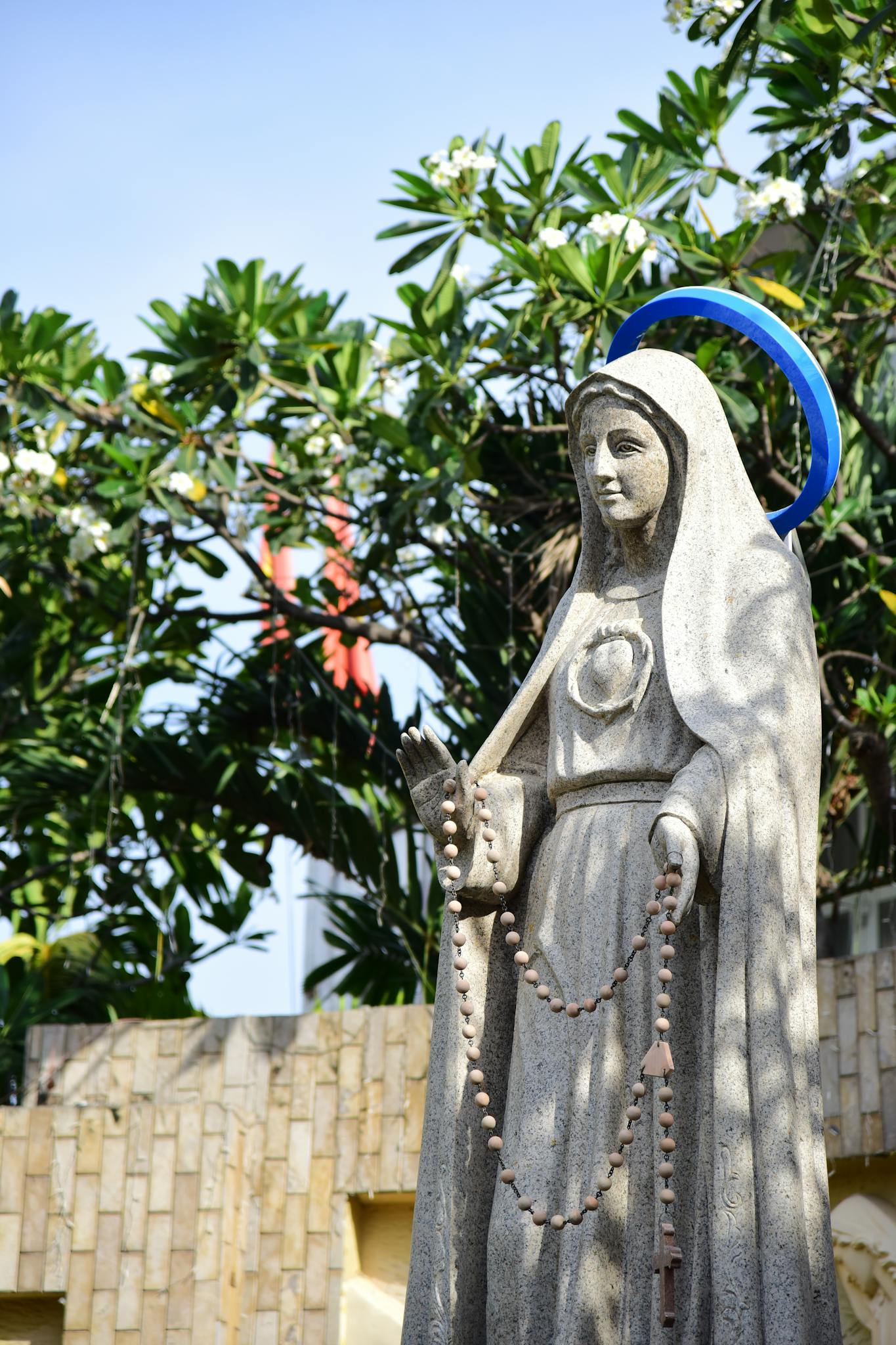
Who Was Saint Fortunato di Napoli?
Saints
A fourth-century bishop of Naples in Italy, whose ancient cult received a formal confirmation of veneration as late as 1841, long after his own lifetime.
Saint Fortunato di Napoli served as bishop of Naples, Italy, in the fourth century, with his episcopate traditionally dated from around 344 into that century, though the precise year of his death is uncertain. The production register notes a canonisation recorded in 1841, which for a bishop of this era should be understood as a formal confirmation of an already ancient and immemorial local cult rather than a modern-style canonization process examining a recently deceased candidate for sainthood.

Quick Facts
- Died: IV century (Naples, Italy)
- Venerated as: Bishop
- Notable: cult formally confirmed in 1841 as recognition of ancient veneration
Who Was Saint Fortunato di Napoli?
Fortunato is recorded as a bishop of Naples in the fourth century, a period in which the city was already an important Christian see with its own developing tradition of bishops and martyrs. Beyond his episcopal office and rough dating, the specific events of his governance, his relations with other bishops, or any particular teaching he may have left behind are not preserved in the available sources, leaving a portrait limited to his office and his see.
Historical Setting
The fourth century was the century in which Christianity moved from a persecuted minority faith to the officially favored religion of the Roman Empire following the Edict of Milan in 313 and the later reign of Theodosius, and bishops such as Fortunato governed their sees during this transformation, building the institutional structures of local churches that would endure for centuries. Naples, an old and prosperous city on the Italian coast, was well positioned to develop exactly this kind of durable episcopal tradition.
Why the Church Remembers Saint Fortunato di Napoli
Fortunato is remembered as one of the early bishops who shaped the Christian community of Naples in the century when the Church first gained public standing across the empire, and the fact that his ancient cult received formal ecclesiastical confirmation as late as 1841 shows how seriously the Church continued, even in the modern era, to examine and validate very old local traditions of sanctity rather than allowing them to lapse unexamined.
Canonization and Feast Day
The 1841 date recorded for Fortunato di Napoli should be read honestly as a formal confirmation of an already ancient and immemorial cult, sometimes called an equipollent or equivalent canonization, rather than as evidence that a fourteen-hundred-year-old bishop underwent a nineteenth-century canonization process of the kind used for recently deceased candidates. His actual veneration traces back to the fourth century itself, sustained continuously by the Neapolitan church.
What Catholics Can Learn Today
Fortunato’s story is a useful reminder that the Church’s formal processes and its living, ancient traditions of holiness are not always the same timeline, and that a late confirmation does not create a saint’s holiness but simply recognizes what a community has already believed for a very long time. Catholics today can take from this the lesson that the Church can be patient and careful even about traditions it already deeply trusts.
A Prayer to Saint Fortunato di Napoli
Saint Fortunato di Napoli, ancient shepherd of the church of Naples, intercede for the Christian community you once served and for bishops governing dioceses in every age. Help the Church to honor rightly both what is ancient in its memory and what is newly confirmed, trusting always in the continuity of faith across the centuries. Amen.
Sources
- New Advent Catholic Encyclopedia, entries on the ancient bishops of Naples
- The Roman Martyrology
- Local ecclesiastical records of the Archdiocese of Naples, Italy