
Saint Foillan
Saints
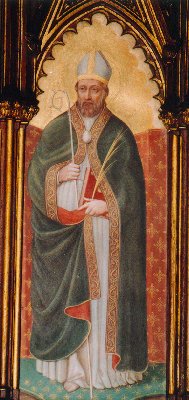
An Irish monk and brother of Saint Fursey, Foillan carried the Irish missionary tradition into Frankish Belgium, founding Fosses Abbey before being killed by robbers around 655.
Saint Foillan was an Irish monk of the seventh century, brother of the better-known missionary Saint Fursey, who followed his brother from Ireland to East Anglia and then, after Fursey’s death, on into the Frankish territories of what is now Belgium, part of the broader wave of Irish peregrini who carried monastic Christianity across early medieval Europe. With the support and patronage of the powerful Frankish noblewomen Itta of Nivelles and her daughter Saint Gertrude of Nivelles, Foillan founded a monastery at Fosses, near Nivelles, becoming its first abbot and continuing the family’s tradition of missionary and monastic work on the continent. Around 655, according to consistent early tradition, he was killed by robbers while traveling through the forest known as the Sonian Forest, near Brussels, a death the Church has remembered as martyrdom given the violent circumstances in which it occurred. His memory is honored particularly at Fosses-la-Ville, the community he founded, and within the wider tradition of Irish missionary saints on the continent.
Quick Facts
- Born: date unknown, Ireland, likely in the early seventh century
- Died: c. 655, Sonian Forest (Forêt de Soignes), near Brussels, in what is now Belgium; killed by robbers
- Feast Day: October 31
- Canonized: predates formal canonization; venerated as a martyr since the seventh century
- Patron of: Fosses-la-Ville and the region of Hainaut, Belgium
Who Was Saint Foillan?
Foillan was an Irish monk, one of three brothers, along with Fursey and Ultan, born into a family that produced several figures notable in the early history of Irish missionary monasticism on the continent. He is best attested through his connection to his more famous brother Fursey, whose own visionary experiences and missionary preaching, first in Ireland and then in East Anglia, drew Foillan into the same monastic and missionary path. When Fursey left England for Frankish territory in the 640s, Foillan and Ultan followed, and after Fursey’s death around 650 the brothers continued the family’s work on the continent, drawing on the patronage of two of the most significant royal Frankish churchwomen of the age, Itta of Nivelles and her daughter Gertrude, herself later venerated as a saint and already the founding abbess of the influential double monastery of Nivelles. With this support, Foillan founded a new monastery at Fosses, not far from Nivelles, and became its abbot, extending the network of Irish-founded religious houses that was reshaping parts of the Frankish church in this period. His life ended violently: around 655, while traveling through the dense forest later known as the Sonian Forest near Brussels, he was set upon and killed by robbers, a death the tradition surrounding him has consistently remembered as martyrdom, understood in the broad sense of a violent death suffered in the course of his religious mission and travels rather than as execution for the faith in the narrower legal sense.
Historical Setting
Foillan’s life belongs to the remarkable seventh-century movement of Irish monks, the peregrini, who left their homeland as a form of ascetic exile and carried monastic Christianity across Britain and the Frankish continent, founding influential houses at Luxeuil, Bobbio, and many other sites associated with Columbanus and his successors. In Frankish Belgium specifically, this Irish missionary current intersected closely with the powerful and pious noblewomen of the Pippinid family circle, including Itta and Gertrude of Nivelles, whose patronage was decisive in establishing new monasteries during this period. Travel through the forested, sparsely governed regions of the Frankish kingdoms carried real danger from bandits and robbers, a hazard the sources surrounding Foillan’s death reflect directly.
Why the Church Venerates Saint Foillan
The Church honors Foillan as part of the extended family and missionary circle of Saint Fursey, whose members carried Irish monastic Christianity into continental Europe and left behind lasting foundations, in Foillan’s own case the abbey at Fosses. He is venerated specifically as a martyr, his violent death while engaged in his religious vocation being read by the tradition as a genuine, if involuntary, witness offered in the course of faithful service rather than a mere accident of travel. His close association with Saint Gertrude of Nivelles and her mother situates him within one of the most historically significant networks of monastic patronage in seventh-century Francia.
Canonization and Feast Day
No formal canonization process applies to Foillan, whose recognition as a saint and martyr developed through the immediate and sustained veneration of the community at Fosses and the wider circle connected to Nivelles, in the manner typical of the early medieval period. His feast is kept on October 31 within the tradition associated especially with Fosses-la-Ville.
What Catholics Can Learn Today
Foillan’s death at the hands of robbers, met while he was simply continuing the ordinary work of his religious vocation rather than in any deliberate act of confrontation with hostile authority, is a reminder that faithful service can carry real and unpredictable risk, and that the Church has long honored such deaths as genuine witness rather than dismissing them as mere misfortune. For readers today, his example, alongside that of his brothers, also speaks to the value of family and companionship in sustaining a shared vocation across long distances and real danger, since Foillan’s own mission only continued because he was willing to follow where his brother had already gone.
A Prayer to Saint Foillan
Saint Foillan, who followed your brother’s calling across the sea and gave your life on the road in service of that same mission, watch over all who travel in danger for the sake of others. Teach me the loyalty that carries a shared calling forward even after loss, and the courage to continue faithful work despite real risk. Pray for missionaries, travelers, and all who face violence in the course of ordinary service, that they may be kept safe, or, if not safe, faithful to the end as you were. Amen.
Sources
- the Vita of Saint Fursey and associated hagiographic tradition
- the historical records of Fosses-la-Ville
- Acta Sanctorum (the Bollandists)
- the Roman Martyrology