
Saint Bruno of Cologne
Saints
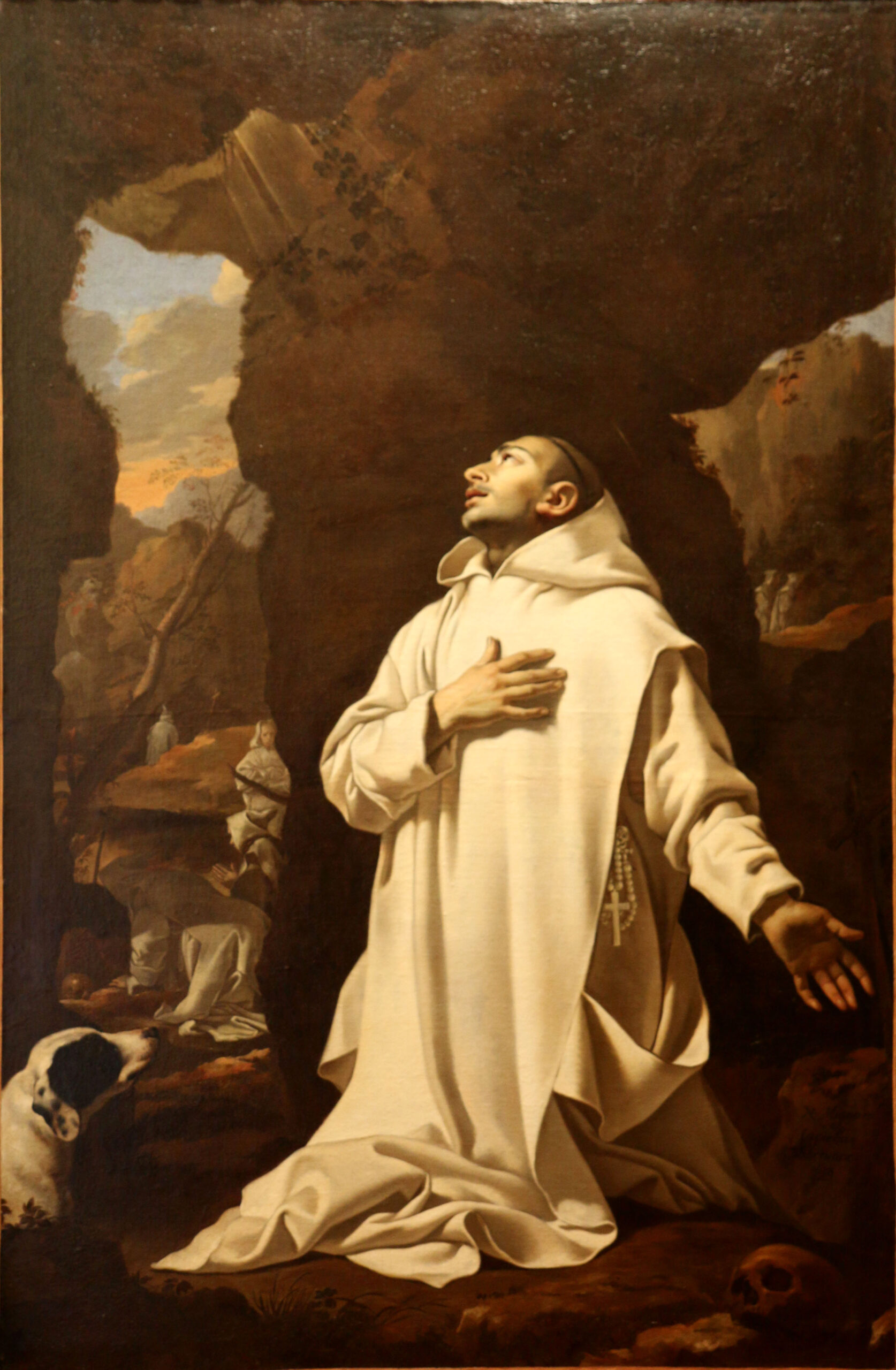
A brilliant cathedral-school teacher who twice abandoned prestige and influence to found the Carthusian Order, seeking silence in the mountains above Grenoble.
Saint Bruno of Cologne (c. 1030-1101) was a German scholar and priest who became one of the most respected teachers at the cathedral school of Reims before withdrawing entirely from public life to seek solitude. Around 1084, together with six companions, he settled in a remote alpine valley near Grenoble called the Chartreuse, founding a community that combined the silence of a hermit’s cell with the shared worship of monastic life, a distinctive balance that became the hallmark of the Carthusian Order he founded without ever intending to start one. Called to Rome years later by his former pupil, Pope Urban II, Bruno served briefly as a papal advisor but soon sought seclusion again, founding a second charterhouse in Calabria, where he died in 1101. Carthusian humility meant he was never formally canonized, though his cult has been recognized by the Church for centuries.
Quick Facts
- Born: c. 1030, Cologne, Holy Roman Empire
- Died: October 6, 1101, Serra San Bruno, Calabria, Italy
- Feast Day: October 6
- Canonization: never formally canonized; his cult was confirmed in 1514 by Pope Leo X
- Patron of: Calabria; those seeking a contemplative or solitary vocation
Who Was Saint Bruno of Cologne?
Bruno was born in Cologne around 1030 into a prominent local family and received an outstanding education, eventually becoming head of the cathedral school at Reims, one of the most prestigious teaching posts in eleventh-century Europe, where his students included the future Pope Urban II. He was later named chancellor of the archdiocese of Reims, a position of real ecclesiastical power, but grew disillusioned after clashing with a corrupt archbishop and increasingly felt drawn to a life of prayer and withdrawal rather than administration. Around 1084 he resigned his offices and, with six companions, sought out the guidance of Bishop Hugh of Grenoble, who led them into a harsh, isolated mountain valley known as the Chartreuse. There Bruno shaped a new form of religious life: monks living largely alone in individual cells devoted to silence, manual work, and prayer, coming together only for the Divine Office and certain meals, a structure that became the foundation of the Carthusian Order. Years later, Urban II summoned his former teacher to Rome to assist him, but Bruno, uneasy amid papal politics and reportedly declining the offer of a bishopric, obtained permission to withdraw again, founding a second charterhouse in the mountains of Calabria, where he lived out his remaining years and died in 1101.
Historical Setting
Bruno’s life unfolded during the Gregorian Reform, a period of intense effort to purify the Church of simony and lay interference in ecclesiastical appointments, and amid the broader eleventh-century revival of monasticism that also produced the Cistercians and Camaldolese. His resignation from a position of real institutional power to pursue radical solitude reflected a wider contemporary hunger, visible across Western Europe, for a return to the austerity and interior focus associated with the earliest Christian hermits of the Egyptian desert.
Why the Church Venerates Saint Bruno of Cologne
Bruno is honored above all for founding an order whose distinctive balance of solitude and community has survived, largely unreformed, for nearly a thousand years, a rare stability in religious history often summed up in the Carthusian motto that the order has ‘never been reformed because never deformed.’ His personal example, walking away from prestige and influence not once but twice, models a Gospel detachment that continues to draw admiration even from those outside the cloistered life he chose.
Canonization and Feast Day
In keeping with Carthusian humility and aversion to public honors, Bruno was never submitted to a formal canonization process. His cult, sustained for centuries within the order and the wider Church, was officially confirmed by Pope Leo X in 1514, and his feast was later extended to the universal calendar. His feast day is kept on October 6.
What Catholics Can Learn Today
In a culture that prizes visibility and achievement, Bruno’s repeated choice of obscurity over advancement is a pointed witness. He did not reject his gifts as a teacher and administrator out of failure but set them aside deliberately, convinced that silence before God mattered more than status among men. His life invites readers to ask whether their own ambitions are serving the deeper purpose they were meant to serve, or crowding it out.
A Prayer to Saint Bruno of Cologne
Saint Bruno, who left behind honor and influence to seek God in silence, teach me to recognize when success has become a distraction from what matters most. You found in solitude not emptiness but the presence of God, and in withdrawal not failure but freedom. Help me to carve out space for quiet prayer amid the noise of my own days, and to trust, as you did, that a hidden life offered to God is never wasted. Amen.
Sources
- Catholic Encyclopedia (New Advent)
- Vatican.va
- The Carthusian Order’s own historical record
- Butler’s Lives of the Saints